Tag Archives: Surrealists

Art Reviews: Gagosian Quarterly – Fall 2023

Gagosian Quarterly Fall 2024 | Gagosian Quarterly
Detail from Andy Warhol’s Mao (1972)

Gagosian Quarterly (Fall 2024) The new issue features Jessica Beck discussing Andy Warhol’s Mao series, contextualizing Warhol’s return to painting in the early 1970s and his attraction to subjects of notoriety. We dig into the archives to honor the inimitable Richard Serra, who had over forty exhibitions at Gagosian since his first in 1983. Elsewhere in the issue, Salomé Gómez-Upegui examines the work of artists confronting the climate crisis, and Péjú Oshin speaks with Jayden Ali about his expansive view of architecture.

In Conversation – Christopher Makos and Jessica Beck

Christopher Makos and Jessica Beck

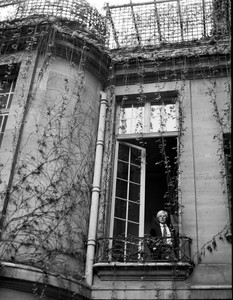
Andy Warhol’s Insiders at the Gagosian Shop in London’s historic Burlington Arcade is a group exhibition and shop takeover that feature works by Warhol and portraits of the artist by friends and collaborators including photographers Ronnie Cutrone, Michael Halsband, Christopher Makos, and Billy Name. To celebrate the occasion, Makos met with Gagosian director Jessica Beck to speak about his friendship with Warhol and the joy of the unexpected.

The Art History of Presidential Campaign Posters

The Art History of Presidential Campaign Posters

Against the backdrop of the 2020 US presidential election, historian Hal Wert takes us through the artistic and political evolution of American campaign posters, from their origin in 1844 to the present. In an interview with Quarterly editor Gillian Jakab, Wert highlights an array of landmark posters and the artists who made them.

Art Reviews: Gagosian Quarterly – Winter 2023

Image

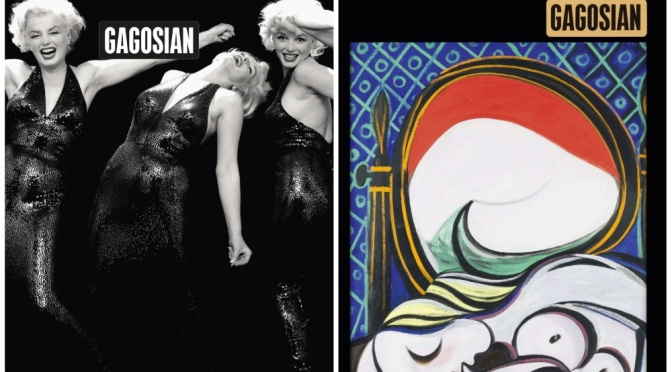
Gagosian Quarterly (Winter 2023) – The new issue features Annie Cohen-Solal who writes about the exhibition A Foreigner Called Picasso, at Gagosian, New York, detailing the genesis of the project, her commitment to the figure of the outsider, and Picasso’s enduring relevance to matters geopolitical and sociological. Connecting the dots among the Surrealist milieu, including Picasso, a conversation on the underrecognized photographer Lee Miller sets the stage for a New York show about her work, friendships, and collaborations with fellow artists.

A FOREIGNER CALLED PICASSO

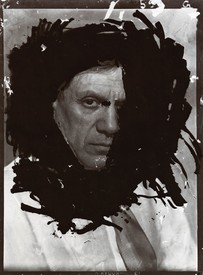
Dora Maar, Portrait de Picasso, Paris, studio du 29, rue d’Astorg, winter 1935–36

Cocurator of the exhibition A Foreigner Called Picasso, at Gagosian, New York, Annie Cohen-Solal writes about the genesis of the project, her commitment to the figure of the outsider, and Picasso’s enduring relevance to matters geopolitical and sociological.

By Annie Cohen-Solal

I have been interested in the issue of immigration ever since I entered the art world. I began my career as an intellectual historian: I was a scholar of Jean-Paul Sartre and wrote his first biography. It was quite unexpected that I would fall into the orbit of the art world, let alone so fast, but two days after I arrived in New York City, in 1989—I had just been nominated cultural counselor to the French Embassy in the United States—I met Leo Castelli at a dinner. Out of the blue, Leo told me, “You don’t look like your predecessors.” (I was the first woman in the position.) “You’ll take New York city by storm and I’ll teach you American art. Come to the gallery tomorrow, I have a show with Roy [Lichtenstein]. Come for the opening and stay for the dinner.”

LEE MILLER AND FRIENDS

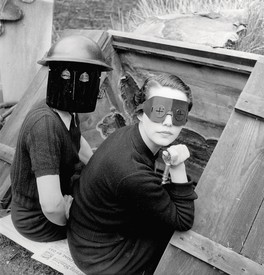
Lee Miller, Fire Masks, 21 Downshire Hill, London, England 1941, 1941

The American Surrealist photographer Lee Miller is the subject of the exhibition Seeing Is Believing at Gagosian, New York. Here we present a conversation on the stewardship of Miller’s legacy, her photography and writing from the frontlines of war to the pages of Vogue, and the intertwined lives of her friends, lovers, and the many artists she knew.

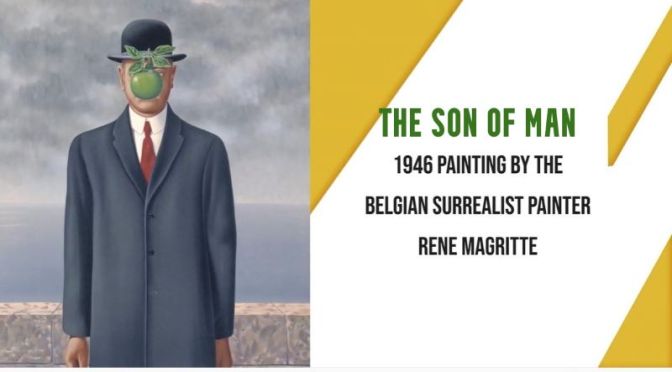
Paintings: ‘The Son Of Man’ By Belgian Surrealist Rene Magritte In 1946 (Video)

The “Son of Man” is an iconic painting by Belgian Surrealist artist Rene Magritte.

Rene Magritte was an internationally acclaimed surrealist artist of all time, yet it was not until his 50s, when he was finally able to reach some form of fame and recognition for his work. Rene Magritte described his paintings saying, “My painting is visible images which conceal nothing; they evoke mystery and, indeed, when one sees one of my pictures, one asks oneself this simple question, ‘What does that mean?’ It does not mean anything, because mystery means nothing, it is unknowable.”

Magritte was born in 1898, to a wealthy manufacturer father. In 1912, his mom was found drowned in the River Sambre. She had committed suicide, and the family was publicly humiliated because of it. From 1916 to 1918, Rene decided to study at the Academie des Beaux-Art, which was located in Brussels. He left the school, because he thought that it was a waste of time. All his paintings afterward reflect cubism, the movements which were introduced by Pablo Picass and was very popular at the time. In 1922 he married Georgette, and took a number of small jobs, including painting cabbage roses for a wallpaper company, in order to be able to pay the bills.

During the early period of his career, shortly following his marriage, Rene Magritte would spend the free time that he had, creating art forms and worked on a number of pieces; it was during this time period that he realized surrealism was the art form which he most enjoyed. The Menaced Assassin was one of his earliest pieces in 1926, which showcased the surrealist style which he had been working on; The Lost Jockey was another piece that he introduced in 1925, which also showcased this art form. Over the course of his career, he produced a number of variants on this piece, and changed the format to recreate what the viewer was experiencing.

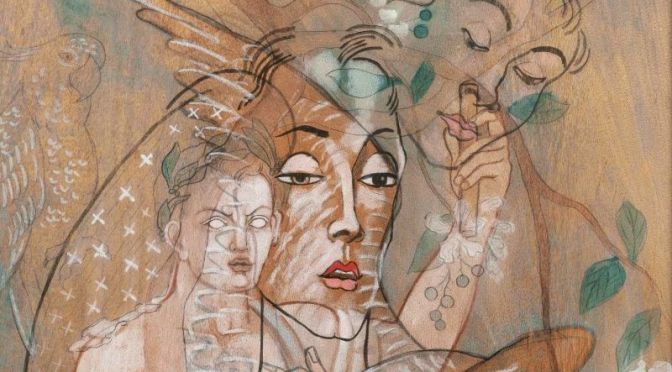
Art History Video: ‘French Surrealist Painter Francis Picabia’ – “Minos” (1929)

Master Surrealist Francis Picabia created complex-dream like paintings for his series, “Transparencies”. In this episode of Anatomy of an Artwork, discover the hidden inspirations for his painting, Minos, and learn about the meaning behind each transparent layer.

Francis Picabia (1879 – 1953) was a French avant-garde painter, poet and typographist. After experimenting with Impressionism and Pointillism, Picabia became associated with Cubism. His highly abstract planar compositions were colourful and rich in contrasts.

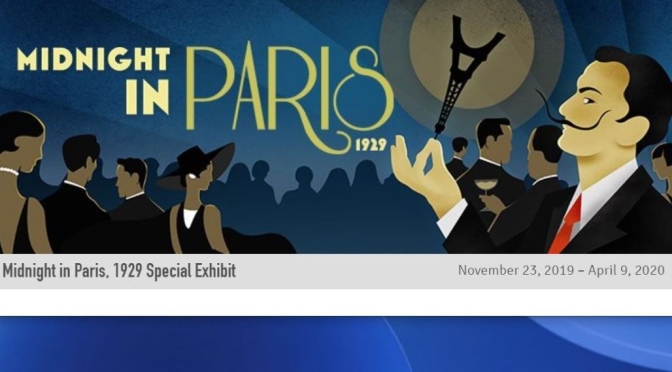
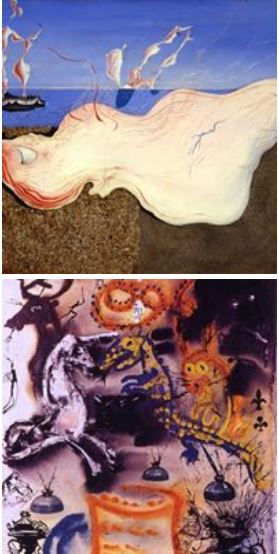
Surrealism: “Midnight In Paris, 1929″(Dalí Museum)

Excerpts from a Wall Street Journal online review (Feb 25, 2020):

Midnight in Paris Surrealism at the Crossroads 1929 Special Exhibit Dali MuseumMasson, a founding Surrealist, saw the movement as an immersion “into what the German romantics call the night side of things.” However, “towards 1930,” Masson wrote, “a formidable disaster appeared in its midst: the demagogy of the irrational.” “Midnight in Paris” touches on Surrealism’s highs and lows, its darkness, poetry, beauty and banalities, reminding viewers—at the heart of the Dalí Museum, no less—that the movement is much, much more than melting watches.

In 1920s Paris, Surrealist revolution and transgression were in the air, but not everyone agreed on how to make Surrealist works or what they should look like. “Midnight in Paris: Surrealism at the Crossroads, 1929,” an exhibition of 80 paintings, prints, sculptures, drawings, collages, photographs, films and documents at St. Petersburg’s Dalí Museum, proposes to examine Surrealism’s rich visual fabric, conflicts and rivalries during the movement’s heyday in the City of Light. Organized by Didier Ottinger, deputy director of the Musée national d’art moderne at the Centre Pompidou, and William Jeffett, chief curator of special exhibitions at the Dalí, it focuses on the moment just before Surrealism burst onto and began to dominate the world stage.

Read full article