

Investigative journalist Charles Piller joins host Sarah Crespi to discuss his latest Science exclusive: a deep dive into the Food and Drug Administration’s protection of human subjects in clinical trials. Based on months of data analysis and interviews, he uncovered long-term failures in safety enforcement in clinical trials and potential problems with trial data used to make decisions about drug and device approvals.
Sarah also talks with Klaus-Robert Müller, a professor of machine learning at the Technical University of Berlin, about an artificial intelligence (AI) trained in the sport of curling—often described as a cross between bowling and chess. Although AI has succeeded in chess, Go, and poker, the constantly changing environment of curling is far harder for a nonhuman mind to adapt to. But AIs were the big winners in competitions with top human players, Müller and colleagues report this week in Science Robotics.

How current and future ice loss in Greenland compares to the past, Long-Covid, and using graphene to make ultra-sensitive radiation detectors.
In this episode:
00:45 Greenland’s historic ice loss
Climate change is accelerating the loss of ice and glaciers around the world leading to unprecedented levels of disappearance. Researchers have drilled samples from deep in the Greenland ice sheet, to model how current, and future, losses compare to those seen in the last 12,000 years. Research Article: Briner et al.; News and Views: The worst is yet to come for the Greenland ice sheet; Editorial: Arctic science cannot afford a new cold war
09:23 Coronapod
Despite recovering from an initial COVID-19 infection, many patients are experiencing severe symptoms months later. We find out about the impact of ‘Long Covid’ and the research that’s being done to try and understand it. News Feature: The lasting misery of coronavirus long-haulers
18:55 Research Highlights
A robot defeats humans at yet another sport, and extreme diving in Cuvier’s beaked whales. Research Highlight: A robot triumphs in a curling match against elite humans; Research Highlight: A smiling whale makes a record deep dive
21:20 A radiation detector made of graphene
Radiation-detectors known as bolometers are vital instruments in many fields of science. This week, two groups of researchers have harnessed graphene to make super sensitive bolometers that could be used to improve quantum computers, or detect subtle traces of molecules on other planets. Research Article: Lee et al.; Research Article: Kokkoniemi et al.
27:49 Briefing Chat
We discuss some of the latest stories highlighted in the Nature Briefing. This week we chat about the lack of diversity in academia, and an animal ally that can protect wildlife during forest fires. Nature Careers: Diversity in science: next steps for research group leaders; National Geographic:
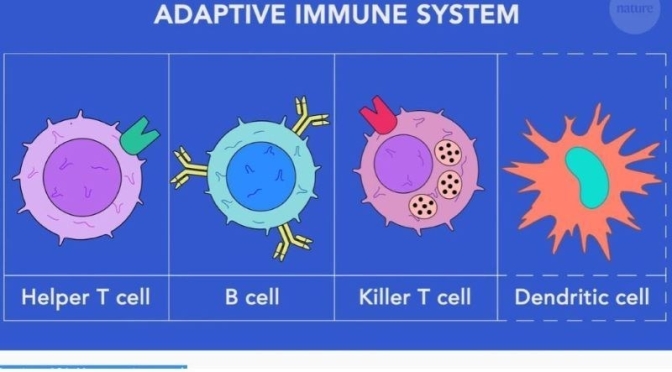
As the world waits for a potential COVID-19 vaccine, we delve into how vaccines actually work. What are the different types of vaccine? How do they trigger and train the immune system, and what is the role of herd immunity?

Contributing Correspondent Ann Gibbons talks with host Sarah Crespi about a series of 120,000-year-old human footprints found alongside prints from animals like asses, elephants, and camels in a dried-up lake on the Arabian Peninsula. These are the earliest human footprints found so far in Arabia and may help researchers better understand the history of early hominin migrations out of Africa.
Continuing on the history of humanity theme, Sarah talks with Janet Kelso of the Max Planck Institute for Evolutionary Anthropology, about her team’s efforts to fish the elusive Y chromosome out of Neanderthal and Denisovan DNA. It turns out Y chromosomes tell a different story about our past interbreeding with Neanderthals than previous tales told by the rest of the genome.

Melanoma may account for a small percentage of skin cancers, yet it causes an estimated 75 to 80 percent of skin cancer deaths. Caught early, it has a 99 percent five-year survival rate, but if it slips patients’ and clinicians’ notice, digs deeper into the skin and spreads beyond the lymph nodes, that rate can drop to 25 percent, according to the National Cancer Institute. The ACS predicts there will be 6,850 deaths in the United States from melanoma this year.
Although more skin pigment provides more protection, melanin itself has a sun protection factor, or SPF, of less than 5, says Fisher, suggesting that it functions physiologically as more than mere sunblock. He and others have clarified how different types of melanin raise or lower melanoma risk, and they’ve shown that any minimal benefit provided by tanning, such as the production of vitamin D, doesn’t outweigh the DNA damage caused by UV exposure.
Skin cancers are far and away the most common cancers in the United States. Basal and squamous cell carcinomas make up the vast majority, with somewhere between 1 million and 5.4 million new instances diagnosed each year. However, because these two malignancies don’t have to be reported to cancer registries, precise numbers aren’t known: The cancer officially ranked as the most common in this country is breast cancer, with 270,000 new cases each year. Melanoma is ranked fifth, with about 100,000 new diagnoses expected in 2020, reports the American Cancer Society (ACS).
Staff Writer Kelly Servick joins host Sarah Crespi to discuss how jail and prison populations in the United States have dropped in the face of coronavirus and what kinds of scientific questions about public health and criminal justice are arising as a result.

Nature podcast discusses: Mapping the migration of the Vikings, a leading Covid-19 vaccine trial was abruptly halted and the world’s smallest ultrasound device.
In this episode:
00:45 Following the Viking footprint across Europe
To better understand who the Vikings were, and where they went, researchers have mapped genomes from hundreds of archaeological artifacts. Research Article: Margaryan et al.
08:00 Coronapod
Phase III trials of a leading coronavirus vaccine were abruptly paused last week – we discuss how news of the event leaked out, and the arguments for transparency in clinical trials. News: A leading coronavirus vaccine trial is on hold: scientists react; News: Scientists relieved as coronavirus vaccine trial restarts — but question lack of transparency; If you are involved in a clinical trial for a coronavirus vaccine or treatment, please fill in our survey.
21:05 Research Highlights
A burnt grain silo gives insight into ancient tax collection, and how hummingbirds survive the cold Andean nights. Research Highlight: Ancient tax collectors amassed a fortune — until it went up in smoke; Research Highlight: Why some of the world’s zippiest birds go stiff and cold every night
23:40 Ultra-tiny ultrasound
Scientists have developed an ultrasound detector which is smaller than the wavelength of sound it detects, providing highly detailed imaging at a cellular level; Research Article: ; Research Article: Shnaiderman et al.
29:53 Briefing Chat
We discuss some of the latest stories highlighted in the Nature Briefing. This week we talk about why California has an orange hue, and the strangeness at the edge of the Solar System. Forbes: The Science Behind Mysterious Orange Skies In California; BBC Future: The weird space that lies outside our Solar System




 Boomers Daily