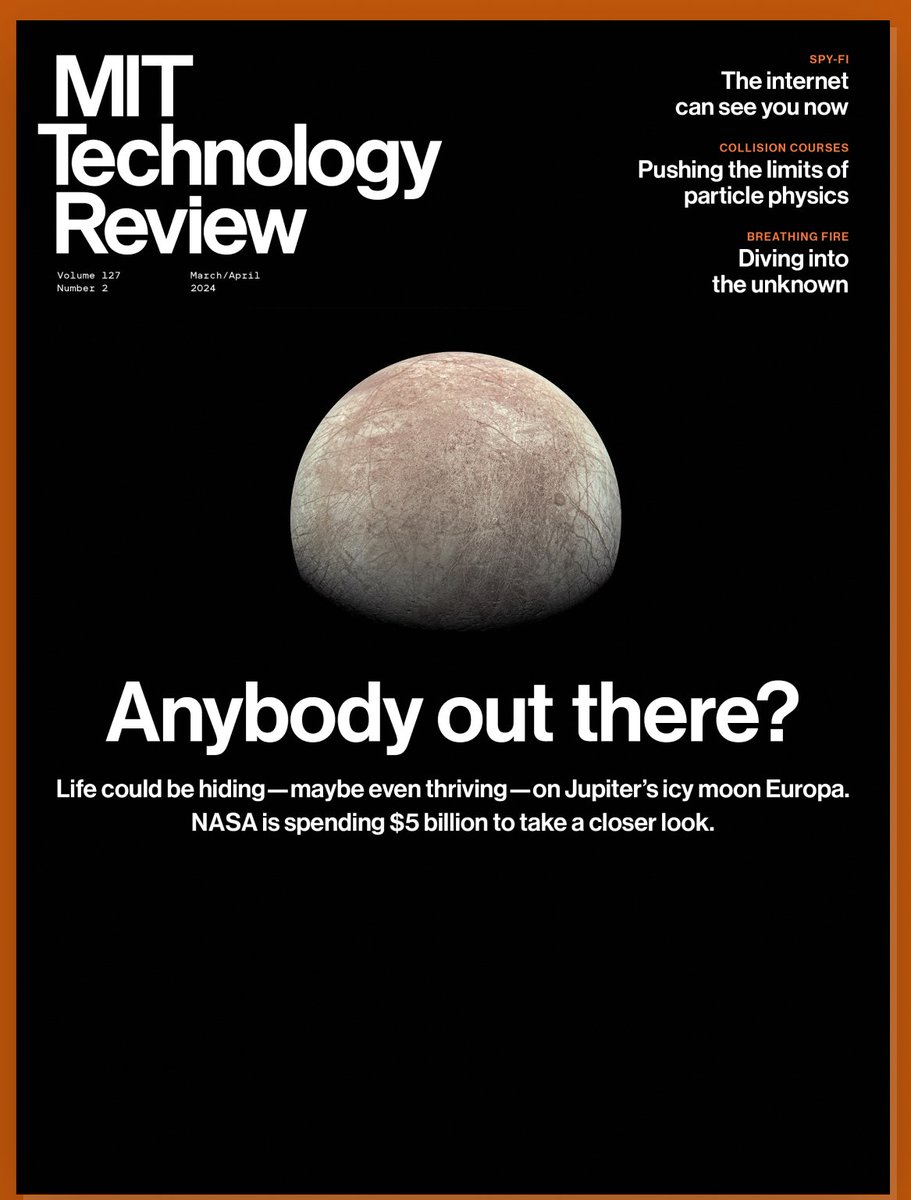
MIT Technology Review (February 29, 2024): The new issue features ‘The Hidden Worlds Issue’ – Is Anybody Out There? Using technology to explore and expose hidden worlds, from enabling deeper dives into ocean depths to journeying to one of Jupiter’s orbiting bodies to pushing the boundaries of particle physics. Plus: wearables for wildlife, Wi-Fi sensing, and a reconsideration of Luddites.
The Large Hadron Collider hasn’t seen any new particles since the discovery of the Higgs boson in 2012. Here’s what researchers are trying to do about it.
Figuring out how the human body can withstand underwater pressure has been a problem for over a century, but a ragtag band of divers is experimenting with hydrogen to find out.
Nature Magazine – February 28, 2024: The latest issue cover features ‘Tale of the Tails’ – How a genetic element aided tail loss in humans and apes; RNA-editing therapies for genetic diseases have in the past few months gained approval for clinical trials, raising hopes for safer treatments…
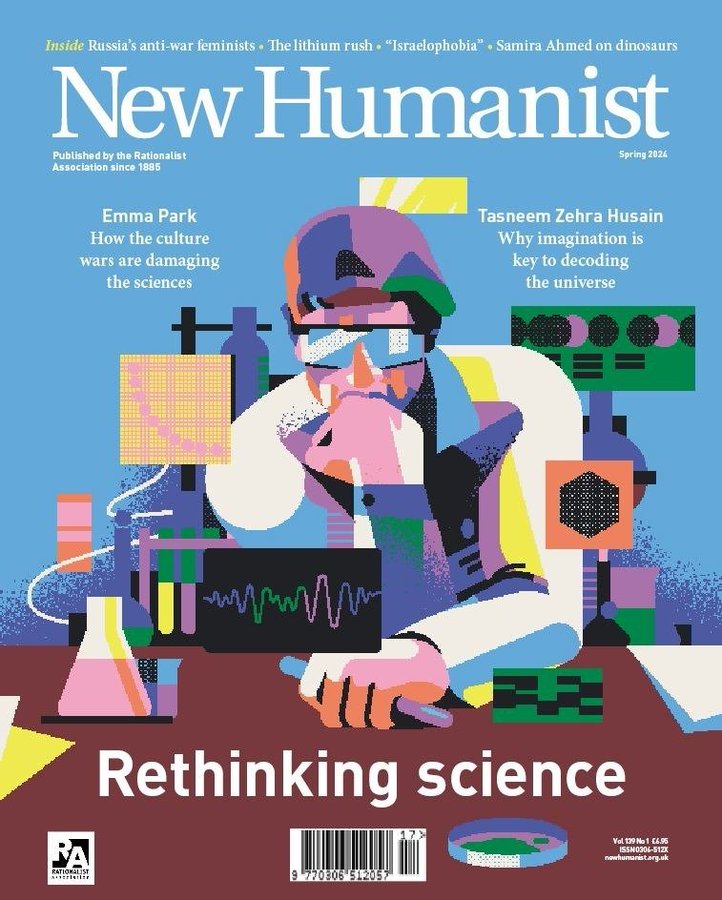
NEW HUMANIST MAGAZINE – SPRING 2024 ISSUE: The new issue features Emma Park on how the culture wars are damaging the sciences, theoretical physicist Tasneem Zehra Husain on why the imagination is key to decoding the universe, and Alom Shaha on what can be gained by thinking like a scientist…
Beyond the two cultures
Amid a polarised debate, science and art seem further apart than ever. Emma Park, editor of The Freethinker, explores what humanism has to teach us about the apparent conflict between these ways of thinking and how to bridge the divide.
“While humanities scholars are often (not without justification) accused of being Luddites, those on the science and technology side could also benefit from the knowledge that the humanities have accumulated over the centuries … [And] no intellectual activity worth the name can flourish in a politically repressive environment: freedom of expression and enquiry should be an issue to unite artists, scholars and scientists.”
The poetry of science
Metaphors are key to unlocking the secrets of the universe – scientists should do more to harness their power, writes acclaimed physicist Tasneem Zehra Husain.
“Metaphors aren’t only a means of description, they can also lead to revelations. Centuries ago, Newton was able to calculate the gravitational attraction between two objects … [but] would ‘feign no hypothesis’ as to why it was so. He had the equation, but he did not understand gravitation … With Einstein, we finally have a metaphor. When we picture space-time as a dynamic ‘fabric’ … we begin to understand what gravity means.”
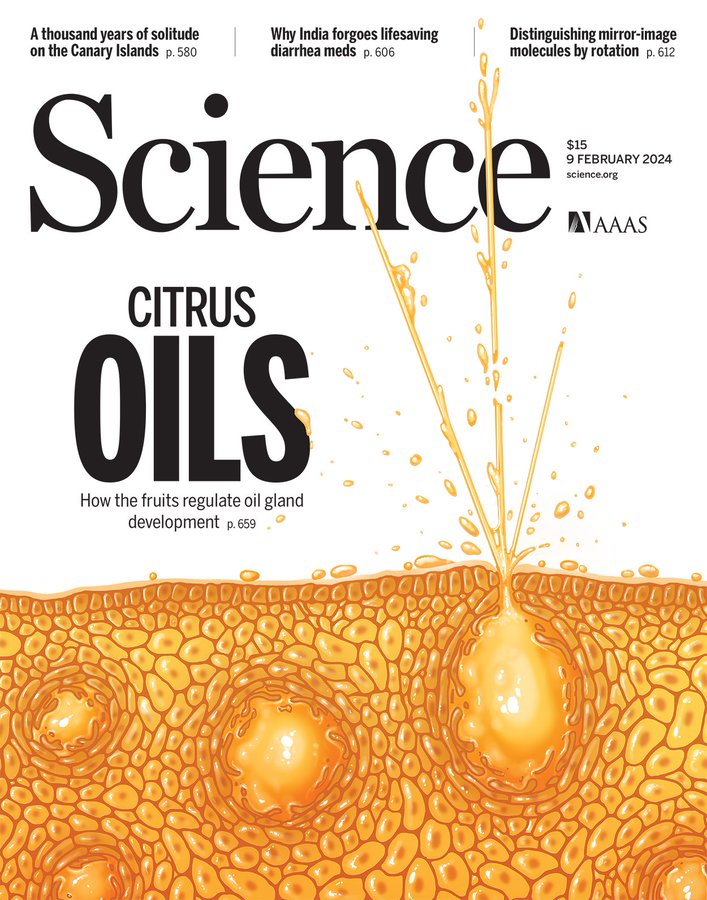
Science Magazine – February 15, 2024: The new issue features ‘A record drought in October 2023 that lowered the Amazon River near the Brazilian city of Tefé, revealing sand dunes and forcing local fishing boats to compete for spots.
American Scientist (February 15, 2024): The latest issue features “Deconstructing DNA Beyond the Helix” – science educator and artist Caryn Babaian explores through illustration the molecular details and interactions that can affect DNA’s structure. She contends that for people to fully understand DNA, it must be shown in relationship to water.
Nature Magazine – February 14, 2024: The latest issue cover climate and land-use stresses could push the rainforest past a tipping point as early as 2050. The researchers probed five causes of water stress — global warming, annual rainfall, seasonal intensity of rainfall, length of the dry season and deforestation — using palaeorecords, climate models and observational data.



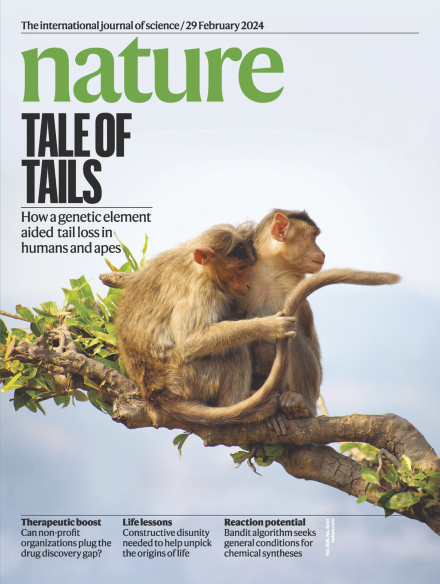
 Nature Magazine – February 28, 2024: The latest issue cover features ‘Tale of the Tails’ – How a genetic element aided tail loss in humans and apes; RNA-editing therapies for genetic diseases have in the past few months gained approval for clinical trials, raising hopes for safer treatments…






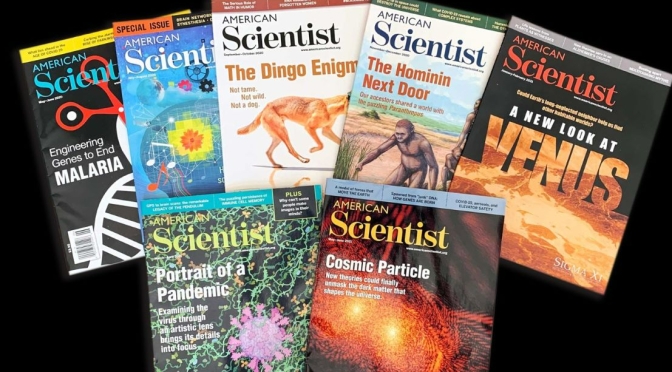
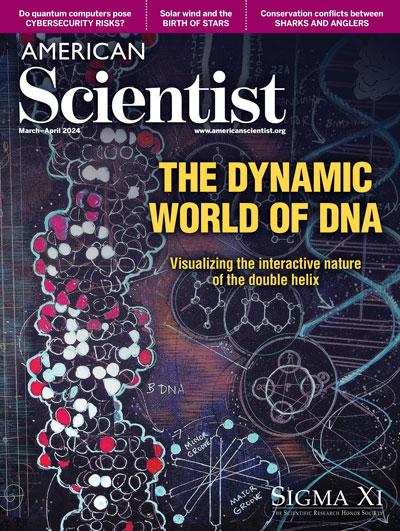
 American Scientist (February 15, 2024): The latest issue features “Deconstructing DNA Beyond the Helix” – science educator and artist Caryn Babaian explores through illustration the molecular details and interactions that can affect DNA’s structure. She contends that for people to fully understand DNA, it must be shown in relationship to water.
 Boomers Daily