
Tag Archives: Science Podcasts

Top New Science Podcasts: Better Battery Charging, Understanding Mice & Electricity From Thin Air

Nature PodcastsThis week, machine learning helps batteries charge faster, and using bacterial nanowires to generate electricity from thin air.

In this episode:

00:46 Better battery charging

A machine learning algorithm reveals how to quickly charge batteries without damaging them. Research Article: Attia et al.

07:12 Research Highlights

Deciphering mouse chit-chat, and strengthening soy glue. Research Highlight: The ‘silent’ language of mice is decoded at last; Research Article: Gu et al.

09:21 Harnessing humidity

A new device produces electricity using water in the air. Research Article: Liu et al.

16:30 News Chat

Coronavirus outbreak updates, the global push to conserve biodiversity, and radar reveals secrets in an ancient Egyptian tomb. News: Coronavirus: latest news on spreading infection; News: China takes centre stage in global biodiversity push

Top New Science Podcasts: NIH Grant Diversity, Post-Traumatic Stress Memory Suppression (ScienceMag)

scimag_pc_logo_120_120 (2)On this week’s show, senior correspondent Jeffrey Mervis joins host Sarah Crespi to discuss a new National Institutes of Health (NIH) grant program that aims to encourage diversity at the level of university faculty with the long-range goal of increasing the diversity of NIH grant recipients.
Sarah also talks with Pierre Gagnepain, a cognitive neuroscientist at INSERM, the French biomedical research agency, about the role of memory suppression in post-traumatic stress disorder. Could people that are better at suppressing memories be more resilient to the aftermath of trauma?

Science Podcasts: CRISPR & Immunotherapy, Ice Age Cave Art Dated With Wasp Nests (ScienceMag)

scimag_pc_logo_120_120 (2)On this week’s show, Staff Writer Jennifer Couzin-Frankel joins host Sarah Crespi to talk about Science paper that combines two hot areas of research—CRISPR gene editing and immunotherapy for cancer—and tests it in patients.
Sarah also talks with Damien Finch, a Ph.D. candidate in the School of Earth Sciences at the University of Melbourne, about the Kimberly region of Australia and dating its ice age cave paintings using charcoal from nearby wasp nests.

Website

Science Podcasts: Low-Cost Cryo-Electron Microscopes & Genetic Roots Of Schizophrenia

Science Magazine PodcastsStructural biologists rejoiced when cryo–electron microscopy, a technique to generate highly detailed models of biomolecules, emerged. But years after its release, researchers still face long queues to access these machines. Science’s European News Editor Eric Hand walks host Meagan Cantwell through the journey of a group of researchers to create a cheaper, more accessible alternative.
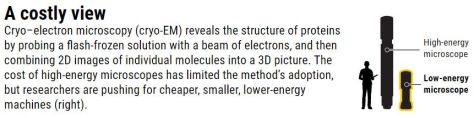
Cryo-Electron Microscopes

Also this week, host Joel Goldberg speaks with psychiatrist and researcher Goodman Sibeko, who worked with the Xhosa people of South Africa to help illuminate genetic details of schizophrenia. Though scientists have examined this subject among Western populations, much less is known about the underlying genetics of people native to Africa.

Website

Science Podcasts: Stress Turns Hair Grey, Giant Sloths, Fake Whiskeys And Climate Change (Nature)

Nature PodcastsHear the latest science news, brought to you by Nick Howe and Benjamin Thompson.  This week, why stress makes mice turn grey, and how to think about climate change.

In this episode:

00:45 Going grey

Anecdotal evidence has long suggested stress as a cause of grey hair. Now, a team of researchers have showed experimental evidence to suggest this is the case. Research Article: Zhang et al.News & Views: How the stress of fight or flight turns hair white

08:39 Research Highlights

Ancient bones suggest that giant ground sloths moved in herds, plus an atomic way to check for whiskey fakes. Research Highlight: A bone bed reveals mass death of herd of giant ground slothsResearch Highlight: Nuclear-bomb carbon unmasks fraudulent luxury whisky

10:40 Climate optimism

To tackle climate change, the former UN secretary for climate change argues that the biggest change needs to be mindset. Comment: Paris taught me how to do what is necessary to combat climate change

18:09 News Chat

The latest on a new virus from Wuhan in China, and insights from ancient African genomes. News: China virus latest: first US case confirmedResearch Article: Lipson et al.

Top New Science Podcasts: Lack Of Clinical Trial Reporting, Gut Microbe Links To Chronic Disease

Science Magazine PodcastsThough a law requiring clinical trial results reporting has been on the books for decades, many researchers have been slow to comply. Now, 2 years after the law was sharpened with higher penalties for noncompliance, investigative correspondent Charles Piller took a look at the results. He talks with host Sarah Crespi about the investigation and a surprising lack of compliance and enforcement.

Also this week, Sarah talks with Brett Finlay, a microbiologist at the University Of British Columbia, Vancouver, about an Insight in this week’s issue that aims to connect the dots between noncommunicable diseases like heart disease, diabetes, and cancer and the microbes that live in our guts. Could these diseases actually spread through our microbiomes?

Top Science Podcasts: Orbiting A Black Hole, Parrots And Online Media Consumption (Nature)

Nature PodcastsListen to the latest from the world of science, brought to you by Benjamin Thompson and Nick Howe. This week, observations of objects orbiting a black hole, and rethinking how we measure screen-time.
In this episode:

00:45 Observing the centre of the galaxy

Researchers have uncovered a population of dust-enshrouded objects orbiting the supermassive black hole at the centre of the galaxy. Research Article: Ciurlo et al.

06:34 Research Highlights

A London landmark’s height lends itself to a physics experiment, and generous behaviour in parrots. Research Highlight: An iconic structure in London moonlights as a scientific toolResearch Highlight: Parrots give each other gifts without promise of reward

09:00 The human ‘screenome’ project

To understand the effects of online media consumption, researchers argue that the way it’s measured needs to change. Comment: Time for the Human Screenome Project

17:26 News Chat

A decline in human body temperature, and a new report on research culture. News: Not so hot: US data suggests human bodies are cooling downNews: Stressful, aggressive, damaging: huge survey reveals pressures of scientists’ working lives


New Science Podcasts: Two People In An MRI Machine; Wisdom & Culture Lab (ScienceMag)

scimag_pc_logo_120_120 (2)Getting into an MRI machine can be a tight fit for just one person. Now, researchers interested in studying face-to-face interactions are attempting to squeeze a whole other person into the same tube, while taking functional MRI (fMRI) measurements. Staff Writer Kelly Servick joins host Sarah Crespi to talk about the kinds of questions simultaneous fMRIs might answer.
Also this week, Sarah talks with Igor Grossman, director of the Wisdom and Culture Lab at the University of Waterloo, about his group’s Science Advances paper on public perceptions of the difference between something being rational and something being reasonable.

Website

Top New Science Podcasts: Latest Trends In Research, Carnivorous Plant Traps

Science Magazine PodcastsWe start our first episode of the new year looking at future trends in policy and research with host Joel Goldberg and several Science News writers. Jeffrey Mervis discusses upcoming policy changes, Kelly Servick gives a rundown of areas to watch in the life sciences, and Ann Gibbons talks about potential advances in ancient proteins and DNA.

In research news, host Meagan Cantwell talks with Beatriz Pinto-Goncalves, a postdoctoral researcher at the John Innes Centre, about carnivorous plant traps. Through understanding the mechanisms that create these traps, Pinto-Goncalves and colleagues elucidate what this could mean for how they emerged in the evolutionary history of plants.

Top Science Podcasts: Soles And Calluses, Far Side Of The Moon & Nobel Prize Winner Q&A (Nature)

Nature PodcastsThe podcast team share some of their highlights from the past 12 months: A sole sensation, The make up of the far side of the Moon, Growth Mindset, ‘Manferences’ and Q&A with Nobel Prize winner John Goodenough.

In this episode:

00:33 A sole sensation

A study of people who do and don’t wear shoes looks into whether calluses make feet less sensitive. Nature Podcast: 26 June 2019; Research article: Holowka et al.; News and Views: Your sensitive sole

08:56 The make up of the far side of the Moon

Initial observations from the first lander to touch down on the far side of the Moon. Nature Podcast: 15 May 2019; Research article: Li et al.

15:43 Growth Mindset

How a one hour course could improve academic achievement. Nature Podcast: 07 August 2019; Research article: Yeager et al.

27:44 ‘Manferences’

Nature investigates the prevalence of conferences where most of the speakers are male. Nature Podcast: 11 September 2019; News Feature: How to banish manels and manferences from scientific meetings

34:02 Q&A with Nobel Prize winner John Goodenough

We talk to John Goodenough, who was jointly awarded the 2019 Nobel Prize in Chemistry for his role in the development of the lithium-ion battery. Podcast Extra: 09 October 2019