

Tag Archives: Research
Research Preview: Nature Magazine – Sept 8, 2022
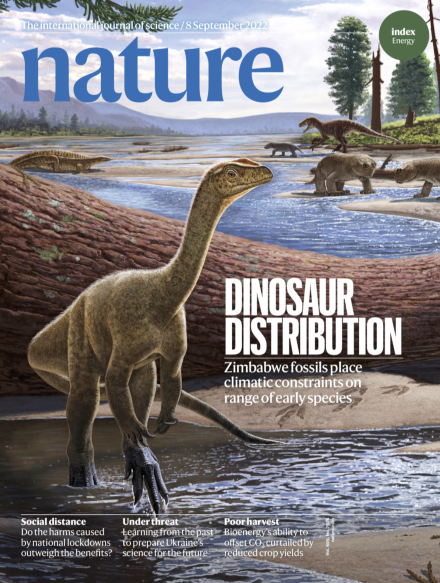
Dinosaur distribution
The cover shows an artist’s impression of Mbiresaurus raathi, a newly discovered species of herbivorous dinosaur found in Zimbabwe and dating to around 230 million years ago.
Avalanches in remote peaks are revealed with old satellites’ aid
Archived data from Landsat 5, launched in 1984, and two newer sensors allow scientists to chart dangerous flows in Afghanistan.
Quick-dried Lystrosaurus ‘mummy’ holds clues to mass death in the Triassic
Reptiles that perished during a severe drought 250 million years ago are preserved as spreadeagled and mummified fossils.
Research: Free-Floating DNA And Oxidation Zones
On this week’s show: The U.S. government is partnering with academics to speed up the search for more than 80,000 soldiers who went missing in action, and how humans create their own “oxidation zone” in the air around them.
First up on the podcast this week, Tess Joosse is a former news intern here at Science and is now a freelance science journalist based in Madison, Wisconsin. Tess talks with host Sarah Crespi about attempts to use environmental DNA—free-floating DNA in soil or water—to help locate the remains of soldiers lost at sea. Also featured in this segment:
University of Wisconsin, Madison, molecular biologist Bridget Ladell Woods Hole Oceanographic Institution marine biologist Kirstin Meyer-Kaiser
Also this week, Nora Zannoni, a postdoctoral researcher in the atmospheric chemistry department at the Max Planck Institute for Chemistry, talks about people’s contributions to indoor chemistry. She chats with Sarah about why it’s important to go beyond studying the health effects of cleaning chemicals and gas stoves to explore how humans add their own bodies’ chemicals and reactions to the air we breathe. In a sponsored segment from Science/AAAS Custom Publishing Office, Sean Sanders, director and senior editor for Custom Publishing, interviews Benedetto Marelli, associate professor at MIT, about winning the BioInnovation Institute & Science Prize for Innovation and how he became an entrepreneur.

Research Preview: Science Magazine – September 2
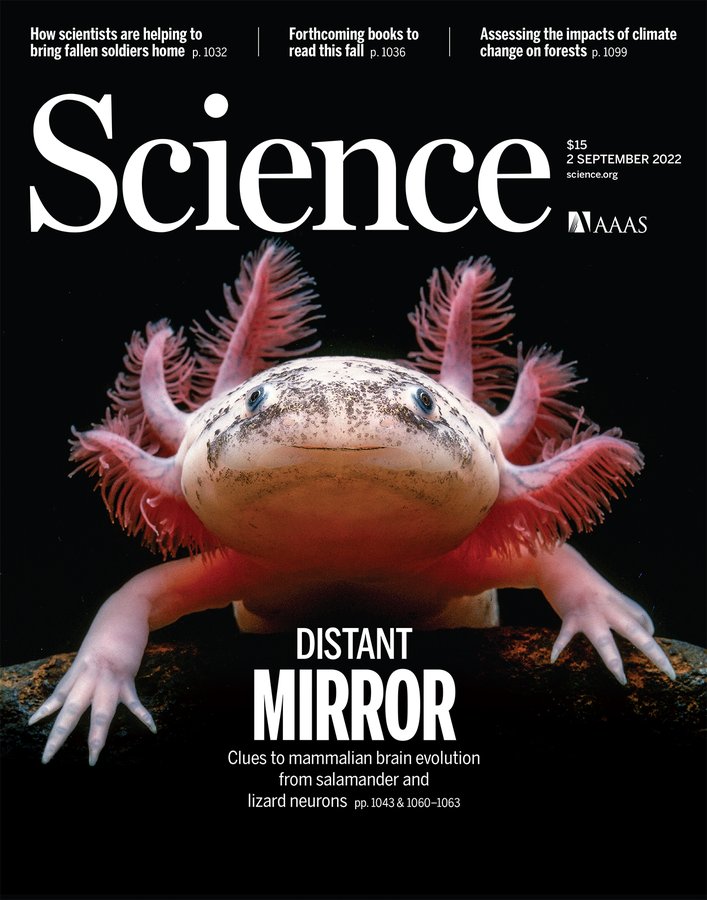
U.S. to require free access to papers on all research it funds
The plan, to start at the end of 2025, is a blow to journal paywalls, but its impact on publishing is unclear
Carbon dioxide detected around alien world for first time
Webb telescope discovery offers clue to planet formation and promises insights on planetary habitability
Researchers tackle vexing side effects of potent cancer drugs
Wider use of checkpoint inhibitor therapy spurs efforts to predict and treat immune complications
Omicron shots are coming—with lots of questions
Decisions on boosters targeting subvariants will be based on limited data
Zimbabwe find illuminates dawn of the dinosaurs
Nearly complete specimen shows earliest dinosaurs needed a temperate climate
Research Preview: Science Magazine – August 26, 2022
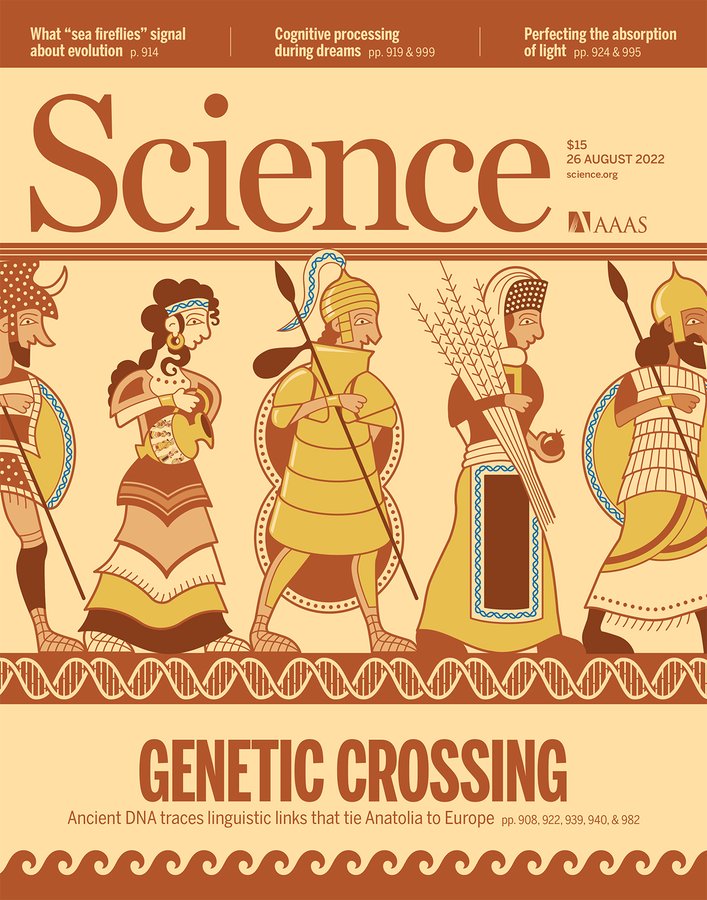
Ancient DNA from the Near East probes a cradle of civilization
Studies seek clues to origins of farming, early languages
Global drought experiment reveals the toll on plant growth
Artificial droughts sharply cut carbon storage
Researchers watch how Arctic storms chew up sea ice
Airborne campaign to study summer cyclones could reveal air-ice interactions
Deadly bird flu establishes a foothold in North America
H5N1 has continued to kill wild birds and poultry this summer. The fall migration could bring it back in force
Many-eyed scope will make movies of the stars
Argus Array will combine hundreds of off-the-shelf telescopes to capture fleeting events
FEATURE
Sparkling waters
Tiny Caribbean crustaceans and their bioluminescent mating displays are shining new light on evolution
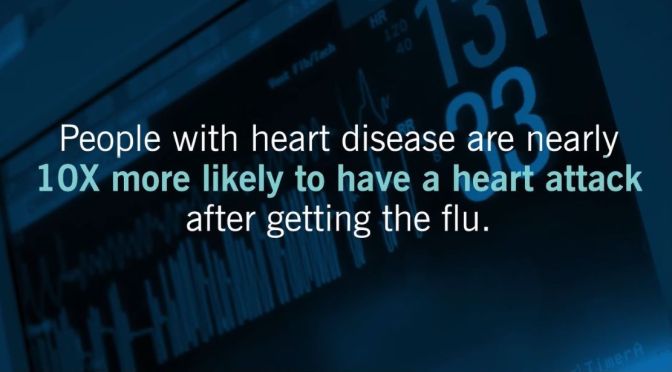
Health: How Flu Shots Lower Heart Attack Risks
Influenza-related stress on your body can launch a negative chain of events that builds toward a heart attack. This video shares how getting a seasonal flu shot can significantly lower your risk of having a heart attack or cardiac arrest, especially if you’re in a high-risk group.
Chapters: 0:00 Can flu shots lower risk of heart attacks? 0:37 How does the flu shot lower risk of heart attacks? 1:08 Who is most at risk of having a flu related heart attack? 1:30 Why else should you get a flu shot?

Research Preview: Nature Magazine – August 25, 2022
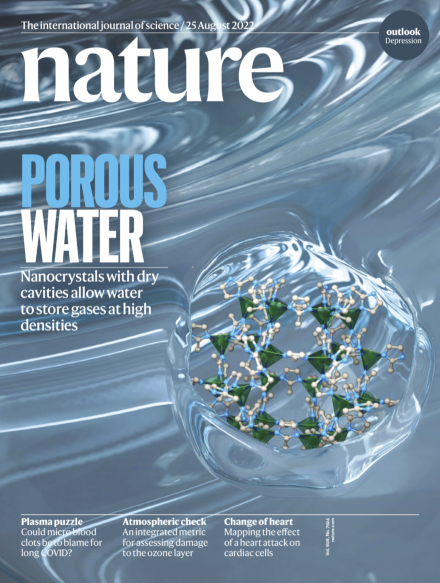
- Which glaciers are the biggest? Scientists finally have an answer – The world’s record holders are in Antarctica, regardless of how ‘glacier’ is defined.
- First space rock found inside Venus’s orbit — and it’s jumbo-sized – An asteroid that travels inside the orbit of Venus probably wandered there from further afield.
- Stretchy synthetic nerve helps mice give ball a mighty kick -Device can bridge a nerve damaged by motor-neuron disease or spinal-cord injury.
- Mosquitoes sniff out humans with super-smelling neurons – The biting insects have an odour-sensing set-up superior to that of many other animals.
- Mount Everest’s harsh heights shelter a rich array of life – Scraps of DNA show that living things of all kinds thrive in the thin air above 4,000 metres.
Preview: New Scientist Magazine – August 27, 2022

Research Preview: Science Magazine – August 19, 2022
Small stowaways on new NASA rocket promise big science
Batteries allowing, CubeSats will target lunar ice and more
China rises to first place in one key metric of research impact
Other methods still put the United States somewhat ahead
New law’s big payout for farming has uncertain climate payoff
Measures to capture carbon in soil may be less effective than hoped, scientists say
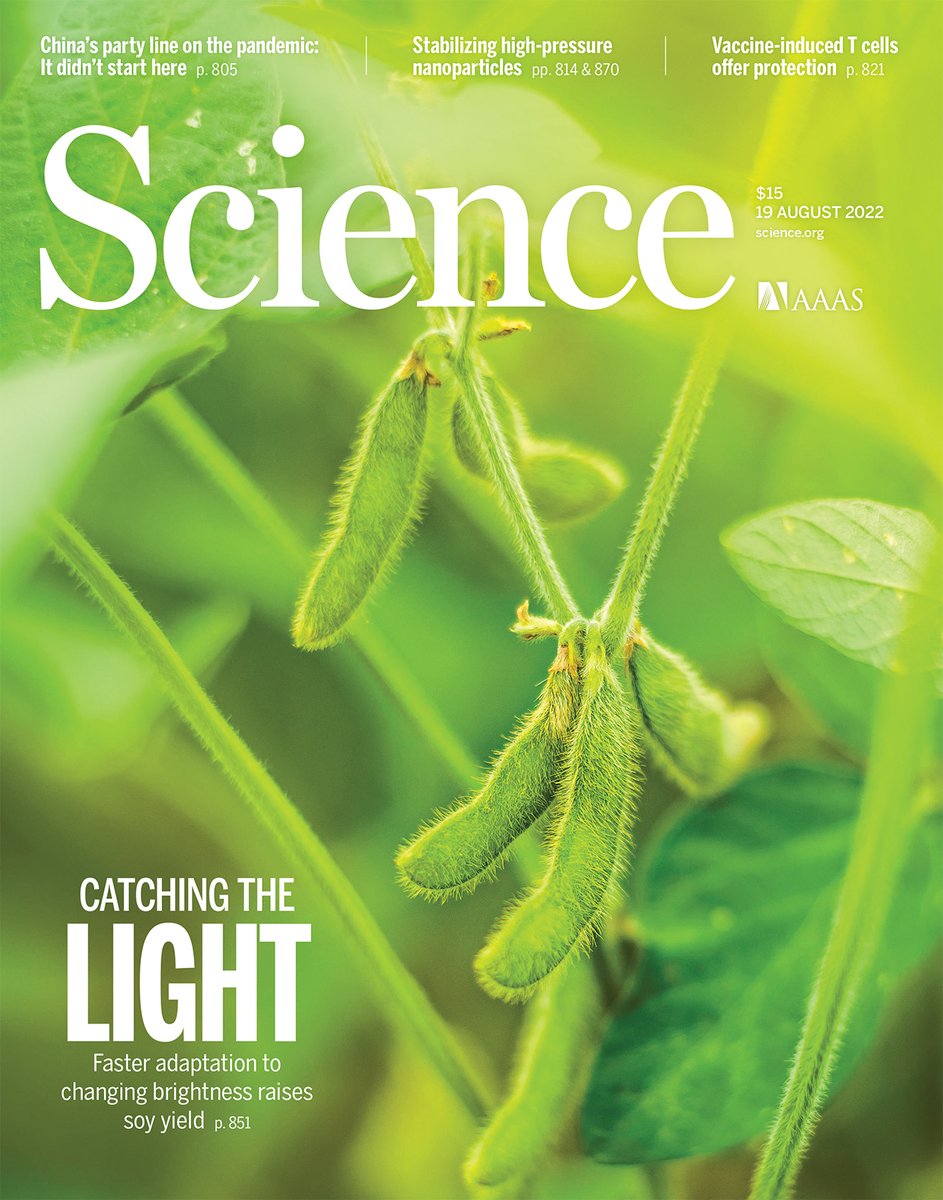
Bioengineering soybean plants to improve regulation of photoprotection—a natural process that enables plants to cope with excess absorbed light energy—improved soybean seed yield by up to 33% in field trials.
Read that study and more this week in Science: https://fcld.ly/r6g2kix
Research Preview: Nature Magazine – August 18, 2022
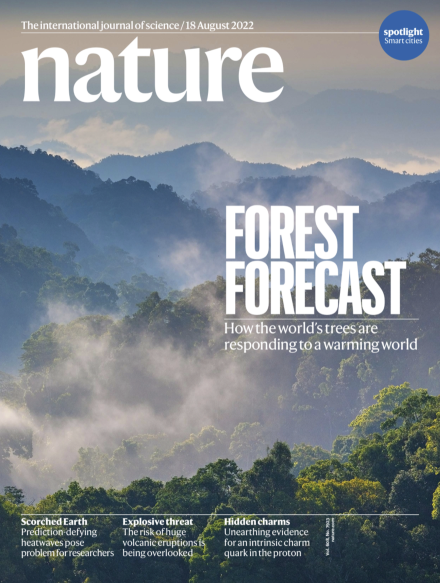
The cover captures the morning mist at Kaeng Krachan National Park in Thailand. Like every other aspect of life on Earth, forests are facing increased challenges posed by climate change. A collection of papers in this week’s issue probes the vulnerabilities and potential resilience of forests in a warming world. Three studies focus on North America: one examining the response of boreal species to warming and drought, another analysing the timing of stem growth in temperate deciduous forests, and a third revealing migration of white spruce (Picea glauca) into the Arctic tundra. In the tropics, one paper investigates the
impact of phosphorus availability in the Amazon, while another assesses the reasons for increased mortality of tropical trees. Finally, a sixth paper shows how satellite imaging can be combined with machine learning to identify declining resilience in the world’s forests.
 Boomers Daily