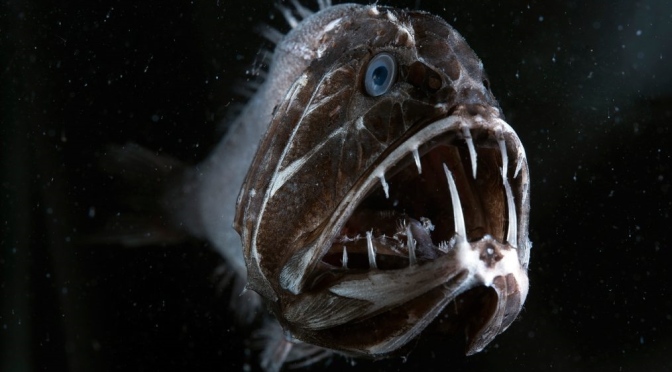
BBC Earth (June 28, 2023) – A kilometre beneath the surface and beyond the reach of the sun, life can still flourish in this dark expanse.
The midnight zone is the single largest habitat on the planet, accounting for 70% of all seawater, but because of its remote location, it is poorly understood. Little is known about the animals that inhabit these waters, and even less is known about microbial life in this zone.
Natural World Facts Films (June 17, 2023) – Explore the wonders of the deep ocean as you’ve never seen them before. This is a collaborative film series with Schmidt Ocean Institute, using their extensive library of 4K footage from an array of deep sea ecosystems.
Below are the episodes in order (subject to change):
1 – The Twilight Zone
2 – The Midnight Zone
3 – The Abyssal Plain
4 – Seamounts and Canyons
5 – Hydrothermal Vents
Schmidt Ocean Institute is a non-profit oceanographic research foundation that has been pioneering deep-sea research and discovery since 2009, on board their old vessel RV Falkor and their brand new RV Falkor (too), the most advanced marine research vessels in the world.
Their remotely operated vehicle (ROV) SuBastian is equipped with a suite of sensors and a 4K camera that has illuminated the depths and live-streamed dives around the world. All footage shown is filmed and provided by Schmidt Ocean Institute.
SeaLegacy (May 26, 2023) – Five years after its protection, Mexico’s Revillagigedo National Park bounds with a resurgence of life– welcoming back the region’s incredible native species, like the endangered giant manta ray. Co-founder Cristina Mittermeier and marine scientist Frida Lara explore what’s possible when we give aquatic life space to recover and thrive.
The pair greet a giant manta as an old friend, as it flips, flies, and glides through the water. The curious creature holds great symbolic significance and plays a vital ecological role within the ocean and all the marine life impacted by its sheer presence. The bounty and diversity of life Cristina captures within Revillagigedo National Park prove that protecting our marine ecosystems is the solution to saving our ocean.
Only brightened by the endangered giant manta’s presence, this region’s achievements act as a guiding light of hope for conservation worldwide.
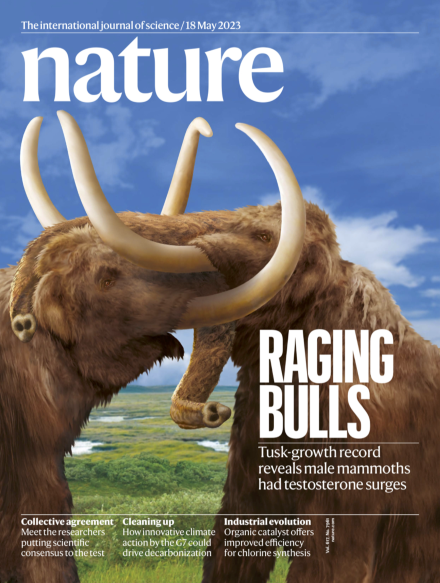
nature Magazine – May 18, 2023 issue: The cover shows an artist’s impression of two male mammoths fighting. During episodes of musth, adult male elephants undergo periods of elevated testosterone levels associated with aggression and competition for mating. In this week’s issue, Michael Cherney and his colleagues show that male woolly mammoths (Mammuthus primigenius) experienced similar episodes of musth.
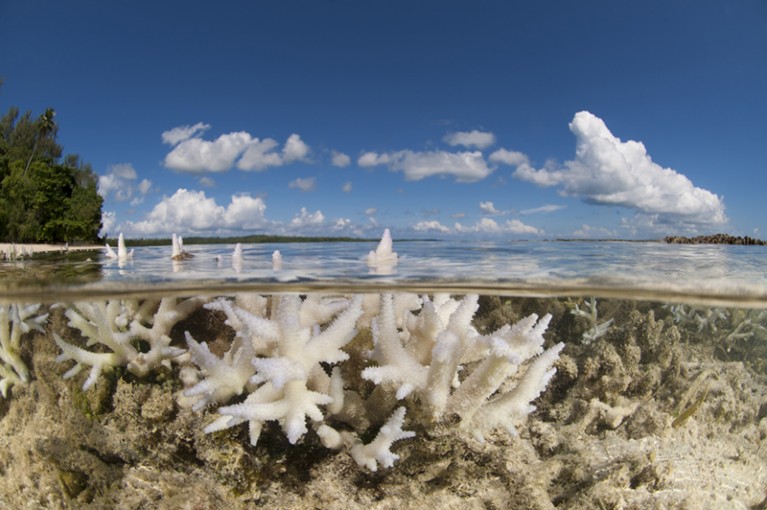
Record temperature combined with an anticipated El Niño could devastate marine life and increase the chances of extreme weather.
The global ocean hit a new record temperature of 21.1 ºC in early April, 0.1 ºC higher than the last record in March 2016. Although striking, the figure (see ‘How the ocean is warming’) is in line with the ocean warming anticipated from climate change. What is remarkable is its occurrence ahead of — rather than during — the El Niño climate event that is expected to bring warmer, wetter weather to the eastern Pacific region later this year.
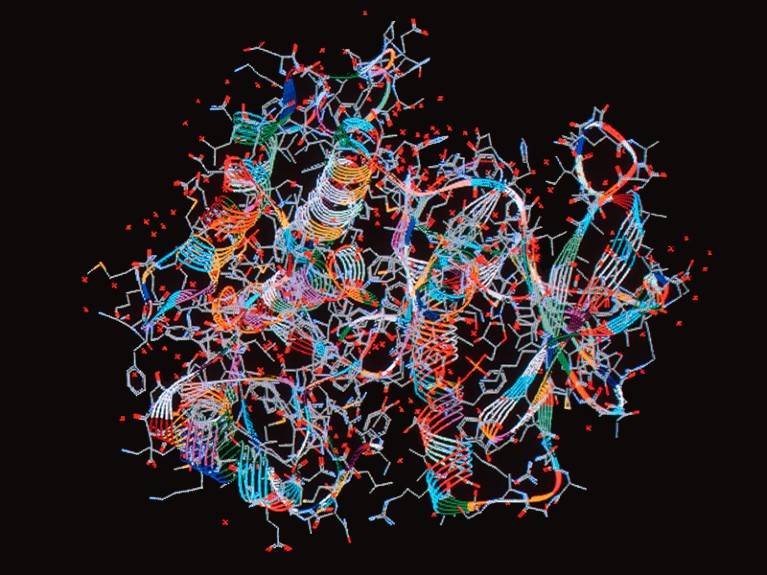
Machine-learning systems in chemistry need accurate and accessible training data. Until they get it, they won’t achieve their potential.
Many people are expressing fears that artificial intelligence (AI) has gone too far — or risks doing so. Take Geoffrey Hinton, a prominent figure in AI, who recently resigned from his position at Google, citing the desire to speak out about the technology’s potential risks to society and human well-being.
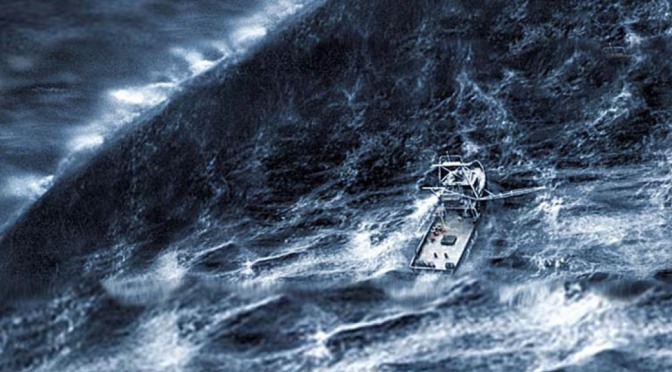
DW Documentary (April 30, 2023) – Statistically, a large ship is lost in the world’s oceans almost once every seven days. One reason for this: monster waves that appear to come from nowhere. Unlike tsunamis, they are completely unpredictable. That means there’s no way to issue any kind of warning.
Scientists still know astonishingly little about these freak waves. For centuries, many people dismissed them as the stuff of legend. The first scientific proof of their existence didn’t come until 1995. A laser on the Draupner oil rig in the North Sea measured a wave almost 26 meters high. Wave models in use at the time deemed this to be an impossibility.
But the data, captured by chance, changed the course of research forever. Scientists have focused on three theories in their bid to explain the emergence of freak waves. The first is the current model: currents flowing in opposite directions reduce the length of the waves, pushing them together to create a monster surge. But freak waves are also a phenomenon in regions where currents aren’t particularly strong.
That’s why researchers came up with a second theory: superposition. In this linear process, faster, longer waves catch up with short, slower waves. They overlap and form monster waves. But in some places, freak waves occur with a frequency that can’t be explained by this linear theory, either.
For several years now, scientists have been considering a third possibility: when non-linear wave trains are unstable, they can develop into monster waves through a highly complex energy “theft”. Research is divided over whether it’s the linear or non-linear effects that form freak waves out at sea – a question that’s crucial for shipping!
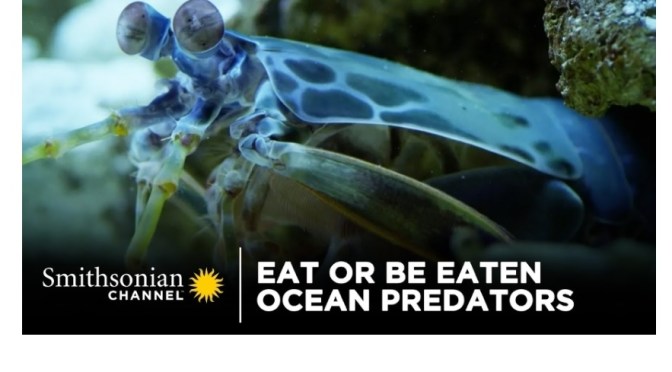
Smithsonian Channel (April 15, 2023) – From Lionfish to Peacock Mantis Shrimp, here’s a look at some of the reef’s fiercest predators from ‘Castro’s Secret Reef,’ Deadly Australians: Oceans and Beaches,’ ‘Great Blue Wild: Indonesia,’ and ‘David Attenborough’s Great Barrier Reef.’
The Hayabusa2 spacecraft made two landings on the asteroid (162173) Ryugu in 2019, during which it collected samples of the surface material. Those samples were delivered to Earth in December 2020. The colors, shapes, and morphologies of the returned samples are consistent with those observed on Ryugu by Hayabusa2, indicating that they are representative of the asteroid.
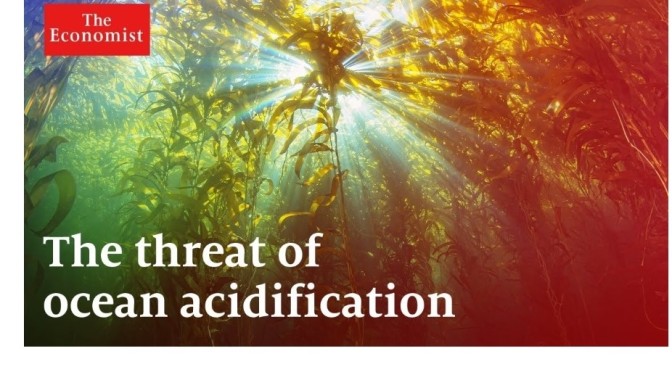
The Economist (February 2, 2023) – As carbon emissions change the chemistry of the seas, ocean acidification threatens marine life and human livelihoods. How worried should you be about climate change’s so-called “evil twin”?
Video timeline: 00:00 The other carbon problem 00:50 How does the ocean’s deepest point reveal its past? 02:55 Why are baby oysters dying? 04:08 Is the ocean acidic? 05:21 What is causing ocean acidification? 06:01 Why are corals dissolving? / Will deep sea ecosystems survive? 08:35 A threat to human livelihoods 10:42 What are the ‘potato chips of the sea’? 12:04 What is the solution?
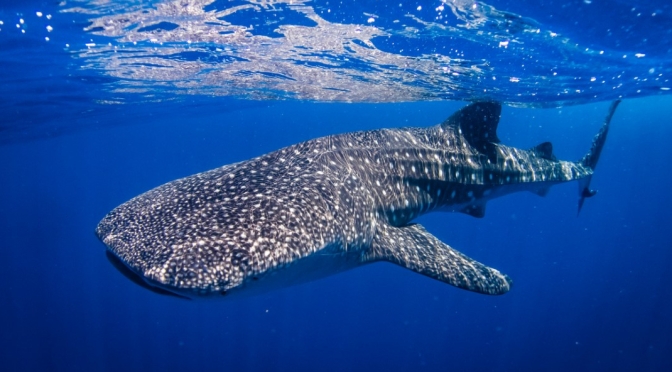
CBS Sunday Morning – We leave you this Sunday morning with whale sharks near Holbox Island off the coast of Cancun, in Mexico. Videographer: Lance Milbrand.
As the largest fish in the sea, reaching lengths of 40 feet or more, whale sharks have an enormous menu from which to choose. Fortunately for most sea-dwellers—and us!—their favorite meal is plankton. They scoop these tiny plants and animals up, along with any small fish that happen to be around, with their colossal gaping mouths while swimming close to the water’s surface.
Filter Feeding
The whale shark, like the world’s second largest fish, the basking shark, is a filter feeder. In order to eat, the beast juts out its formidably sized jaws and passively filters everything in its path. The mechanism is theorized to be a technique called “cross-flow filtration,” similar to some bony fish and baleen whales.
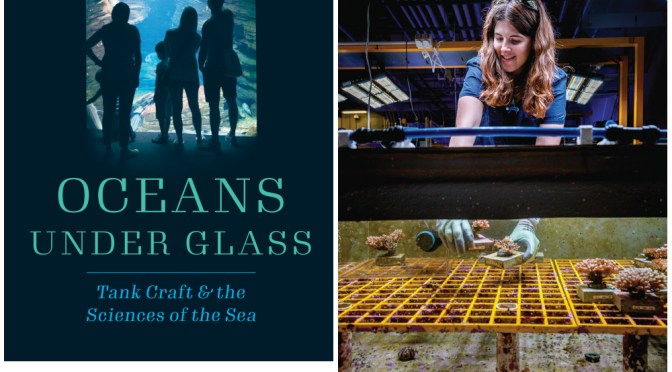
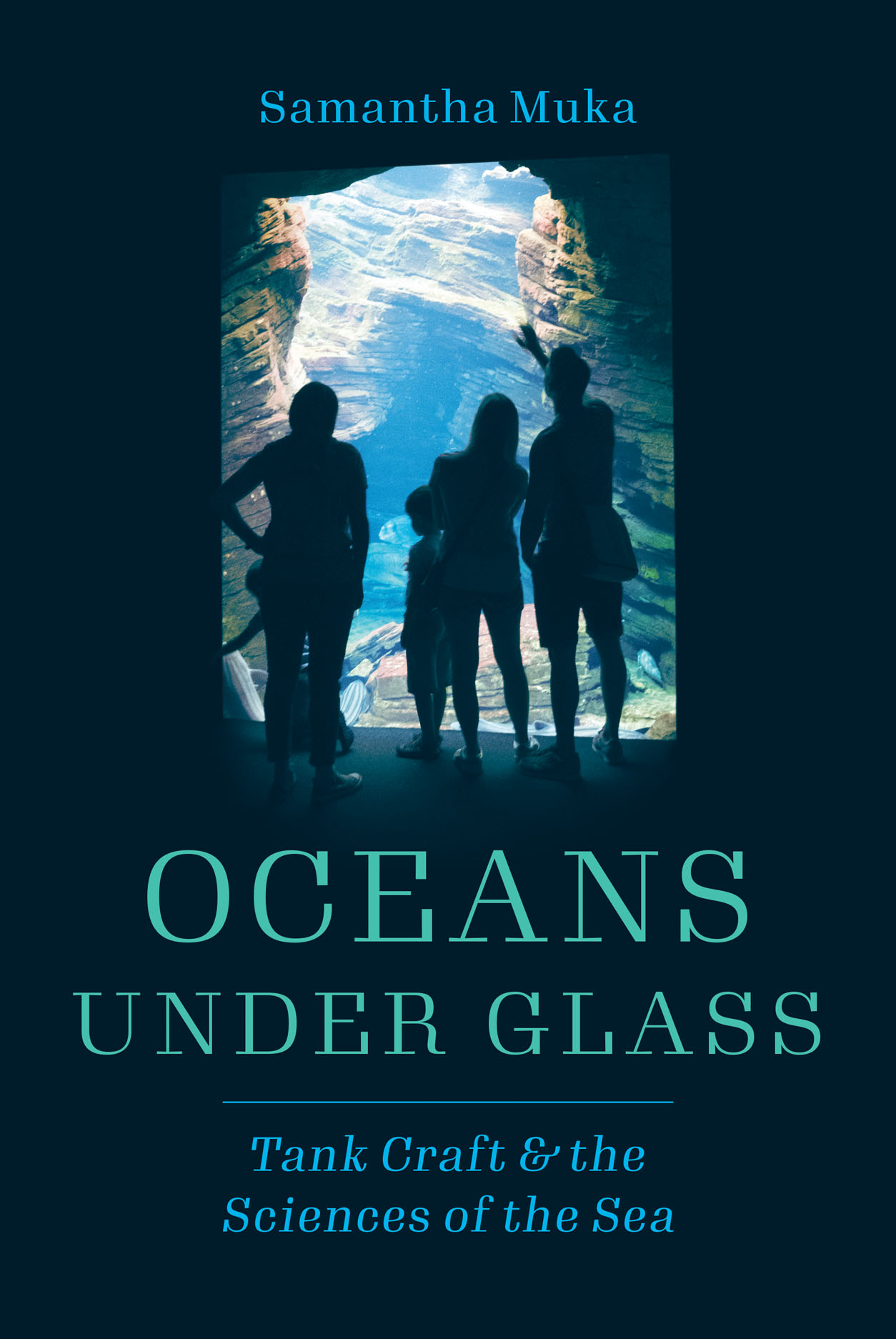
Aquarist knowledge is an often overlooked but vital part of marine research
A welcome dive into the world of aquarium craft that offers much-needed knowledge about undersea environments.
The art of aquarium science
Atlantic coral is rapidly disappearing in the wild. To save the species, they will have to be reproduced quickly in captivity, and so for the last decade conservationists have been at work trying to preserve their lingering numbers and figure out how to rebuild once-thriving coral reefs from a few survivors. Captive environments, built in dedicated aquariums, offer some hope for these corals. This book examines these specialized tanks, charting the development of tank craft throughout the twentieth century to better understand how aquarium modeling has enhanced our knowledge of the marine environment.
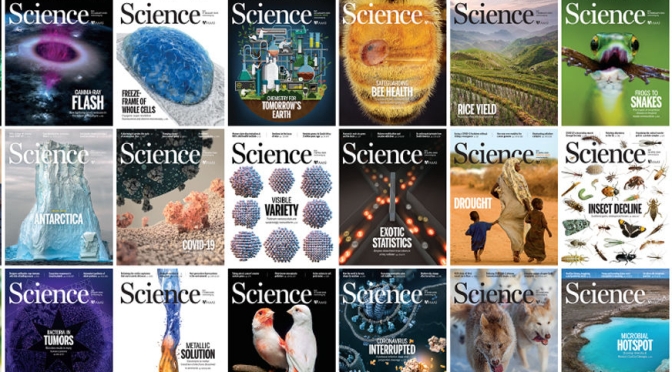
Science Magazine – December 22, 2022
News, Views and Reviews For The Intellectually Curious


 Natural World Facts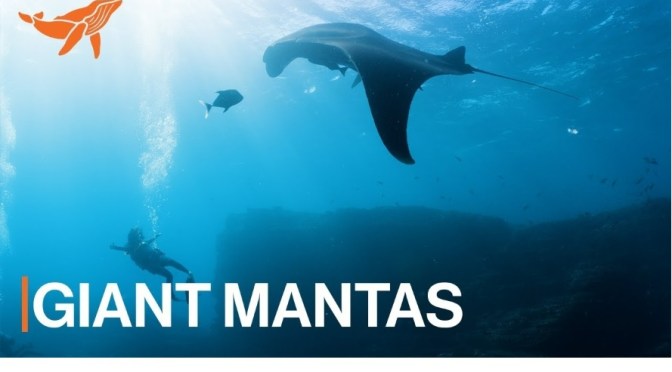
 SeaLegacy






 Science Magazine – December 22, 2022
 Boomers Daily