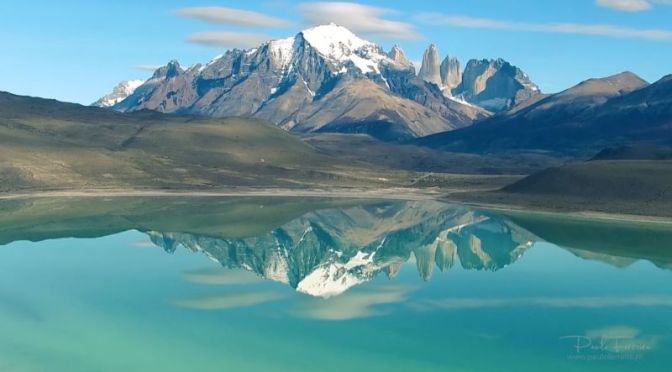
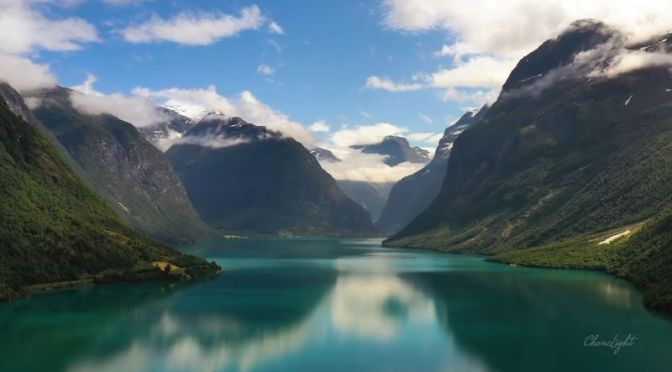
I made this video (with images from Norway, Chile, Argentina, New Zealand and Iceland), in order to motivate people to take care of our home, Planet Earth. Feel every wonder of our Planet and look for the necessary conscience so that in each gesture, you have to pay attention to the damage we have caused. Share.
One of Norway’s most exciting new travel writers, Erika Fatland has gained a reputation for telling unique, often overlooked stories. A social anthropologist by training, she has documented terrorism in Beslan and the 2011 terror attacks in her native Norway.
In her latest book, ‘The Border: A Journey Around Russia,’ she turns her attention to frontiers, recounting a fascinating trip through each of the 14 countries bordering the world’s largest country.
Kattegat is the name given to the large sea area situated between Denmark, Norway, and Sweden. Thanks to Vikings, many people assume Kattegat is a village in Norway but this is not the case. Sweden borders the Kattegat to the East, Denmark to the southwest, and Norway to the northwest. The bottom of the Kattegat leads to the baltic sea to the Skagerrak, which connects to the North Sea. There are several large cities and major ports in the Kattegat area, including Gothenburg, Aarhus, Aalborg, Halmstad and Frederikshavn. The main islands of the Kattegat are Samsø, Læsø, and Anholt – Samsø has a population of approximately 4,000 people each whereas Læsø and Anholt remain uninhabited. The name Kattegat comes from the old Dutch term for the words “Cat”, “hole” or ‘throat.”
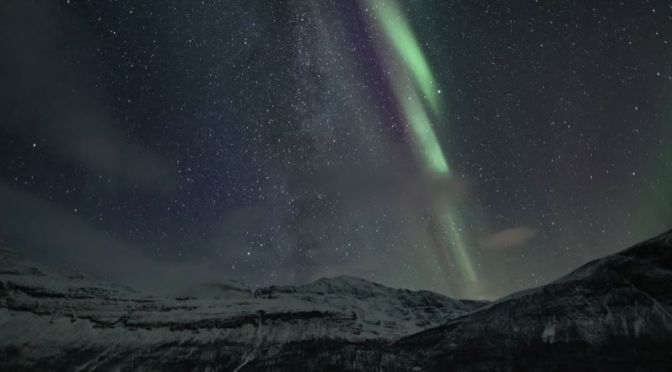
Shooting auroras above the majestic Mount Otertinden has been on my bucket list for years now, and on October 20th and 21st my dreams came true. Orionids meteor shower was peaking at that time, so there were quite a few shooting stars as well.
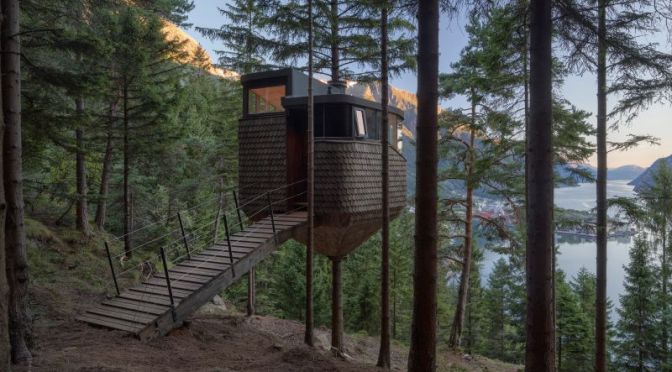
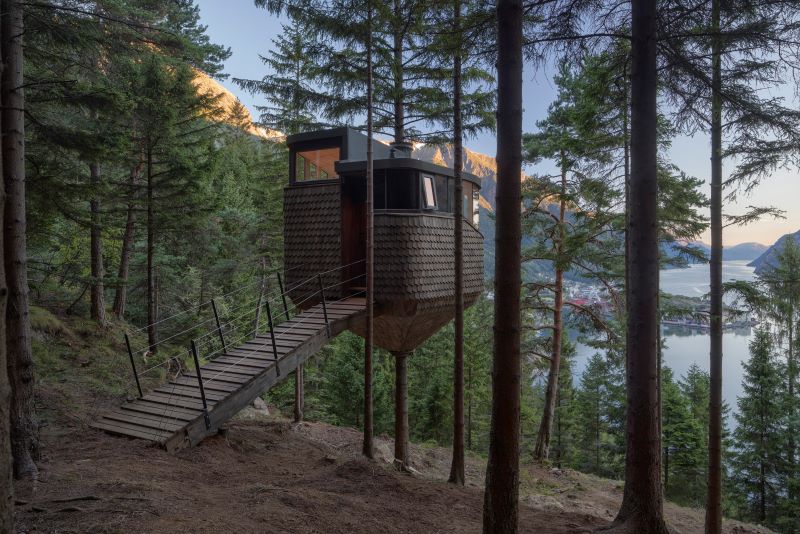
The steep forested hillsides around the Hardangerfjord above Odda, is the location of two Woodnest treehouses. The architecture is a specific response to the topography and conditions of the site itself. Inextricably crafted from nature, each treehouse is suspended 5-6m above the forest floor and fastened with a steel collar to the individual trunk of a living pine tree.
The journey to the site begins with the 20minute walk from the town of Odda, on the edge of the fjord and up through the forest via a steep winding path. Each treehouse is accessed via a small timber bridge, leading the visitor off the ground, into the structure and up in to the tree.
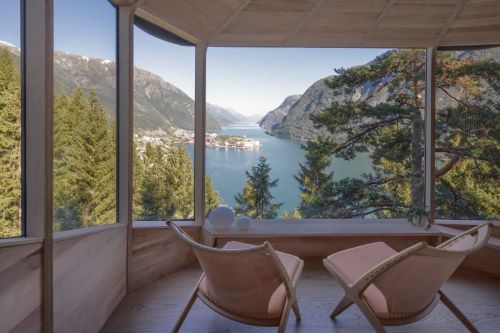
At just 15m2, carefully organized inside around the central tree trunk itself are four sleeping places, a bathroom, a kitchen area and a living space. From here one can lookout and experience the vast view out through the trees, down to the fjord below and across towards the mountains beyond.
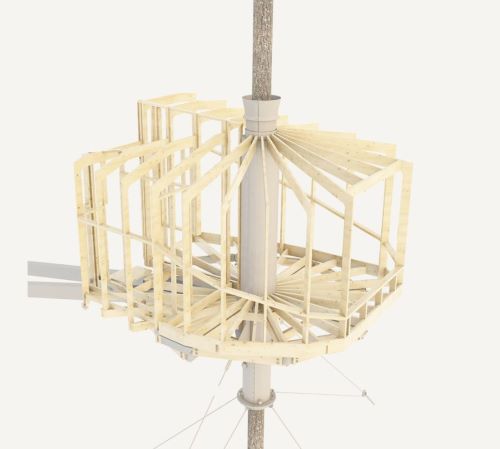
At the very core of the project is the appreciation of timber as a building material. Inspired by the Norwegian cultural traditions of vernacular timber architecture, together with a desire to experiment with the material potential of wood, the architecture is structurally supported by the tree trunk itself, and formed from a series of radial glu-laminated timber ribs. The untreated natural timber shingles encase the volume creating a protective skin around the building, which will weather over time to merge and blend with the natural patina of the surrounding forest.
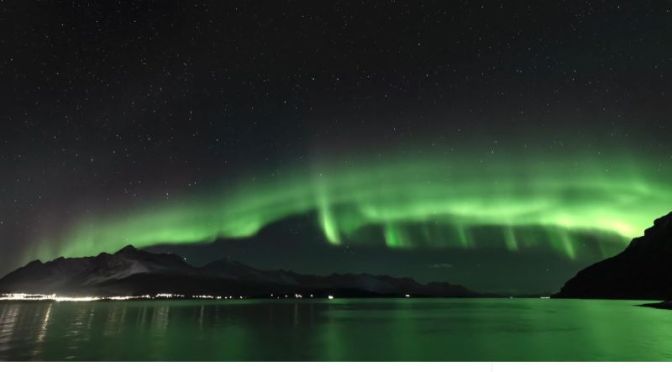
It is common belief that September is too early to view the Northern Lights within the Arctic circle. Truthfully, it is one of the best times to see them, especially if you don’t like the cold. September is my favorite month of the year for aurora, as you have a bit of both cold and warm worlds.
The still mild temperatures enable you to get the precious reflection of the auroral dance in the still water of lakes and fjords. All hikes are also very accessible as the snow hasn’t fallen in big and dangerous quantities yet. As a conclusion, you can literally enjoy the northern lights from anywhere. It opens up so many more opportunities than at the heart of the winter.
This year, we are just coming out of solar minimum. And it shows! The month of September alone has been extremely productive, with both coronal hole High Speed Streams and CMEs (stealthy). More precisely, the week of September 24th – October 1st has delivered insane nightly shows back to back!
I wanted to showcase these beautiful displays that I was able to capture in Northern Norway (Senja and Troms area), as the leaves were starting to turn into golden and orange hues. I will publish a more general ‘Fall-themed’ movie in the near future. Stay tuned!
All was shot with the Sony a7s, a7rII and 2 Canon 6D astromodified, a variety of bright lenses ranging from 14mm to 50mm. For motion control I used the Syrp 3-axis Genie I system and also the Vixen Polarie. All post production was made in Lr with the special timelapse plus plugin, Sequence for mac, TLDF, and final production was made in FCPX. I hope you like the movie as much as I liked shooting and processing it and I thank everyone of you for your support. All content is of course copyrighted Night Lights Films (except sountrack licensed through Epidemic Music, see credits for authors and titles), and no footage can be used in any way without the author’s permission. Please contact me for media and purchase inquiry. Please share and comment if you liked the video and follow me for more videos like this one! More at nightlightsfilms.com.
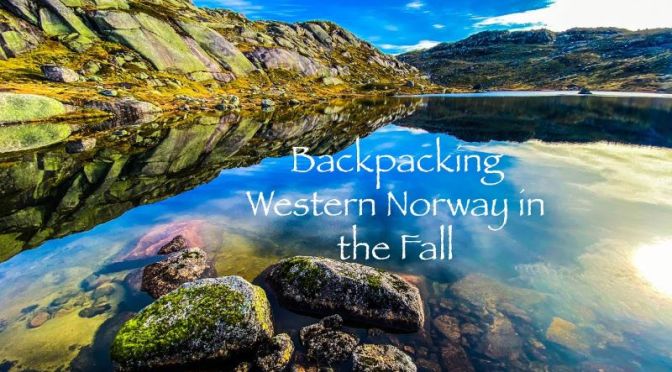
Backpacking Western Norway in the fall of 2020, peaceful solo hiking in the Norwegian Mountains of Sirdal, Hilleknuten, Bergehei, Fidjeland, a journey through amazing views and waterfalls.
It’s hard to describe a feeling. This is how the mountains of Norway feel. To me.
The geography of Norway is dominated by vast mountain ranges broken up by valleys and fjords. Less than 10% of the country’s area is arable, and the rest is mountainous. Glaciers are the major cause for erosion, so the terrain in the Norwegian mountains consists of plateaus and lakes with peaks. These areas have an abundant and diverse fauna and flora.
The altitude of the treeline comes slowly down going to higher latitudes; in northern Finnmark, the treeline reaches sea level. The treeline is also lower near the coast, and higher on the eastern slopes of the mountains.
Mountain ranges also form the main boundaries among Norway’s districts. They typically run north-south. Several of the ranges have had road and railroad passes since historical times; some are newer; and many close over the winter.
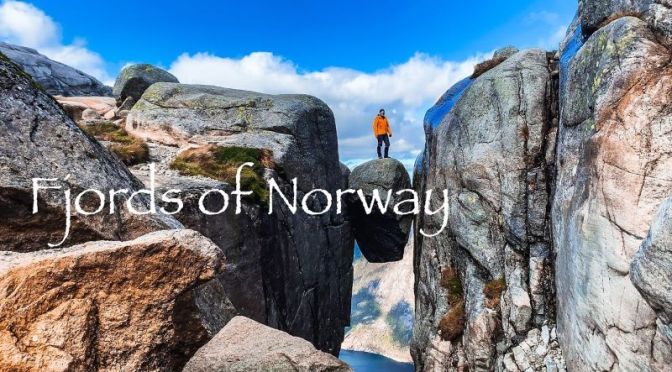
This is a video from Lysefjord in Norway, hiking Kjerag, Kjeragbolten and Kjerag Falls, in the fall of 2020. “The 1,110-metre (3,640 ft) tall mountain sits on the southern shore of Lysefjorden, just southwest of the village of Lysebotn. Its northern side is a massive cliff, plunging 984 metres (3,228 ft) almost straight down to fjord, a sight which attracts many visitors each year. Another tourist attraction, the Kjeragbolten, a 5-cubic-metre (180 cu ft) stone wedged between two rocks is located on the mountain. The Kjeragfossen waterfall plunges off the mountain down to the fjord. It is one of the tallest waterfalls in the world”.
News, Views and Reviews For The Intellectually Curious







 Boomers Daily