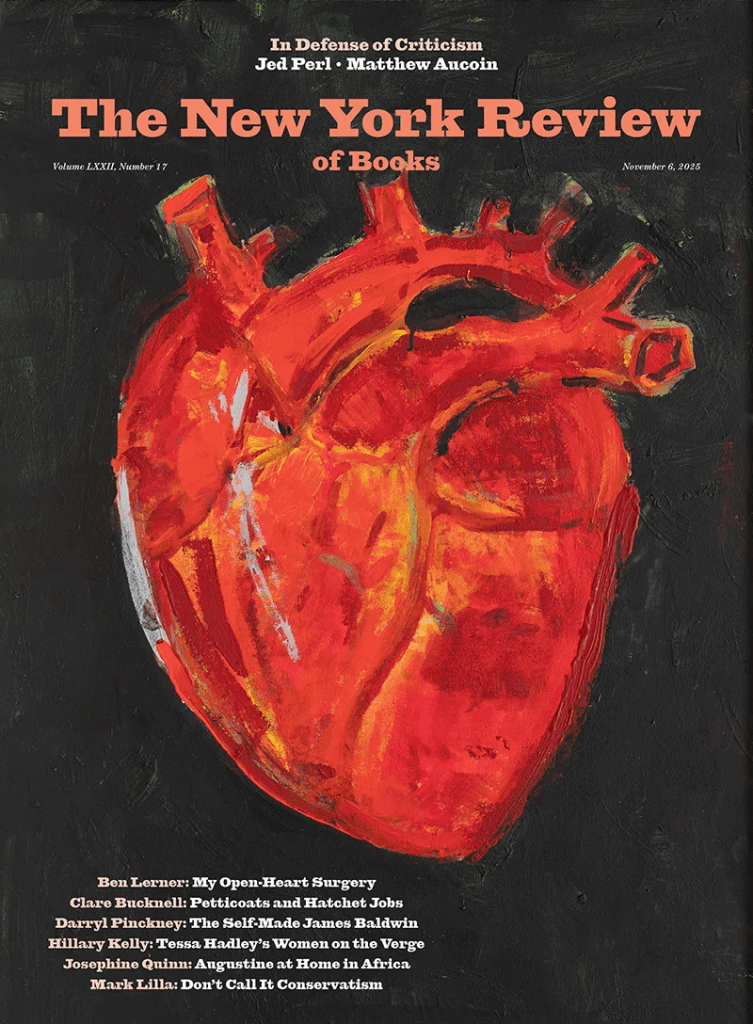
A critic’s power lies in the testing of deeply held beliefs about the nature of art and art’s place in the world against the experience of specific artworks.
Authority by Andrea Long Chu
All Things Are Too Small: Essays in Praise of Excess by Becca Rothfeld
Those Passions: On Art and Politics by T.J. Clark
Criticism and Truth: On Method in Literary Studies by Jonathan Kramnick
The MAGA movement is not fed by conservative ideas but by a nihilistic, apocalyptic determination to stage a counterrevolution against the Sixties, against liberalism, against even democracy itself.
When the Clock Broke: Con Men, Conspiracists, and How America Cracked Up in the Early 1990s by John Ganz
Furious Minds: The Making of the MAGA New Right by Laura K. Field
Fights about digital filtering tools have turned more and more bitter. That’s because of their extraordinary power to shape both political opinion and mass culture.
Invisible Rulers: The People Who Turn Lies into Reality by Renée DiResta
Character Limit: How Elon Musk Destroyed Twitter by Kate Conger and Ryan Mac
Filterworld: How Algorithms Flattened Culture by Kyle Chayka
Shadow Ticket is brisker than Thomas Pynchon’s other work, but it’s full of his usual vaudevillian sensibility, and it addresses his favorite theme: how to live freely under powerful systems of control.
Emmeline Clein finds pockets of faith in feminist writer Shulamith Firestone’s ostensibly airless spaces;
Jack Lubin examines the relationship between rap and supervised release;
Charley Burlock interrogates the myths surrounding wildfires, grief, and California’s supposed “gasoline trees”;
Cory Bradshaw describes the art and agony involved in making amateur porn;
Nathan Crompton and Andrew Witt discuss the documentary form and photographing Los Angeles
Become a member for all of that and more—including essays and features by Alexander Chee, Elizabeth Rush, and Tal Rosenberg; interviews with Samual Rutter and Abdulrazak Gurnah;
Plus, an excerpt from Yvan Algabé’s Misery of Love; fiction by Erin Taylor, Devin Thomas O’Shea, and A. Cerisse Cohen
Poetry by Farnoosh Fathi, Paula Bohince, John James, Caitlyn Klum, Sawako Nakayasu, and Harryette Mullen;
THE BRUSSELS REVIEW (June 15, 2025): The Summer 2025 issue of The Brussels Review offers a captivating blend of fiction, nonfiction, and poetry, showcasing diverse voices and narratives. On its evocative cover, Ximena Maldonado Sánchez’s vibrant artwork, Terracotta, beautifully sets the tone for a collection defined by profound emotional depth and artistic exploration. You can also read a review of her work or listen to her journey in our new podcast: Call To The Editor on Spotify.
The issue opens with Sonnet Mondal’s poetic reflections, drawing readers into nuanced meditations on memory, loss, and heritage. His pieces, including “Fragments of Life,” “The Biscuit Factory,” “The Bridge at Midnight,” and “Grandpa’s Veranda,” evoke a poignant sense of nostalgia and the passage of time.
In nonfiction, Gaye Brown’s introspective essay “Some Gifts” elegantly probes the complex nature of generosity, intertwining personal anecdotes with thoughtful philosophical insights. Similarly, Sue Tong’s “Father in the Photograph” and Gina Elia’s “Show and Tell” offer deeply personal explorations that resonate universally, inviting readers to reflect on their own histories and relationships.
The fiction selection is particularly compelling, headlined by Patrick ten Brink’s imaginative and thought-provoking “The Word Thief.” Brink masterfully blends elements of mystery and fantasy to craft a tale that explores the profound power of language and memory. Beatriz Seelaender’s “Motion Picture Sickness” adds a clever and satirical dimension, examining fame, identity, and morality through the lens of contemporary pop culture with sharp humor and keen observations.
Louis Kummerer’s intriguingly titled “A Founding Father’s Guide to Contingency Planning” provides both historical nuance and sharp social commentary, while Charles Wilkinson’s “Hayden in March” and Danila Botha’s “Like Freedom or Fear” explore psychological landscapes with acute sensitivity and emotional authenticity.
Features The Pool at The LINE by Maya Binyam Dark Waters and Sorcerer by Sam Bodrojan
Nonfiction Points of Entry: On Lebanon and broken glass by Mary Turfah Rising from Her Verses: The poetry and politics of Julia de Burgos by Sophia Stewart Mann Men: Exploring an oeuvre of men in crisis by Clayton Purdom Jolted out of Our Aesthetic Skins: Mario Kart and fiction in Las Vegas by Simon Wu Beautiful Aimlessness: The cultural footprint of Giant Robot by Oliver Wang In Its Purest Form: Reading Lolita on its 70th anniversary by Claire Messud Perfect Momentum: How to crash someone else’s car by Dorie Chevlen
Comic Mafalda by Quino, translated by Frank Wynne
Fiction The Tragedy Brotherhood by O F Cieri The Eagle’s Nest by Devin Thomas O’Shea
Excerpt The Heir Conditioner: from Mother Media by Hannah Zeavin
Poetry Minister of Loneliness by Ansel Elkins Iterations by Tracy Fuad Moon over Brooklyn by Daniel Halpern You by Laura Kolbe Third Act by Tamara Nassar Still, my brother’s flag flies by Jorrell Watkins
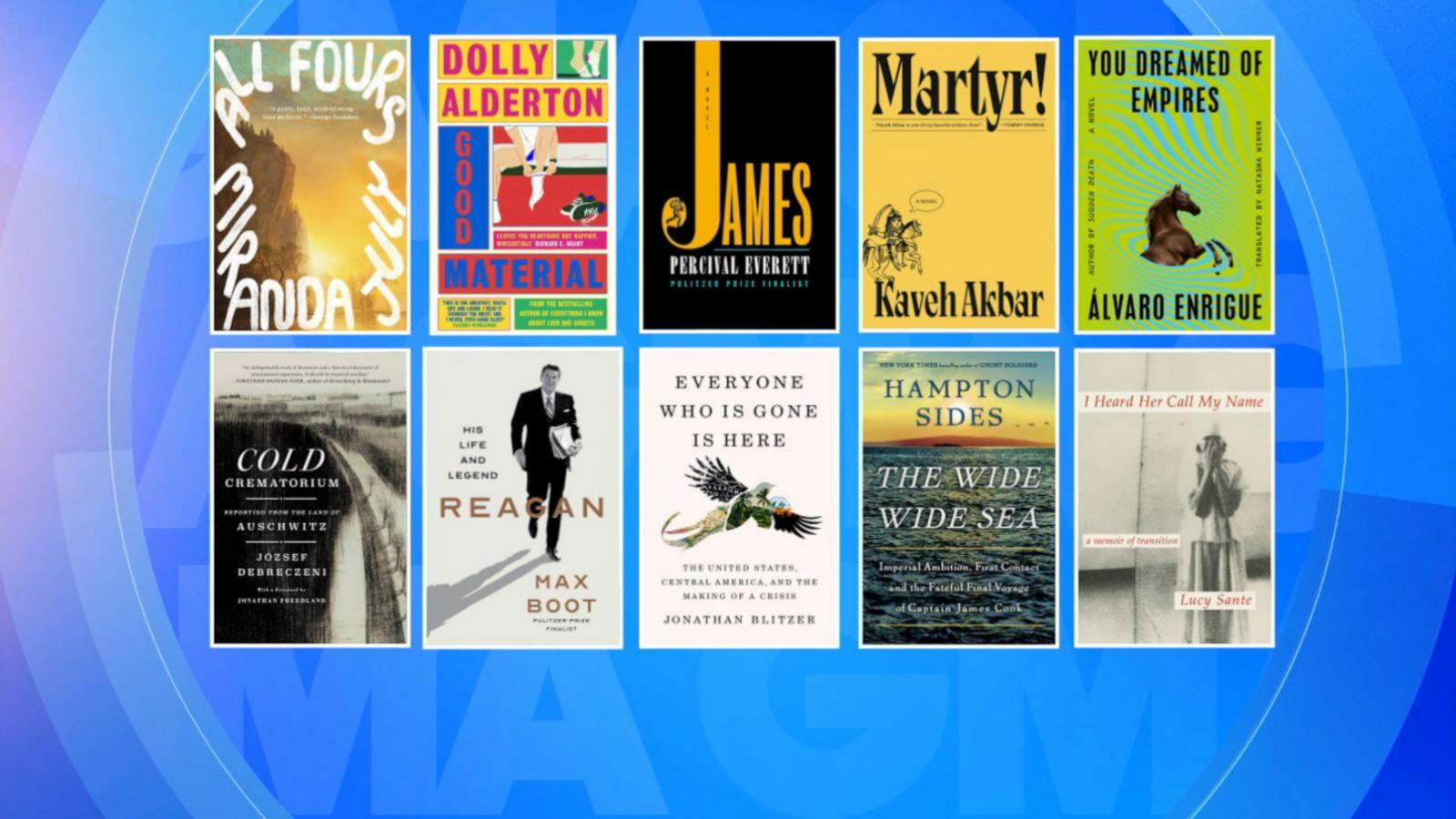
July’s second novel, which follows a married mother and artist who derails a solo cross-country road trip by checking into a motel close to home and starting an affair with a younger rental-car worker, was the year’s literary conversation piece, dubbed “the talk of every group text — at least every group text composed of women over 40” and “the first great perimenopause novel” in just two of many articles that wrestled with its themes. Sexually frank and laced with the novelist’s loopy humor, the book ends up posing that most universal question: What would you risk to change your life? Read our review.
In Alderton’s brisk, witty novel, a 35-year-old struggling comedian in London tries to make sense of a recent breakup at the same moment when the majority of his friends seem to be pairing off for life. Cue snappy dialogue, awkward first dates and a memorable quest for a new home; toss clichéd gender roles, the traditional marriage plot and a ho-hum happily ever after. Not only does Alderton cement herself as a latter-day Nora Ephron, she also puts her own mark on the classic romantic comedy form. There are no second fiddles in “Good Material”; every character sings. And there is a deeper message, revealed in a surprise twist, having to do with independence, adventure and charting your own course. Read our review.
It takes a lot of ambition, skill and vision to reinvent one of the most iconic books in American letters, but Everett demonstrates he possesses those virtues in spades in “James.” The novel is a radical reworking of Mark Twain’s “Huckleberry Finn,” telling the story not from Huck’s perspective, but from the point of view of the enslaved man who accompanies Huck down the Mississippi River: Jim (or, as he clarifies, James). From James’s eyes, we see he is no mere sidekick but rather a thinker and a writer who is code-switching as illiterate and fighting desperately for freedom. Everett’s novel is a literary hat trick — a book that highlights the horrors in American history and complicates an American classic, all while also emerging as a work of exquisite originality in its own right. Read our review.
Cyrus Shams, an Iranian American aspiring poet and recovering drug addict, wallows in a post-college malaise in a fictional Midwestern town. He’s working dead-end jobs and halfheartedly attending A.A., while grieving his parents’ deaths and, increasingly, fantasizing about his own. Cyrus is lost and sad, but this captivating first novel, by an author who is himself a poet, is anything but. As Akbar nudges Cyrus closer to uncovering a secret in his family’s past, he turns his protagonist’s quest for meaning — involving a road trip to New York and a revelatory encounter in the Brooklyn Museum — into an indelible affirmation of life, rife with inventive beauty, vivid characters and surprising twists of plot. Read our review.
History has long been Enrigue’s playground, and his latest novel takes readers to 16th-century Tenochtitlan, or what is now Mexico City. Hernán Cortés and his men have arrived at Moctezuma’s palace for a diplomatic — if tense and comically imbalanced — meeting of cultures and empires. In this telling, it’s Moctezuma’s people who have the upper hand, though the emperor himself is inconveniently prone to hallucinogenic reveries and domestic threats. The carnage here is devilishly brazen, the humor ample and bone-dry. Read our review.
Debreczeni, 39 when he was deported from his native Hungary to what he calls “the Land of Auschwitz,” would later memorialize the experience in a book that defies easy classification. First published in 1950, “Cold Crematorium” is a masterpiece of clinical, mordant observation. In a cattle car he watches a fellow deportee whose hand retains the gestures of a chain-smoker; newly arrived at Auschwitz, he encounters the lousy barroom piano player he avoided back home. This is more than gallows humor; it’s a stubborn fight to stay human and place the unimaginable in the context of the known. Look elsewhere for platitudes — Debreczeni witnessed, and reported, the best and worst of mankind and showed it to us to use as we will. Read our review.
Blitzer, a staff writer at The New Yorker, presents a timely analysis of the situation at America’s southern border, placing the blame for today’s screaming headlines, detainee camps and unaccompanied minors firmly on post-Cold War U.S. policy. His kaleidoscopic narrative moves between the Central American insurgencies that flooded this country with refugees, and the shifting and frequently incoherent policies that worsened the fallout. We meet morally pragmatic domestic politicians, a tireless activist who’s moved from El Salvador to Chicago, Los Angeles teenagers ensnared in gang pipelines. None of it is simple; all of it has a terrible cost. Blitzer handles his vast topic with assurance and grace, never losing sight of the human element behind the global crisis. Read our review.
When the veteran literary and cultural critic came out as transgender in 2021 at the age of 66, she described in an email to her loved ones the devastating realization that her “parallel life” — the one presented to her by a “gender-swapping” app that showed her how she would have looked as a girl and then a woman at various junctures in her life — had passed her by. “Fifty years were under water, and I’d never get them back.” As she reflects on her upbringing as the “only child of isolated immigrants,” her early adulthood in 1970s New York and her career of seeking truths through writing while hiding an important truth about herself, Sante fearlessly documents a transformation both internal and external, one that is also a kind of homecoming. Read our review.
This elegant biography of the 40th president stands out for its deep authority and nimble style. Boot, a historian and foreign policy analyst, grew up idolizing Ronald Reagan, but after a decade of interviews and research, he finds himself asking whether his onetime hero paved the way for Donald Trump, the man whose ascent to power led Boot to abandon the right. The book is a landmark work that shows how Reagan emerged from his New Deal roots to become a practiced Red baiter and racist dog whistler before settling into the role of the optimistic all-American elder statesman. “It is no exaggeration,” Boot writes, “to say that you cannot fully comprehend what happened to America in the 20th century without first understanding what happened to Ronald Reagan.” Read our review.
In this masterly history, Sides tracks the 18th-century English naval officer James Cook’s third and final voyage across the globe, painting a vivid and propulsive portrait that blends generations of scholarship with the firsthand accounts of European seafarers as well as the oral traditions of Indigenous Pacific islanders. The story begins in Britain as the last embers of the Enlightenment are going out, a time when curiosity and empathy gave way to imperial ambition and moral zeal. Between tales of adventure on the open ocean, complex depictions of Polynesian culture and colorful scenes of a subarctic frost littered with animal life, Sides expertly probes the causes of Cook’s growing anger and violence as the journey wears on and the explorer reckons with the fallout of what he and others had wrought in expanding the map of Europe’s power. Read our review.
Fiction “Thinking Ahead” by Joan Silber: “How does a person behave when he knows he’s dying? There’s a myth that people go off and do what they’ve always wanted to do—sail to Spain, buy a horse, eat at the world’s most famous restaurant. ‘They never do that,’ my mother said, ‘that I’ve seen. They don’t even remember why they wanted to do it.”
“Seabreeze” by Korey Lewis: Jojo and Jaz wait for The Defendant to pick them up from their mother’s place and take them to Seabreeze. “If Disney is where dreams come true, then Seabreeze is where they give up.”
“Eau de Nil” by Chloe Wilson: “It was a website called Geriatrix. On it were women my age, in various states of undress. I saw breasts droopier and flatter than mine, necks that were crêpier, bellies that bulged and hung. But what really struck me was how happy they looked.”
“Country Furnishings” by Earle McCartney: The equilibrium in a tetchy blue-collar workshop gets jostled with the arrival of Frank Wonderwood—future son-in-law of the business’s new co-owner and future woodworking graduate from Del Tech.
Poetry Karen Leona Anderson, Stuart Dybek, Johanna Carissa Fernandez, Mike Good, Cleo Qian, Sarah Lynn Rogers, Joel M. Toledo
Nonfiction Laura M. Furlan her birth parents, identity, and butterflies. Adam Foulds on the home-turned-museum of one of England’s greatest architects, Sir John Soane. Sam McPhee on the singular fascination hands have on his attention. Jessica Francis Kane on her lifelong affinity with the fascinating James Boswell. And Devon Brody’s “Beth”: “I’m glad to be with only Beth and her long hair that meets the hair on my arms, and the hair on her arms that meets the hair on my arms.”
In Conversation: Ricardo Frasso Jaramillo delves with Justin Torres into Torres’s career and his new novel, Blackouts, a finalist for the National Book Award.
The Mysteries of the Universe by Anna Badkhen: “I see now what this is about. I’m a professor and author in America, she’s in a war zone: to her, I’m rich and happy. How is she supposed to know about the cancer, the medical debt, Ksyusha’s student loans? So, I try to deflect.”
Encyclopedia of Botany by Jane Marchant: A daughter’s closely observed catalog of the flora around her Bay Area home, and of her family’s complex history of identity.
Glint of Sport by Angie Sijun Lou: “I don’t know if this story is true. You can’t divide truth from kitsch in this place…”
Eulogy by William Hawkins: In the wake of a funeral, a dead father’s legacy hangs over his surviving adult sons as they trudge into the lukewarm waters of the lake by the family pier.
The Eye by Elodie Saint-Louis: “When Theo spoke, she thought, you could see all of these places on his body. Vyros, Hymettus, Loutro, Parnitha. The land was in him. It was the river running out of his mouth. The words that bumped into each other gently but never spilled over, petering out into a gentle sway.”
Plus more fiction by Perry Janes, David Hayden (there be strange happenings in a dilapidated insurance building in Chicago), and Wendy Elizabeth Wallace.
Nonfiction
Jane Marchant on the flora around her Bay Area home—and her family’s complex history of identity.
Poetry
Jason Allen-Paisant, Dan Alter, Allison Benis White, Ricardo Cázares, E.G. Cunningham, Peter LaBerge, Joyce Mansour, Maria Zoccola
Art
Sofia Bonati
News, Views and Reviews For The Intellectually Curious













 Boomers Daily