Railways can be a world unto themselves. When properly managed, this can mean it’s easier to get things done on the railways than in other parts of an economy. That should be a huge opportunity for reducing climate emissions by getting passengers off the roads and out of the skies. But unless we re-purpose rail networks to serve the interests of people – and not those of the empires and corporations which built them and run them to this day – we can’t succeed. This edition explores how we can make a start on this task.
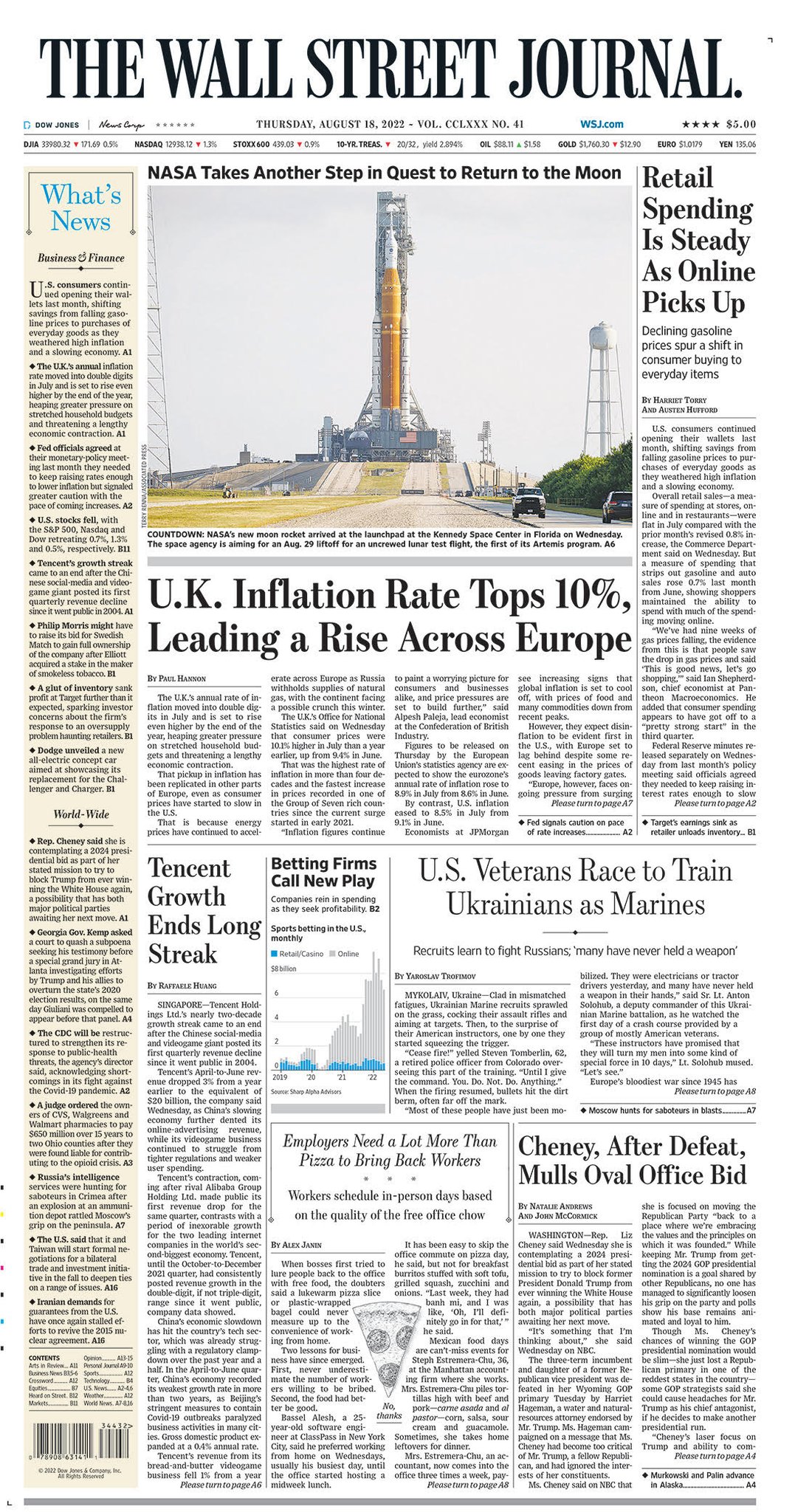
A.M. Edition for Aug. 18. Recent explosions at a Russian air base and an ammunition depot in Crimea have made the Russian-occupied peninsula the latest battleground in the Ukraine war.
WSJ European security correspondent James Marson explains what the attacks signal about Ukraine’s capabilities and Russia’s ability to fight the war in southern Ukraine.
The aim is to deepen ties on a range of issues including digital trade, agriculture and trade facilitation, and comes amid fresh tensions over Taiwan between the U.S. and China.
As Indonesia celebrates its independence day, we discuss President Joko Widodo’s plan to act as a diplomatic bridge between Russia and Ukraine. Plus: French troops officially leave Mali, cartel-driven violence in Mexico and the latest aviation news.
Investigators say there was so much fraud in federal Covid-relief programs that — even after two years of work and hundreds of prosecutions — they’re still just getting started.
A Commerce Department-led process that reviews U.S. tech exports to the country approves almost all requests and has overseen an increase in sales of some particularly important technologies, according to an analysis of trade data.
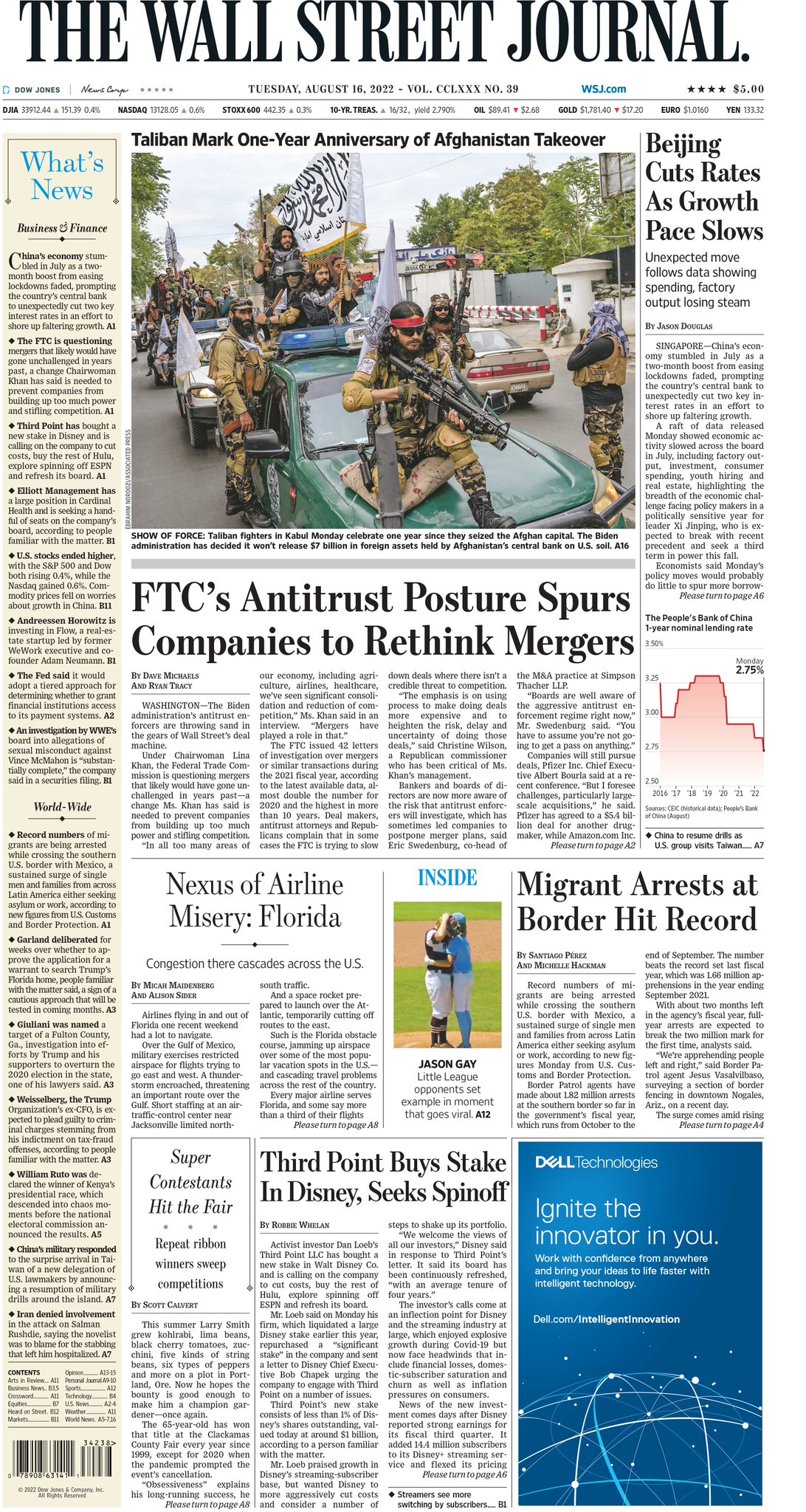
Attorney General Merrick Garland deliberated for weeks over whether to approve the application for a warrant to search former President Donald Trump’s Florida home, people familiar with the matter said.
A.M. Edition for Aug. 15. Ukraine’s battlefield defense against Russia may be gradually strengthening, but the country is facing a widening financial shortfall.
WSJ reporter Marcus Walker says Kyiv has been forced to print money to cover the cost of fighting Russia’s invasion, which has pummeled Ukraine’s economy. Luke Vargas hosts.
When some G.O.P. members of Congress attacked the nation’s top law enforcement agencies immediately after the F.B.I.’s search of Mar-a-Lago, it underscored deep fissures within the party.
Across industries and incomes, more employees are being tracked, recorded and ranked. What is gained, companies say, is efficiency and accountability. What is lost?
Monocle’s editorial director, Tyler Brûlé, Florian Egli and Oliver Strijbis on the weekend’s biggest talking points. We’ll also get the latest headlines from Ljubljana and Marseille.
The lawyer signed a statement in June that all documents marked as classified and held in boxes in storage at Mar-a-Lago had been given back. The search at the former president’s home on Monday turned up more.
Both threats of political violence and actual attacks have become a steady reality of American life. Experts blame dehumanizing and apocalyptic language.
News, Views and Reviews For The Intellectually Curious










 Boomers Daily