
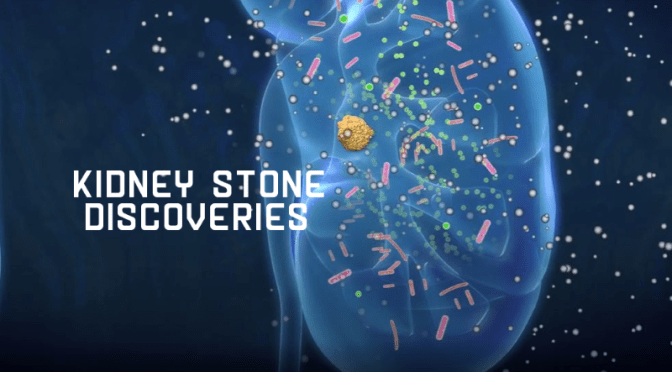
Travertine stone used extensively in Mayo Clinic buildings has provided a research team from Mayo Clinic and the University of Illinois with an unexpected – and beautiful – clue about kidney stones.
Tag Archives: Medicine

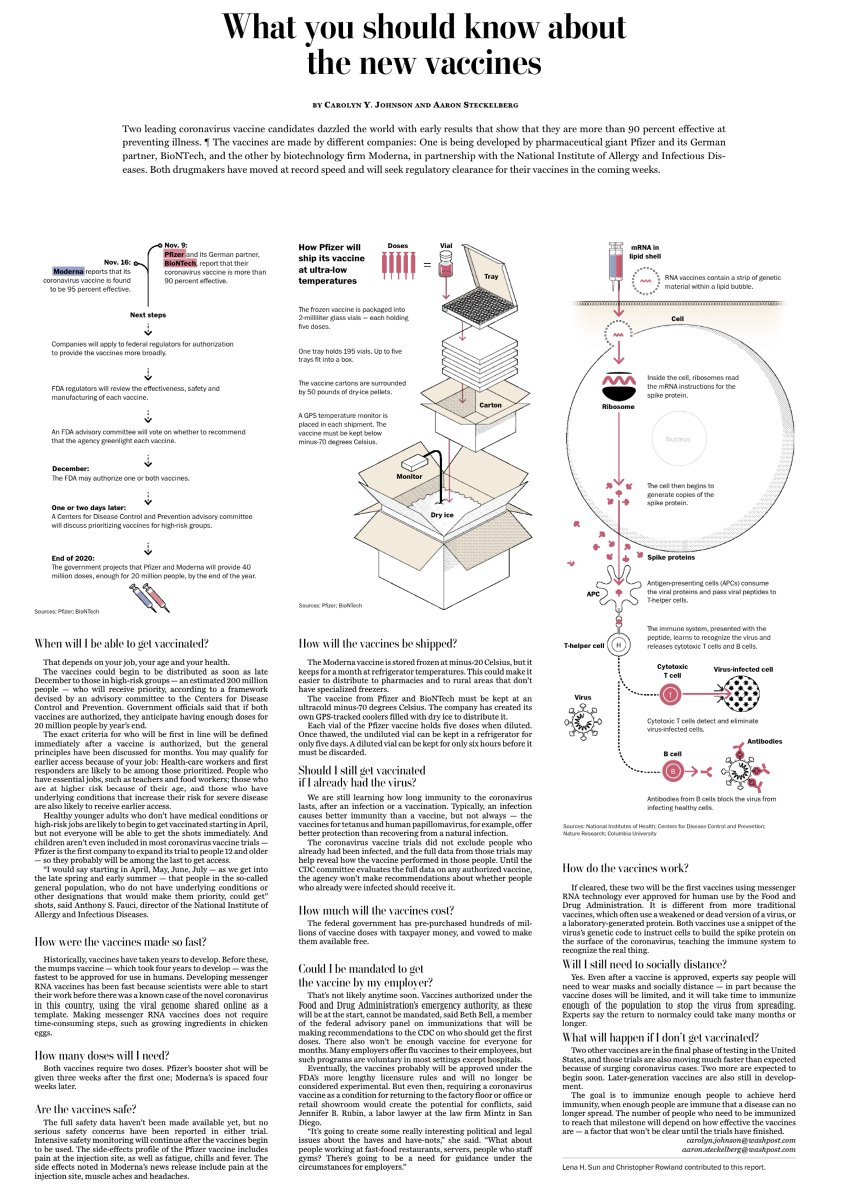
Covid-19: What To Know About The New Vaccines

Health: ‘Risks & Benefits Of AI Revolution In Medicine’

It has taken time — some say far too long — but medicine stands on the brink of an AI revolution. In a recent article in the New England Journal of Medicine, Isaac Kohane, head of Harvard Medical School’s Department of Biomedical Informatics, and his co-authors say that AI will indeed make it possible to bring all medical knowledge to bear in service of any case.

Properly designed AI also has the potential to make our health care system more efficient and less expensive, ease the paperwork burden that has more and more doctors considering new careers, fill the gaping holes in access to quality care in the world’s poorest places, and, among many other things, serve as an unblinking watchdog on the lookout for the medical errors that kill an estimated 200,000 people and cost $1.9 billion annually.
“I’m convinced that the implementation of AI in medicine will be one of the things that change the way care is delivered going forward,” said David Bates, chief of internal medicine at Harvard-affiliated Brigham and Women’s Hospital, professor of medicine at Harvard Medical School and of health policy and management at the Harvard T.H. Chan School of Public Health. “It’s clear that clinicians don’t make as good decisions as they could. If they had support to make better decisions, they could do a better job.”
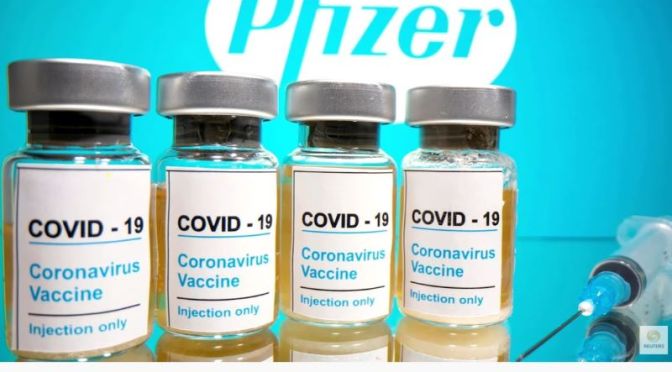
Pfizer’s Covid-19 Vaccine Is 90% Effective, But Has Storage & Shipping Issues
Work to distribute Pfize and BioNTech’s COVID-19 vaccine is gearing up but it won’t hit local pharmacies for the general public any time soon.

Future Of Hospitals: ‘The New Pavilion At Penn Medicine – 2021’ (Video)
The new Pavilion at Penn Medicine will be one of the most state-of-the-art patient care facilities in the world when it opens in 2021.

Medical Innovation Video: ‘Nerve Damage Repair’
A new recipe for patterning cells on a surface holds promise for spinal cord injuries. Video by the Office of Communications
Covid-19 Infographic: ‘Exercise Is Medicine’ (BMJ)
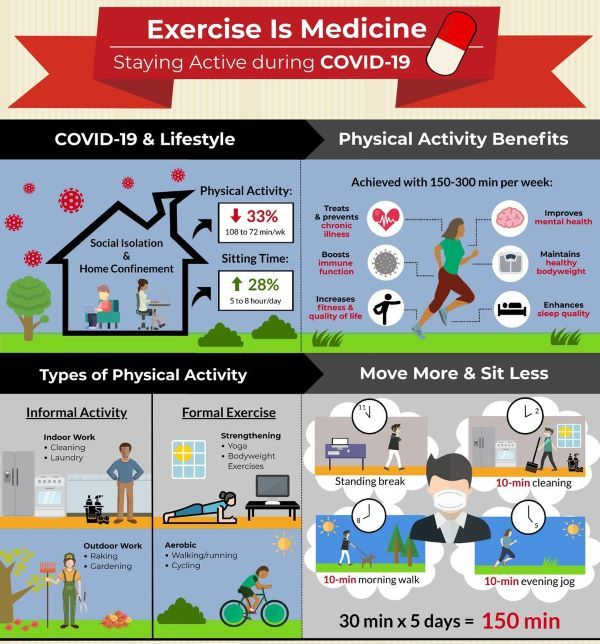

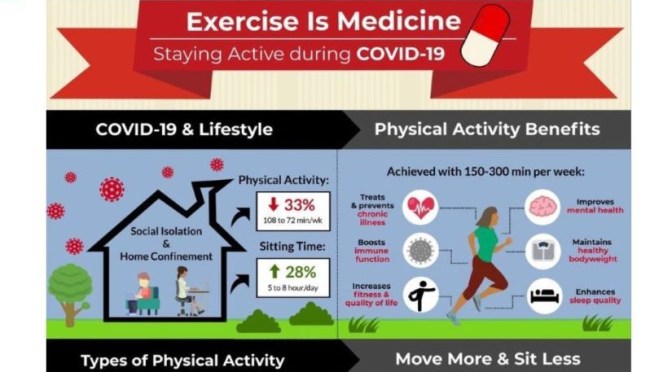
There are over 35,000,000 reported cases of COVID-19 disease and 1 000 000 deaths across more than 200 countries worldwide.1 With cases continuing to rise and a robust vaccine not yet available for safe and widespread delivery, lifestyle adaptations will be needed for the foreseeable future. As we try to contain the spread of the virus, adults are spending more time at home. Recent evidence2 suggests that physical activity levels have decreased by ~30% and sitting time has increased by ~30%. This is a major concern as physical inactivity and sedentary behaviour are risk factors3 for cardiovascular disease, obesity, cancer, diabetes, hypertension, bone and joint disease, depression and premature death.
To date, more than 130 authors from across the world have provided COVID-19-related commentary on these concerns. Many experts4 have emphasised the importance of increasing healthy living behaviours and others5 have indicated that we are now simultaneously fighting not one but two pandemics (ie, COVID-19, physical inactivity). Physical inactivity alone results in over 3 million deaths per year5 and a global burden of US$50 billion.6 Immediate action is required to facilitate physical activity during the COVID-19 pandemic because it is an effective form of medicine3 to promote good health, prevent disease and bolster immune function. Accordingly, widespread messaging to keep adults physically active is of paramount importance.
Several organisations including the WHO, American Heart Association and American College of Sports Medicine have offered initial suggestions and resources for engaging in physical activity during the COVID-19 pandemic. Expanding on these resources, our infographic aims to present a comprehensive illustration for promoting daily physical activity to the lay audience during the COVID-19 pandemic (figure 1). As illustrated, adults are spending more time at home, moving less and sitting more. Physical activity provides numerous health benefits, some of which may even help directly combat the effects of COVID-19. For substantial health benefits, adults should engage in 150–300 min of moderate-to-vigorous intensity physical activity each week and limit the time spent sitting. The recommended levels of physical activity are safely attainable even at home. Using a combination of both formal and informal activities, 150 min can be reached during the week with frequent sessions of physical activity spread throughout the day. Sedentary behaviour can be further reduced by breaking up prolonged sitting with short active breaks. In summary, this infographic offers as an evidence-based tool for public health officials, clinicians, educators and policymakers to communicate the importance of engaging in physical activity during the COVID-19 pandemic.
Health: ‘Diabetes And Chronic Kidney Disease’ – New Guidelines (OCt 2020)
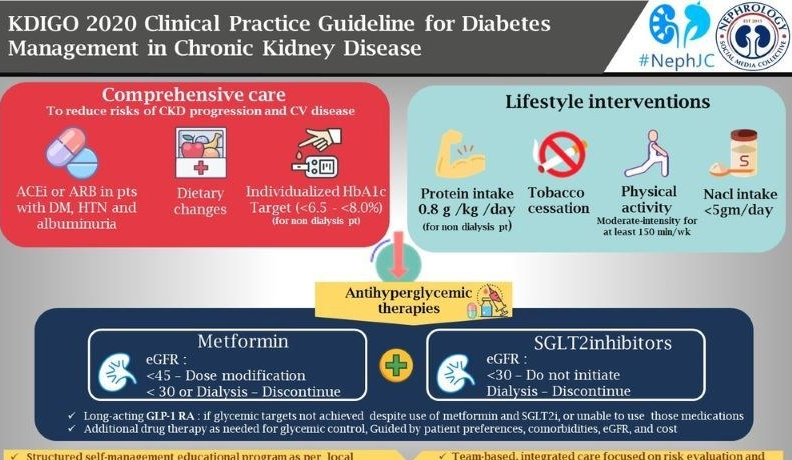
Comprehensive care in patients with diabetes and CKD
Management of CKD in diabetes can be challenging and complex, and a multidisciplinary team should be involved (doctors, nurses, dietitians, educators, etc). Patient participation is important for self-management and to participate in shared decision-making regarding the management plan. (Practice point).
We recommend that treatment with an angiotensin-converting enzyme inhibitor (ACEi) or an angiotensin II receptor blocker (ARB) be initiated in patients with diabetes, hypertension, and albuminuria, and that these medications be titrated to the highest approved dose that is tolerated (1B).
Lifestyle interventions in patients with diabetes and CKD
We suggest maintaining a protein intake of 0.8 g protein/kg)/d for those with diabetes and CKD not treated with dialysis (2C).
On the amount of proteins recommended in these guidelines, they suggest (‘recommend’ becomes a ‘suggest’ at this level of evidence) a very precise intake of 0.8g/kg/d in patients with diabetes and CKD. Lower dietary protein intake has been hypothesized but never proven to reduce glomerular hyperfiltration and slow progression of CKD, however in patients with diabetes, limiting protein intake below 0.8g/kg/d can be translated into a decreased caloric content, significant weight loss and quality of life. Malnutrition from protein and calorie deficit is possible.
Physical activity
We recommend that patients with diabetes and CKD be advised to undertake moderate-intensity physical activity for a cumulative duration of at least 150 minutes per week, or to a level compatible with their cardiovascular and physical tolerance (1D).

Infographic: ‘What Is Herd Immunity?’ – Achieving It With Covid-19 (JAMA)
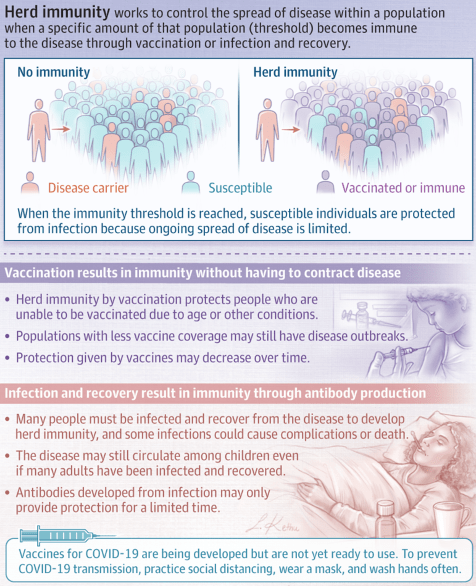

What Is Herd Immunity?
Herd immunity occurs when a significant portion of a population becomes immune to an infectious disease, limiting further disease spread.
Disease spread occurs when some proportion of a population is susceptible to the disease. Herd immunity occurs when a significant portion of a population becomes immune to an infectious disease and the risk of spread from person to person decreases; those who are not immune are indirectly protected because ongoing disease spread is very small.
The proportion of a population who must be immune to achieve herd immunity varies by disease. For example, a disease that is very contagious, such as measles, requires more than 95% of the population to be immune to stop sustained disease transmission and achieve herd immunity.
How Is Herd Immunity Achieved?
Herd immunity may be achieved either through infection and recovery or by vaccination. Vaccination creates immunity without having to contract a disease. Herd immunity also protects those who are unable to be vaccinated, such as newborns and immunocompromised people, because the disease spread within the population is very limited. Communities with lower vaccine coverage may have outbreaks of vaccine-preventable diseases because the proportion of people who are vaccinated is below the necessary herd immunity threshold. In addition, the protection offered by vaccines may wane over time, requiring repeat vaccination.
Achieving herd immunity through infection relies on enough people being infected with the disease and recovering from it, during which they develop antibodies against future infection. In some situations, even if a large proportion of adults have developed immunity after prior infection, the disease may still circulate among children. In addition, antibodies from a prior infection may only provide protection for a limited duration.
People who do not have immunity to a disease may still contract an infectious disease and have severe consequences of that disease even when herd immunity is very high. Herd immunity reduces the risk of getting a disease but does not prevent it for nonimmune people.
Herd Immunity and COVID-19
There is no effective vaccine against coronavirus disease 2019 (COVID-19) yet, although several are currently in development. It is not yet known if having this disease confers immunity to future infection, and if so, for how long. A large proportion of people would likely need to be infected and recover to achieve herd immunity; however, this situation could overwhelm the health care system and lead to many deaths and complications. To prevent disease transmission, keep distance between yourself and others, wash your hands often with soap and water or sanitizer that contains at least 60% alcohol, and wear a face covering in public spaces where it is difficult to avoid close contact with others.

Top Medical Podcasts: ‘Diverticular Disease’ (BMJ)

Colonic diverticulosis refers to herniation of the mucosa and submucosa through the muscular layer of the colonic wall and may be the result of colonic smooth muscle over-activity. Diverticular disease may be defined as any clinical state caused by symptoms pertaining to colonic diverticula and includes a wide-ranging spectrum from asymptomatic to severe and complicated disease.
Mohamed Thaha, Senior Lecturer & Lead Consultant in Colorectal Surgery, National Bowel Research Centre, Barts and The London School of Medicine and Dentistry, tells us more.
 Boomers Daily