
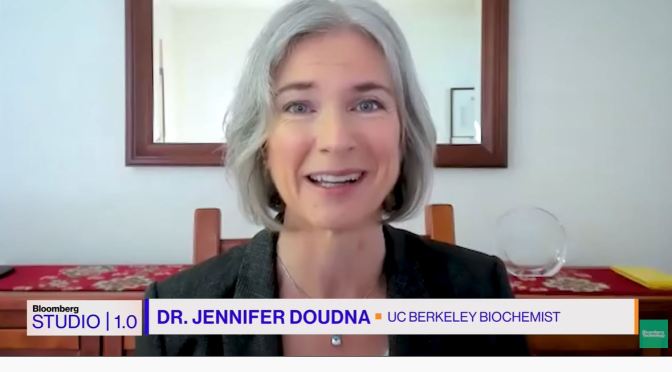
Dr. Jennifer Doudna first made her name uncovering the basic structure and function of the first ribozyme, a type of catalytic ribonucleic acid (RNA) that helps catalyse chemical reactions. This work helped lay the foundation for her later helping to pioneer CRISPR-Cas 9, a tool that has provided the means to edit genes on an unprecedented scale and at minimal cost. In addition to her scientific contributions to CRISPR, Doudna is known for spearheading the public debate to consider the ethical implications of using CRISPR-Cas9 to edit human embryos.
Tag Archives: Medical Ethics
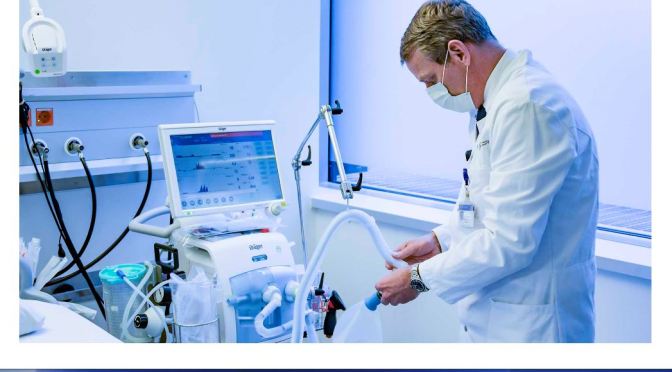
Health Podcasts: Hospital Ventilator Shortage Forces Doctors To Make Difficult Choices (WSJ)
 Facing shortages of critical equipment, medical workers must make life-or-death decisions about who receives care. WSJ’s Joe Palazzolo reports from an emergency room that’s running short on ventilators, and Chris Weaver explains the plans hospitals are putting in place to decide who gets them.
Arthur Caplan, a bioethicist at NYU’s School of Medicine, talks about how hospitals think about these difficult choices.
Top Science Podcasts: Lab Monkey Retirement, Near-Earth Asteroids
 After their life as research subjects, what happens to lab monkeys? Some are euthanized to complete the research, others switch to new research projects, and some retire from lab life. Should they retire in place—in the same lab under the care of the same custodians—or should they be sent to retirement home–like sanctuaries? Online News Editor David Grimm joins host Sarah Crespi to discuss recently penned legislation that pushes for monkey retirements and a new collaboration between universities and sanctuaries to create a retirement pipeline for these primates.
Sarah also talks with Dante Lauretta, principal investigator for NASA’s Origins, Spectral Interpretation, Resource Identification, Security, Regolith Explorer (OSIRIS-REx) and a professor at the University of Arizona in Tucson, about the latest news from the asteroid Bennu. Within 1 week of beginning its orbit of the asteroid, OSIRIS-REx was able to send back surprising images of the asteroid ejecting material. It’s extremely rocky surface also took researchers by surprise and forced a recalculation of the sample return portion of the craft’s mission.
To read more: https://www.sciencemag.org/podcast/debating-lab-monkey-retirement-and-visiting-near-earth-asteroid
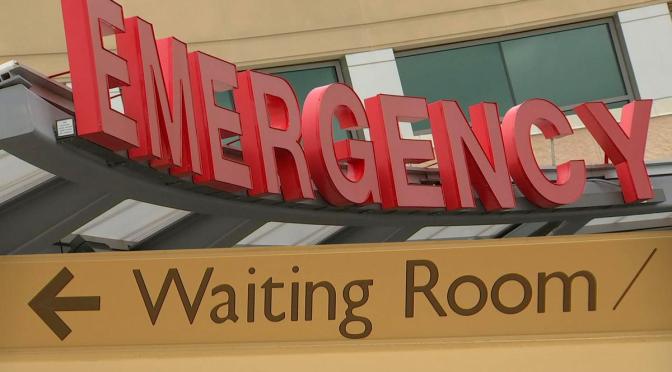
Emergency Medicine: When “Treating Everyone” Meets “Triage”, Patients And Healthcare Must Wait
From a STAT online article:
 The specialty of emergency medicine is firmly grounded in social justice and providing access to expert care to everyone who comes in. That means treating anyone, with any condition, at any time. And yet, embedded into emergency department operations is a system that might be perceived as unjust: the concept of triage. The emergency queue isn’t “first come, first served.” It’s nonlinear by design, since triage prioritizes the severity of illness. The severely ill or injured receive immediate attention. Everyone else, to various degrees, must wait.
There are situations when waiting feels immoral to me, not merely inconvenient. Being an emergency doctor means shouldering burdens for perceived injustices that we have little, if any, control over. Most of the beds were locked up with patients boarding in the ED, which means they are waiting for an inpatient bed to become available in the hospital.
Hospitals have high expectations regarding how quickly patients are seen in the emergency department, and my colleagues and I share that goal. But there’s less urgency when it comes to discharging patients from the hospital, which would unclog the backup in the emergency department — and its waiting room.

Ethics Of Lying About A Terminal Cancer Diagnosis Explored In Movie “The Farewell”
From a New Scientist online review:
The prevailing narrative of “battling cancer” in Western society has its own issues, with its discourse of personal triumph that values individual responsibility and determination. But the alternative – to lie outright – might seem inconceivable, particularly to those accustomed to the norms of Western culture. It is, however, a common practice in China, rooted in the belief that telling a person about their diagnosis can make their condition deteriorate quicker.
 The plot line of The Farewell is familiar to me. Like Billi’s Nai Nai, my aunt was diagnosed with metatastic lung cancer. Nobody in the family told her – nor did the doctors when she later underwent surgery to remove a tumour. The last time I saw her was in north-eastern China a few years ago. Her once-plump figure had shrunk to a wiry frame. She was in her early 70s, in good spirits, but a far cry from the feisty matriarch who used to dominate conversations.
The Farewell is a heartfelt film, punctuated by moments of unexpected – and unexpectedly uplifting – humour. In a darkly comical scene in a printing shop, Nai Nai’s younger sister demands that the results of a medical report be doctored to edit out references to cancerous nodules and replaced with the nebulous term “benign shadows”.
 Boomers Daily