The outbreaks of hantavirus and Ebola expose the shortsightedness of America’s retreat, under the Trump Administration, from its role as a global-health leader. By Dhruv Khullar
The Trump-Epstein Files: Look but Don’t Touch
The Donald J. Trump and Jeffrey Epstein Memorial Reading Room, in Tribeca, housed three and a half million bound files, along with a handy time line charting the ickiness. By Charlotte Goddu
How Problematic Is Patriotism?
National pride in America has plummeted in the Trump era. Is it worth trying to salvage? By Arthur Krystal
Their electoral prospects are finally improving, but opportunities can quickly give way to divisions. Does the Party have a plan? By Amy Davidson Sorkin
The Human-Trafficking Victim Next Door
A young girl was brought from Guinea to a wealthy suburb near Dallas. She spent the next sixteen years of her life in forced servitude. By Yudhijit Bhattacharjee
Can Hakeem Jeffries Lead a Democratic Takeover of the House?
An unprecedented gerrymandering effort led by Donald Trump—and internal divisions among Democrats—has made the Minority Leader’s path to victory harder than ever. By Jason Zengerle
Mary Todd Lincoln Has Long Been Derided. Is Her Reputation Salvageable?
History knows the First Lady as a hysterical widow and a lavish spender. Her most recent biographer chooses to highlight her mental fortitude and political prowess. By Thomas Mallon
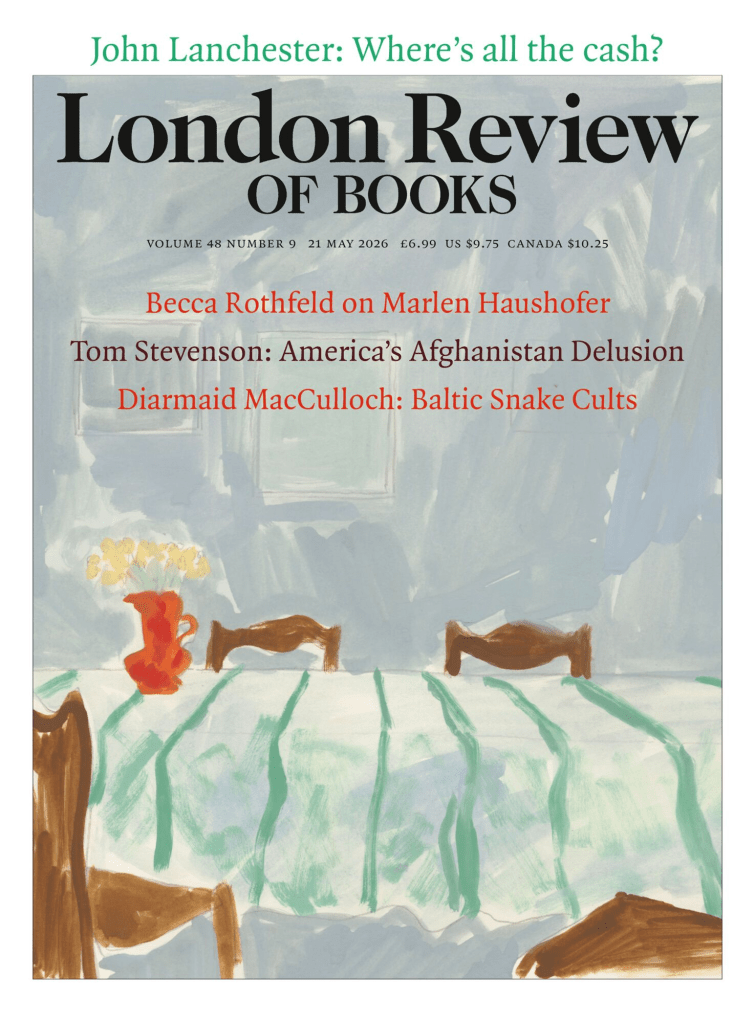
“America’s Afghanistan Delusion” by Tom Stevenson: Stevenson examines the legacy of the War on Terror, arguing that the 2021 withdrawal from Kabul was viewed by the Western establishment as a “mistake” or “cautionary tale” rather than the “crime” he suggests it was. He traces the expansion of American power through “black sites” and military advisers across the globe.
“Short Cuts: Labour’s Failure” by James Butler: Butler analyzes the results of the English local elections (held on May 7). He criticizes Keir Starmer’s leadership style as “all injunction and no argument” and explores why national revulsion toward the Labour Party overshadowed local government issues.
“Where’s All the Cash?” by John Lanchester: A characteristically lucid investigation into modern economics, focusing on the circulation of physical currency and the shifting nature of wealth in a digital-first economy.
Literature & History
“On Marlen Haushofer” by Becca Rothfeld: A deep dive into the work of the Austrian writer, specifically her 1963 masterpiece The Wall. Rothfeld explores Haushofer’s recurring themes of entrapment and isolation, noting the paradoxical “joy” found in her most barricaded characters.
“Baltic Snake Cults” by Diarmaid MacCulloch: The eminent historian reviews the long survival of paganism and “serpent worship” in the Baltic regions, challenging the standard narrative of a monolithic Christian Europe during the Middle Ages.
“Should We Punish?” by Thomas Nagel: The philosopher engages with the ethics of the penal system, weighing the traditional justifications for punishment against contemporary moral and legal theories.
Other Features
“The Clearance of Aoineadh Mòr, 1824” by Tarn MacArthur: A historical account of the Highland Clearances, specifically focusing on the displacement of communities in Scotland.
At the Movies: Michael Wood provides his regular column of film criticism, likely focusing on current European or art-house releases.
Poetry & Correspondence: The issue also contains poems and a robust letters section, which in this period has been heavily occupied by debates over the Arctic (following Laleh Khalili’s piece in the previous issue) and the fallout of the UK local elections.
The US-Israeli war against Iran, far from encouraging a popular uprising, has strengthened the regime’s grip and set back the cause of Iranian freedom indefinitely.
In Everthing Is Now, J. Hoberman chronicles a radical avant-garde’s attempts to jostle New York City out of its postwar complacency and moral retrenchment.
Everything Is Now: The 1960s New York Avant-Garde—Primal Happenings, Underground Movies, Radical Pop by J. Hoberman
Walter Lippmann was the most influential political commentator of his generation, but behind his preternatural confidence was a far more complicated and unsettled character.
Walter Lippmann: An Intellectual Biography by Tom Arnold-Forster
Donald Trump’s aversion to admitting fault suggests that we will not likely see events that grapple with the nuanced nature of the nation’s history this July 4th. By Jelani Cobb
Was the Declaration of Independence Better Before the Edits?
Amid contention, criticism, and compromise, a divided nation had to present a unified front. It came at a cost. By Jill Lepore
Barack Obama Considers His Role in the Age of Trump
The former President remains one of the most popular politicians in the country. What are his obligations to it?
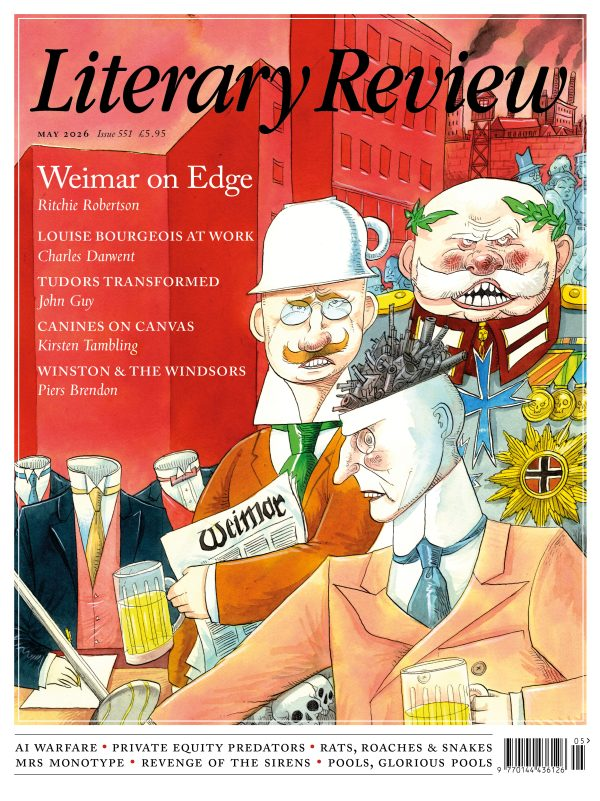
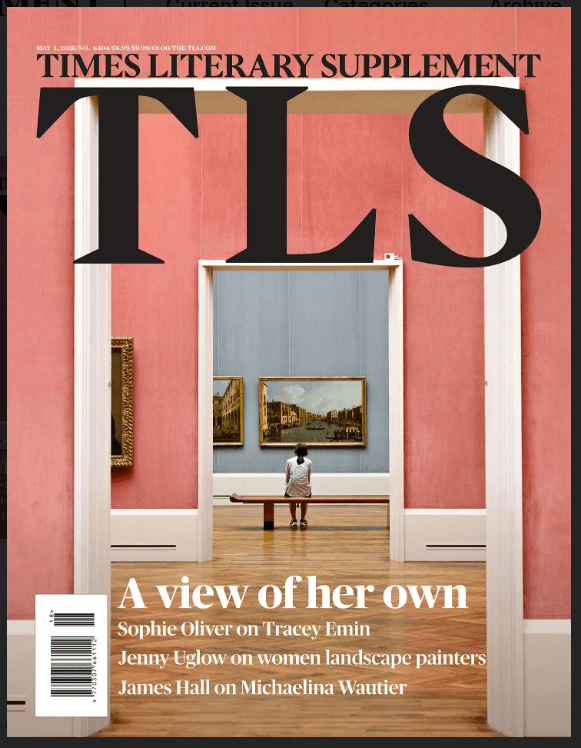
LITERARY REVIEW : The latest issue featuresRitchie Robertson on Weimar * Charles Darwent on Louise Bourgeois * John Guy on the Tudors * Kirsten Tambling on dogs in art * Piers Brendon on Churchill and the crown * Saul David on AI warfare * Simon Nixon on private equity predators * Nigel Andrew on outsider animals * Zoe Guttenplan on Beatrice Warde * Maren Meinhardt on women and music * Lucy Lethbridge on swimming * Diane Purkiss on being published * Anthony Pagden on the West * Michael Reid on Lula * Anthony Teasdale on Tory leaders * Anna Reid on Vera Gedroits * Wendy Holden on Elizabeth II * Harriet Rix on trees * Emma Smith on Shakespeare’s identity * Jane Yager on Herta Müller * Sheena Joughin on Siri Hustvedt * Adam Kucharski on evidence * Keith Miller on Douglas Stuart * Natalie Perman on Jem Calder * and much, much more…
Weimar Germany: Death of a Democracy By Victor Sebestyen
Weimar: Life on the Edge of Catastrophe By Katja Hoyer
The small town of Weimar is overladen with historical associations. Goethe spent more than fifty years there as an employee and friend of Duke (later Grand Duke) Karl August. After the last grand duke abdicated in November 1918, the National Assembly met in Weimar to draw up a new republican constitution for Germany. Other symbolically charged venues considered were Nuremberg (home of Dürer) and Bayreuth (because of Wagner), but it was Weimar that gave its name to the period of German history from …
Having been named for her father, Louis, a mere dealer in antique tapestries, seemed insufficiently romantic to Louise Bourgeois, who was born on Christmas Day in 1911. She preferred the idea that her namesake was Louise Michel, ‘the red virgin of Montmartre’, an anarchist heroine of the Paris Commune. It wasn’t true, of course, but …
A phrase like ‘fortress England’ seems to echo down the centuries, and turns up again in This Little World, Nandini Das’s new study of identity and belonging, cross-border migration, assimilation and estrangement in the period between 1500 and the restoration of Charles II. Das seeks to unmask the period’s most fundamental assumptions about English … read more
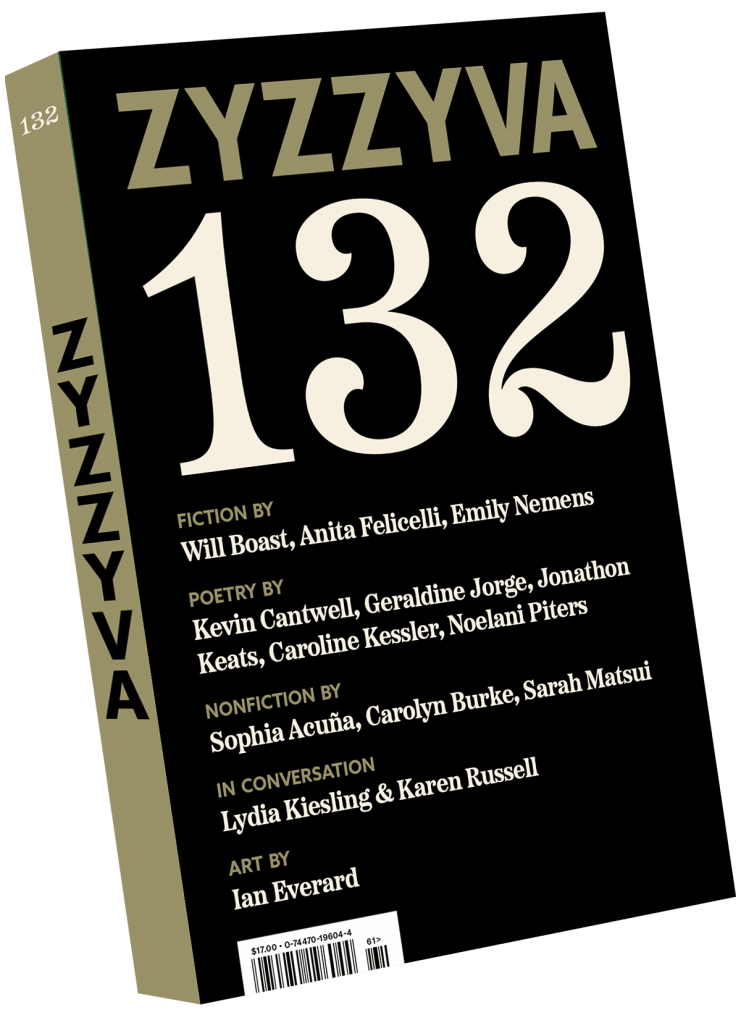
“Saguaro in the Sea” by Sophia Acuña: on surfing and indigeneity in Southern California, told through collage.
“Care Directive” by Sarah Matsui: a daughter’s attempt to keep her aging father in Hawaii from all sorts of calamity, but having to monitor him from the mainland.
“Triptych: A Biographer’s Sketchbook” by Carolyn Burke: “The Baroness was lively, curious, and still blond at eighty-five. She received me in a flurry of franglais, the mingling of two languages in which we would converse, and put us at ease with pink champagne, her favorite.”
Fiction
“Decoys” by Will Boast: goofing around working at the town supermarket, burning through the days till it all comes to head.
“Lilac Mud” by Anita Felicelli: A Bay Area artist in Amsterdam is approached one night by a man claiming to be a former student, leading to a crisis of identity and purpose.
“Grote geplumaceerde” by Emily Nemens: “Afterward, staring hard at her phone, which was her radio, which was the bearer of bad news, she wondered what mattered at all.”
Poetry
Kevin Cantwell, Geraldine Jorge, Jonathon Keats, Caroline Kessler, and Noelani Piters.
In Conversation
Lydia Kiesling talks to acclaimed author Karen Russell about Russell’s latest novel, The Antidote, and about Russell’s “fascination with foundational myths, the things we choose to know, and the things we choose to ignore or forget.”








 Boomers Daily