
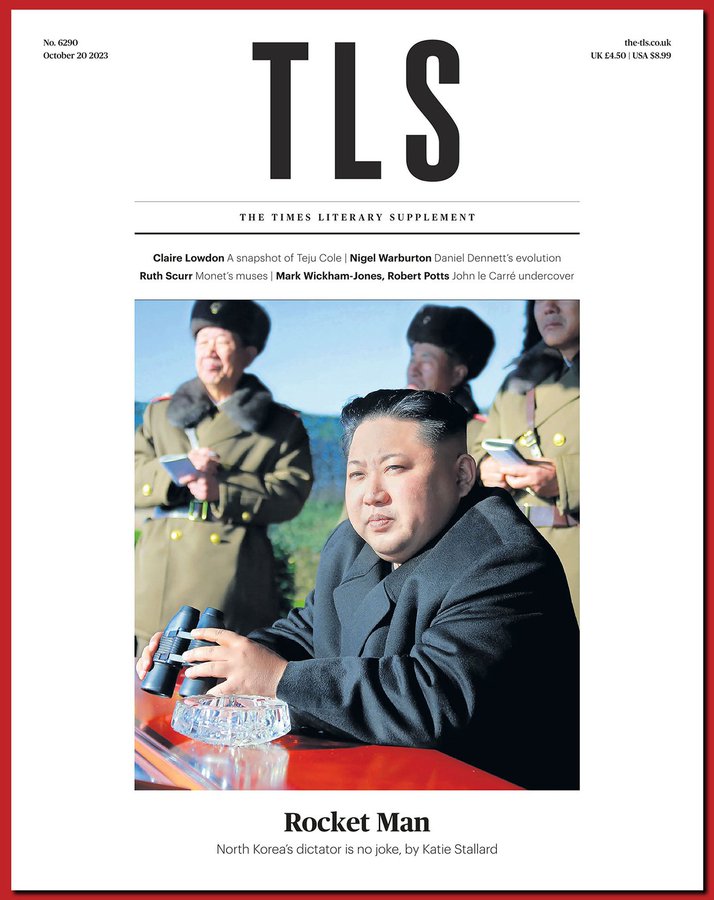

Times Literary Supplement (October20, 2023): The new issue features ‘Rocket Man’ – North Korea’s dictator is no joke; A snapshot of Teju Cole; Daniel Dennett’s evolution; Monet’s muses; John le Carré undercover, and more…

Times Literary Supplement (October20, 2023): The new issue features ‘Rocket Man’ – North Korea’s dictator is no joke; A snapshot of Teju Cole; Daniel Dennett’s evolution; Monet’s muses; John le Carré undercover, and more…



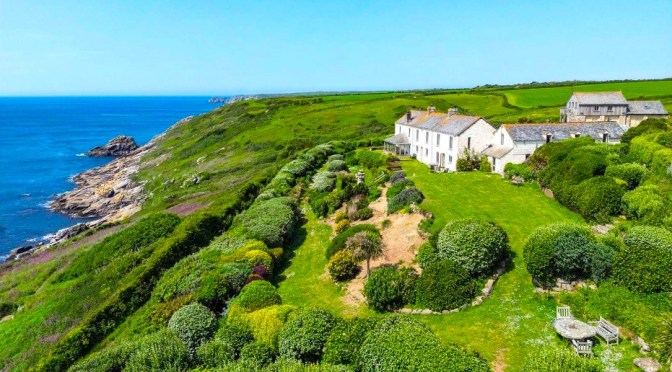
In the late 1960s, the author John le Carré (born David Cornwell, but forbidden from writing under his own name when employed by MI5 and MI6) was staying with an old friend, the Cornish artist John Miller. Miller lived in a house in West Penwith in Cornwall’s far west, on a sparsely populated peninsula ringed by high cliffs and surrounded on three sides by the Atlantic Ocean.

One day, when walking along the cliffs at Tregiffian, near the village of St Buryan, le Carré passed three derelict fisherman’s cottages and a barn overlooking the coast between St Loy and Lamorna. He fell in love with the place.

Armed with the proceeds of The Spy Who Came in From The Cold (1963), the second of his bestselling espionage novels set against the backdrop of the Cold War, le Carré tracked down the owner of the property, a local farmer, and bought the cottages, together with 27 acres of land, including a mile of coastline, much of which he later donated to the National Trust.
Over the years, le Carré and his wife, Jane, restored and adapted the cottages and outbuildings into the comfortable, but unpretentious coastal retreat that was to be their family home for more than 40 years, until his death, from pneumonia, in December 2020. Jane died from cancer two months later, in February 2021.


The New York Times Book Review (December 18, 2022) –
“A Private Spy,” a collection of the British writer’s letters, offers glimpses of unguarded moments and ruffled feathers.
“A Private Spy,” a collection of correspondence spanning much of his life, offers a fresh look at his brilliance — and his contradictions
In a new memoir, “Novelist as a Vocation,” the Japanese writer reflects on his craft and his career.

This week’s @TheTLS , featuring Rosemary Righter and @peterfrankopan on Xi Jinping; @LaurenElkin on Annie Ernaux; @pottmeister on John le Carré; @MirandaFrance1 on Clarice Lispector; @Lordoflongitude on measurement – and more.
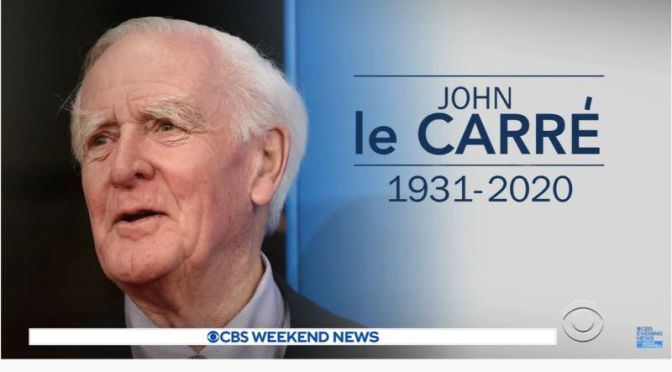
John le Carré, who forged thrillers from equal parts of adventure, moral courage and literary flair, has died aged 89.
Le Carré explored the gap between the west’s high-flown rhetoric of freedom and the gritty reality of defending it, in novels such as The Spy Who Came in from the Cold, Tinker Tailor Soldier Spy and The Night Manager, which gained him critical acclaim and made him a bestseller around the world.
On Sunday, his family confirmed he had died of pneumonia at the Royal Cornwall Hospital on Saturday night. “We all deeply grieve his passing,” they wrote in a statement.
His longtime agent Jonny Geller described him as “an undisputed giant of English literature. He defined the cold war era and fearlessly spoke truth to power in the decades that followed … I have lost a mentor, an inspiration and most importantly, a friend. We will not see his like again.”
From a The Economist online review:
 “Agent Running in the Field” is narrated by Nat, a 47-year-old spy for British intelligence—known not as “the Circus” of yore but, more prosaically, as “the Office”.
After years spent handling secret agents overseas Nat has returned to London to take charge of the Haven, an “outstation” of the Russia department that doubles as “a dumping ground for resettled defectors of nil value and fifth-rate informants on the skids”. With Florence, his number two, Nat throws himself into Operation Rosebud, which involves the surveillance of a London-based Ukrainian oligarch with links to Moscow Centre. Then Florence unexpectedly resigns and won’t return Nat’s calls. Equally abruptly, the powers-that-be pull the plug on the operation.
WHEN JOHN LE CARRÉ’S third book, “The Spy Who Came in From the Cold”, was published in 1963, it presented the world of espionage in a harsh new light. Spies were not brave, suave heroes. “They’re a squalid procession of vain fools, traitors too,” explains the flawed and beleaguered protagonist, Alec Leamas. They are “sadists and drunkards, people who play cowboys and Indians to brighten their rotten lives.” The novel preferred intrigue to adventure, gritty reality to escapist fantasy. Readers expecting a finale in which good conquered evil were instead offered convoluted twists and a bleak denouement.


 Boomers Daily