
Tag Archives: Foreign Policy Magazine

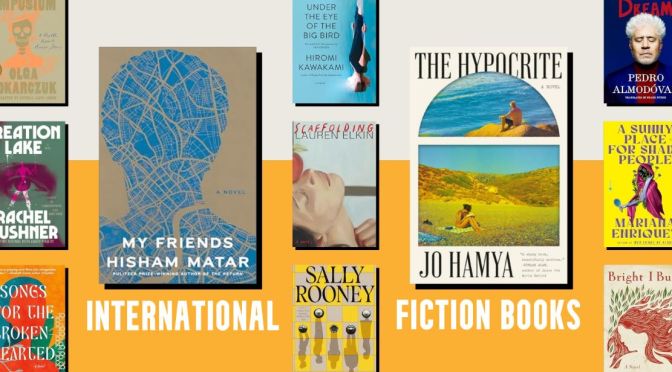
Book Reviews: Best Of International Fiction

Foreign Policy (September 20, 2024): The Mediterranean was the backdrop for much of FP’s summer reading. For the first installment of our new column about international fiction, we travel to two very different settings along this vast sea: Muammar al-Qaddafi’s Libya and modern Sicily. Plus, we highlight the buzziest releases in international fiction this month.


My Friends: A Novel

Hisham Matar (Random House, 416 pp., $28.99, January 2024)

Hisham Matar’s latest novel, recently longlisted for the 2024 Booker Prize, is about friendship and exile. Matar, a Libyan American writer based in London, was raised in a family of anti-Qaddafi dissidents and has made the tyrant’s maniacal rule the subject of most of his work.
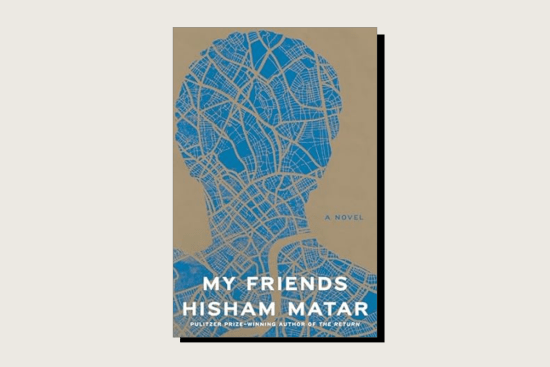
In My Friends, Matar follows protagonist and narrator Khaled from his school days in Benghazi to the period following Qaddafi’s overthrow in 2011. After attending a 1984 anti-Qaddafi demonstration in London and landing on the dictator’s hit list, Khaled is forced to upend his quiet life as a university student in Edinburgh and start over in the British capital. (The real-life protest, where officials at the Libyan Embassy shot several protesters and killed a police officer, led Libya and Britain to sever ties.)

Khaled develops strong friendships with two fellow Libyans in London, Hosam and Mustafa. Unlike Khaled, both are unwavering in their political convictions. Although Khaled is opposed to Qaddafi’s regime, he is also aware of the costs—and futility—of speaking out. That Khaled’s criticism of Qaddafi’s Libya never leaves the private, rhetorical sphere is a point of contention between him and his friends. Ultimately, Hosam and Mustafa return to Libya in 2011 to join the militias fighting Qaddafi; Khaled remains in Britain, deeply insecure about his inaction.

Khaled’s decision to attend the 1984 protest was one he made hesitantly, so it is all the more shocking that his first brush with activism fundamentally altered the course of his life. Khaled’s father, an academic who resigned himself to a mid-level career under Qaddafi to avoid repression, had taught his son that it is “almost always best to leave things be.”

At its core, My Friends is a debate over whether, in the face of repression, such silence is a form of self-preservation or cowardice. This tension exists between the book’s main characters—the friends—as well as within Khaled’s own head. While Khaled’s exile led him to make great friends, his time in London is equally a painful experience of solitude. With Libyan phone lines tapped and mail pilfered by the regime, he has had to uphold a decades-long lie to his family about why he can no longer return home—all because he attended a single protest.

An author with an agenda might have sought to portray Hosam and Mustafa as valiant fighters whose sacrifices are rewarded, opposite Khaled, who prefers comfort to confrontation. But Libyan history does not follow a morally righteous narrative arc. At the end of the book, Libya becomes enveloped in a new crisis, and each friend seeks to find his place within it.—Allison Meakem


The Hypocrite: A Novel

Jo Hamya (Pantheon, 240 pp., $26, August 2024)

The Mediterranean is a time-honored stage for the psychosocial dramas of the elite. From British novelist John Fowles’s 1965 masterpiece, The Magus, to the entire Mamma Mia! franchise, fictional foreigners have long flocked to Greek and Italian isles to escape from—and, more often, confront—their heartbreaks and pathologies and familial squabbles. Often left out of these tales are the locals.
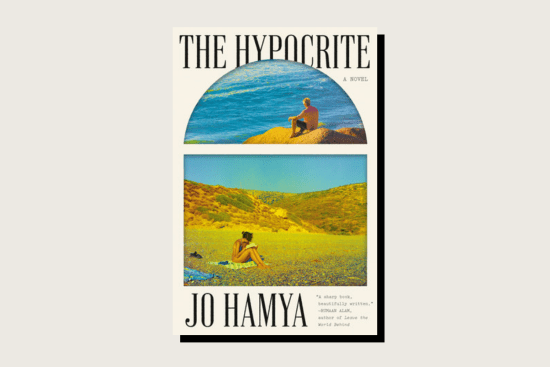
The Hypocrite by British author Jo Hamya at first seems like more of the same. It takes place over the course of one staging of a play about a summer that Sophia, the young playwright, once spent in Sicily’s Aeolian Islands with her father, a famous novelist whose work has aged poorly. It’s a smooth and often witty portrait of the upper-middle-class London art scene, written in the streamlined Rachel Cusk-esque register that defines much contemporary literary fiction.

Yet The Hypocrite also attempts to do something more. Although Sophia’s family dramas make up the bulk of the narrative, Hamya eventually shifts her focus to the family’s housekeeper in Sicily. She recalls that Sophia “was demanding in the worst way an English tourist could be.” Sophia didn’t try to learn even a little Italian. She and her father, the housekeeper thinks, were “lazy, messy people” who never bothered “to make her job easier with the simplest of acts.”

Hamya’s novel is part of the recent trend of examining who, historically, has been omitted in traditional narratives, especially ones set in locales that are under-resourced, exoticized, and deeply reliant on tourism. (Sicilians are European, yes, but they also live in one of Italy’s poorest regions.) In this regard, the novel is closer in spirit to HBO’s The White Lotus, the much-lauded send-up of the rich at a luxury resort chain (first in Hawaii, then in Sicily, and soon in Thailand), than many of its other predecessors.

Hamya does not dwell, however, on this upstairs-downstairs dynamic. Rather than skewering the careless interlopers, she aims for a bit more nuance, attending—if only fleetingly—to both the narrower interests of her protagonists and the invisible hands that helped set the stage for them that summer.—Chloe Hadavas
Preview: Foreign Policy Magazine – Fall 2024

2024 U.S. Election: The World's Advice to the Next White House

Foreign Policy Magazine – September 9, 2024: The new issue features 2024 U.S. Election: The World’s Advice to the Next White House

Letters to the Next President

No matter who wins the White House, these nine thinkers from around the world would like a word. Catherine AshtonJason BordoffArancha GonzálezMartin KimaniMark Malloch-BrownJoseph S. Nye Jr.Danny QuahNirupama RaoJoseph E. Stiglitz

The Most Important Factor in Presidential Debates

A dramatic moment between Jimmy Carter and Gerald Ford showed the camera really is king.

Is 2024 Really the Most Important Election in History?

Democracy—and the global system—might not be so easily dismantled.

Preview: Foreign Policy Magazine – Summer 2024

Europe-issue-FP-Summer-2024

Foreign Policy Magazine – July 1, 2024: The new issue features ‘Europe Alone’ – Ten thinkers on a future without America’s embrace….

Europe Alone

Europe-EU-NATO-Donald-Trump-US-election-foreign-policy-illustration-doug-chayka-3-2

Nine thinkers on the continent’s future without America’s embrace.

By Mark LeonardConstanze StelzenmüllerNathalie TocciCarl BildtRobin NiblettRadoslaw SikorskiGuntram WolffBilahari KausikanIvan Krastev, and Stefan Theil

No bloc of countries has, for the past 75 years, been as umbilically tied to the United States as Europe. First, its western half and, since the end of the Cold War, much of its eastern half have prospered under the world’s most extensive bonds in trade, finance, and investment. Europe could also depend on the U.S. military’s iron commitment—enshrined in the 75-year-old NATO alliance—to come to its defense. Together with a few other nations, the United States and Europe defined many of the institutions that comprise what we call the Western-led order. The U.S.-European alliance has arguably been the bedrock of the global system as we know it today.

Trump’s Return Would Transform Europe

Illustration of a torn map of Europe revealing Donald Trump

Without Washington’s embrace, the continent could revert to an anarchic and illiberal past. By HAL BRANDS

Which is the real Europe? The mostly peaceful, democratic, and united continent of the past few decades? Or the fragmented, volatile, and conflict-ridden Europe that existed for centuries before that? If Donald Trump wins the U.S. presidential election in November, we may soon find out.

Previews: Best Books On Foreign Affairs For 2024

2024-books-2-1

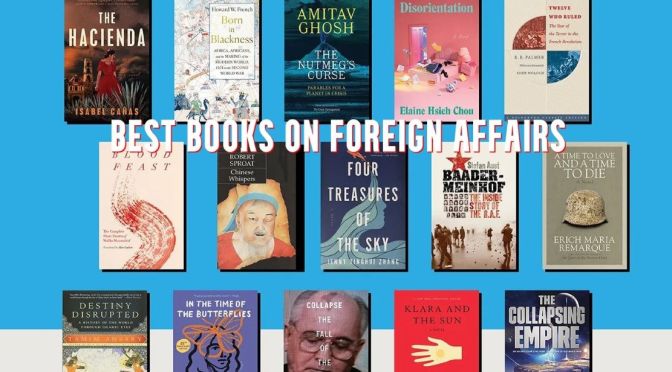
Foreign Policy Magazine (December 31, 2023): The Best of Books 2024 Here are 30 major nonfiction titles coming out this year on Foreign Policy’s radar, from economic manifestos to histories of forgotten eras to new assessments of great-power competition in the 21st century. New titles include:

The Everything War: Amazon’s Ruthless Quest to Own the World and Remake Corporate Power 

The Everything War: Amazon's Ruthless Quest to Own the World and Remake  Corporate Power: 9780316269773: Mattioli, Dana: Books - Amazon.com

by Dana Mattioli (April 23, 2024)

From veteran Amazon reporter for The Wall Street Journal, The Everything War is the first untold, devastating exposé of Amazon’s endless strategic greed, from destroying Main Street to remaking corporate power, in pursuit of total domination, by any means necessary.

In 2017, Lina Khan published a paper that accused Amazon of being a monopoly, having grown so large, and embedded in so many industries, it was akin to a modern-day Standard Oil. Unlike Rockefeller’s empire, however, Bezos’s company had grown voraciously without much scrutiny. 

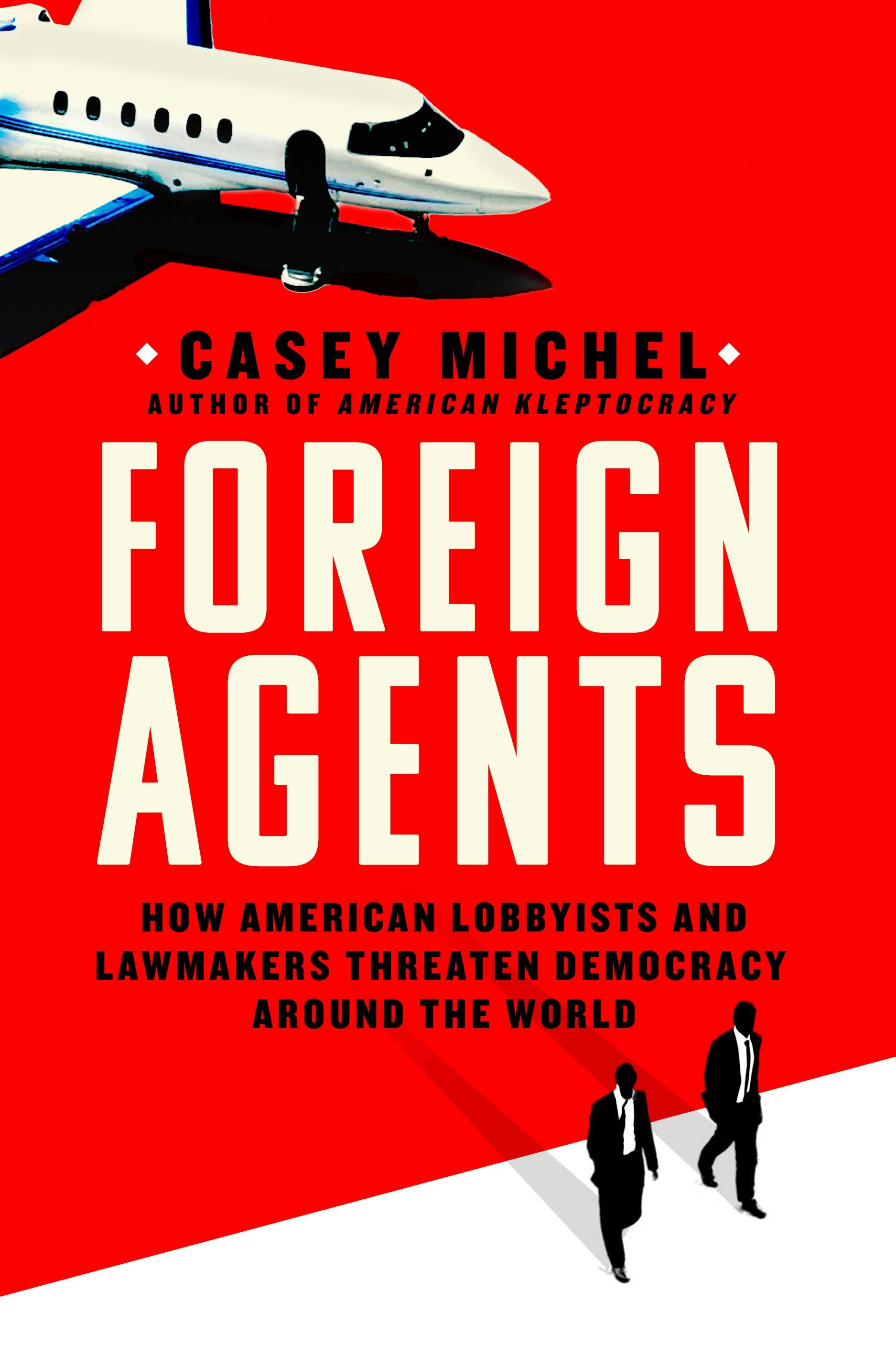
Foreign Agents: How American Lobbyists and Lawmakers Threaten Democracy Around the World

Foreign Agents

By Casey Michel (August 2024)

A stunning investigation and indictment of the elements in United States’ foreign lobbying industry and the threat they pose to democracy.

For years, one group of Americans has worked as foot-soldiers for the most authoritarian regimes around the planet. In the process, they’ve not only entrenched dictatorships and spread kleptocratic networks, but they’ve secretly guided U.S. policy without the rest of America even being aware. And now, journalist Casey Michel contends some of them have begun turning their sights on American democracy itself.

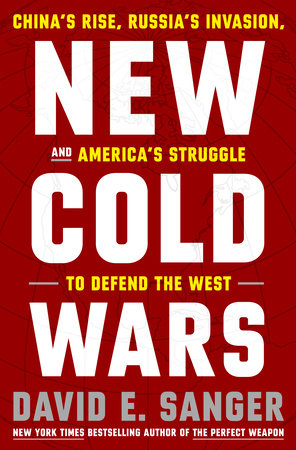
New Cold Wars : China’s Rise, Russia’s Invasion, and America’s Struggle to Defend the West

New Cold Wars by David E. Sanger: 9780593443590 | PenguinRandomHouse.com:  Books

By David E. Sanger (April 2024)

Three decades after the end of the Cold War, the United States finds itself in a volatile rivalry against the other two great nuclear powers–Xi Jinping’s China and Vladimir Putin’s Russia–in a world far more complex and dangerous than that of a half century ago

.New Cold Wars–the latest from Pulitzer Prize-winning journalist and bestselling author of The Perfect Weapon, David E. Sanger–is a fast-paced account of America’s plunge into simultaneous confrontations against two very different adversaries. For years, the United States was confident that the newly-democratic Russia and increasingly wealthy China could be lured into a Western-led order that promised prosperity and relative peace–so long as they agreed to Washington’s terms. By the time America emerged from the age of terrorism, it was clear that this had been a fantasy.

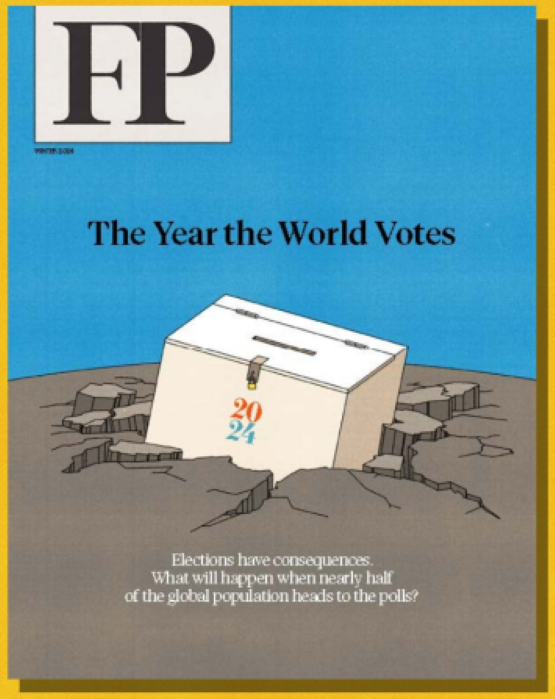
Preview: Foreign Policy Magazine – Winter 2024

Image

Foreign Policy Magazine – December 28, 2023: The new issue features ‘The Year The World Votes’ – Elections have consequences. What will happen when nearly half of the global population heads to the polls?

The Promise and Peril of Geopolitics

The world’s most dismal science could make Eurasia safe for illiberalism and predation—or protect it from those forces.

By Hal Brands, a professor of global affairs at the Johns Hopkins School of Advanced International Studies.

An illustration shows a stylized globe with a crack through it. A hand with a wrench tightens the screw atop the globe.

Alexander Dugin is a bit of a madman. The Russian intellectual made headlines in the West in 2022, when his daughter was killed, apparently by Ukrainian operatives, in a Moscow car bombing likely meant for Dugin himself. Dugin would have been targeted because of his unapologetic, yearslong advocacy for a genocidal war of conquest in Ukraine. “Kill! Kill! Kill!” he screeched after Russian President Vladimir Putin’s first invasion of that country in 2014, adding: “This is my opinion as a professor.” Even at his daughter’s funeral, Dugin stayed on message. Among her first words as an infant, he claimed, were “our empire.”

Preview: Foreign Policy Magazine – Fall 2023

Image

Foreign Policy Magazine – Fall 2023: The new issue features The G-7 Becomes a Power Player – Russia’s war and China’s rise are turning a talking shop into a fledgling alliance of democracies; Vivek Ramaswamy’s Foreign Policies Raise Eyebrows in Washington – The GOP’s rising star offers up a grab bag of ideas cribbed from Eminem to Richard Nixon and more…

The G-7 Becomes a Power Player

Foreign Policy – the Global Magazine of News and Ideas

Russia’s war and China’s rise are turning a talking shop into a fledgling alliance of democracies.

By G. John Ikenberry, a professor of politics and international affairs at Princeton University.

Time and again over the last century, the United States and the other liberal democracies in Europe, East Asia, and elsewhere have found themselves on the same side in grand struggles over the terms of the world order. This political grouping has been given various names: the West, the free world, the trilateral world, the community of democracies. In one sense, it is a geopolitical formation, uniting North America, Europe, and Japan, among others. It is an artifact of the Cold War and U.S. hegemony, anchored in NATO and Washington’s East Asian alliances.

Vivek Ramaswamy’s Foreign Policies Raise Eyebrows in Washington

Vivek Ramaswamy's Foreign Policies Raise Eyebrows in Washington – DNyuz

The GOP’s rising star offers up a grab bag of ideas cribbed from Eminem to Richard Nixon.

By Jack Detsch

End American dependence on Taiwan’s semiconductor factories. Declare economic independence from China. Give India an AUKUS-like submarine deal. And stage a dramatic visit to Moscow to broker a deal to end Russia’s full-scale invasion of Ukraine. 

Preview: Foreign Policy Magazine – Summer 2023

Image

Foreign Policy Magazine – Summer 2023: Artificial intelligence is suddenly everywhere. It seems as though no conversation about jobs, education, health care, technology, or politics happens without an inevitable question about how AI could disrupt it all. 

AI Is Winning the AI Race

Success isn’t just staying ahead of China.

A textural drawn illustraiton shows a robotic AI arm stabbing a flag through a globe wireframe containing two wrestling human-shaped figures with U.S. and China colors on each for a story about global competition over artificial intelligence.

Preview: Foreign Policy Magazine – Spring 2023

The Magazine – Foreign Policy

Foreign Policy Magazine – Spring 2023

The World Will Regret Its Retreat From Globalization

Trade and financial flows have fallen well below their peaks, and poorer countries will bear the brunt.

It’s High Time to Prepare for Russia’s Collapse

Not planning for the possibility of disintegration betrays a dangerous lack of imagination.

America’s Zero-Sum Economics Doesn’t Add Up

Industrial policy and subsidies are nothing new and can be useful. But shutting off from the world will have consequences.

Preview: Foreign Policy Magazine – Winter 2023

Image

Foreign Policy Magazine – Winter 2023 Issue:

The New Rules of War

Twelve experts on what the world needs to learn from Russia’s invasion of Ukraine.

Biden Is Now All-In on Taking Out China

The U.S. president has committed to rapid decoupling, whatever the consequences.

Why Japan Should Join AUKUS

Tokyo has become an indispensable security actor in the Indo-Pacific.

Preview: Foreign Policy Magazine – Fall 2022

May be an image of food

The Solution to the Global Food Crisis Isn’t More Food

There’s plenty to go around, but it’s going to the wrong places.

Africa Needs More, Not Less, Fertilizer

Developing countries need to boost their yields, even if that conflicts with climate goals.

How the World’s Appetite for Meat Is Changing

Who’s eating more, and who’s eating less.

Foreign Policy Magazine Website