Tag Archives: Fiction

Cervantes in the Cave — The Art of Illusion

From Lepanto to Algiers to Seville, he recast Plato’s cave: instead of fleeing, he trimmed the wick—using comedy and narrative to make honest light out of shadow.

By Michael Cummins, Editor, August 22, 2025

In a cave in Argamasilla de Alba, Spain, a man sits hunched over a manuscript. The air is damp; the light keeps deciding what to keep. He writes not with the flourish of a court poet but with the urgency of someone who has known confinement—who has lived among shadows and learned to speak their language. The man is Miguel de Cervantes. The cave, according to local legend, is where he began Don Quixote. Whether the story is true hardly matters. The image endures: Cervantes, imprisoned, wounded, obscure, writing the book that would fracture the very idea of literary realism.

He breaks the silence first, as if talking to the walls. “Engendrado en una cárcel, donde toda incomodidad tiene su asiento,” he says—begotten in a prison, where every discomfort keeps its chair. He smiles at his own choice of verb. Begotten. It gives hardship hands.

A foot scuffs the threshold. Mateo steps into the half-light, a fellow freed captive from a life the two men still carry like a watermark. He takes the cave in at a glance—the whitewash, the barred slit of window, the stone bench that knows the shape of a tired back.

“You write in the dark, Miguel,” Mateo says. “Still chasing shadows?”

“Not chasing,” Cervantes replies, without looking up. “Refracting. These shadows are more honest than the sunlit lies of court and empire.”

Plato’s prisoners mistook flicker for fact. Cervantes has no such innocence; he knows exactly what light can do and what it cannot. In Algiers he learned the cost of sunlight and the uses of a candle. “We invented stories to survive,” he says. “We imagined rescue. We became authors of unreality. And in doing so, we learned how unreality works.”

He had boarded a homeward ship in 1575 and sailed straight into a profession he did not apply for. Corsairs took the vessel. Letters of recommendation—ironically the very proof of his merit—made him valuable. Algiers swallowed him for five years. Four escape attempts, each with its choreography of bribes, whispers, and night boats, failed in turn; punishments followed with bureaucratic punctuality. In the baños he organized fellow captives, staged plays that felt like oxygen rations, and discovered a kind of command that requires neither rank nor drumrolls. The lesson was not transcendence. It was texture. Captivity did not reveal some pure, sunlit truth; it revealed illusion’s machinery: how shadows are cast, how they persuade, how they can be turned from weapon into instrument.

“So you believe captivity reveals truth?” Mateo asks.

“No,” Cervantes says. “It reveals illusion. But if you know you’re in a cave, illusion can be honest about itself.”

He speaks like a man who has balanced too many ledgers and decided to keep one for the soul. In his prologue to the Exemplary Novels he would boast with a craftsman’s pride: mías propias, no imitadas ni hurtadas—my own pieces, not imitated or stolen. After a life in which other people held the keys, authorship felt like a kind of lawful possession. He is not naïve about it; theft will come in a thousand copies. Still, he plants his flag in sentences.

Mateo lowers himself onto the bench. The cave keeps its cool.

“Begin earlier,” Mateo says softly. “Begin with the wound.”

Cervantes nods, as if paging back. “Lepanto,” he says. “Two shots to the chest, one to the hand. El mayor bien que me vino. The greatest favor that came to me.”

Mateo laughs—a short, incredulous bark. “Favor?”

“A hand is a tool,” Cervantes says, flexing his right, letting the left sleeve fall into its gentle emptiness. “So is a story. One broke and taught the other its work. I learned that honor is not trumpets; it is the bruise that stays after the sound goes.”

“What did it smell like—the battle?” Mateo asks, because some questions insist.

“Oak and salt and a fire that wandered,” Cervantes says. “The sea keeps bad accounts—always debits, never balance. We threw our bodies at its ledger and called it glory. I got a bill I could live with.”

The cave changes its mind about brightness by a single shade. Light climbs a little higher on the wall, as if memory has a temperature.

“After Algiers,” Mateo says, “you came home to paper.”

“To paper and suspicion,” Cervantes answers. “Spain wanted receipts more than epics.” He became a purchasing agent, then a tax collector—the sort of work that presses humility into a man’s pockets and takes the lint besides. A banker fell in Seville and the ground gave way beneath him. Jail happened the way weather happens. Bureaucracy, he discovered, is a prison with nicer pens.

He thumps the palm of his right hand on the bench, a quiet imitation of a ledger closing. “Always the same sum,” he says. “Loyalty plus wounds equals suspicion.”

“That arithmetic,” Mateo says, “taught you comedy.”

“It taught me instruments,” Cervantes corrects gently. “Comedy is a surgeon’s knife you can carry in public.”

He had tried other rooms. La Galatea (1585), a pastoral romance, sighs under painted trees and speaks expertly in a fashionable voice—too expertly for a man who had learned to breathe in iron. “A ceiling too low for the lungs,” he says. Failure did not embarrass him; it emancipated him. “I loved what books promised. I wrote the promise’s correction.”

“And then you choose another cave,” Mateo says, looking around.

“This time I brought the candle.” Cervantes nods at the stub trembling in its dish. “The cave is not a prison if you know you’re inside it. Fiction is not delusion if you wield it knowingly.”

“Is that freedom?” Mateo asks. “To live in fiction?”

Cervantes answers with a line he will later put in a knight’s mouth because knights carry sentences farther than taxmen do. “La libertad, Sancho, es uno de los más preciosos dones…” Freedom, Sancho, is one of the most precious gifts. He lets the clause hang and then adds the counterweight: captivity is the greatest evil. “But there is a third thing,” he says. “The discipline of the wick. Not everyone reaches the sun. Many of us live by hearth-light. So make the hearth honest.”

He laughs, not kindly but not unkindly, at the memory of a barber’s basin mistaken for a helmet. “A basin can be a helmet,” he says, “if the story is honest about the trick.” The joke is not cruelty; it’s consent. Illusions that confess their wages are allowed to work.

“You sound like Plato’s least obedient pupil,” Mateo says. “He wants the prisoner out of the cave. You stay.”

“Plato had less practice with caves,” Cervantes says. “I stay and trim the wick.”

The man who stays in the cave can tell you about the cost of zeal. He knows what happens when mercy runs faster than attention: chaos dresses up as freedom. He has written a scene in which a knight frees a chain gang of galley slaves with a fine speech and a flash of temper, and the liberated—unbriefed on narrative responsibility—repay the favor with stones. “Pity without comprehension,” he says, “is a door swinging in a storm. Freedom without narrative becomes a mess that lets tyrants say, ‘You see? Chains keep order.’”

Mateo’s eyes drift toward a wooden head in the corner, painted eyes arrested mid-glance. “Master Pedro,” Cervantes says, amused at the prop the cave has supplied. He tells the story of a puppet theater, a knight who cannot bear strings, a sword that corrects an illusion into splinters. Even illusions keep accounts, he reminds Mateo. Someone pays for the pleasure. “In that scene,” he says, “I taxed zeal. I sent the bill to laughter.”

“So your book is a theater?” Mateo asks.

“A theater that shows its ropes,” Cervantes says. “A historian with a wink in his ink. A narrator who argues with me, and I with him. A false sequel enters the room, and I absorb him into the play. If illusion is a crime, let the evidence be visible. If it is a craft, let the strings show and the audience decide.”

He keeps his quotes short and to the point, letting them behave like tools rather than trophies. “Yo sé quién soy,” he says, not to boast but to set a boundary—I know who I am. “And I know what I am not. I am not the sun. I am a candle with a good memory.”

Memory is a troublesome servant. “¡Oh memoria, enemiga mortal de mi descanso!,” he mutters with theatrical exasperation—Oh memory, mortal enemy of my rest—knowing full well he cannot do without her. In the deepest fold of the book he is writing, he lowers his knight into the Cave of Montesinos and gives him a private vision no one can verify. Minutes pass in the world; days unfold in the cave. Readers will fight about that descent for centuries: lie or parable? He shrugs. The rope held. The telling is what matters.

“What about truth?” Mateo asks. “You dodge it like a matador.”

“Truth is errant,” Cervantes says. “Like my knight. It wanders, stumbles, reinvents itself. La verdad adelgaza y no quiebra—truth thins but does not break. It lives in the flicker between shadow and flame.” He aims for a truth you can sit with, not a blaze you must worship. Even now, when the cave dims or brightens by a breath, he adjusts nothing in his voice. He trusts the room to keep up.

The room has heard other versions of this life. Soldier, captive, clerk, failed author—the catalogue is accurate and useless until you give it breath. He has learned that a life of refusals and humiliations can be rearranged into a lamp. “El que lee mucho y anda mucho, ve mucho y sabe mucho,” he says with a grin—he who reads much and travels much sees much and knows much—and Mateos’s chuckle bounces off the whitewash and returns as agreement.

If the cave is a theater, it is also a workshop. He places three objects on the bench as if laying out tools: a frayed rope (failed escape; lesson kept), a ledger (bureaucracy’s Bible, now a prop for comedy), and the puppet head (illusion, demystified and retained). He sets the rope across the ledger like a sash and props the puppet against both like a child asleep between two patient adults.

“You’re staging your own life,” Mateo says.

“Everything I own appears in my books,” Cervantes answers. “Better to put them to work than let them gather dust.”

He will put even injury to work. He has already done it. “There is no book so bad that it does not have something good,” he says—No hay libro tan malo que no tenga algo bueno—and he means, among other things, his own early efforts. He tried the fashion and failed; he learned to write beyond it. The failure cleared the room.

“And the counterfeit?” Mateo asks. “The other Quixote?”

“I made room,” Cervantes says, not quite happily. He doesn’t bother to call the rival by name. “I let the counterfeit into Part II and gave him the dignity of being wrong on the page. It is the politest way to win.”

Outside, late afternoon arranges itself. Inside, the candle practices its small weather. The conversation acquires the unhurried gravity of men who have been forced to wait before and know that waiting can be made useful. They speak of the Información de Argel—the sworn testimonies that stitched a biography out of scars and courage; of the petition to the Council of the Indies that asked for four possible offices across the ocean and delivered no; of Seville’s auditoriums of suspicion where a man could do arithmetic all day and still owe.

“You turned all that into a style,” Mateo says.

“I turned it into a temperament,” Cervantes corrects. Style is the residue. The temperament is the choice: to stay in the cave and make the light adjustable; to refuse the panic of transcendence in favor of the patience of attention; to let laughter be a form of moral accounting. “I wanted a book in which the strings show,” he says. “So when someone pulls, we know who is moving what.”

He reaches for the candle with wetted fingers and trims the wick. The flame tightens, steadies, sharpens the edges of the room with a surgeon’s manners. The gesture is mundane and feels like a thesis.

“Why not flee?” Mateo asks one last time, because some questions return until answered in the body.

“Because someone must tend the flame,” Cervantes says. “Because most people live by hearth-light. Because the cave tells the truth about limits, and I prefer honest rooms to lying palaces.”

He stands, and the bench acknowledges the change with a creak that has learned both complaint and loyalty. He touches the stone with the backs of his fingers, as one does a sleeping child. The puppet keeps its round attention. The rope adopts its length. The ledger decides to be heavy again.

“Begin,” Mateo says, suddenly shy of making a ceremony of it.

“I did,” Cervantes answers, and returns to his page.

He writes the opening lines of Don Quixote as the candle throws a peninsula of light bordered by ink. A poor gentleman with a head full of books starts out into a world that will bruise him into philosophy. A squire with a sack of proverbs learns to spend them one by one, after listening. Windmills declare their innocence; a basin negotiates a new title. Dukes turn out to be children who have learned cruelty by playing. Priests explain themselves into farce. Puppets are freed to their ruin, then repaired by a writer who has learned to apologize with laughter.

Cervantes does not flee illusion; he illuminates it. He does not reject reality; he reframes it. He does not promise truth; he escorts it, errant and sturdy, through rooms with honest walls. He turns shadows into stories and stories into a way of seeing that does not blind. He has stayed where Plato urged ascension and found, by staying, a different kind of ascent: the climb of attention, the charity of proportion, the courage to let strings show and still believe in the show.

Unlike Plato’s prisoner, Cervantes remains in the cave. He writes. He refracts. He talks to the walls and to the future, and both answer. His broken hand, his captive mind, his errant knight—everything he survived and everything he invented—gathers in the small weather of a candle and becomes, against all instruction, a form of daylight.

THIS ESSAY WAS WRITTEN AND EDITED UTILIZING AI

GRANTA MAGAZINE – SUMMER 2025 PREVIEW

GRANTA MAGAZINE SUMMER 2025: The new issue features ‘Badlands’, traversing inhospitable landscapes, from troubled childhoods to drone-infested Ukraine.

Badlands

‘There are badlands of the Earth, but also badlands of memory – whited-out areas that the mind fills in as best it can.’ By Thomas Meaney

Drones and Decolonization

‘Brody was rich in fresh flowers and fresh grief.’ By William T. Vollmann

Essay: The Imperative of Art in Dark Times

The following essay was written by AI and edited by Intellicurean:

One often hears that art is a refuge from the storm, a quaint hermitage for the sensitive soul. But when the storm is a veritable tempest of tyranny, what then? Must beauty shrink to a whispered metaphor, or can it, with a flourish, confront the grotesque, form itself a weapon, and memory its shield?

Peter Weiss, the German-Swedish playwright and novelist, perhaps best known for his provocative Marat/Sade, offers an unflinching answer in his masterwork, The Aesthetics of Resistance. This three-volume novel—published between 1975 and 1981, and only recently fully translated into English by Joel Scott for Verso Books—presents not merely a chronicle of Europe’s descent into fascism, but an audacious theory of survival, contemplation, and rebellion through the very act of art.

In a perceptive recent essay for Liberties Journal, Jared Marcel Pollen explores the novel’s radical scope, elegantly correcting a common misattribution of a pivotal political aphorism. Not Lenin, but Maxim Gorky, Pollen reveals, claimed that “aesthetics was [his] ethics—the ethics of the future.” More than a mere historical footnote, this elegantly salvaged reversal encapsulates the novel’s very governing spirit: that beauty, far from being a retreat from political crisis, is its very precondition for meaning, that art does not merely ornament truth, but, with a surgical precision, it excavates it.

A Chronicle of Darkness and Light

The Aesthetics of Resistance unfolds in the shadow of Europe’s unraveling, commencing in 1937, as Hitler consolidates power and Stalin’s purges silence dissent. The narrative spans the years up to 1942—a period that Hannah Arendt once called “midnight in the century.” But unlike conventional historical fiction, Weiss offers no linear tale of protagonists moving toward neat resolution. Instead, he crafts a philosophical Hades-wanderung—a relentless descent through betrayal, failed revolutions, ideological fracture, and the wreckage of cultural inheritance.

The text itself resists easy consumption. Its dense, paragraphless pages—walls of syntax without clear beginning or end—mirror the labyrinthine realities its characters inhabit. In an interview with The New York Times, translator Joel Scott remarked that reading Weiss is like “being submerged in consciousness,” and likened the novel’s structure to a frieze: a continuous mural of intellect, grief, and memory. This relentless, frieze-like form compels the reader to engage with history not as a series of discrete events, but as an overwhelming, cumulative force, a continuous present of trauma and resistance. The novel is as much a meditation on how we perceive history as it is on history itself.

Learning as Rebellion: The Proletarian Bildungsroman

At its core, The Aesthetics of Resistance is a Bildungsroman—a novel of education and formation. But it defiantly eschews the genre’s traditional bourgeois framework. This is no Goethe’s Wilhelm Meister or Joyce’s Stephen Dedalus spiraling through self-inquiry in cloistered academic halls. Weiss’s narrator—working-class, gentile, unnamed—does not wander through elite libraries or university quads. Instead, he and his comrades read Dante, study Greek sculpture, and debate Marxist theory in factory basements and kitchens, under constant threat of arrest or worse.

This autodidacticism—the practice of self-teaching—is not a mere supplement to formal education but a radical replacement. The narrator declares early on: “Our most important goal was to conquer an education… by using any means, cunning and strength of mind.” Their knowledge is not earned; it is stolen—like Promethean fire—from the guarded sanctums of official culture. This echoes Friedrich Schiller’s view in On the Aesthetic Education of Man (1795) that beauty cultivates moral freedom, acting as a safeguard against the dehumanizing mechanisms of state power. Indeed, in a totalitarian state that mutilates truth and simplifies human experience, the very act of preserving intellectual complexity – a core tenet of Weiss’s autodidacts – becomes, as Susan Sontag argued in “On Style,” an ethical stance in itself, an insistence on the primacy of certain values. In Weiss’s hands, this ethic becomes urgently, tragically manifest.

Art at the Crossroads: Form, Violence, and Hope

The profound question that animates Weiss’s project is not simply how to survive violence, but how to perceive it. What happens to art, to the very faculty of perception, when the world collapses into brutality? One compelling answer emerges in the novel’s early scene at the Pergamon Altar, a Hellenistic frieze of the Gigantomachy—a mythic war between gods and giants—housed in Berlin’s museum. As Nazi banners flutter outside, the young resisters look upon this magnificent fragment of antiquity and see not quaint myth, but relentless struggle. They interpret the contorted figures as symbols of class war, reclaiming the altar from its imminent fascist cooptation.

This interpretive act—the deliberate reading “against the grain”—is both aesthetic and political, a defiant reconstitution of meaning. It echoes Walter Benjamin’s chilling thesis that “there is no document of civilization that is not at the same time a document of barbarism.” Indeed, as Pollen writes with chilling precision, the Nazis, in their grotesque appropriation of classical forms, hollowed them into “plaster emptiness.” Weiss’s characters do the opposite: they revive these ancient forms by placing them in urgent dialogue with their own suffering, thus universalizing the struggle against domination, making the “mass of stone” a value “belonging to anyone who steps in front of it.”

The novel closes with a powerful meditation on Picasso’s Guernica, his monumental canvas depicting the bombing of the Basque town in 1937. The painting, the narrator insists, does not merely show war—it registers “an assault on the ability to express things.” Guernica marks a new kind of aesthetic task: not only must art represent horror, it must endure it. The painting outlasts its own referent, becoming what philosopher Elaine Scarry once called “a durable object,” an artifact that shelters memory and meaning long after political systems fall and the bombs cease to drop. In Alfonso Cuarón’s bleakly prescient dystopian film Children of Men (2006), Guernica appears, almost unnoticed, in the sterile interior of a government building—a poignant token of lost humanity. This, precisely, is Weiss’s abiding fear: that without the active labor of interpretation, without the human will to engage, even the greatest artistic achievements become mere decor, robbed of their subversive potential.

Witness and Memory: The Imaginative Faculty as Resistance

Some may, of course, recoil, finding The Aesthetics of Resistance too cerebral, too demanding, perhaps even too… Germanic, to resonate beyond the intellectual class. It’s a fair, if somewhat lazy, concern. And yet, as Timothy Snyder so chillingly reminds us in On Tyranny, fascism thrives precisely when the imagination is starved—when complexity gives way to cliché, when memory is replaced by manufactured myth.

Weiss’s project is a counteroffensive. His characters repeatedly ask, with desperate sincerity: “What does the Divina Commedia have to do with our lives?” In posing the question, they model the very activity the novel enacts—bridging distant beauty with present suffering. As Pollen notes, Weiss is not proposing simplistic analogies between then and now, but calling us to maintain the capacity for analogy—the capacity to perceive echoes and derive moral relevance from history, an imaginative act in itself.

Art, then, is not escapism. It is a form of mnemonic defense, a profound act of spiritual preservation. Horst Heilmann, a real historical figure and one of the novel’s central martyrs, declares: “All art… all literature are present inside ourselves, under the aegis of the only deity we can believe in—Mnemosyne”—Memory, mother of the Muses. Here Weiss evokes a stunning theological shift: divinity no longer lies in revelation, but in remembrance. Not in salvation, but in reckoning. Weiss shares this ethos with writers like W.G. Sebald and Toni Morrison, both of whom insisted that literature’s task is not to uplift, but to testify. In her Nobel lecture, Morrison described language as “the measure of our lives,” and warned that its decay is the first sign of cultural amnesia. Weiss anticipates this danger, and his novel becomes a fortress of form against forgetting.

Style as Weapon, Not Ornament

Perhaps the greatest gauntlet Weiss throws down, the element that still most sharply divides critics, is his distinctive style. The novel’s paragraphs can stretch for pages. There is no chapter division, no conventional dialogue, and barely a linear plot. But this excess is deliberate. As George Steiner observed in The New Yorker, Weiss “wanted his novel to resist readability as a form of moral laziness.” This is not to suggest the novel is obscure for its own sake, a mere affectation of difficulty. Rather, its very form embodies its thesis: the reader’s discomfort, the laborious trek through its unbroken syntax, becomes an echo of the characters’ own relentless, desperate struggle for meaning amidst chaos. Like Thomas Bernhard, whose relentless monologic fury shapes Correction and Extinction, Weiss denies literary comfort. Instead, he offers friction, density, and dissonance—qualities perfectly befitting a narrative of clandestine, underground resistance, where truth arrives not through effortless clarity but through sheer, unyielding persistence. In his study The Work of Literature, philosopher Peter Szondi described literature as a form that must “carry contradiction inside itself.” Weiss takes this principle further: contradiction is not a flaw but a crucial feature of truly resistant art. The reader’s discomfort, then, is the novel’s ethical demand.

Toward the Future: A Testament Against Forgetting

Weiss died in 1982, a year after completing his trilogy. In a rare interview that year with Der Spiegel, he confessed that his greatest fear was not censorship but irrelevance—that art would become mute in the face of spectacle. That fear feels chillingly prescient. As Western democracies flirt again with the seductive sirens of authoritarianism, and as history is re-scripted by those who profit from collective forgetting, The Aesthetics of Resistance emerges not merely as literature but as an instruction manual for endurance.

Its lessons are not limited to Germany or the 1930s. They resonate in Chile’s brutal reckoning with Pinochet, in the defiant murals of Belfast, in the urgent poetry of Mahmoud Darwish, and in the resolute chants of Tehran’s women today. Where brutality seeks silence, art insists on form—on surviving and shaping what was meant to be annihilated.

Weiss leaves us with a final, searing proposition: Imagination lives as long as resistance lives. And when resistance ends—when truth is reduced to slogan, when memory collapses into myth—then imagination, too, begins to die. But while a single reader still labors through his walls of text, still stands before the Pergamon frieze and refuses to see mere stone, Weiss’s profound vision endures. This is the essence of The Aesthetics of Resistance: not to comfort, but to compel. Not to promise victory, but to remind us that moral clarity comes not from slogans, but from study. And that to understand the past is not merely to remember—it is, in the most profound sense, to resist the future that forgets it.

Literary Essay: “Infinite Interiors – On the Twenty Best Novels of All Time”

The following essay was written by ChatGPT and edited by Intellicurean from an article titled “The 20 best novels of all time” written by Claire Allfree and published in The Telegraph book section on July 6, 2025.

When a culture attempts to consecrate a definitive list of its greatest novels, it risks both an admirable arrogance and a kind of elegiac futility. The recent selection of The 20 Best Novels of All Time, published by The Telegraph, seems at once a celebration of the novel’s inexhaustible possibility and an implicit acknowledgment of our own waning capacity for reading with genuine urgency. It is as though we assemble these canons less to instruct our descendants than to reassure ourselves that we have not entirely forgotten how literature once moved the soul.

One cannot help but admire the breadth and seriousness of this catalogue. It stretches from the dreamlike elegance of The Tale of Genji—a work whose thousand-year distance intensifies its immediacy—to the compulsive self-dissection of Knausgaard’s My Struggle, a testament to our age’s faith that self-disclosure can substitute for narrative shape. What holds these disparate texts together is not merely their historical significance but their shared aspiration to render life in all its unmastered perplexity.

If Harold Bloom were to begin here, he might call attention to The Tale of Genji as an early demonstration of what he once termed the “internalization of romance.” It is a book that transcends its courtly gossip to become an inexhaustible study in desire’s transformations, a mirror to the reader’s own fluctuations of attachment and estrangement. We encounter Genji’s erotic restlessness as both scandalous and poignantly familiar, for the novel’s true subject is the incommensurability between longing and fulfillment—an incommensurability that modern fiction has inherited as its principal obsession.

James Wood, by contrast, might focus on Middlemarch as the novelistic apogee of moral realism. Eliot’s genius lay in her refusal to reduce her characters to mere emblems of ideology or historical process. Instead, she endowed them with what Wood has called “free indirect style’s psychic oscillation,” a prose capable of inhabiting and exposing consciousness in the same instant. It is a book that dares to be both panoramic and exquisitely local, to weigh the ambitions of a nation against the disappointments of a single marriage bed. If there is a single argument to be made for the continued relevance of the realist novel, it is that Middlemarch remains more acute about our interiority than any contemporary memoir.

And yet one cannot ignore how this list gestures toward the novel’s capacity for formal subversion. Ulysses, with its irreverent transformations of the Homeric epic into the trivial routines of Dublin, still feels scandalous in its abundance. Joyce’s genius is not only in his linguistic pyrotechnics but in his suspicion that consciousness itself can never be adequately represented. His prose, that shifting mosaic of styles and registers, offers no comfort to the reader who seeks transparency. Instead, it confronts us with the knowledge that the novel’s greatest power may reside in its refusal to cohere.

This refusal—to simplify, to console, to moralize—animates many of the twenty selections. Invisible Man is less a conventional narrative than a hallucinatory initiation into the American underworld of racial invisibility. Ellison’s rhetorical bravado, his blending of surrealism and jeremiad, still outpaces the efforts of more contemporary chroniclers of identity. To read Invisible Man today is to recognize how easily literary radicalism becomes cultural commonplace, but also to remember how singular its achievement remains.

Nor does the list shy from novels that embrace the uncanny. Bulgakov’s The Master and Margarita may be the most exuberant refutation of realist pieties ever composed. Its supernatural comedy is both a rebuke to Stalinist orthodoxy and a reminder that the imagination is an inherently seditious faculty. If much of the 20th-century novel sought to dismantle the illusions of bourgeois life, Bulgakov’s masterpiece demonstrates that irony and enchantment can be revolutionary forces.

Yet if Bloom were to caution us, he would do so against the temptation to read these novels exclusively as instruments of social critique. Literature endures precisely because it exceeds its momentary political applications. War and Peace is indeed an anatomy of the Napoleonic Wars, but it is more crucially a demonstration of how historical consciousness itself can become an object of artistic inquiry. Tolstoy’s genius was to discover that the novelist’s truest fidelity is not to facts but to the felt perplexity of lived experience.

It is striking how Robinson Crusoe stands at the inception of the English novel, bearing within it the seeds of many later contradictions. Defoe’s narrative is, on the surface, a hymn to industry and resourcefulness. But the same story—of a man claiming dominion over an island—also encodes the imperial impulse, the confidence that the world exists to be measured, catalogued, and possessed. What once seemed the purest adventure has become, to modern readers, an uneasy parable of conquest.

One also encounters here the severe naturalism of Thérèse Raquin, a work whose lurid determinism feels almost an affront to Victorian piety. Zola’s lovers are not tragic in any redemptive sense; they are specimens trapped in an experiment of their own appetites. And yet there is a perverse grandeur in the novel’s refusal to pretend that desire leads anywhere but into the pit.

New Grub Street too is a novel about entrapment—this time not by passion but by commerce. Gissing’s weary chronicling of literary London feels uncannily prophetic, as if he anticipated the rise of every ghostwritten bestseller and every writer forced to commodify a persona. What is most unsettling is that he offers no counterexample: no heroic idealist who transcends the marketplace, no unspoiled domain of “pure” art. In this sense, the book remains an indispensable autopsy of cultural production.

If Zola and Gissing reveal the suffocating material conditions of life, Moby-Dick reveals the existential abyss. No novel is more saturated with the terror of cosmic indifference. Melville’s prose—sometimes biblical, sometimes madcap—collapses the distance between metaphysics and anatomy, making the whale not merely an animal but an emblem of the universe’s mute resistance to comprehension. In Bloom’s phrase, it is the American epic that devours all interpretations, a text that renders the critic humble before its incommensurate ambition.

One finds a different kind of ambition in Party Going, where Henry Green distills modernist unease into something almost glacial. Its stranded revellers, imprisoned in their own frivolity while fog swallows the city below, seem to embody an entire civilization’s failure to apprehend its own decline. The novel is both slight in incident and inexhaustible in implication—a reminder that the modernist fascination with stasis can be as provocative as any narrative pyrotechnics.

Proust’s In Search of Lost Time remains the most exhaustive testimony to literature’s faith in consciousness as a world unto itself. No novel before or since has so patiently mapped the minute inflections of memory, the subtle humiliations and triumphs of social life. It is a book that tests the limits of our attention but also rewards it with an intimacy that becomes, paradoxically, universal.

The Great Gatsby, meanwhile, retains its status as a parable of aspiration’s inevitable corrosion. Fitzgerald’s sentences are so lapidary that their loveliness can almost distract from the novel’s acrid judgment. Gatsby’s dream—at once romantic and predatory—has become the template for American self-mythology. That the dream collapses under the weight of its illusions is precisely what grants it the force of prophecy.

It is striking, too, how many of these novels seek to articulate the experience of cultures in collision. Things Fall Apart is the most lucid demonstration of Achebe’s conviction that narrative authority must be reclaimed by those whom empire has consigned to silence. Okonkwo’s tragedy is not only that he fails to adapt but that his story has been written over by the conqueror’s language. Achebe’s triumph is to create a form that both inhabits and transforms that language.

Closer to our own era, The Country Girls quietly ignited a literary insurrection. O’Brien’s candid portrayal of female desire and disillusionment, so scandalous in 1960s Ireland, now seems almost decorous in its gentleness. Yet its influence remains incalculable. It taught a generation of writers that the domestic could be radical, that the most private confessions might unsettle entire cultures.

No less ambitious, though in a different register, is The Golden Notebook. Lessing’s formal fragmentation enacts the very psychic disintegration it describes. Anna Wulf’s notebooks—political, personal, artistic—refuse to reconcile into any coherent identity. In this refusal, Lessing anticipates the confessional experiments of Knausgaard and the autofiction that now dominates so much literary discourse.

The Rings of Saturn, by W.G. Sebald, is a late testament to literature’s capacity to hover between genres—memoir, travelogue, essay—and to become, in that ambiguity, something more resonant than any of them alone. Sebald’s melancholy is not performative but almost geological: the sorrow of civilizations grinding into dust, of memory dissolving into rumor.

If Sebald writes out of mourning, Knausgaard writes out of a hunger so relentless it often seems pathological. My Struggle is both monument and provocation: an assertion that the granular details of ordinary life deserve the same attention Proust once gave to aristocratic salons. Whether this is a triumph of honesty or a capitulation to narcissism is a question the reader must answer alone.

And then there is Conversations with Friends, whose subdued prose and emotional diffidence reflect an era uneasy with grandeur. Rooney’s novel is not so much plotted as observed: a record of glancing attachments, tentative betrayals, and the provisional negotiations of millennial intimacy. Some will dismiss it as slight, but its cool detachment has a disquieting relevance. It suggests that the novel no longer needs epic ambition to be significant; it need only be exact.


A Closing Reflection

Surveying these twenty novels, we see not a single tradition but a plurality of experiments—each one extending the novel’s reach. To read them is to join a conversation that has never ended, in which each new book answers its predecessors with admiration, dissent, or surpassing ambition. Perhaps that is the most heartening lesson: that literature, in all its contradictions, remains the most durable form we possess for contemplating the inexhaustible strangeness of being alive.

A LIST OF THE BOOKS FROM THE ESSAY AND REVIEW IS BELOW:

  1. The Tale of Genji (1021) – Murasaki Shikibu
    Often called the first novel ever written, this thousand-year-old Japanese masterpiece recounts the romantic adventures of Prince Genji and the inner lives of the women he pursues, offering an exquisite portrayal of courtly love and social intrigue.
  2. The Pilgrim’s Progress (1678) – John Bunyan
    A religious allegory composed in prison, telling the story of Christian’s perilous journey to the Celestial City. Simultaneously quest narrative, moral parable, and spiritual confession, it became one of English literature’s most influential texts.
  3. Robinson Crusoe (1719) – Daniel Defoe
    A castaway narrative presented as a true account, blending adventure and colonial ideology. Crusoe’s survival on an island and mastery over his domain has sparked both admiration and fierce debates over its imperialist assumptions.
  4. Moby-Dick (1851) – Herman Melville
    Captain Ahab’s vengeful pursuit of the white whale becomes an existential epic exploring obsession, fate, and humanity’s place in the cosmos. Famous for its lyrical prose and encyclopedic digressions on whales and whaling.
  5. Thérèse Raquin (1867) – Émile Zola
    A grim study of adultery and guilt, depicting the murderous passion between Thérèse and her lover, Laurent. Their crime leads to psychological disintegration and ghostly hauntings in this early work of French naturalism.
  6. War and Peace (1867) – Leo Tolstoy
    Tolstoy’s sprawling saga of Russian aristocrats during the Napoleonic Wars interweaves personal transformation with sweeping history, offering a masterful portrait of love, fate, and the forces that shape nations.
  7. Middlemarch (1871) – George Eliot
    Set in a provincial English town, this realist masterpiece follows the intellectual and emotional struggles of Dorothea Brooke and other characters as they confront marriage, ambition, and disappointment.
  8. New Grub Street (1891) – George Gissing
    An unflinching look at the late-Victorian literary marketplace, chronicling the rivalry between idealistic writers and pragmatic hacks, and exploring the compromises required to survive as a professional author.
  9. Ulysses (1922) – James Joyce
    A modernist reimagining of Homer’s Odyssey, set over a single day in Dublin. Famous for its stream-of-consciousness style, linguistic experimentation, and celebration of ordinary life’s hidden richness.
  10. In Search of Lost Time (1913–1927) – Marcel Proust
    A monumental seven-volume exploration of memory, time, and desire, chronicling the narrator’s life and the decline of French aristocracy with lush psychological and social detail.
  11. The Great Gatsby (1925) – F. Scott Fitzgerald
    A glittering tragedy of the Jazz Age, centering on the mysterious Jay Gatsby’s doomed pursuit of wealth and love, and exposing the hollowness of the American Dream.
  12. Party Going (1939) – Henry Green
    A surreal, modernist novel about a group of privileged young people stranded in a railway hotel, whose trivial gossip masks a pervasive sense of dread as Europe hovers on the brink of war.
  13. Invisible Man (1952) – Ralph Ellison
    An unnamed Black narrator journeys through racism and disillusionment in America, blending surreal episodes, biting satire, and profound reflections on identity and invisibility.
  14. Things Fall Apart (1958) – Chinua Achebe
    Set in a 19th-century Igbo village, this landmark postcolonial novel traces the cultural collision between indigenous African traditions and British missionaries, through the tragic story of Okonkwo.
  15. The Country Girls (1960) – Edna O’Brien
    The coming-of-age story of two Irish girls escaping their repressive Catholic upbringing, whose quest for independence transformed Irish literature and scandalized conservative audiences.
  16. The Golden Notebook (1962) – Doris Lessing
    An ambitious, formally fragmented narrative about a woman writer dividing her life into separate notebooks—political, personal, creative—and attempting to reconcile them during a breakdown.
  17. The Master and Margarita (1966) – Mikhail Bulgakov
    A satirical fantasy in which the Devil arrives in Stalinist Moscow with a retinue that includes a giant talking cat, exposing the absurdity and cruelty of totalitarian society.
  18. The Rings of Saturn (1995) – W.G. Sebald
    A genre-defying meditation combining travelogue, memoir, history, and philosophy, as a narrator’s walk along the English coast sparks digressions on decay, memory, and loss.
  19. My Struggle (2009–2011) – Karl Ove Knausgaard
    A six-volume autofiction epic chronicling the author’s life in exhaustive detail, from childhood to fatherhood, redefining confessional writing and stirring controversy over privacy and truth.
  20. Conversations with Friends (2017) – Sally Rooney
    A millennial love story about a young Dublin student entangled in an affair with an older married man, written in Rooney’s lucid, understated style that captures the textures of contemporary intimacy.

WORLD LITERATURE TODAY – JULY 2025 PREVIEW

WORLD LITERATURE TODAY (June 26, 2025): The latest issue features Writing with Light – The 2025 Puterbaugh Lecture, by Guadalupe Nettel

Gaza Voices

Introduction: Eyes of the Pen, Voices of the Cameraby Yousef Khanfar

Writing on War’s Edgeby Yousri Alghoul

They Call It Displacement—In Reality, It’s Hell (This Is My Story)by Nour Abo-Rokb

This Is What I Haveby Shrouq Mohammed Doghmosh

Nun and War (She and War)by Kifah Salama Al-Ghseen

CREATIVE NONFICTION

Ghost by Basem Nabres

Ringtones of My Mobile Phoneby Omar Hammash

DRIFT MAGAZINE – SUMMER 2025 LITERARY PREVIEW

THE DRIFT MAGAZINE (June 24, 2025): The latest issue Fifteen features It’s morning in America. Daphne, chased by Apollo, grows hooves. We live in an age of conspiracism and insincerity. Spring and summer will not follow. Staying below two degrees might be a challenge. It’d be corny to call it Orwellian. We reached the limits of what moral outrage can do. Miraculously, we still made decisions. Acting recklessly. Lining up at the barricades. The more you have, the more you have to protect. Eye contact is everything. Already, the oil field was quieter. Misogyny converts reality. All that love for objects. It sanctifies him. He wore a face that spoke of multiple divorces. She was bitter about her beauty. That’s all in an evening screening. We’re in a definitional war. Publicity beats truth. Art that risks nothing is worth nothing. A negation of the possibility of forgetting. A private fiefdom. A child on whom childhood was wasted. A game of inches. Ask a pundit or professor. There are only so many laughs to be had.
Interviews

“They’re Using Megaphones”​ | An Interview with Wendy Brown

The Drift Editors

“Losing Any Claim to Moral Leadership”​ | An Interview with Nikhil Pal Singh

The Drift Editors

“We Will Not Win on Our Own”​ | An Interview with Eman Abdelhadi

The Drift Editors

“Politics Is Conflictual”​ | An Interview with Olúfẹ́mi O. Táíwò

The Drift Editors

“All Sticks, No Carrots”​ | An Interview with Adam Tooze

The Drift Editors

Dispatches on the New Regime

Unified Purpose and Total Vision​ | Our New Department of Justice

Piper French

State of Exception​ | National Security Governance, Then and Now

David Klion

A Bureaucratic and Feminine Mind​ | The Right’s Misogyny Politics

Becca Rothfeld

Brutality and Opacity​ | Birthright Citizenship Under Attack

Elisa Gonzalez

Agit-Slop​ | The White House’s Numbing Aesthetic

Mitch Therieau

A Disaster Big Enough​ | Climate Policy on Life Support

Jake Bittle

Competing Moral Visions​ | Two Paths for Pronatalism

Gaby Del Valle

Easy to Exploit​ | Collapsing the Urban-Rural Divide

Nick Bowlin

Collective Political Activity​ | Reclaiming the First Amendment

Rhiannon Hamam

Anti-Anti-Rape​ | On the #MeToo Backlash

Jamie Hood

God-Like Confidence​ | Donald Trump’s Cult of Faith

Tope Folarin

THE PARIS REVIEW – SUMMER 2025 LITERARY PREVIEW

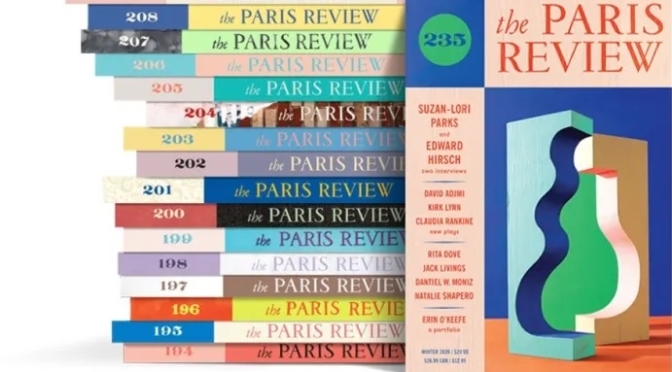
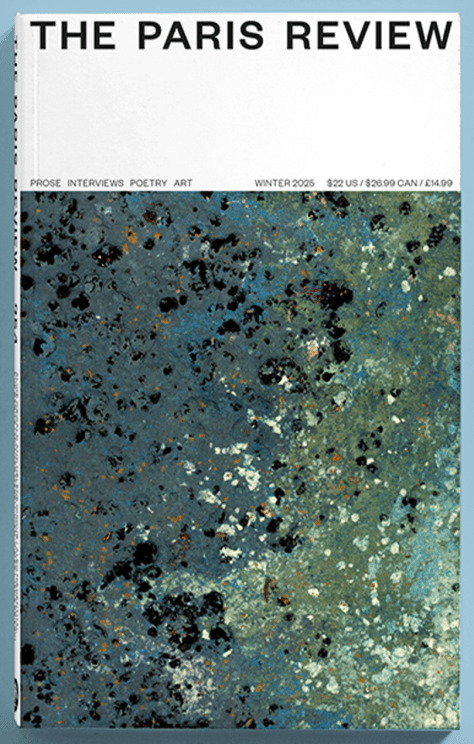
Image

THE PARIS REVIEW (June 24, 2025):

Fanny Howe on the Art of Poetry: “If I could say I was assigned something at birth, it would be to keep the soul fresh and clean, and to not let anything bring it down.”

Marie NDiaye on the Art of Fiction: “Oh, no! Reading beautiful books can’t be traumatizing. Seeing awful things can be—but reading? I don’t believe in that at all.”

Prose by Anuk Arudpragasam, Tom Crewe, GauZ’, Zans Brady Krohn, and Joy Williams.

Poetry by Will Alexander, John Berryman, Yongyu Chen, Eugene Ostashevsky, Ricardo Reis, and Nell Wright.

Art by Anne Collier, Celia Paul, and Alessandro Teoldi; cover by Tyler Mitchell.

LOS ANGELES REVIEW OF BOOKS – SUMMER 2025

LOS ANGELES REVIEW OF BOOKS (June 19, 2025): The latest issue of LARB features ‘Submission’ – all new essays, interviews, short fiction, poetry, and art reexamining the complex conditions of power (or a lack thereof).

Emmeline Clein finds pockets of faith in feminist writer Shulamith Firestone’s ostensibly airless spaces;

Jack Lubin examines the relationship between rap and supervised release;

Charley Burlock interrogates the myths surrounding wildfires, grief, and California’s supposed “gasoline trees”;

Cory Bradshaw describes the art and agony involved in making amateur porn;

Nathan Crompton and Andrew Witt discuss the documentary form and photographing Los Angeles

Become a member for all of that and more—including essays and features by Alexander Chee, Elizabeth Rush, and Tal Rosenberg; interviews with Samual Rutter and Abdulrazak Gurnah;

Plus, an excerpt from Yvan Algabé’s Misery of Love; fiction by Erin Taylor, Devin Thomas O’Shea, and A. Cerisse Cohen

Poetry by Farnoosh Fathi, Paula Bohince, John James, Caitlyn Klum, Sawako Nakayasu, and Harryette Mullen;

And art by Carla Williams and Talia Chetrit.

THE BRUSSELS REVIEW – SUMMER 2025 PREVIEW

THE BRUSSELS REVIEW (June 15, 2025): The Summer 2025 issue of The Brussels Review offers a captivating blend of fiction, nonfiction, and poetry, showcasing diverse voices and narratives. On its evocative cover, Ximena Maldonado Sánchez’s vibrant artwork, Terracotta, beautifully sets the tone for a collection defined by profound emotional depth and artistic exploration. You can also read a review of her work or listen to her journey in our new podcast: Call To The Editor on Spotify.

The issue opens with Sonnet Mondal’s poetic reflections, drawing readers into nuanced meditations on memory, loss, and heritage. His pieces, including “Fragments of Life,” “The Biscuit Factory,” “The Bridge at Midnight,” and “Grandpa’s Veranda,” evoke a poignant sense of nostalgia and the passage of time.

In nonfiction, Gaye Brown’s introspective essay “Some Gifts” elegantly probes the complex nature of generosity, intertwining personal anecdotes with thoughtful philosophical insights. Similarly, Sue Tong’s “Father in the Photograph” and Gina Elia’s “Show and Tell” offer deeply personal explorations that resonate universally, inviting readers to reflect on their own histories and relationships.

The fiction selection is particularly compelling, headlined by Patrick ten Brink’s imaginative and thought-provoking “The Word Thief.” Brink masterfully blends elements of mystery and fantasy to craft a tale that explores the profound power of language and memory. Beatriz Seelaender’s “Motion Picture Sickness” adds a clever and satirical dimension, examining fame, identity, and morality through the lens of contemporary pop culture with sharp humor and keen observations.

Louis Kummerer’s intriguingly titled “A Founding Father’s Guide to Contingency Planning” provides both historical nuance and sharp social commentary, while Charles Wilkinson’s “Hayden in March” and Danila Botha’s “Like Freedom or Fear” explore psychological landscapes with acute sensitivity and emotional authenticity.

The London Magazine – April/May 2025 Preview

THE LONDON MAGAZINE (April 2, 2025): The latest issue takes the city as its muse:

Joshua Mehigan finds poetic inspiration at a petrol station stop, on the way back from Atlantic City

Kasra Lang and Sara Ahmad explore London and its residents who are marginalised or ignored

Paul Stephenson goes to Paris and attempts to ‘exhaust a place’ à la Georges Perec

Gráinne O’Hare’s fiction takes us to Belfast, a city scarred by the effects of generational trauma