
‘Editor’s Picks’ Podcast (October 2, 2023) – A selection of three essential articles read aloud from the latest issue of The Economist. This week, the search for the antidote to ageing, why a bigger EU is a better EU (11:30), and Japan’s world-leading toilet culture (25:30).
Tag Archives: Europe
Opinion: Ukraine’s Long War, Asia Trade Evolves, A Disgraced UK Comedian
‘Editor’s Picks’ Podcast (September 25, 2023) – A selection of three essential articles read aloud from the latest issue of The Economist. This week, how to win a long war in Ukraine, what Asia’s economic revolution means for the world (11:05) and why a disgraced comedian is the symbol of a cruel, misogynistic and politically vacant era in Britain (18:52).
Opinion: AI Is Recasting Science And Rising Waves Of Hard-Right Populism
‘Editor’s Picks’ Podcast (September 18, 2023) – Three essential articles read aloud from the The Economist. This week, an analysis of how AI can revolutionize science and how a fresh wave of hard-right populism is stalking Europe.

Switzerland Travel: A Walking Tour Of Zermatt

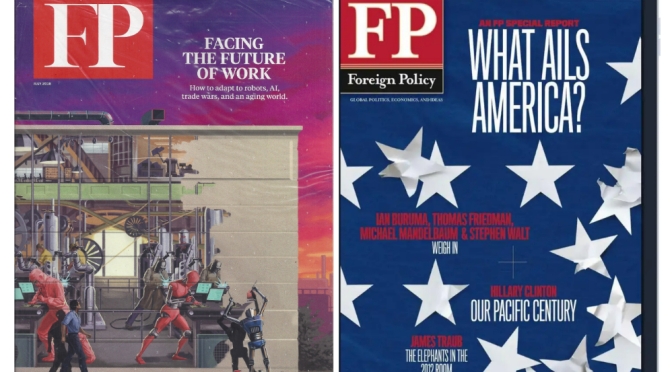
Preview: Foreign Policy Magazine – Fall 2023
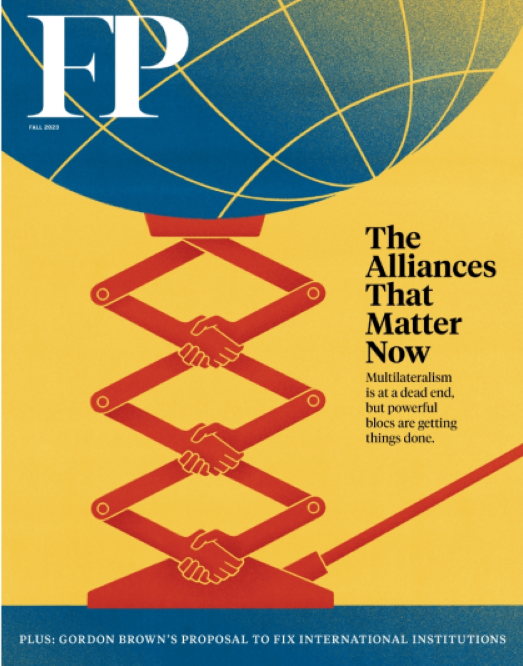
The G-7 Becomes a Power Player

Russia’s war and China’s rise are turning a talking shop into a fledgling alliance of democracies.
By G. John Ikenberry, a professor of politics and international affairs at Princeton University.
Time and again over the last century, the United States and the other liberal democracies in Europe, East Asia, and elsewhere have found themselves on the same side in grand struggles over the terms of the world order. This political grouping has been given various names: the West, the free world, the trilateral world, the community of democracies. In one sense, it is a geopolitical formation, uniting North America, Europe, and Japan, among others. It is an artifact of the Cold War and U.S. hegemony, anchored in NATO and Washington’s East Asian alliances.
Vivek Ramaswamy’s Foreign Policies Raise Eyebrows in Washington

The GOP’s rising star offers up a grab bag of ideas cribbed from Eminem to Richard Nixon.
By Jack Detsch
End American dependence on Taiwan’s semiconductor factories. Declare economic independence from China. Give India an AUKUS-like submarine deal. And stage a dramatic visit to Moscow to broker a deal to end Russia’s full-scale invasion of Ukraine.

Analysis: China’s Large Investments In Europe

These include ports, wind and solar farms, telecommunications, airports – the list goes on. But there are growing fears that Beijing could use its strategic investments to further its own political ambitions. A recent dispute between the Baltic nation of Lithuania and Beijing shed light on potential reactions from China.
It’s led European governments to step up their scrutiny of Chinese investments and attempt to figure out how to redesign their relationship with Beijing. Dr Yu Jie from Chatham House told CNBC that we’re going to see more frictions regarding Chinese investment in Europe looking ahead.
World Economic Forum: Top Stories- Aug 12, 2023
0:15 Scientists discover self healing metals – They have the ability to weld tiny cracks back together again without human intervention. Scientists were studying how microscopic cracks spread through platinum using a machine that repeatedly pulled on the ends of the metal. But after 40 minutes, the damage began to heal itself. The scientists said it was ‘absolutely stunning’ to watch first-hand. The finding revises some of our basic theories about metals.
1:42 Who owns a song written by AI – Music made with artificial intelligence has made headlines this year. In April, an AI-generated track cloned the voices of Drake and The Weeknd. Heart on My Sleeve racked up 20 million streams on Spotify, Tiktok and Twitter before copyright claims by Universal Music Group saw it pulled from platforms. The pop star Grimes has taken a different route, offering to split royalties with anyone who uses her voice on an AI track. The limits of creative copyright were once clear but AI has introduced uncertainty.
4:50 These special microbes kill harmful bacteria – The food industry struggles with persistent pathogens, such as Salmonella which causes fever, diarrhoea and stomach pain. In 2021, 96,000 cases of salmonellosis were reported in the EU. The illness costs up to €3 billion a year in health bills and lost productivity. These phage food safety solutions have been created by Phageguard. Phages are the most abundant organisms in nature and a natural solution to bacteria which they infect and dissipate. As well as being natural and safe, phages are specific to each target pathogen and unlike antibiotics, they don’t lead to side-effects or antimicrobial resistance (AMR)
6:24 Prescribing fruit and veg could save millions of lives – In the US, fruit and veg prescriptions would prevent almost 300,000 heart attacks and strokes and give people an extra 260,000 years of good health if they were offered to people with diabetes aged 40-79.
_____________________________________________
The World Economic Forum is the International Organization for Public-Private Cooperation. The Forum engages the foremost political, business, cultural and other leaders of society to shape global, regional and industry agendas. We believe that progress happens by bringing together people from all walks of life who have the drive and the influence to make positive change.
World Economic Forum: Top Stories- August 5, 2023
0:15 Half of Gen Z & Millenials live paycheck to paycheck – A new survey asked young people their biggest concerns. The cost-of-living crisis came out top. Many say they’ve been forced to take on side jobs to make ends meet or postpone big life decisions such as buying a house. And the extra stress is taking its toll. 46% of Gen Zs and 39% of millennials feel anxious at work all or most of the time and levels of burnout are on the rise. Their second biggest concern is unemployment.
1:51 This start-up recycles household batteries – The Better Battery Company sells batteries in special packaging. Its batteries are white at the positive end and blue at the negative. Inside the box, the batteries are arranged in rows with the white end upturned. When each battery runs out, you put it back in the box the other way up so it’s easy to see which are used and which are new. When the box is filled with spent batteries, you return it using a free postage label and the Better Battery Company sends them off to be recycled.
3:01 AI translates K pop hits into 6 languages – K-pop stars have recorded songs in Japanese and English before but a simultaneous 6-language release is a global first. Right now, the pronunciation correction process takes ‘weeks or months’, according to HYBE. But one day, AI could translate songs in real-time. This isn’t the only way AI is changing the music industry. Streaming platforms use AI to analyse users’ listening habits to pick the perfect playlist AIs are even composing their own music or being employed as collaborators.
4:48 New airline tires can cut pollution – Airless tyres could cut pollution and make punctures a thing of the past. Made of shape memory alloy, these tyres are puncture-proof, sustainable, and easier to recycle.
_____________________________________________
The World Economic Forum is the International Organization for Public-Private Cooperation. The Forum engages the foremost political, business, cultural and other leaders of society to shape global, regional and industry agendas. We believe that progress happens by bringing together people from all walks of life who have the drive and the influence to make positive change.
World Economic Forum: Top Stories- July 29, 2023
6 energy saving tips for hot weather – When it’s hot, your ceiling fan should turn anti-clockwise. This creates a downdraft and circulates the cool air. On winter mode, fans move clockwise instead. Pulling hot air upwards and dispersing it around the room.
France will help pay for people’s clothing repairs – The government will refund €6-€25 of the cost of mending shoes and clothes. It hopes the scheme will cut textile waste and help to create a more circular textile sector. 700,000 tonnes of clothing are thrown away in France every year. Two-thirds of it ends up in landfill. The global textile industry is a major source of both pollution and CO2. It generates 10% of the world’s total CO2 emissions. By 2050, this could be 25%.
This Finnish island wants you to turn off your phone – This summer, Ulko-Tammio is encouraging visitors not to look at their devices. Ulko-Tammio is a small island in the Eastern Gulf of Finland. It’s uninhabited and home to rare birds and plants. Visitors arrive by boat to birdwatch, hike and camp. Now, the island is encouraging them to switch off their devices, take a break from emails and social media and focus attention on their surroundings rather than their screen.
Japan is encouraging more women into science – Currently, only 1 in 7 Japanese scientists are women. So from 2024, a dozen universities are introducing quotas to urge more women to major in science, technology, engineering and maths, also known as STEM. The Tokyo Institute of Technology wants women to make up 20-30% of new students, up from 13% today. Nagoya University, Shimane University and the University of Toyama are also putting quotas in place. Currently, only 7% of female students in Japan major in science and engineering. The lowest in the OECD.
_____________________________________________
The World Economic Forum is the International Organization for Public-Private Cooperation. The Forum engages the foremost political, business, cultural and other leaders of society to shape global, regional and industry agendas. We believe that progress happens by bringing together people from all walks of life who have the drive and the influence to make positive change.
World Economic Forum: Top Stories- July 22, 2023
0:15 Solar panels are sending silver prices up – A new, more efficient panel design uses silver in paste for. This year, the solar sector could account for 14% of silver consumption, up from 5% in 2014. But globally, there’s a shortage of primary silver mines and demand is growing faster than supply. Experts say that solar panels could exhaust 85-90% of silver reserves by 2050. Here are 3 more news stories about energy this week.
1:41 This phone costs $12 – Its makers hope it will help close India’s digital divide. It’s not a smartphone, but a feature phone, that is, a simple handset with a keypad and a small screen. It’s called Jio Bharat. 250 million Indians still use 2G phones. But 2G technology is more than 30 years old. Its users can make calls and send texts but they can’t connect to the internet. Jio Bharat’s users can access 4G internet services from instant digital payments to music streaming
3:08 Europe’s largest green facade – It’s home to 30,000 young trees arranged in 8km of hedges. Covering an area the size of 4 soccer pitches. The facade covers a building called Kö-Bogen II in the heart of Düsseldorf, Germany. It shades the concrete roof from the sun and prevents the building and the surrounding air from getting too hot.
4:47 These blocks can help beat the climate crisis – Antora Energy uses excess renewable electricity to heat up blocks of solid carbon. These thermal batteries reach temperatures above 1500°C. This heat can be safely stored in the blocks for days on end until it’s needed to power 24/7 industrial processes. The industrial sector accounts for a quarter of global emissions and the majority of that stems from the need for heat.
_____________________________________________
The World Economic Forum is the International Organization for Public-Private Cooperation. The Forum engages the foremost political, business, cultural and other leaders of society to shape global, regional and industry agendas. We believe that progress happens by bringing together people from all walks of life who have the drive and the influence to make positive change.
 Boomers Daily