The Globalist Podcast (January 4, 2024) – The latest on Iran following the cancellation of president Ebrahim Raisi’s trip to Turkey and discuss the US decision to reopen border crossings with Mexico.
Plus: the release of the explosive Epstein papers and business news with economist Vicky Pryce.
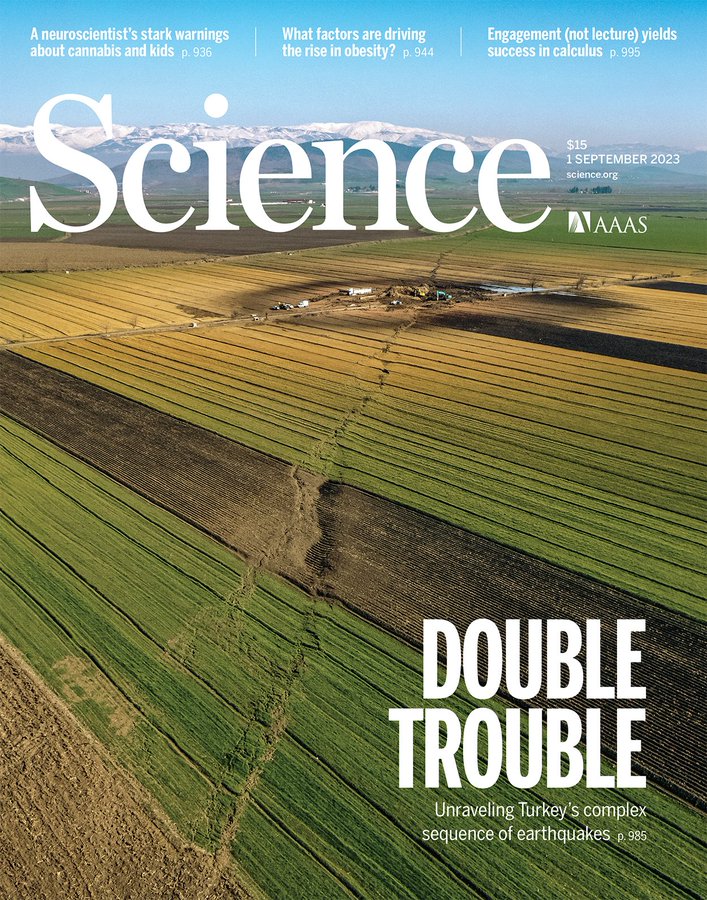
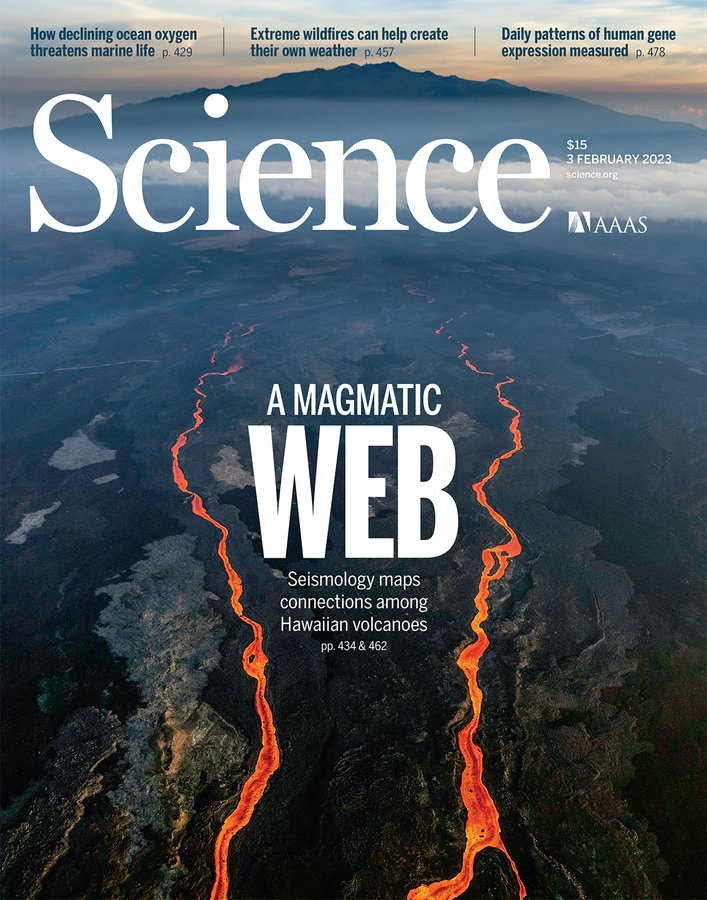
Science Magazine – September 1, 2023: The cover features a drone photograph, taken near the town of Kahramanmaraş, of the surface rupture produced by the first mainshock of the 2023 Turkey earthquake sequence shows agricultural fields offset by the fault slip.
Human and environmental health are inextricably linked. Yet ocean ecosystem health is declining because of anthropogenic pollution, overexploitation, and the effects of global climate change. These problems affect billions of people dependent on oceans for their lives, livelihoods, and cultural practices. The importance of ocean health is recognized by scientists, managers, policy-makers, nongovernmental organizations, and stakeholders including fishers, recreationalists, and cultural practitioners. So why are the oceans still degrading?
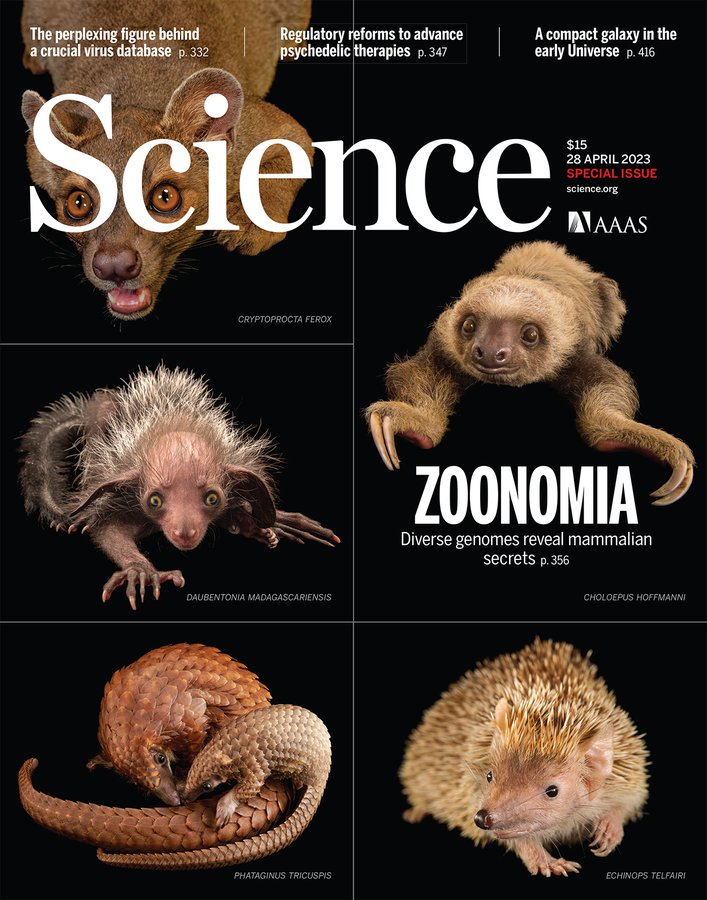
Science Magazine – April 28, 2023 issue: Mammals come in a wide variety of shapes and sizes, here represented by some of the least well known and most unusual—clockwise from top left: a fossa, a Hoffmann’s two-toed sloth, a lesser hedgehog tenrec, two tree (or white-bellied) pangolins, and an aye-aye.
Mammals are one of the most diverse classes of animals, ranging both in size, across many orders of magnitude, and in shape—nearly to the limit of one’s imagination. Understanding when, how, and under what selective pressures this variation has developed has been of interest since the dawn of science.
The 240 mammals sequenced through the Zoonomia project include the famous sled dog Balto, who was reported to have led a team of sled dogs in the final leg of the race to carry a life-saving serum to Nome, Alaska, in 1925. His genome, in conjunction with others, was used to reveal his ancestry and adaptations, as well as predict aspects of his morphology, including his coat color.
Researchers deploy a wave glider to measure seafloor displacement associated with earthquakes.PHOTO: TODD ERICKSEN
The destructive behavior of great earthquakes in subduction zones, such as in Japan in 2011, depends on details of the earthquake slip. A slip at shallow depth is the dominant driver of tsunami. Using recently developed seafloor geodetic instrumentation, Brooks et al. found that the deeper slip of the July 2021 magnitude 8.2 Chignik, Alaska earthquake was followed 2.5 months later by a second stage of (aseismic) slip. This approximately 2 to 3 meters of “silent” slip allowed the shallow fault to catch up with its deeper portion, reducing its future earthquake potential.
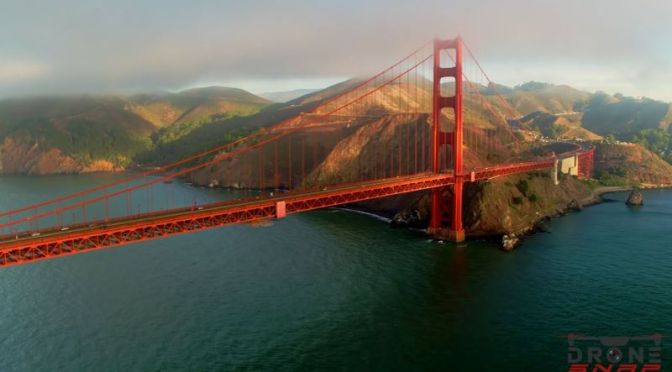
The B1M(April 26, 2023) – The Golden Gate Bridge in San Francisco is getting a huge earthquake upgrade.
IT’S the world’s most recognisable bridge and an icon of America. Defying incredible odds during its four years of construction, the Golden Gate has stood for over 80 years, and remains a critical piece of infrastructure — not just a pretty sight.
Today, it’s almost impossible to imagine San Francisco without this engineering marvel on its skyline. But that is now a very real possibility thanks to a threat that has loomed large over California for decades — a massive earthquake known as ‘The Big One’.
The iconic Golden Gate Bridge may not survive this unless it’s given some serious upgrades. Fortunately, that’s just what it’s getting with a huge seismic retrofit project that should see it stand for many more decades to come.
“It’s vitally important that we protect this icon, not just so people can come and take photos, but so our region can continue to function after a major seismic event,” Paolo Cosulich-Schwartz, director of public affairs for The Golden Gate Bridge, Highway and Transportation District, said.
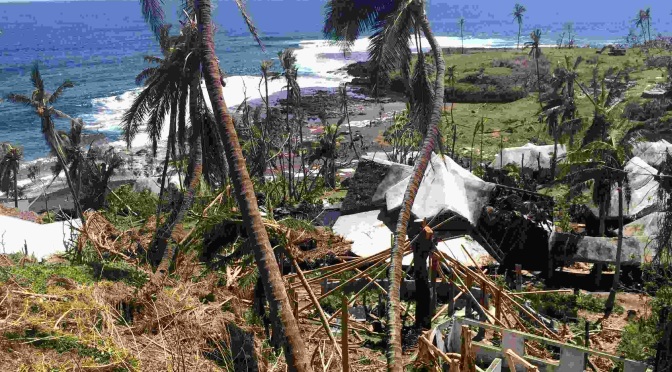
The Independent (March 28, 2023) – The tiny Pacific island state of Vanuatu was hit by two category-four cyclones and two earthquakes over three days this month, in a devastating onslaught that destroyed homes, cut power, and impacted 80 per cent of the population.
Scientists say global heating is already making major tropical cyclones like those that hit Vanuatu more frequent. Under moderate and worst-case climate scenarios, the country is expected to lose around 20-25 per cent of its GDP from natural disasters each year, according to a recent UN report. Later this month Vanuatu’s proposal for a top international court to clarify the obligations of states to tackle climate change and the consequences of not doing so under international law will be put to a vote at the United Nations.
Vanuatu is a South Pacific Ocean nation made up of roughly 80 islands that stretch 1,300 kilometers. The islands offer scuba diving at coral reefs, underwater caverns and wrecks such as the WWII-era troopship SS President Coolidge. Harborside Port Vila, the nation’s capital and economic center, is on the island of Efate. The city is home to the Vanuatu National Museum, which explores the nation’s Melanesian culture.
March 7, 2023: Almost a month on from the earthquakes in Turkey and Syria, we unpack the consequences of the disaster and look at the particular impact on refugees. Plus: Imran Khan is banned from Pakistan’s airwaves, the latest business news and episode two of our spy series.
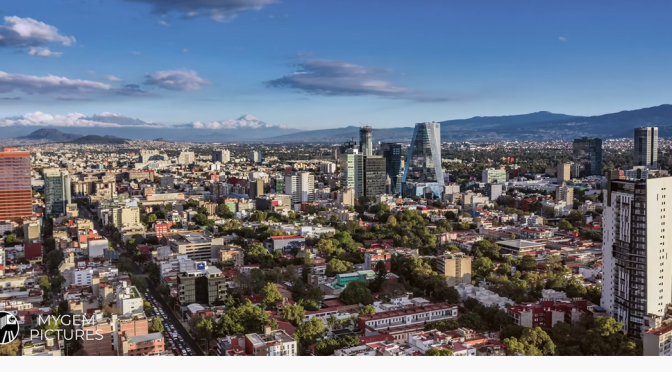
The B1M – TAKE a look at Mexico’s cities and you might spot some similarities.
You’ll see it’s a country that clearly knows a thing or two about urban sprawl, with hardly a skyscraper in sight. But look closely and you’ll find that skyscrapers do exist, just not really in any great numbers.
That’s because it’s one of the toughest places on Earth to build tall and engineers must grapple with the extremes of the elements, unforgiving ground conditions, congestion and the absence of some key resources.
Now though, after decades of building outwards instead of upwards, skyscrapers in Mexico are seriously on the rise and construction crews are managing to meet some immense challenges.
News, Views and Reviews For The Intellectually Curious








 Boomers Daily