Tag Archives: DW Documentary

Africa Views: ‘Safari Train’ From Tanzania To Zambia

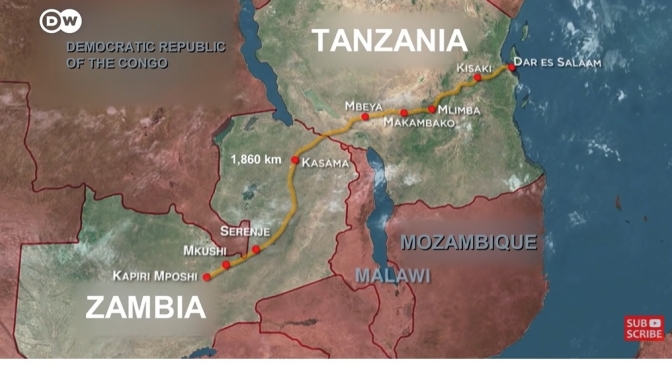
1970 marked the start of construction work on the Tanzania-Zambia Railway, or “Tazara” for short. Some 1,860 km of tracks were laid through thick forest, uninhabited savannah and mountainous terrain as part of one of Africa’s boldest infrastructure projects.

The route was inaugurated in 1976. It links the coastal city of Dar es Salam in northeastern Tanzania with the town of Kapiri Mposhi in central Zambia. Local people have an affectionate nickname for it – “Uhuru” or freedom, symbolizing the people’s hope for a more self-determined life.

But some of the stations along the line have been out of operation for years. Drivers always need to be on the lookout for monkeys, elephants, lions, hippos and giraffes. For passengers, the ticket includes a free safari. Leaving the Selous Game Reserve behind, the Tazara enters the most dangerous and spectacular section of the route.

Drone footage shows dramatic images of a largely unknown area sliced through by the railway line.
Rainforests: Indigenous People Struggle In Brazil

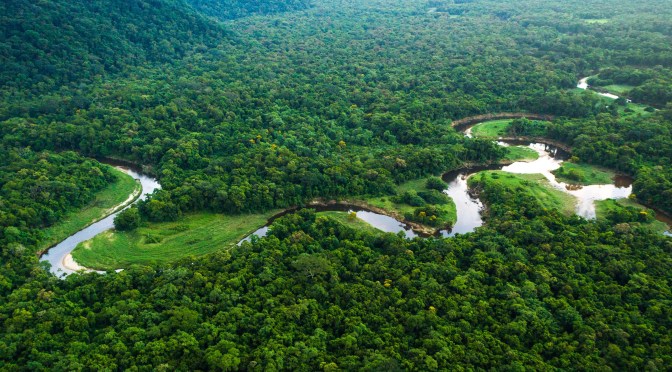
“They used to kill us with guns, now they kill us with deforestation and dams.” The Brazilian government’s failure to protect the Amazon forest is forcing the Munduruku indigenous people to take action against land grabs and illegal logging – and try to save the rain forest on their own.

In an unprecedented movement led by Chief Juarez Saw Munduruku, for the last six years indigenous people have been fighting the theft and destruction of their forest home. Since 1970, 20% of the Brazilian Amazon has been deforested. Logging and forest fires are threatening a further 20%. Scientists say that at 40% deforestation, we will reach the point of no return. The forest will be lost forever, replaced by savannahs – and the environmental consequences will be catastrophic.

The Amazon is often known as ‘the lungs of the planet,’ producing 6% of the world’s oxygen. It is no secret that the rainforest has been losing a dramatic fight against an array of threats, encouraged by capitalism, consumerism and greed – both legal and illegal.

In today‘s Brazil, some 600,000 square kilometers of land – an area about the size of France — are farmed by farmers who don’t officially own it. The military dictatorship (1964-1985) encouraged them to settle on state-owned land, but the farmers never became legal owners. As a result, speculators now seize the areas, clear the forests, then resell the plots with forged title deeds. This land grab, known as “grilagem” in Portuguese, has led to uncontrolled forest clearing and fierce conflicts.

The documentary was shot from 2014 to 2020, under three different Brazilian governments. It provides deep insights into the drama of the illegal occupation of state land and forest areas by organized crime groups. Several indigenous peoples have united under Juarez Saw Munduruku, leader of the Munduruku people, in a last-ditch bid to save the planet’s most important forest.

Microbes: A Microscopic View Of The Human Body

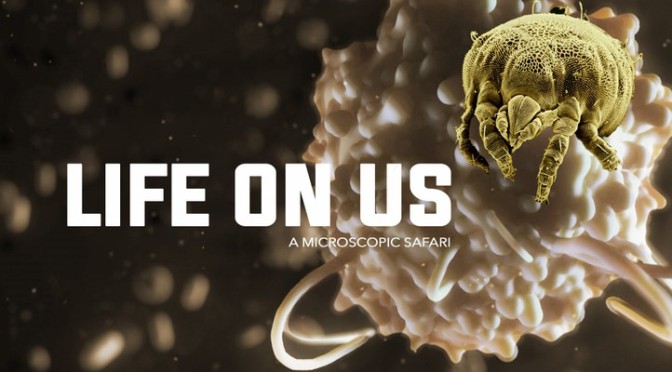
Among the unknown worlds in the universe, we can count our very own bodies. Like planet earth, each of us is made up of fascinating landscapes that are home to all kinds of wildlife.

The film takes the viewer on a unique microscopic safari, where we encounter some of the myriad creatures that live, thrive, compete, feed, are born and die on or inside our bodies. In fact, microscopic creatures play a more powerful role than we know: These life forms impact our health, our life expectancy, our physique and even our behavior.

The film renders these hidden worlds visible with the help of special effects: Combining cinematic electron microscopy with a super macro film technique. The documentary explains cutting-edge scientific findings, by turns surprising, enlightening and amazing. It raises questions about who we are, and how we exist in the unexplored, complex ecosystems that help constitute us.

We are born 100% human, but will die 90% microbial. Between these two points in our lives lies the unexplored terrain of ‘Life on Us’.

Views: Saving The White Rhinos Of South Africa

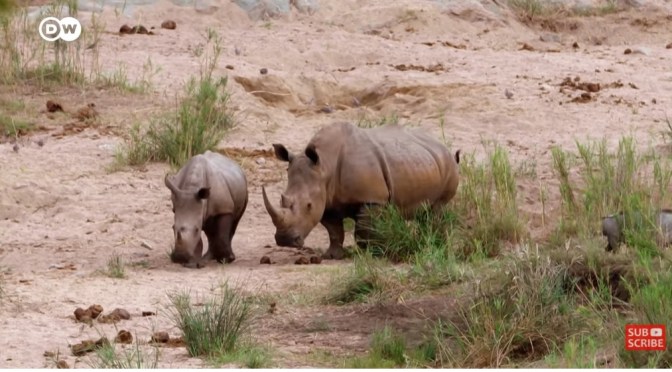
Poachers kill at least one rhino a day in South Africa. Their horns are in huge demand on the black market, and are worth more than gold. Anti-poaching squads are now increasingly better equipped: with night-vision equipment, drones and thermal imaging cameras.

Covering some 20,000 km2, Kruger National Park is one of the largest game reserves in Africa. It’s home to the biggest population of white rhinos in South Africa – and also the highest number of rhinos killed by poachers. One major problem for ranger teams is their small size in comparison to the vast area of territory involved. Another is the widespread poverty in the many villagers bordering the park – and it’s here that you ultimately have to begin if you want to win the battle to save the rhinos.

Vince Barkas has 30 years’ experience working in wildlife conservation, and little confidence in the current system’s effectiveness in protecting rhinos. In 1992 he founded the anti-poaching unit “Protrack”. Its teams operate in the Greater Kruger, which includes private wildlife reserves neighboring the national park.

Over the decades he says he’s seen no change, despite rangers being better armed and equipped, and wants to see new options: “We’ve shot poachers, arrested poachers, beaten up poachers. Everything. But we’ve never sat down and spoken.” Vince Barkas believes in the power of dialog rather than violence. He and his son Dylan made their way to Mozambique – where many of the poachers who kill rhinos in the Kruger National Park hail from.

Their journey takes them to the town of Massingir, where Barkas Snr. first began talking to poachers a number of years ago. The problem, he says, is rooted in the very concept of wildlife conservation: “We’ve made wildlife a rich white man’s thing – where white people hunt and benefit from it, and go to lodges etc. And we’ve kept black people out of it – behind a fence. We’ve got to change that approach.”

Climate Change: Flooding Rivers Ravage Bangladesh

Bangladesh is struggling just to stay afloat. Literally: By 2050, it’s estimated that climate issues will displace one in seven of the country’s inhabitants.

This film takes the viewer on a journey through Bangladesh, exploring why overflowing rivers flood three-quarters of the country every year. We see how flooding threatens the country’s food security, how soil erosion thrusts thousands into homelessness, and how climate refugees are forced to flee their homes in a desperate act of survival.

Along the way, we meet communities adapting to rising sea climate change by growing food on water. This is a strategy which could prove very useful in the near future, as rising sea levels threaten to inundate 11% of the country’s land in the next 30 years.

This documentary brings us to the front lines of the battle against catastrophic climate change in Bangladesh. It also tells the stories of activists who are bringing the dangers posed by man-made threats to light.

Egyptian History: Saving The Temples On The Nile

A timeless treasure, nearly lost forever. Without the UNESCO‘s unprecedented rescue operation, future generations might have only seen the stunning temples of Ramses II and Cleopatra in the pages of history books. Majestic stone colossi rising from the desert sands, structures like these kept their secrets for generations.

For centuries, Abu Simbel, Dendur, Amada and other monuments faced threats from looters, earthquakes, and floods. Ultimately, it was the waters of the Aswan Dam that nearly sealed their fate. In 1960, then Egyptian President Nasser ordered the dam‘s construction. In order to save the temples of Ramses II and Cleopatra, among others, UNESCO reached out to over 50 countries, and raised $80 million.

After receiving multiple proposals to save the structure, it was one from Sweden that proved successful. The plan: dismantling the complex and rebuilding it on higher ground. Between November 1963 and September 1968, saws were used to cut the two temples into 1,036 blocks, each weighing between seven and 30 tons.

Their new location was 64 meters above the old site and 180 meters further inland. After five years of construction, this major undertaking was completed on September 22, 1968. The Nubian temples of Abu Simbel are now a UNESCO World Heritage Site.

Politics & Technology: China’s Surveillance State

China is building a huge digital surveillance system. The state collects massive amounts of data from willing citizens: the benefits are practical, and people who play by the rules are rewarded. Critics call it “the most ambitious Orwellian project in human history.”

China’s digital surveillance system involves massive amounts of data being gathered by the state. In the so-called “brain” of Shanghai, for example, authorities have an eye on everything. On huge screens, they can switch to any of the approximately one million cameras, to find out who’s falling asleep behind the wheel, or littering, or not following Coronavirus regulations. “We want people to feel good here, to feel that the city is very safe,” says Sheng Dandan, who helped design the “brain.” Surveys suggest that most Chinese are inclined to see benefits as opposed to risks: if algorithms can identify every citizen by their face, speech and even the way they walk, those breaking the law or behaving badly will have no chance. It’s incredibly convenient: a smartphone can be used to accomplish just about any task, and playing by the rules leads to online discounts thanks to a social rating system. That’s what makes Big Data so attractive, and not just in China. But where does the required data come from? Who owns it, and who is allowed to use it? The choice facing the Western world is whether to engage with such technology at the expense of social values, or ignore it, allowing others around the world to set the rules.

History: The Legendary Beau-Rivage Hotel In Geneva, Switzerland

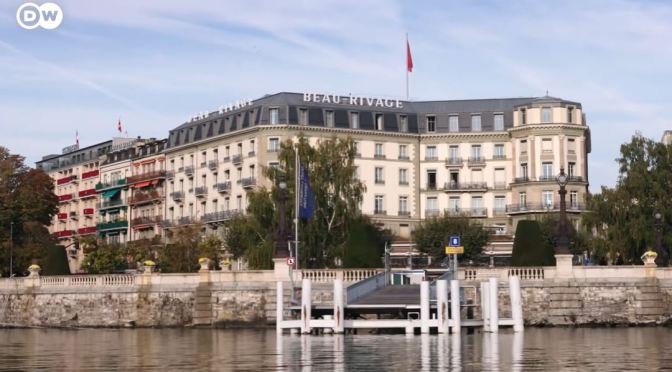
With its stunning view of Lake Geneva, the Beau-Rivage, in Geneva has attracted actors from Roger Moore to Angelina Jolie, and played host to political luminaries like Kofi Annan, Charles de Gaulle and the Dalai Lama. Political history has been made here, too: In 1898, the Empress “Sisi” of Austria was stabbed to death by an anarchist at the Beau-Rivage. Nearly a hundred years later, in 1987, the German politician Uwe Barschel was discovered dead here, in a bathtub. Family-run for generations, the hotel is impressive not just for its size, but also for its discretion. Now, director Jacques Mayer uses interviews, archival film and rarely seen photographs to vividly chronicle some of the most fateful years of the Beau-Rivage.

History: The Legendary ‘American Colony Hotel’ – Jerusalem (DW Video)

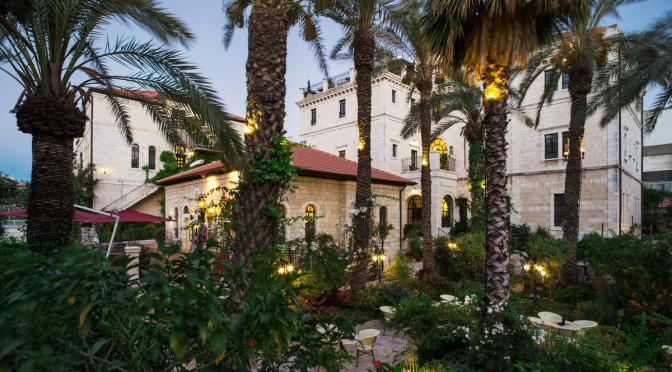
The elegant “American Colony Hotel” in Jerusalem is an island of tranquility in a troubled city. The grand hotel has lived through all of Jerusalem’s serious crises. Everyone is welcome here, no matter where they come from or what they believe. The name “American Colony Hotel” goes back to a group of 19th Century American pilgrims. In its early days, the grand hotel was located among olive groves outside Jerusalem’s city walls. For over a hundred years, many parties to the Palestinian-Israeli conflict have shaken hands, eaten and drunk here together. People mingle here in a way they would never do elsewhere. Behind it all is the fascinating story of Anna and Horatio Spafford, who, after several tragic events, moved from the US to the Holy Land with a community of devout Christians. With diligence, skill, and an insistence on neutrality and tolerance despite political difficulties, they created a hotel in a truly special location. Its atmosphere continues to attract illustrious guests from the worlds of politics, diplomacy, literature, art and entertainment.

Ecology: Scientists Breed Plants With Fast-Growing Roots To Revitalize Land

Humanity faces major challenges. Could roots hold the answers? It’s possible: Research shows that roots have the potential to provide food for the world’s population, stop climate change and help extract resources in an environmentally friendly way. Plants must withstand periods of drought and heat, as well as flooding, and they use their roots to do this. Roots also help them actively search for nutrients in the soil, while warding off dangers such as pathogens and toxins.

Now, scientists at the research institute Forschungszentrum Jülich are investigating root growth using high-tech methods. The goal is to breed stress-resistant seeds for plants with robust roots. They are not alone: In Sweden, Professor Linda Maria Mårtensson is conducting research on a perennial wheat variety that will ensure higher yields while protecting the soil. Along the world’s coasts, too, roots are a lifesaver.

Coastal ecologist Professor Tjeerd Bouma has discovered that if special grasses are planted in front of dikes, they create a salt marsh that acts as a natural breakwater. Meanwhile, geochemist Dr. Oliver Wiche of the Technical University of Freiberg is researching something known as “phytomining.” He wants to know which plants are best suited for mining metals from the soil. Could this root research give rise to a new, environmentally friendly branch of industry?