Tag Archives: CNBC Videos

Analysis: Why Demand For Armed-Drones Is Surging

Armed drones are growing in military importance as conflicts around the world have proven the utility of these effective tools of war. Companies in China, Turkey, and Russia, among others, have developed advanced remotely piloted aircraft that can use guided weapons on and off the battlefield.

The widespread use of drones in Iraq and Afghanistan by the United States to target and kill insurgents jump started a new chapter in the history of conflict. These high flying and remotely piloted aircraft could engage targets with impunity while the operators were safely working in a ground control station. Keeping the crews out of danger also made the drones politically cheap to use over dangerous skies.

Now more and more countries are gaining this military capability for their own purposes. “At the moment, we’ve seen over 100 states worldwide using military drones and that number is growing significantly” said Wim Zwijnenburg, Project leader, Humanitarian Disarmament at PAX. “We have over 20 states that are using armed drones in conflicts or outside of armed conflicts.”

Although larger and more complex drones, like the General Atomics MQ-9 Reaper are not cheap to develop or operate, smaller drones are becoming more ubiquitous in conflict zones. Limiting the proliferation of these smaller drones, and the ability to weaponize them, is a regulatory nightmare for government agencies around the world.

“Drones are just model airplanes with great sensors on them. And all of these are dual use and have been used in the civilian realm” said Ulrike Franke, a Senior Policy Fellow at the European Council on Foreign Relations. “And in fact, drones have risen enormously in the civilian realm over the last five to 10 years. And so controlling their export is really difficult.”

Analysis: The Future Of Geothermal Energy

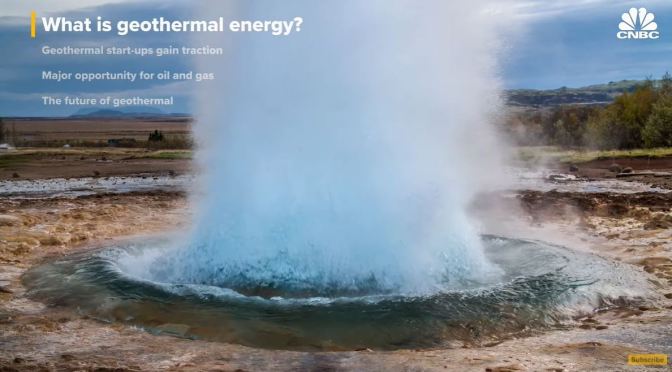
Miles below the Earth’s surface, there’s enough thermal energy to power all of humanity for the foreseeable future. It’s called geothermal energy, and it’s poised to play an increasingly large role as a source of always available, renewable power. Now, there are a number of startups in the geothermal space, working to figure out how to access this heat in difficult to reach geographies, at a price point that makes sense. And it’s even gotten the attention of oil and gas industry giants, who are interested in greening their portfolios while sticking to their core competencies – extracting energy resources from deep within the Earth. 

Air Travel: The Rise Of Emirates (CNBC Video)

Emirates, the long-haul carrier known for its luxury services, has set new standards for the way we travel. Like airlines everywhere, the carrier has been battered by the coronavirus pandemic. To keep customers safe and on board, Emirates adopted a variety of new protocols. The company also pivoted to cargo shipments to keep itself afloat. So will Emirates bounce back from the economic fallout pummeling the airline industry?

Analysis: Do The Wealthy Flee Higher Tax States?

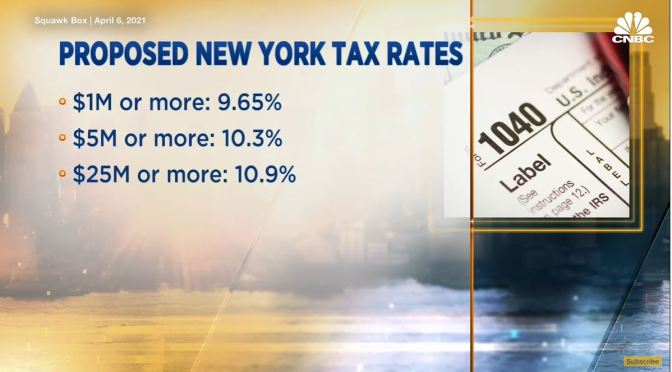
To balance their budgets during the coronavirus pandemic, states including New Jersey and New York have raised taxes on the wealthy. Conservatives warn that it will cause many of those who left at the onset of the pandemic make those moves permanent since they’re no longer bound to the physical locations of their offices or their children’s schools. But available data from 2020 show that the so-called exodus wasn’t as pronounced as initially projected, and the urban exit that did happen, was to suburbs rather than low tax states.

Analysis: The High Costs Of Air Pollution In The U.S.

Air pollution still remains one of the key environmental issues in the United States. Although it has seen incredible improvement since the 1970s, more than 4 in 10 Americans are still estimated to live in counties with poor air quality. Every year, air pollution kills more than 6 million people worldwide from heart attacks, stroke and diabetes. So just how clean is the air we breathe in the U.S.?

Culinary: Why Wagyu And Nobu Sushi Costs So Much

Would you pay hundreds of dollars for the best cut of steak? What about a cup of coffee or a bottle of wine? From steak to caviar, CNBC Make It breaks down whether luxury foods are worth their high prices.

00:00​ — Intro

01:01​ — Wagyu Steak – This is the best Kobe steak ever imported to the United States. It costs $450 for 13 ounces and if it was sold in a restaurant it would cost $900. That’s about $90 a bite. That’s because It’s an A5 Kobe steak with a BMS of 12. In the Japanese beef rating system BMS stands for Beef Marble Score. The BMS scale ranges from 3 to 12, with 3 being a normal amount marbling, think what in the butcher shop at your high-end grocery store. The highest rating is 12. Steaks that reach that level are almost white with fat. Very, very few cuts of meat reach a BMS of 12. Over the last 10 years, just five BMS 12 beef loin sets have been imported into the U.S.

05:27​ — Nobu Sushi – The omakase menu option at chef Nobu Matsuhisa’s namesake sushi restaurants runs nearly $200 per head. With locations in Beverly Hills, Aspen, and NYC, his restaurants count celebs like Justin Bieber and the Kardashian-Jenner clan. That’s expensive, but it’s by no means the most expensive sushi in the world, let alone New York. We set out to answer whether Nobu is worth the price and how does the quality of Chef Nobu’s menu compare to an average New York City sushi restaurant?

11:59​ — Jeni’s Splendid Ice Cream – It seems like pricy artisanal ice cream is everywhere these days. Once limited to brands like Ben & Jerry’s and Haagen-Dazs, the premium ice cream freezer at the grocery store is crowded with ice cream that’s handmade and includes top dollar ingredients. While brands like Halo Top, Ample Hills, and Jeni’s Splendid Ice Creams are for sale in a larger number of stores, the price can result in sticker shock. A pint of Jeni’s Splendid Ice Cream retails for $12 a pint. Here’s why pints have sky-rocked in price.

17:48​ — Coffee – Personal finance experts like Ramit Sethi and Suze Orman are split on whether buying coffee is a waste of money, but what about paying $100 for a cup? Elida Geisha Natural 1029 is currently the most expensive coffee in the world at $1,029 per pound. Is it worth the money?

26:12​ — White Truffles – There is something undeniably intoxicating about the smell of truffles. In fact, that potent smell is a major part of why truffles are so expensive. In 2019, someone paid over $130,000 for just over two pounds of white truffles. Interestingly enough, there’s a scientific explanation behind the intense reactions to the scent.

Politics: The Corporate Backlash To Georgia’s New Voting Law (CNBC)

Republican state legislators across the country began to formulate new voting laws in response to the tumultuous 2020 presidential election in State Houses across the country. In Georgia, the voting law known as SB 202 has become mired in controversy, as opponents of the law claim it will further voter suppression, and supporters of the new law argue that it will bring back confidence in elections.

Internet Service: Spacex’s ‘Starlink’ Explained (Video)

SpaceX’s broadband satellite internet, Starlink, is still in beta, but already has over 10,000 customers. The fledgling service is expected to be a cash cow for SpaceX, bringing in as much as $30 billion a year — more than 10 times the annual revenue of its existing rocket business. This revenue will be used to fuel Elon Musk’s ultimate goal of building a colony on Mars. Eventually, Starlink may even keep us connected on the Red Planet.

Video timeline: 00:00​ – Introduction 02:24​ – Understanding Starlink 07:15​ – SpaceX’s golden ticket 10:05​ – Challenges 16:12​ – Future of Starlink

Online Shopping: ‘Digital Coupon Codes’ – Making Curators Millions (Video)

Promo code sites have become big business, with digital coupons surpassing paper for the first time in 2020. Major deal sites make millions based almost entirely on commissions from each sale. They don’t sell shopper data and it’s not a scam. In fact, big companies like PayPal and Rakuten are buying up deal sites for billions.

From Honey to Slickdeals, Rakuten Rewards to Brad’s Deals, CNBC asked the major sites what it takes to find deals that are real and why the business model works. With the huge boost in online shopping during the pandemic, deal-finding sites have become a major business. In 2020, Inmar Intelligence found that digital coupons surpassed printed coupons for the first time ever. Also in recent years, behemoths like Goldman Sachs and PayPal have paid hundreds of millions – or even billions – for sites like Slickdeals and Honey that automatically curate coupon codes or offer shoppers cash back for making purchases through their sites.

Even banks like Capital One are getting into the game. The business model is not a scam. All major deal sites say they don’t sell shopper data. Instead, each sale generates a commission for the deal site and for the middleman known as the affiliate marketer – a company that connects the vast world of retailers with deal sites. With nearly 2,000 businesses in the daily deal site space, it’s a crowded industry filled with legitimate businesses as well as plenty of sites that are riddled with ads and expired coupon codes. That’s because regardless of whether a coupon code works, the site that provided the code will get commission for that sale. When the deals are legitimate, however, it can mean big money for shoppers, retailers, and the deal sites.

From Honey to Slickdeals, Rakuten Rewards to Brad’s Deals, CNBC asked the major deal sites, and shoppers, what it takes to find deals that are real and why the business model works. Watch the video to learn how saving consumers’ money makes big bucks for companies in the vast world of online deal hunting.