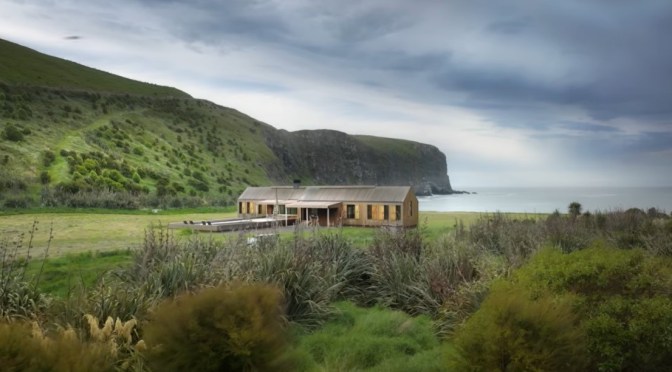
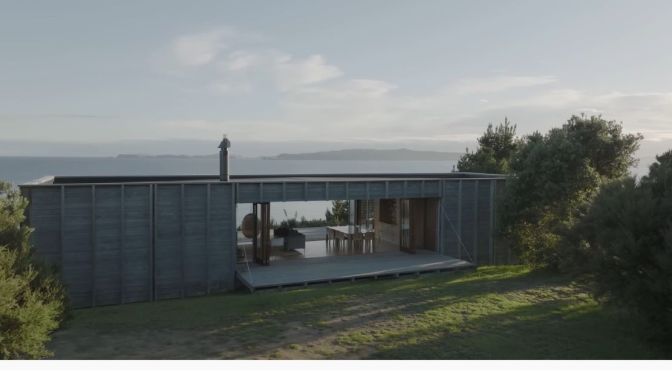
The Local Project (April 19, 2024) – Creating a place for people to reconnect with each other and nature, Patterson Associates built a cabin that sits upon the New Zealand landscape with advantageous coastal views. Located on a working sheep and cattle farm on the Banks Peninsula, Scrubby Bay is extremely remote.
Video timeline:00:00 – Introduction to the Remote Cabin 01:16 – The History of the Landscape 02:13 – An Insight into the Design Inspiration 03:02 – The Layout of the Cabin 03:57 – Approaching the Bay 05:02 – The Respectful Construction Process 05:30 – A Robust Material Palette 06:31 – The Functionalities of the Cabin 07:23 – A Sustainable Approach to the Build
The cabin home is architectural in its design and faces straight into the sub-Antarctic weather that comes in from the bay and down the mountains. Moreso, due to the home’s location, there is a wide variety of wildlife, including an array of birds, dolphins and whales. Faced with the decision of what to design and how to design it, the architect was drawn to building a residence that responded to the site. Moreover, seen in the house tour of the cabin is the bay, which tends to be covered in driftwood.
This helped influence the architect on choosing the unique materials and timber for the project. Designed to age and get better with time, Scrubby Bay is laid out as two simple gabled barn forms that are slotted together. Specifically arranged for families or large groups renting off Airbnb, the house can accommodate up to 16 people and encourages them to come together and experience the natural landscape. Three main bedrooms have been created for the adults and spread throughout the gabled form of the home. Additionally, seen in the house tour, at each side of the home are two gathering areas, one being an entertainment deck facing the ocean and the other is a pool facing the rear mountains.
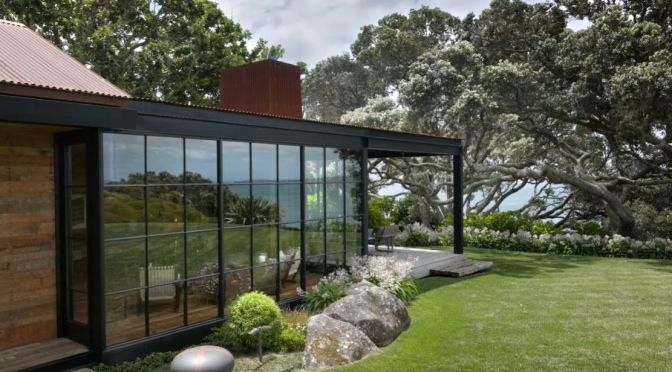
The Local Project (March 19, 2024) – The philosophical intent of The Folly by Chesire Architects is to provide a gentle cabin retreat for its owners. As such, the architect is concerned about employing a built interior quality of calm and repose to the cabin. Positioned on a clifftop in Takapuna, New Zealand,
Video timeline:00:00 – Introduction to The Secluded Cabin 00:44 – A 25-year Long Process 01:35 – Incorporating Considered Luxury 02:22 – The Cabin Floor Plan 03:17 – A Warm Material Palette 04:30 – The Collaborative Process 05:11 – Inspired by Personal Memories
The Folly is an end piece of a project that started near thirty years prior and is a single house with steps down the clifftop. To complement the original luxurious home, the architect built The Folly on the far northern edge of the landscape to embrace the sun and views. With each Chesire Architects projects there is an element of managed revelation, so that when one arrives there is hint of something before the reveal is slowly rolled out. Designed to look like a modern yet rusted shed, The Folly can be seen across the landscape from the main home, yet it isn’t until approach that its charm is revealed.
Following the house tour through the entry, there is a realisation that there is a level of consideration and luxury provided through the choice of materials, decor and interior design. The cabin appears to look casual and informal yet, through its meticulously planned interior design and architecture, a certain level of luxurious indulgence is felt. The floor plan of the cabin is kept quite simple as the architect has built it to serve two functions. One half is the garden shed and the other is the retreat and guesthouse with kitchen. The inside of the home is rectangular in shape and everything, such as the kitchen, lounge space and two-way fireplace, is visible upon entrance. Outside is an open-air terrace where one can sit and look out to the ocean.
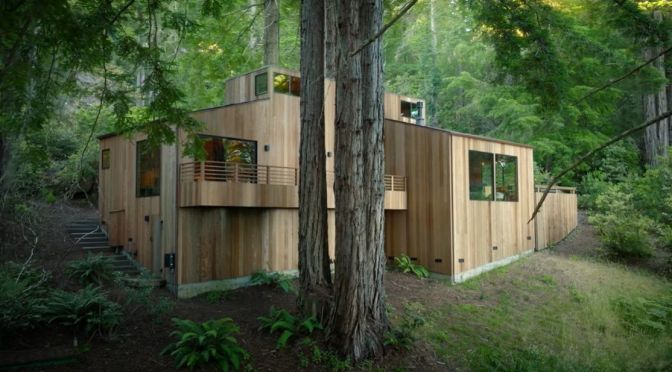
The Local Project (January 16, 2024) – The Local Project’s latest house tour takes viewers inside an architect’s own cabin at Sea Ranch, a planned Californian community founded in the 1960s by architect and developer Alan Boeke.
Video timeline:00:00 – Introduction to the Architect’s Own Cabin 01:50 – The History of The Sea Ranch Community 02:19 – Unique and Special Aspects 02:35 – A Walkthrough of the Cabin 03:37 – Aligning with The Original Footprint 05:40 – The Sea Ranch Design Rules 06:50 – A Natural Material Palette 07:50 – Proud Moments
Originally designed in the 1970s by William Turnbull Jr. – one of Sea Ranch’s pioneering architects – the cabin now belongs to Berkeley-based architect Joanne Koch, who has renovated the cabin with humility and respect. Pleasingly, it still exhibits many of Sea Ranch’s defining tenets surrounding quiet and environmentally sustainable architecture, reimagined through a contemporary lens. Joanne considers herself to be a “steward and caretaker” of this historic house at Sea Ranch. Stepping inside an architect’s own cabin, it is easy to see how she has respected the original design intent by gently reimagining the architecture and interior design.
The house tour highlights various spaces inside an architect’s own cabin, such as the kitchen, bedrooms, garden, courtyard and balconies, illustrating a blend of contemporary and heritage ideals through the interior design, furniture and décor. The materials echo the cabin’s 1970s sensibility with a subtle contemporary edge, and a palette of moss green, blue and grey not only reflects the hues of the surrounding forest but complements the amber tones of the sugar pine throughout the home. The kitchen features new cabinetry and refined yet elemental fixtures to reflect the rudimentary nature of the cabin. The presence of the surrounding landscape inside an architect’s own cabin is significant. “You just have this feeling that you need to look up into the trees,” Joanne says.
Sea Ranch Forest Retreat illustrates the importance of taking an informed and intuitive approach to architecture of heritage significance. With thanks to Joanne’s sensitive response, this cabin will prevail as an important piece of modernist American architecture.
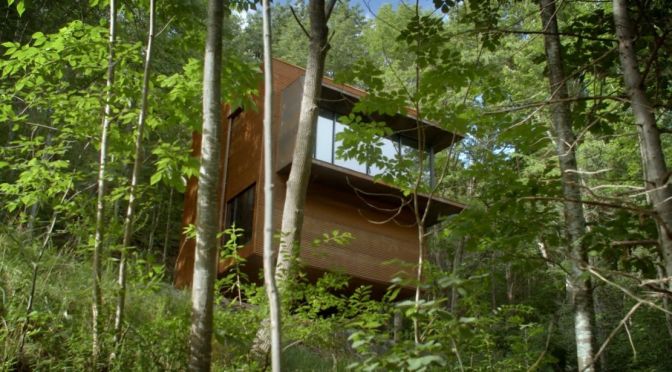
The Local Project (November 14, 2023) – White Rock is a secret cabin hidden in the woods in the Gaspereau Valley, an agricultural community in Nova Scotia, Canada. Designed by architect Omar Gandhi as a retreat for his family, a close friend’s family and their circle of friends and colleagues,
Video timeline:00:00 – Introduction to the Architect’s Own Secret Cabin 00:55 – A Shared Childhood Dream 01:26 – A Walkthrough and the Layout of the Cabin 02:39 – A Sparse and Simple Material Palette 04:01 – The Modern Kitchen Design 05:33 – Evolving The Design Elements 05:56 – Favourite Aspects of the Project
it is a deeply personal project that adds a dynamic layer to his studio’s portfolio. It is possible to visualise this secret cabin hidden in the woods in other forest settings, yet the architectural nuances bring a specificity to the design that belong only to this place. From a distance, the cabin is but a small disruption amid the ever-changing colours of the forest, yet up close, its architectural presence is monumental. The steel form is a confident expression of simple geometries and a bold reinterpretation of a typical secret cabin hidden in the woods.
A house tour reveals an aesthetic that is elemental and layered, from the bedrooms to the kitchen. The interior design, which is defined by smoked oak, raw steel shelving and wall-mounted industrial light fixtures, complements the architecture of this secret cabin hidden in the woods. As the lead architect, designer and homeowner, Omar embraced the opportunity to inject his personality into the design. He saw this project as an opportunity to experiment within the framework of his practice, thus, several pieces of furniture created in collaboration with local artisans and makers dot the interiors.
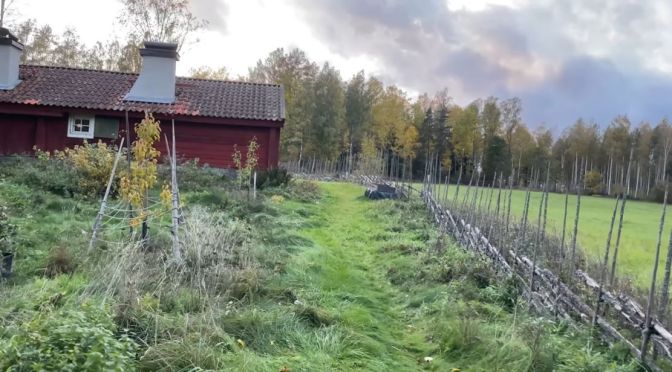
Stockholm Walks Films (October 17, 2023) – Windy October, leaves falling, going out for some chanterelles. There are mushrooms that will kill you, so I stick to chanterelles and funnel chanterelles that are hard to mistake for poisonous cousins
BALBEK BUREAU ARCHITECTS (AUGUST 2023) – Relogged is a private residential house located in Ukraine, in the green zone on the riverbank. Constructed using log cabin technique, it was redesigned by our studio to better align with the client’s style and way of living.
Near the fireplace area, there are vertical metal shelves for a substantial library and a cozy reading chair. For convenience, the shelves are equipped with movable metal stairs.
To the left of the entrance is a home theater. There is a step at the entrance since there used to be a garage with a different floor level, making the theater area recessed.
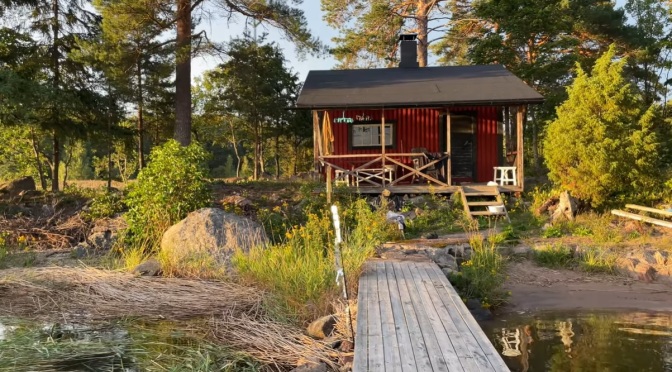
Stockholm Walks Films (August 9, 2023) – A summer walk by a cottage on the Baltic Sea. Many Swedes have summer homes, and actually prefer them to be rather old fashioned without modern comfort.
Hang up your hand washed clothes outside and take a morning swim instead of a shower no matter the temperature and forget about indoor plumbing. A traditional sauna is what saves you those cold summers when the rain keeps pouring.
The Local Project – (March 21, 2023) – Only reachable by boat, Marra Marra Shack by Leopold Banchini Architects is a hidden eco-friendly timber cabin that embraces a quiet lifestyle removed from the bustle of city living.
Video timeline:00:00 – Introduction to the Eco-Friendly Timber Cabin 00:46 – The Site and its Location 01:06 – The Brief: Simplicity and Discovery 01:30 – Working with a Remote Construction Site 01:59 – Hand Built and Off-Grid 02:32 – A Walkthrough of the Cabin 03:06 – The Feature Window 03:57 – A Timber Structure 04:29 – Custom Made Furniture 05:00 – The Materials 05:36 – Hidden in Plain Sight
As Leopold Banchini Architects’s first Australian project, the hidden eco-friendly timber cabin required only two bedrooms, easy living spaces and a connection to landscape. Using the occasion to discover the Australian landscape, the Swiss architect has used the unique crafts only available in this country. The entire building has been completed by two carpenters and using materials that required no heavy machinery.
Additionally, each chosen material responds directly to the complexity of weather, tides and floods experienced in the unique riverside location. Sitting on a slope, the hidden eco-friendly timber cabin welcomes guests with an awe-inspiring reveal upon arrival at the renovated jetty. After walking up the stairs the house tour begins at the entrance to the main living spaces, which includes the living room, dining area and kitchen. Located to the rear of the shack are two smaller bedrooms with bathrooms, both of which have been designed to offer solitude where the owners can enjoy their own space.
Finished with a large window that overlooks the river, the living room gives the impression that the home sits upon the water instead of above. By using counterweights, the opened window turns the living space into an inside and outside deck, allowing a deeper connection to the wider surrounds. The interior of the hidden eco-friendly timber cabin has been imbued with locally sourced timbers, including iron bark that is used for the pillars that hold the home together. Other elements within the home, including the stairs and flooring, are made from turpentine wood from the old jetty, while spotted gum forms the structural beams along the roof of the cabin.
Additionally, the furniture of the home has been designed specifically for Marra Marra Shack by using leftover wood from the construction. Other elements in the home, including the fireplace, sink and all steel elements, have been custom made to resolve the few needs of the owners while staying in the house. Being in the middle of an Australian national park, the architect had to respond to certain elemental outcomes including floods, fire and tide heights. Built up on a slope to respond to the conditions, the exterior of the home has also been covered in fibre cement and plaster board to address fire safety in the warmer months.
While the exterior of the hidden eco-friendly timber cabin appears to be made of other materials, it is evident when entering the home that the interior is entirely made of timber. Elevated and surrounded by trees, Marra Marra Shack does not transform the landscape but becomes one with it.
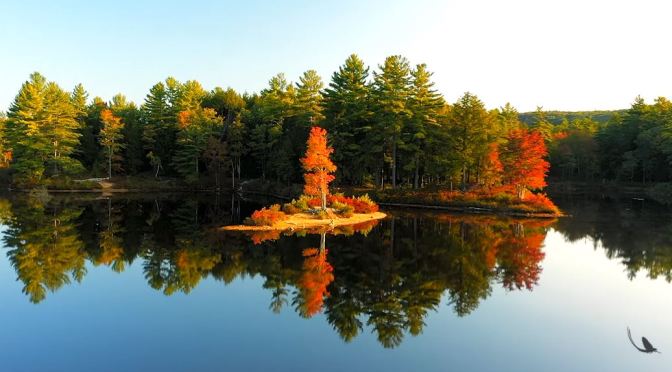
In this series, I use my favorite fall foliage footage from last year to help tell the story of the true mystery of autumn. This is part 1 of a 2 video series. I love curating my best fall shots from the year prior into one or two jam packed videos and look forward to continuing this idea as the years go by. This one features some beautiful cabin surrounded in autumn leaves, hot coffee and the crunch of leaves on the ground, cider donuts, pumpkins, apple picking, fall aerial drone work and a timeless soundtrack to tie it all in.
Coromandel Bach, an architect’s own tiny cabin, is designed by Crosson Architects as a functional holiday home. The timber residence is the ideal place of retreat away from busy urban life. Settled on the eastern side of The Coromandel Peninsula, Coromandel Bach is an architect’s own tiny cabin.
Video timeline: 00:00 – The Local Project Print Publication 00:10 – Introduction to the Architect’s Own Tiny Cabin 00:36 – Designing Using Timber 01:35 – The Perfect Holiday House 02:33 – Entering the Tiny Cabin 03:19 – The Bathroom 04:00 – The Kitchen and Dining Spaces 04:23 – An Experimental Home 05:42 – Celebrating Success 06:04
The holiday house sits on a site with no other buildings; no bush, just a north-facing view to white sandy beaches and a series of islands. As an architect’s own tiny cabin, Coromandel Bach expresses a studious approach to form and function. In a manner reminiscent of a suitcase, the architecture of the home can fold open or closed depending on the needs of the occupant, protecting its interior from the natural elements in some instances or embracing the outdoors in others.
The inspiration underpinning Coromandel Bach’s ‘refined camping’ is thoroughly executed, as would be expected in an architect’s own tiny cabin. Crosson Architects omits curtains and drapes from the interior design, enabling occupants to rise with the sun. Nature is celebrated using natural timber and through innovative features such as a bathtub on wheels that allows bathing outdoors in the morning sun or under the stars.
A unique example of an architect’s own tiny cabin, Coromandal Bach is a textural building with an innate sense of dynamism. The residential experience proposed by Crosson Architects is synonymous with the experience of nature.
News, Views and Reviews For The Intellectually Curious




 Stockholm Walks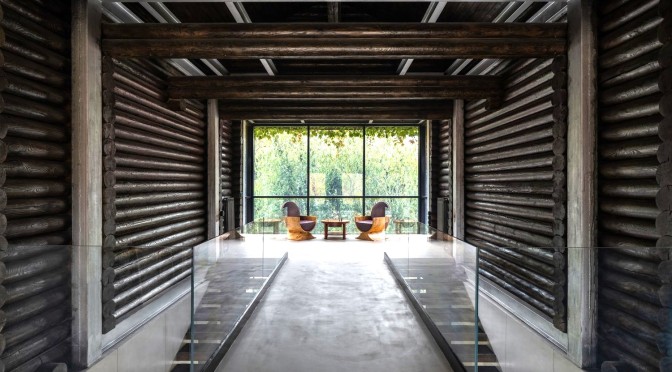





 Boomers Daily