The argument of Peter Watson’s hugely ambitious The British Imagination: A history of ideas from Elizabeth I to Elizabeth II is that “The essential arc of British history – intellectual and creative history, just as much as political, economic and military history – is of a small, indeed tiny, country sequestered on the north-west coast of Europe that over the centuries would forge the largest and most unlikely empire the world has seen”. It may seem odd to be reading this in the present depressed state of the nation, although Watson stresses from the outset that the concept of “the British imagination” embraces its hospitality to foreign influences and eventually to the power of a wider “Anglosphere”.
English virtue battles the pagan
The genesis of Far from the Madding Crowd
The texture of etcetera
What smartphones can’t record
Freeing Thomas Mann
Modern English translations that do justice to the work
The subject of this excellent biography wished to be remembered as Jan ‘Empire’ Morris, author of the great imperial trilogy Pax Britannica, but she correctly predicted that the valedictory headlines would read ‘Sex Change Author Dies’. As James Morris, he had won early fame as the Times reporter who broke the news of the conquest of Everest on Coronation Day, 1953. And Morris’s real distinction, as Sara Wheeler affirms, was as a travel writer. It was a term she loathed. (Wheeler follows Morris’s own lead in using male pronouns for the author’s early life and female ones after 1970, when transition was nearing completion.) But as a young man James had immersed…
Stalin’s Apostles: The Cambridge Five and the Making of the Soviet Empire By Antonia Senior
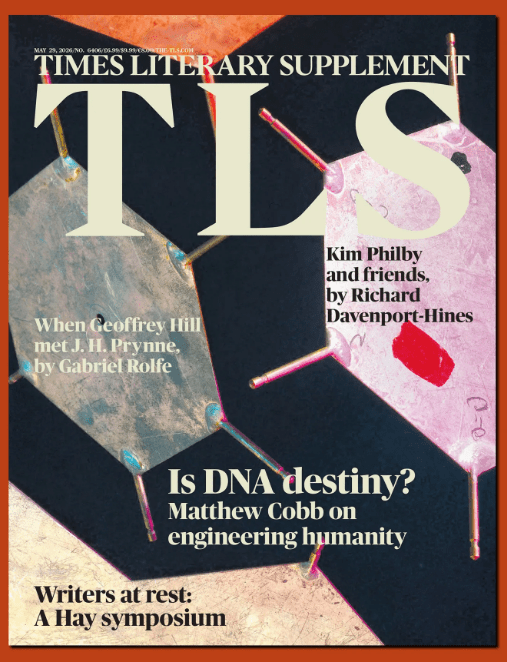
It may be thought that the notorious Cambridge spies – the majority of them members of the Apostles, that university’s secretive, elitist society – had been written out. But, as Stalin’s Apostles makes clear, such is not the case. Most of the books on what the KGB later called their ‘Magnificent Five’ – Kim Philby, Guy Burgess, Donald Maclean, Anthony Blunt and John Cairncross – have dwelt …
We Know You Can Pay a Million: Inside the Dark Economy of Hacking and Ransomware By Anja Shortland
Not so long ago, stories about powerful computer viruses apparently spreading around the world and threatening to bring modern life to a halt regularly filled the news. These days, cybercrime rarely makes the headlines, and most of us have become inured to warnings that our passwords have been found in a data leak. Yet ..
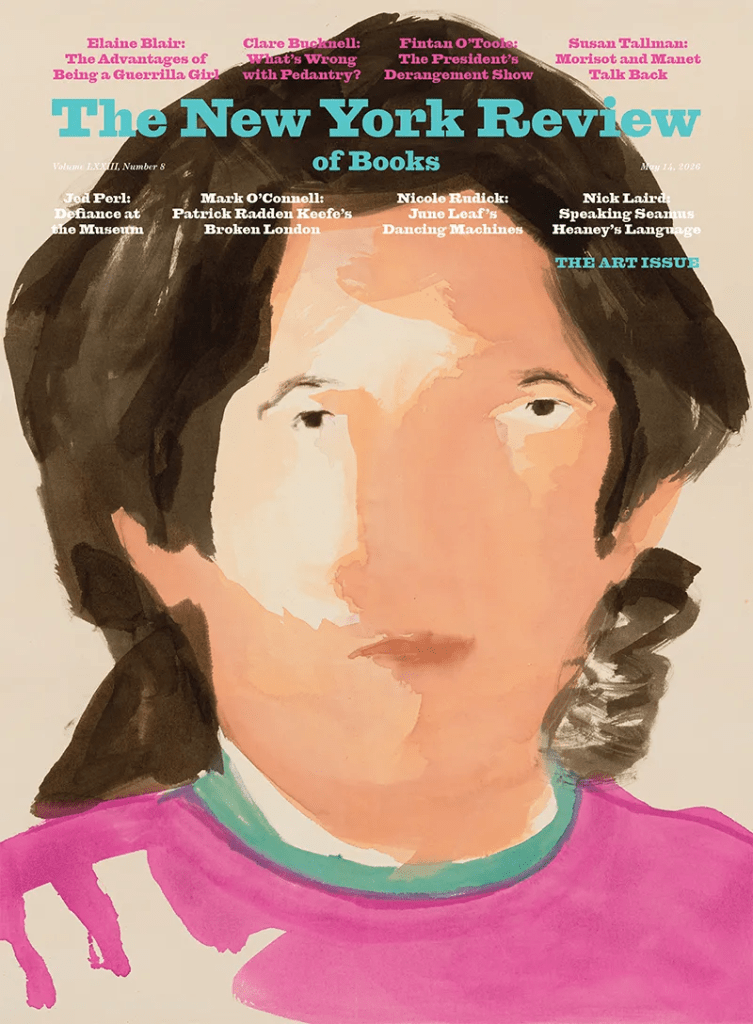
Sarah Schulman on the Art of Nonfiction: “I like to have my say, obviously. And if people would have just let me talk, some of these books wouldn’t have had to be written.”
Darryl Pinckney on the Art of Nonfiction: “There are moments when you run up against a white wall—there’s a white man, white man, white man, white man—and the story somehow has to be uncovered.”
Prose by Ingeborg Bachmann, Dan Bevacqua, Patrick Cottrell, Zans Brady Krohn, Tao Lin, David Szalay, and Yu Hua.
Poetry by Inger Christensen, Rachel Lapides, Enrique Lihn, Joyelle McSweeney, Nakahara Chuya, and Asiya Wadud.
Art by Cecily Brown, Tom Fairs, and Cauleen Smith; cover by Cecily Brown.
THE NEW YORK REVIEW OF BOOKS: The latest issue features Anne Enright on a day in Jeffrey Epstein’s life, Jacob Weisberg on the Great Crash, Ingrid D. Rowland on Giorgia Meloni alla fresco, Robert G. Kaiser on Citizen Bezos, Marilynne Robinson on two-party tyranny, Catherine Nicholson on the first diarist, Nathan Thrall on a lost Hebrew classic about the Nakba, David Cole on the fate of affirmative action, Aaron Matz on satire, Orville Schell on Chiang Kai-shek, Mark Lilla on a nineteenth-century protofascist, a poem by Patricia Lockwood, and much more.
When Jeff Bezos bought The Washington Post in 2013 and promised to find inventive ways to make journalism profitable in the digital age, he seemed like a godsend. He wasn’t.
The Leiden Collection—one of the largest private collections of Dutch art in the world—was conceived as a “lending library for Old Masters,” animated by the humanist spirit found in Rembrandt’s paintings.
Art and Life in Rembrandt’s Time: Masterpieces from the Leiden Collection – an exhibition at the H’ART Museum, Amsterdam, April 9–August 24, 2025, and the Norton Museum of Art, West Palm Beach, Florida, October 25, 2025—March 29, 2026
The Leiden Collection Online Catalogue, Fourth Edition edited by Arthur K. Wheelock Jr. and Elizabeth Nogrady
The historian A J P Taylor was at Oxford during the general strike of 1926. After it, he later recalled, relations between the minority of undergraduates, such as himself, who had gone to help the strikers and those who had signed on as special constables or volunteer strike-breakers were cordial. Only those sensible men who had stuck to their books and essays were disdained. The whole episode seemed funny in a stereotypically English way – like a Punch cartoon brought to life.