Tag Archives: Book Review

Literary Essay: “Infinite Interiors – On the Twenty Best Novels of All Time”

The following essay was written by ChatGPT and edited by Intellicurean from an article titled “The 20 best novels of all time” written by Claire Allfree and published in The Telegraph book section on July 6, 2025.

When a culture attempts to consecrate a definitive list of its greatest novels, it risks both an admirable arrogance and a kind of elegiac futility. The recent selection of The 20 Best Novels of All Time, published by The Telegraph, seems at once a celebration of the novel’s inexhaustible possibility and an implicit acknowledgment of our own waning capacity for reading with genuine urgency. It is as though we assemble these canons less to instruct our descendants than to reassure ourselves that we have not entirely forgotten how literature once moved the soul.

One cannot help but admire the breadth and seriousness of this catalogue. It stretches from the dreamlike elegance of The Tale of Genji—a work whose thousand-year distance intensifies its immediacy—to the compulsive self-dissection of Knausgaard’s My Struggle, a testament to our age’s faith that self-disclosure can substitute for narrative shape. What holds these disparate texts together is not merely their historical significance but their shared aspiration to render life in all its unmastered perplexity.

If Harold Bloom were to begin here, he might call attention to The Tale of Genji as an early demonstration of what he once termed the “internalization of romance.” It is a book that transcends its courtly gossip to become an inexhaustible study in desire’s transformations, a mirror to the reader’s own fluctuations of attachment and estrangement. We encounter Genji’s erotic restlessness as both scandalous and poignantly familiar, for the novel’s true subject is the incommensurability between longing and fulfillment—an incommensurability that modern fiction has inherited as its principal obsession.

James Wood, by contrast, might focus on Middlemarch as the novelistic apogee of moral realism. Eliot’s genius lay in her refusal to reduce her characters to mere emblems of ideology or historical process. Instead, she endowed them with what Wood has called “free indirect style’s psychic oscillation,” a prose capable of inhabiting and exposing consciousness in the same instant. It is a book that dares to be both panoramic and exquisitely local, to weigh the ambitions of a nation against the disappointments of a single marriage bed. If there is a single argument to be made for the continued relevance of the realist novel, it is that Middlemarch remains more acute about our interiority than any contemporary memoir.

And yet one cannot ignore how this list gestures toward the novel’s capacity for formal subversion. Ulysses, with its irreverent transformations of the Homeric epic into the trivial routines of Dublin, still feels scandalous in its abundance. Joyce’s genius is not only in his linguistic pyrotechnics but in his suspicion that consciousness itself can never be adequately represented. His prose, that shifting mosaic of styles and registers, offers no comfort to the reader who seeks transparency. Instead, it confronts us with the knowledge that the novel’s greatest power may reside in its refusal to cohere.

This refusal—to simplify, to console, to moralize—animates many of the twenty selections. Invisible Man is less a conventional narrative than a hallucinatory initiation into the American underworld of racial invisibility. Ellison’s rhetorical bravado, his blending of surrealism and jeremiad, still outpaces the efforts of more contemporary chroniclers of identity. To read Invisible Man today is to recognize how easily literary radicalism becomes cultural commonplace, but also to remember how singular its achievement remains.

Nor does the list shy from novels that embrace the uncanny. Bulgakov’s The Master and Margarita may be the most exuberant refutation of realist pieties ever composed. Its supernatural comedy is both a rebuke to Stalinist orthodoxy and a reminder that the imagination is an inherently seditious faculty. If much of the 20th-century novel sought to dismantle the illusions of bourgeois life, Bulgakov’s masterpiece demonstrates that irony and enchantment can be revolutionary forces.

Yet if Bloom were to caution us, he would do so against the temptation to read these novels exclusively as instruments of social critique. Literature endures precisely because it exceeds its momentary political applications. War and Peace is indeed an anatomy of the Napoleonic Wars, but it is more crucially a demonstration of how historical consciousness itself can become an object of artistic inquiry. Tolstoy’s genius was to discover that the novelist’s truest fidelity is not to facts but to the felt perplexity of lived experience.

It is striking how Robinson Crusoe stands at the inception of the English novel, bearing within it the seeds of many later contradictions. Defoe’s narrative is, on the surface, a hymn to industry and resourcefulness. But the same story—of a man claiming dominion over an island—also encodes the imperial impulse, the confidence that the world exists to be measured, catalogued, and possessed. What once seemed the purest adventure has become, to modern readers, an uneasy parable of conquest.

One also encounters here the severe naturalism of Thérèse Raquin, a work whose lurid determinism feels almost an affront to Victorian piety. Zola’s lovers are not tragic in any redemptive sense; they are specimens trapped in an experiment of their own appetites. And yet there is a perverse grandeur in the novel’s refusal to pretend that desire leads anywhere but into the pit.

New Grub Street too is a novel about entrapment—this time not by passion but by commerce. Gissing’s weary chronicling of literary London feels uncannily prophetic, as if he anticipated the rise of every ghostwritten bestseller and every writer forced to commodify a persona. What is most unsettling is that he offers no counterexample: no heroic idealist who transcends the marketplace, no unspoiled domain of “pure” art. In this sense, the book remains an indispensable autopsy of cultural production.

If Zola and Gissing reveal the suffocating material conditions of life, Moby-Dick reveals the existential abyss. No novel is more saturated with the terror of cosmic indifference. Melville’s prose—sometimes biblical, sometimes madcap—collapses the distance between metaphysics and anatomy, making the whale not merely an animal but an emblem of the universe’s mute resistance to comprehension. In Bloom’s phrase, it is the American epic that devours all interpretations, a text that renders the critic humble before its incommensurate ambition.

One finds a different kind of ambition in Party Going, where Henry Green distills modernist unease into something almost glacial. Its stranded revellers, imprisoned in their own frivolity while fog swallows the city below, seem to embody an entire civilization’s failure to apprehend its own decline. The novel is both slight in incident and inexhaustible in implication—a reminder that the modernist fascination with stasis can be as provocative as any narrative pyrotechnics.

Proust’s In Search of Lost Time remains the most exhaustive testimony to literature’s faith in consciousness as a world unto itself. No novel before or since has so patiently mapped the minute inflections of memory, the subtle humiliations and triumphs of social life. It is a book that tests the limits of our attention but also rewards it with an intimacy that becomes, paradoxically, universal.

The Great Gatsby, meanwhile, retains its status as a parable of aspiration’s inevitable corrosion. Fitzgerald’s sentences are so lapidary that their loveliness can almost distract from the novel’s acrid judgment. Gatsby’s dream—at once romantic and predatory—has become the template for American self-mythology. That the dream collapses under the weight of its illusions is precisely what grants it the force of prophecy.

It is striking, too, how many of these novels seek to articulate the experience of cultures in collision. Things Fall Apart is the most lucid demonstration of Achebe’s conviction that narrative authority must be reclaimed by those whom empire has consigned to silence. Okonkwo’s tragedy is not only that he fails to adapt but that his story has been written over by the conqueror’s language. Achebe’s triumph is to create a form that both inhabits and transforms that language.

Closer to our own era, The Country Girls quietly ignited a literary insurrection. O’Brien’s candid portrayal of female desire and disillusionment, so scandalous in 1960s Ireland, now seems almost decorous in its gentleness. Yet its influence remains incalculable. It taught a generation of writers that the domestic could be radical, that the most private confessions might unsettle entire cultures.

No less ambitious, though in a different register, is The Golden Notebook. Lessing’s formal fragmentation enacts the very psychic disintegration it describes. Anna Wulf’s notebooks—political, personal, artistic—refuse to reconcile into any coherent identity. In this refusal, Lessing anticipates the confessional experiments of Knausgaard and the autofiction that now dominates so much literary discourse.

The Rings of Saturn, by W.G. Sebald, is a late testament to literature’s capacity to hover between genres—memoir, travelogue, essay—and to become, in that ambiguity, something more resonant than any of them alone. Sebald’s melancholy is not performative but almost geological: the sorrow of civilizations grinding into dust, of memory dissolving into rumor.

If Sebald writes out of mourning, Knausgaard writes out of a hunger so relentless it often seems pathological. My Struggle is both monument and provocation: an assertion that the granular details of ordinary life deserve the same attention Proust once gave to aristocratic salons. Whether this is a triumph of honesty or a capitulation to narcissism is a question the reader must answer alone.

And then there is Conversations with Friends, whose subdued prose and emotional diffidence reflect an era uneasy with grandeur. Rooney’s novel is not so much plotted as observed: a record of glancing attachments, tentative betrayals, and the provisional negotiations of millennial intimacy. Some will dismiss it as slight, but its cool detachment has a disquieting relevance. It suggests that the novel no longer needs epic ambition to be significant; it need only be exact.


A Closing Reflection

Surveying these twenty novels, we see not a single tradition but a plurality of experiments—each one extending the novel’s reach. To read them is to join a conversation that has never ended, in which each new book answers its predecessors with admiration, dissent, or surpassing ambition. Perhaps that is the most heartening lesson: that literature, in all its contradictions, remains the most durable form we possess for contemplating the inexhaustible strangeness of being alive.

A LIST OF THE BOOKS FROM THE ESSAY AND REVIEW IS BELOW:

  1. The Tale of Genji (1021) – Murasaki Shikibu
    Often called the first novel ever written, this thousand-year-old Japanese masterpiece recounts the romantic adventures of Prince Genji and the inner lives of the women he pursues, offering an exquisite portrayal of courtly love and social intrigue.
  2. The Pilgrim’s Progress (1678) – John Bunyan
    A religious allegory composed in prison, telling the story of Christian’s perilous journey to the Celestial City. Simultaneously quest narrative, moral parable, and spiritual confession, it became one of English literature’s most influential texts.
  3. Robinson Crusoe (1719) – Daniel Defoe
    A castaway narrative presented as a true account, blending adventure and colonial ideology. Crusoe’s survival on an island and mastery over his domain has sparked both admiration and fierce debates over its imperialist assumptions.
  4. Moby-Dick (1851) – Herman Melville
    Captain Ahab’s vengeful pursuit of the white whale becomes an existential epic exploring obsession, fate, and humanity’s place in the cosmos. Famous for its lyrical prose and encyclopedic digressions on whales and whaling.
  5. Thérèse Raquin (1867) – Émile Zola
    A grim study of adultery and guilt, depicting the murderous passion between Thérèse and her lover, Laurent. Their crime leads to psychological disintegration and ghostly hauntings in this early work of French naturalism.
  6. War and Peace (1867) – Leo Tolstoy
    Tolstoy’s sprawling saga of Russian aristocrats during the Napoleonic Wars interweaves personal transformation with sweeping history, offering a masterful portrait of love, fate, and the forces that shape nations.
  7. Middlemarch (1871) – George Eliot
    Set in a provincial English town, this realist masterpiece follows the intellectual and emotional struggles of Dorothea Brooke and other characters as they confront marriage, ambition, and disappointment.
  8. New Grub Street (1891) – George Gissing
    An unflinching look at the late-Victorian literary marketplace, chronicling the rivalry between idealistic writers and pragmatic hacks, and exploring the compromises required to survive as a professional author.
  9. Ulysses (1922) – James Joyce
    A modernist reimagining of Homer’s Odyssey, set over a single day in Dublin. Famous for its stream-of-consciousness style, linguistic experimentation, and celebration of ordinary life’s hidden richness.
  10. In Search of Lost Time (1913–1927) – Marcel Proust
    A monumental seven-volume exploration of memory, time, and desire, chronicling the narrator’s life and the decline of French aristocracy with lush psychological and social detail.
  11. The Great Gatsby (1925) – F. Scott Fitzgerald
    A glittering tragedy of the Jazz Age, centering on the mysterious Jay Gatsby’s doomed pursuit of wealth and love, and exposing the hollowness of the American Dream.
  12. Party Going (1939) – Henry Green
    A surreal, modernist novel about a group of privileged young people stranded in a railway hotel, whose trivial gossip masks a pervasive sense of dread as Europe hovers on the brink of war.
  13. Invisible Man (1952) – Ralph Ellison
    An unnamed Black narrator journeys through racism and disillusionment in America, blending surreal episodes, biting satire, and profound reflections on identity and invisibility.
  14. Things Fall Apart (1958) – Chinua Achebe
    Set in a 19th-century Igbo village, this landmark postcolonial novel traces the cultural collision between indigenous African traditions and British missionaries, through the tragic story of Okonkwo.
  15. The Country Girls (1960) – Edna O’Brien
    The coming-of-age story of two Irish girls escaping their repressive Catholic upbringing, whose quest for independence transformed Irish literature and scandalized conservative audiences.
  16. The Golden Notebook (1962) – Doris Lessing
    An ambitious, formally fragmented narrative about a woman writer dividing her life into separate notebooks—political, personal, creative—and attempting to reconcile them during a breakdown.
  17. The Master and Margarita (1966) – Mikhail Bulgakov
    A satirical fantasy in which the Devil arrives in Stalinist Moscow with a retinue that includes a giant talking cat, exposing the absurdity and cruelty of totalitarian society.
  18. The Rings of Saturn (1995) – W.G. Sebald
    A genre-defying meditation combining travelogue, memoir, history, and philosophy, as a narrator’s walk along the English coast sparks digressions on decay, memory, and loss.
  19. My Struggle (2009–2011) – Karl Ove Knausgaard
    A six-volume autofiction epic chronicling the author’s life in exhaustive detail, from childhood to fatherhood, redefining confessional writing and stirring controversy over privacy and truth.
  20. Conversations with Friends (2017) – Sally Rooney
    A millennial love story about a young Dublin student entangled in an affair with an older married man, written in Rooney’s lucid, understated style that captures the textures of contemporary intimacy.

TIMES LITERARY SUPPLEMENT – JUNE 27, 2025 PREVIEW

TIMES LITERARY SUPPLEMENT (June 25, 2025): In this week’s TLS , If all Russian writers are supposed to have come out of Gogol’s Overcoat, then “all American literature”, according to Ernest Hemingway, “comes from one book by Mark Twain called Huckleberry Finn”. James Marcus reviews Ron Chernow’s 1,200-page biography of Twain – the Great American Novel seems fated to be twinned with the Great American Door-Stopper.

Inventing a history

How Stalin shaped the Soviet collective memory By Bryan Karetnyk

‘A dear little genius’

Mark Twain and the making of an American literary revolution By James Marcus

Triumph at Camp David, disaster in Iran

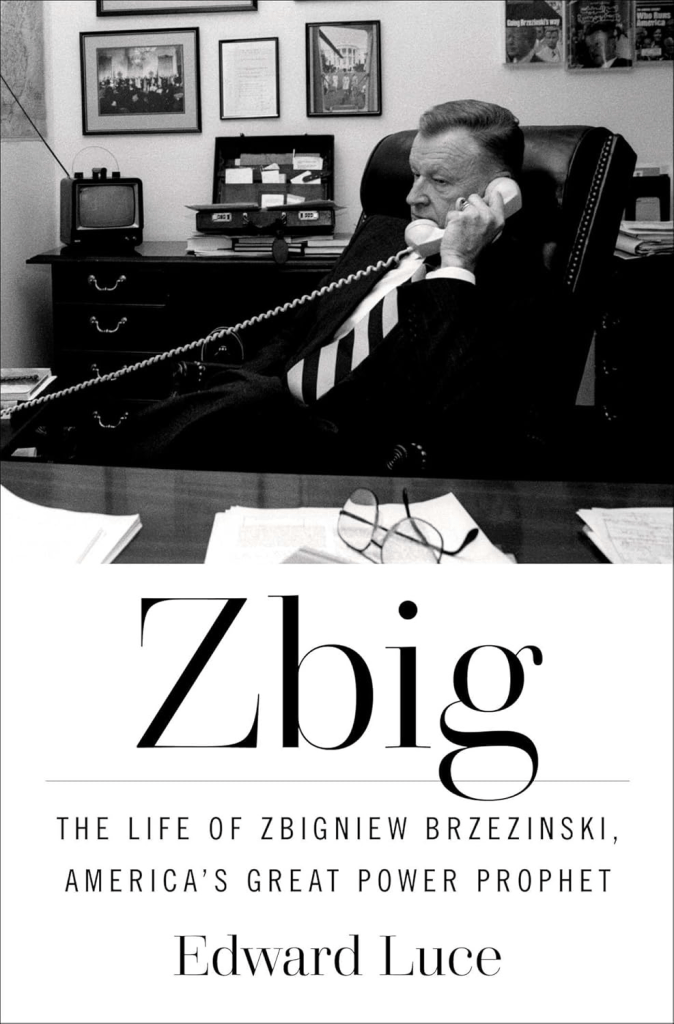
Jimmy Carter’s abrasive foreign policy adviser and rival to Henry Kissinger By Edward N. Luttwak

TIMES LITERARY SUPPLEMENT – MAY 30, 2025 PREVIEW

TIMES LITERARY SUPPLEMENT (May 28, 2025): The latest issue features ‘Their dollar, our problem’ – America’s crumbling financial empire…

“The dollar plays a similar role to that of the English language in global commerce”, writes Edward Chancellor in his lead review of three books devoted to American financial supremacy. “Both enjoy network effects: the more they are used, the more others are obliged to use them.”

By Martin Ivens

King Dollar’s shaky throne and fall    

Can the world’s dominant currency survive Donald Trump?

By Edward Chancellor

‘Literature is the antidote to numbness’

What questions should today’s writers and artists be asking? Responses from authors at the Hay Festival and the

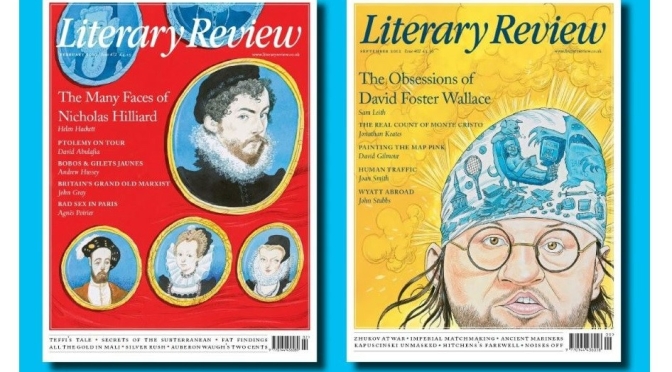
Literary Review – May 2025 Arts & Books Preview

LITERARY REVIEW (May 1, 2025): The latest issue features ‘Mad About Diana’…

Kind Hearts & Coronets

Dianaworld: An Obsession By Edward White

Descartes Be Damned

Blaise Pascal: The Man Who Made the Modern World By Graham Tomlin

Start the Presses!

Johannes Gutenberg: A Biography in Books By Eric Marshall White

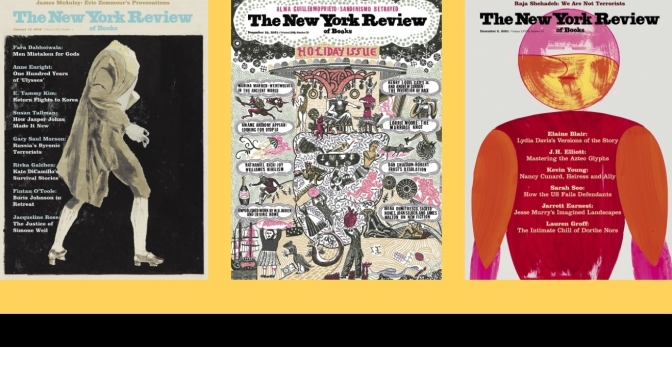
The New York Reviews Of Books – May 15, 2025

THE NEW YORK REVIEW OF BOOKS (April 24, 2025): The latest issue features the Art Issue—with Susan Tallman on warp and weft, Ingrid D. Rowland on Vitruvius, Jerome Groopman on antivaccine lunacy, Martin Filler on the new Frick, Julian Bell on art in an age of crisis, Lisa Halliday on Claire Messud, Heather O’Donnell on the Morgan librarian, Noah Feldman on the rule of law, Jarrett Earnest on fancy furnishings, Madeleine Thien on Fang Fang, Coco Fusco on Felix Gonzalez-Torres, Jed Perl on Surrealism, poems by Ben Lerner and Carmen Boullosa, and much more.

String Theory

Two exhibitions focused on weaving go beyond the functional, the folkloric, and the feminine, tracking fiber’s escape from the connotations of the grid.

Woven Histories: Textiles and Modern Abstraction – an exhibition at the Museum of Modern Art, New York City, April 20–September 13, 2025

Weaving Abstraction in Ancient and Modern Art – An exhibition at the Metropolitan Museum of Art, New York City

Vitruvius & the Warlords

Vitruvius’s Ten Books on Architecture was not only a manual of the building arts but a treatise on how to extend and consolidate the Roman Empire, and lent itself all too well to the autocratic ambitions of Renaissance princes.

All the King’s Horses: Vitruvius in an Age of Princes by Indra Kagis McEwen

Measles Gone Wild

During a burgeoning measles outbreak, HHS Secretary Robert F. Kennedy Jr. has continued to make contradictory remarks, publicly endorsing the measles vaccine while raising doubts about its safety.

Booster Shots: The Urgent Lessons of Measles and the Uncertain Future of Children’s Health by Adam Ratner

So Very Small: How Humans Discovered the Microcosmos, Defeated Germs—and May Still Lose the War Against Infectious Disease by Thomas Levenson

The Frick Reinvigorated

In an ambitious and long-overdue renovation, the architect Annabelle Selldorf attempted to harmonize with the Frick’s Classical aesthetic while asserting her Modernist credentials.

A Century of Surrealism

One hundred years after André Breton launched the Surrealist movement, we’re still trying making sense of its aims and effects.

Surrealism – an exhibition at the Centre Pompidou, Paris, September 4, 2024–January 13, 2025, and the Philadelphia Museum of Art, November 8, 2025–February 6, 2026

Manifestoes of Surrealism by André Breton, translated from the French by Richard Seaver and Helen R. Lane

Revolution of the Mind: The Life of André Breton, Revised and Updated Edition by Mark Polizzotti

Surrealism in Exile and the Beginning of the New York School by Martica Sawin

Surrealism and Painting by André Breton, translated from the French by Simon Watson Taylor, with an introduction by Mark Polizzotti

London Review Of Books – February 20, 2025 Preview

Image

LONDON REVIEW OF BOOKS (February 12, 2025): The latest issue features Clair Wills on Marion Milner; Deaths in Custody; Adam Shatz on Messiaen’s Ecstasies; Bee Wilson looks in the fridge and Christopher Clark defends Merkel…

Marion Milner’s MethodClair Wills

Marion Milner believed in the importance of creative fulfilment (the ‘genius’ inside every one of us) and offered a kind of manual for finding it. From her earliest self-experiments through decades of psychoanalytic practice she took seriously the need to feel ‘real in living’, and tried to theorise the therapeutic potential of aesthetic experience, however minimal.

Deaths in CustodyDani Garavelli

William had spent most of his life in the care of the state. His story was one of intergenerational trauma, common to many families in the West of Scotland, and of the lies Scotland tells itself about its treatment of its most vulnerable young people.

Merkel’s Two LivesChristopher Clark

Angela Merkel’s low-key, unflappable persona makes it easy to overlook how extraordinary her story is. A life composed of such unlike elements has never been possible before and will never be so again, at least in Europe.

Messiaen’s EcstasiesAdam Shatz

While few would question Messiaen’s importance in 20th-century music, his religious modernism has always been met with accusations of idolatry, inauthenticity and bad taste.

The New York Review Of Books – February 27, 2025

THE NEW YORK REVIEW OF BOOKS (February 7, 2025): The latest issue features The Prophet Business…

The Prophet Business

A Century of Tomorrows: How Imagining the Future Shapes the Present by Glenn Adamson

There have always been oracles, prophets, soothsayers, utopians, seers, or futurologists to make predictions about what will pass, and no matter how often they are wrong or discredited, humanity’s need remains.

A Daring Departure

Paris in Ruins: Love, War, and the Birth of Impressionism by Sebastian Smee

Paris 1874: The Impressionist Moment – an exhibition at the Musée d’Orsay, Paris, March 26–July 14, 2024, and the National Gallery of Art, Washington, D.C., September 8, 2024–January 19, 2025

One hundred and fifty years after Impressionist paintings were first exhibited, it takes a certain effort to recover their original radicalism.

Rebooting the Pentagon

Unit X: How the Pentagon and Silicon Valley Are Transforming the Future of War by Raj M. Shah and Christopher Kirchhoff

Bringing Silicon Valley’s drive for innovation to defense contracting has been a slow process, but the war in Ukraine has led tech firms to plunge into the war business.

The London Magazine – February/March 2025

Image

THE LONDON MAGAZINE (February 3, 2025): The latest issue features…

Cusk, Experimentalism and the Limits of Autofiction

Zuhri James

‘I don’t think character exists anymore’, Rachel Cusk declared in a 2018 interview. This was not the first time Cusk appeared to be announcing the atrophy of the traditional novel. In a 2014 interview with The Guardian, Cusk stated she was ‘certain autobiography’ was ‘increasingly the only form in all the arts’. Inversely, fiction and its conventional preoccupation with ‘making up John and Jane’, Cusk argued, was only becoming more ‘ridiculous’, ‘fake and embarrassing’. It is precisely this disregard for literary orthodoxy that runs through Cusk’s widely acclaimed trilogy of autofictional novels – Outline (2014), Transit (2016) and Kudos (2018). 

Heat Signature

.Idra Novey

My twin brother calls from the hospital. He’s finished his blood draw and wants to know the word in Portuguese for watermelon. I recite the word for him – melancia – though my brother’s mind isn’t likely to keep hold of it. Zach can no longer keep a hold of his house keys or his phone, which he left yesterday in the bathroom sink. Before we hang up, I ask him to please wait for me in the lounge area for outpatient services, not to wander outside the hospital.

Jacqueline Feldman: ‘It’s salutary to spend time around people who have arranged their lives in radical ways.’

.Julia Steiner

Jacqueline Feldman’s Precarious Lease: The Paris Document – out from Fitzcarraldo Editions on 30 January – delivers captivating literary reportage on Parisian squats of the early 2010s. Feldman introduces us to people who transformed abandoned buildings into homes, shelters and hubs for artistic creation. With echoes of Agnès Varda’s work, Feldman’s prose is compassionate and honest, acknowledging her own role as an observer. She answered these questions by email about her fifteen-years-long project, begun in 2009.

The New York Times Book Review – January 19, 2025

Image

THE NEW YORK TIMES BOOK REVIEW (January 19, 2025): The latest issue features ‘The Hipster Grifter’…

The Hipster Grifter Tells All

In “You’ll Never Believe Me,” Kari Ferrell details going from internet notoriety to self-knowledge in a captivating, sharp and very funny memoir.

Publishers and Authors Wonder: Can Anything Replace BookTok?

With a ban looming, publishers are hoping to pivot to new platforms, but readers fear their community of book lovers will never be the same.

Want to Get Sucked Into a Black Hole? Try This Book.

Marcus Chown’s “A Crack in Everything” is a journey through space and time with the people studying one of the most enigmatic objects in the universe.

Books on Drug Trafficking, and Kant, Line Adam Haslett’s Shelves

His new novel is titled after Turgenev’s “Fathers and Sons,” he says, “given the theme of incomprehension between generations in that book.”

Nature Magazine: Top New Science Books Of 2025

SCIENCE MAGAZINE (January 13, 2025): Pictograms, comics and other illustrations: Andrew Robinson reviews five of the best science picks.

What the Body Knows

John Trowsdale Yale Univ. Press (2024)

To understand the body, “we might picture the heart as a pump, the brain as a kind of computer, the lungs as bellows, the kidney as filters”. But what about the immune system — asks immunologist John Trowsdale in his engaging analysis. It has no straightforward analogy, operating simultaneously as an antiviral software, a surveillance camera, a weapons system and a way to share resources. The system is “unobtrusive yet extensive, nowhere and everywhere, redundant yet essential, powerful yet remote”.

Wild Chocolate

Rowan Jacobsen Bloomsbury (2024)

When residue inside decorative pots from ancient Mexico was analysed, it yielded traces of cacao — early evidence of cocoa consumption. The Spanish word chocolate might have been influenced by the Nahuatl (Aztec) cacahuatl, or cacao water. Journalist Rowan Jacobsen’s appealing book explores wild chocolate’s history as he travels through Central and South America, meeting chocolate makers, activists and Indigenous leaders who revive the bean’s variety in taste and prestige, lost during its modern industrial manufacture.

Talking Images

Eds Silvia Ferrara et alRoutledge (2024)

The logo of the Beijing 2008 Paralympic Games was a figure with a red dot ‘head’, blue ‘body’ and single, straight green ‘leg’ — adapted from the Chinese character zhi, meaning ‘birth, life’, ‘arrival’ and ‘achievement’. It is one of a huge variety of “talking images” in a collection edited by three scholars interested in writing. Images range from Palaeolithic symbols and ancient Mesopotamian pictograms to modern Chinese calligraphy and Indian comics. The book traces links between images, marks, language and writing.

Do Plants Know Math?

Stéphane Douady et al. Princeton Univ. Press (2024)