

M+ has completed the construction of its museum building, which is set to open to the public at the end of 2021. designed by herzog & de meuron in partnership with TFP farrells and arup, the landmark building is seeking to become a new addition to the global arts and cultural landscape. located in hong kong’s west kowloon cultural district on the victoria harbour waterfront, it provides a permanent space for M+ — the first global museum of contemporary visual culture in asia dedicated to collecting, exhibiting, and interpreting visual art, design and architecture, moving image, and hong kong visual culture of the 20th and 21st centuries.
Tag Archives: Architecture Videos

Architecture: ‘Reef House’ – Auckland, New Zealand
Summer holidays near the coast, any coast, are the right of every New Zealander and loom large in the childhoods of many of us. For some, the reality of a home near the coast is a goal to aspire to; a place where family and friends can build memories that often transcend generations.
For the owner of this house, that was the dream—to provide a holiday home for her three children and their families. One that would ultimately be passed on, becoming, in the process, an indelible embodiment of that dream. In this instance though, the familial link runs deeper, as the owner commissioned her architect cousin—Dave Strachan of Strachan Group Architects (SGA)—to design the home and two of her children, builders starting out on their own, to build it.
“Reef house is very much a family experience,” says Dave. “Not just because of its intended use but because we will all get to look back on it and see where it was touched by each of us in turn.” Situated on an elevated section overlooking the rocky beach break of Daniels Reef, the site enjoys extensive sea views from the northeast through to the south and across to Little Barrier Island. “These views, as well as a fall of seven metres across the site diagonally from west to east, provided the natural context.
A vacant site to the northeast, as well as neighbours overlooking from the north, also needed to be considered in the design process. Dave says that while the site itself was of a good size, council regulations around setbacks and neighbouring sightlines, coupled with topographical considerations, restricted placement of the building site to within a 200m2 building platform.
“From the outset, the goal was to design as complete a council-compliant scheme as possible, including strict adherence to the maximum building footprint. To achieve that, the plan is a split cruciform, providing axial views and cross ventilation in both directions. In section, breaking the form into a twin-roof pavilion allows for ample volumetric shifts across the upper-floor spaces.
“Here, the floorplates are offset and arranged to direct views out to the sea from the entrance and living areas. The kitchen projects through the building envelope and out onto layered and screened outdoor living spaces—helping blur the lines between indoor spaces and outdoor spaces.” Another design element that blurs the lines is the courtyard garden, which works as a climate modifier and is accessed through a bank of hinged doors, cleverly incorporating the space into the interior while maintaining its exterior designation.
Click here to see the full project: https://archipro.co.nz/project/reef-h…
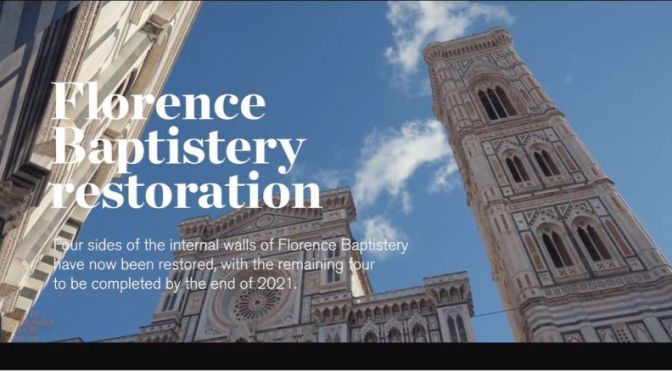
Travel & Architecture: 14th Century Florence Baptistery Restoration
Four sides of the internal walls of Florence Baptistery have been restored, with the remaining four to go by the end of 2021. “Here come all those who wish to see admirable things” is the English translation of the words set in the marble inlay of the floor of Florence’s baptistery, as visitors enter through the Gates of Paradise.
These worthy items include the fourteenth-century mosaics depicting prophets, bishops and cherubs, which are enjoying renewed vigour after the restoration of four of the eight sides of Florence’s oldest monument. The internal walls of the baptistery began to be restored towards the end of 2017 following a restoration campaign on the external walls and roof.
Many discoveries emerged from the diagnostics, the first of their kind to be conducted on the monument, including the original technique used in the parietal mosaics; the presence of a pigmented wax on the green Prato marble, used to cover the white limestone that had formed due to water coming in through the roof, now removed to reveal the stone’s natural hue; and traces of gold leaf on one of the capitals of the matroneum, which could form evidence that the capitals were all originally covered in gold leaf.
In the first couple of decades of the fourteenth century, having completed the colossal feat of the mosaics inside the baptistery’s dome, the decision was made to extend the technique to the parietal sides, something that wasn’t part of the original plans.
It was a solution that allowed the mosaics to be superimposed over the marble covering and solve the issue of the monument’s static nature. Made-to-measure hollow terracotta tiles were used, cut and fixed to the marble on the baptistery’s walls with central iron linchpins driven back and welded in a straight line.
“A hurried sinopia was then conducted on the tiles and later the mosaic with a direct method and over days, which can still be identified and interpreted today,” explained Beatrice Agostini, planner and head of the restoration campaign of Opera di Santa Maria del Fiore. “Even the mixture used to apply the mosaic tiles is absolutely unique. Ordinary mortar wasn’t used. Instead it was more of a glue, and it’s the decline of this compound that has caused the most problems in this restoration.”
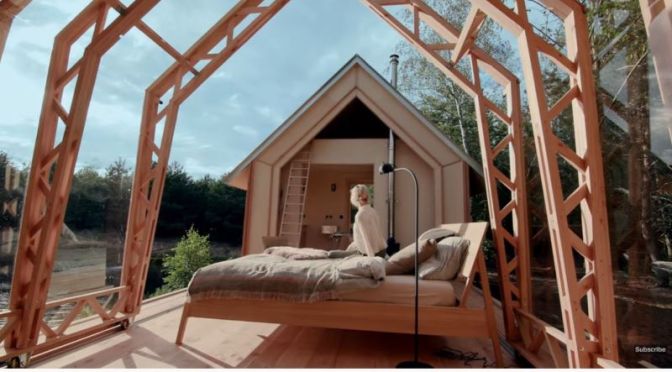
Top Architectural Design: ‘Cabin ANNA’ In Eindhoven, Netherlands (Video)
Architectural designer Caspar Schols is producing a flat-pack version of a garden shed with moving walls, which he built for his parents before he went to architecture school, as cabins for living and for working.
Schols drew on the Garden House pavilion he completed with no formal architecture training in Eindhoven in 2016 to develop two design: the ANNA Stay home and the ANNA Meet workplace. As with Garden House, the Cabin ANNA concepts have and inner beam-and-glass structure that is separated from the outer wooden walls and metal roof, and set on runners. This means they can be moved and outwards to create different layouts.
“A sellable, fully inhabitable house, a flat-pack that could be built and re-built anywhere in the world,” Schols said. “A dynamic home in the shape of an open platform to live with rather than against the elements, by playing with the configuration of the layers of the house – just like the way you dress yourself to suit different weather conditions, occasions and moods.”

Architecture Tour Video: ‘Hotel MalisGarten’ In Austria, First 5-Star To Be Totally Made Of Wood
In Austria’s Zillertal region, the first 5-star hotel constructed out of solid wood has opened its doors. It’s an outstanding example of sustainable architecture, and was designed by renowned architect Matteo Thun.

Travel & Architecture: “Windsor Castle” In Berkshire, England (Video)
Windsor Castle is a royal residence at Windsor in the English county of Berkshire. It is notable for its long association with the English and later British royal family and for its architecture. The original castle was built in the 11th century after the Norman invasion of England by William the Conqueror.
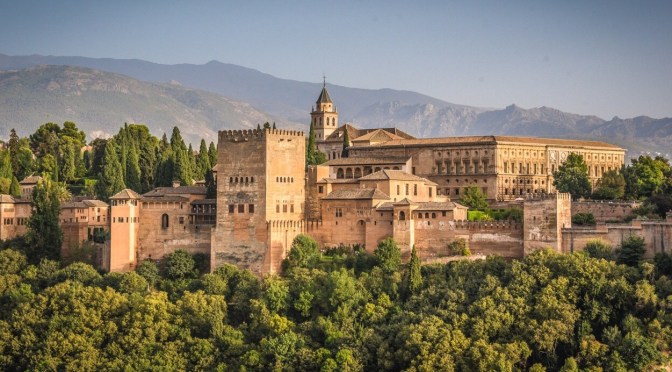
Travel & Architecture: “Alhambra Palace – The Red Castle” In Spain (Video)
The Alhambra, the Red Castle Alhambra is a Palace and Fortress Complex located in Granada, Andalusia, Spain. Designed as a Military Zone at the beginning, the Alhambra became the Royal Residence and Court of Granada in the 13th Century after the establishment of the Nasrid Kingdom and the Construction of the First Palace by the Founding King Mohammed Ibn Yusuf,
Better Known as King Alhamar, It Was Converted Into a Royal Palace in Later by Yusuf the First, Sultan of Granada. After the Conclusion of the Christian Reconquista in 1492, the Site Became the Royal Court of Ferdinand and Isabella (Where Christopher Columbus Received Royal Endorsement for His Famous Expedition), and the Palaces Were Partially Altered in the Renaissance Style.
 Boomers Daily