
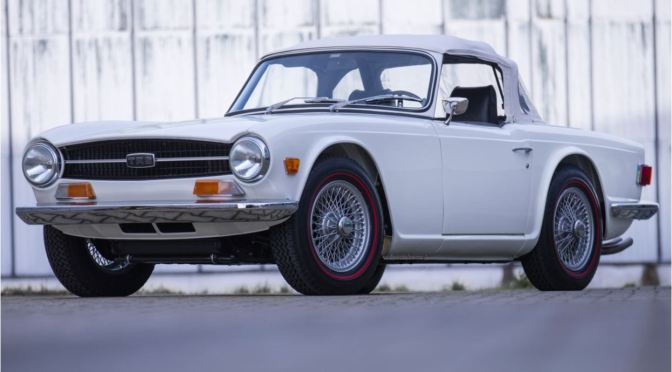
From a Classic Driver online listing:
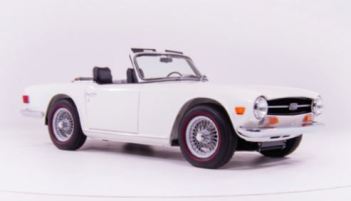
Offered as an affordable, six-cylinder sports car, the first Triumph TR6 rolled off the production line in 1968 as a 1969 model. It’s intended target was to rival similar sports cars at the time, and although most were designed with sleek, curved lines, the TR6 was squared off at both ends, making it stand out from it’s competitors. With just a seven year production span, the TR6 grew to become a true British classic.
The Triumph TR6 was offered as a convertible only, with a factory steel hard top available optionally.
Triumph produced a range of TR models, from the TR1 right up to a limited run of the TR8, but it was the sixth car in the range that really stood out from a sales point of view. The TR5 enjoyed a very brief thirteen-month period of manufacture between 1967 and 1968. Less than 3,000 units were produced before the TR6 came in to improve on many of the specifications. Unlike its predecessors, the Triumph TR6 was more reliable mechanically, which means that there are many original models still on our roads.
Website: https://www.classicdriver.com/en/car/triumph/tr6/1968/723270

 Along with the
 The result is a testimony to the true meaning of haute couture – this car doesn’t need to impress or be flashy. It’s first and foremost superb craftsmanship, which has been married to extreme refinement. Next time you venture into Paris and notice a dark blue Eden Roc being driven by a young and elegant tattooed man, don’t hesitate to look closer and try to spot Leroy’s intricate tailor-made feathery details.
 Maxime Leroy is anything but your typical classic car collector. He is a visionary creator with a strong personality whose adult life has been devoted to showcasing feathers. He discovered the art of plumasserie at school thanks to two of his professors. At that time, the school was the last school in France dedicated to teaching this dying art. And thanks to Leroy, who now spends two days a week there teaching, it still is.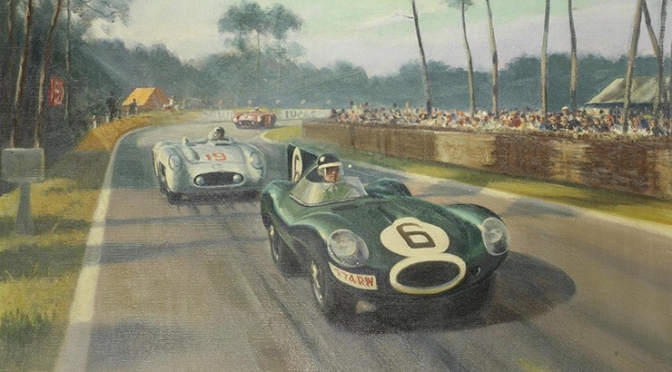
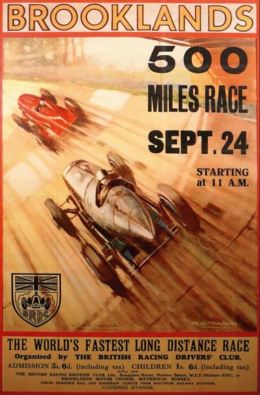 His work was displayed in many exhibitions in the UK and twenty four of his paintings were exhibited in New York in 1960. the exhibition was entitled ‘British Motoring Achievements’ and was a collection of paintings depicting outstanding performances of British cars during the previous ten years. These included the Vanwall and Cooper in Grand Prix, Monte Carlo and Alpine Rallies, speed records by MG and Austin, and Le Mans wins by Jaguar and Aston Martin.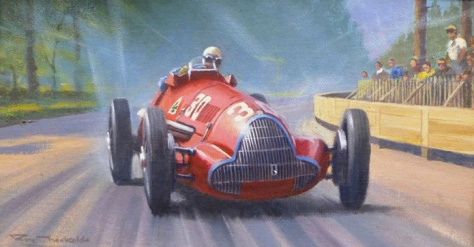
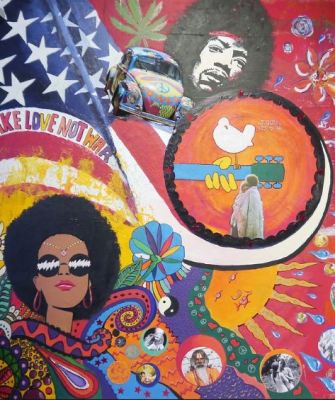 Although the boomers may not have contributed much to the social and cultural changes of the nineteen-sixties, many certainly consumed them, embraced them, and identified with them. Still, the peak year of the boom was 1957, when 4.3 million people were born, and those folks did not go to Woodstock. They were twelve years old. Neither did the rest of the 33.5 million people born between 1957 and 1964. They didn’t start even going to high school until 1971. When the youngest boomer graduated from high school, Ronald Reagan was President and the Vietnam War had been over for seven years.
 Boomers Daily