
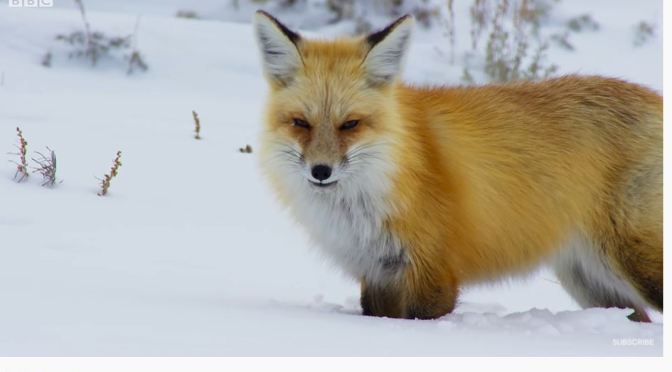
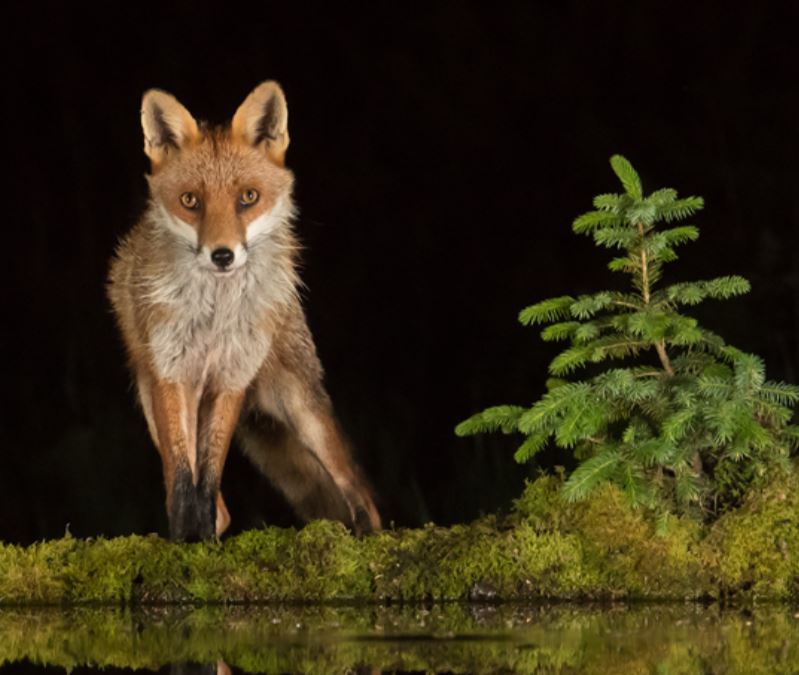
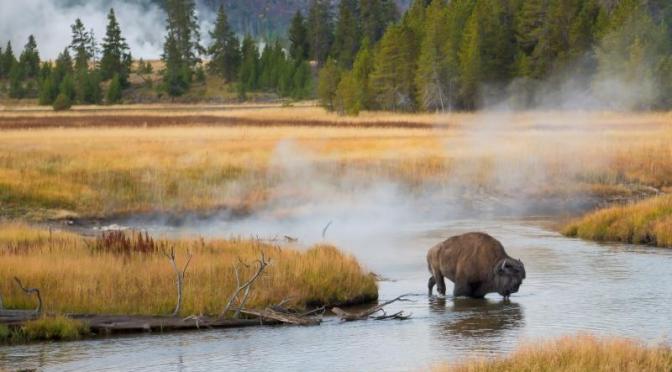
Unlike the buffalo who dig through tonnes of snow, this crafty fox has a unique way of hunting its prey in winter.

THE KINGFISHER HAS the poise of an Olympic diver. It catches food by plunging head-first into water, wings outstretched and beak pointed keenly at an unsuspecting minnow or stickleback swimming below. The bird dives in the blink of an eye, snatching its prey and flying away in a blur.
Alan McFadyen recently captured a kingfisher’s riveting dive in a gorgeous photo that shows the bird the moment before it nabs a fish, its body reflected as a mirror image in the water’s surface. The birds, which tend to be small, with large heads and dagger-like beaks, can dive at speeds up to 25 mph, making McFadyen’s photo a difficult shot. “The [kingfisher’s] speed is incredible and fascinating to watch,” he says. “Even at 10 frames per second, sometimes you get nothing in the [photograph]. It’s that fast.”
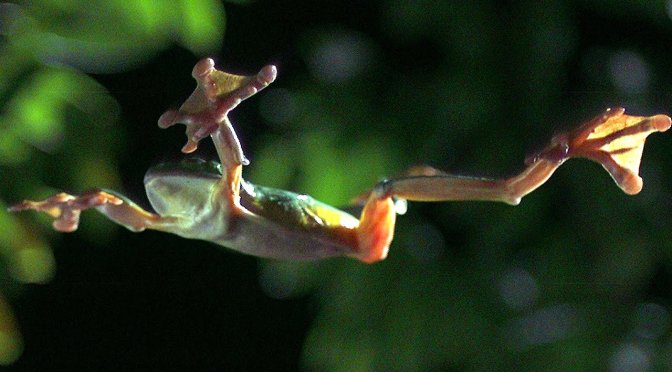
Sometimes nature drives animals to take wild leaps of faith, for food, to survive, or to learn to fly.
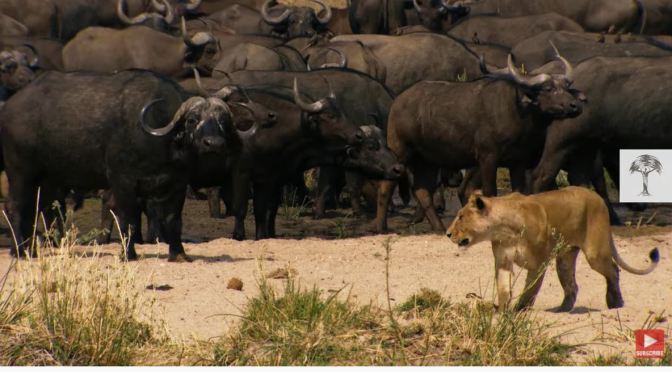
In Tanzania’s Ruaha National Park, water is hard to come by in the dry season. Without it, animals like buffalo will die. And so they’ll do anything for a drink – even take on a pride of hungry lions.
In stunning footage of an exciting chase, we show you lions’ hunting techniques – and how it’s possible even for these experienced predators to make mistakes. Who will be the winner in the end?
From overthrowing an empire to battling with bees, here are some of our most memorable hornet moments.
The Asian giant hornet, including the color form referred to as the Japanese giant hornet, is the world’s largest hornet. It is native to temperate and tropical East Asia, South Asia, Mainland Southeast Asia, and parts of the Russian Far East.
The sword-billed hummingbird has exclusive access to food that other birds simply cannot reach, but having such a long bill does have its drawbacks.
The sword-billed hummingbird is a neotropical species of hummingbird from the Andean regions of South America. It is the sole member of the genus Ensifera and is characterized by its unusually long bill; it is the only bird to have a beak longer than the rest of its body.
A vole has made a fatal mistake and wandered into ‘The Slash’–the narrow cleared pathway that serves as a border to Canada. Out in the open, she’s easy to spot and a predator would need no second invitation.
The red-tailed hawk is a bird of prey that breeds throughout most of North America, from the interior of Alaska and northern Canada to as far south as Panama and the West Indies. It is one of the most common members within the genus of Buteo in North America or worldwide.
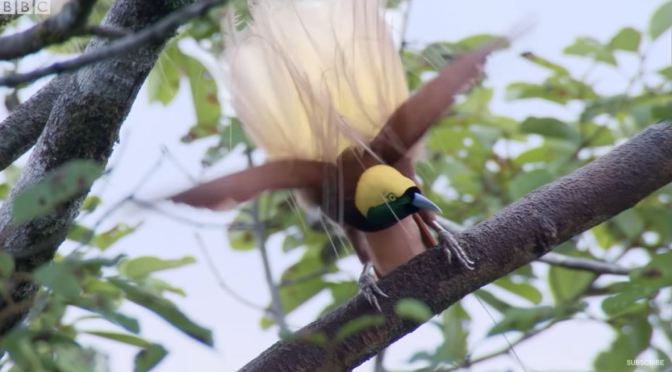
Filming birds that dance and pose isn’t easy, but cameraman/producer Paul Stuart reveals how this iconic sequence was captured.



 Boomers Daily