

From a Wall Street Journal online review:
 Whereas most Wright biographies build from one structure to the next, this one caroms from one digression to the next. Mr. Hendrickson spins miniature biographies of the people who commissioned Wright to build their homes and office buildings. An array of midcentury figures appears: e.g., Glenway Wescott, the novelist and poet who rubbed shoulders with Gertrude Stein in Paris and whose sister commissioned one of Wright’s homes; and Clarence Darrow, the renowned lawyer, who waded into the murk of Wright’s personal life when a disgruntled housekeeper attempted to use the Mann Act to have Wright arrested. We also meet the little-known residents of various structures. Seth Peterson, for instance, dreamed of living in a Wright home so powerfully that he camped out in the one he commissioned as it was being built.
Even when you grant how exposed to the elements an architect’s work may be, Frank Lloyd Wright appears to have been an insurer’s nightmare. If a building could shake, burn or flood, time and again Wright’s structures did. Like the exquisite Rose Pauson House in Phoenix, which lasted a mere year before succumbing to fire. Or the Imperial Hotel in Tokyo, with its gorgeous H-shaped guest wing, rocked by an earthquake on the day it opened. The Johnson Wax building in Racine, Wis., was so porous that office staff were known to keep buckets by their desk on rainy days.
To read more: https://www.wsj.com/articles/plagued-by-fire-review-the-spirit-in-the-form-11570806240?mod=ig_booksoctober12

 The tantalizing combination of brown butter and fried sage may have its origin in Italy, but it turns out to work just as well with pita as it does with pasta. At Miss Ada, a restaurant in Fort Greene, it gets spooned, nutty and fragrant, over a sweet but earthy carrot hummus, and again over a bowl of fluffy whipped ricotta. The pita—warm, puffy, chewy—goes perfectly, too, with a rich, stretchy stracciatella cheese, its milky surface marbled with little golden ponds of olive oil and topped with, depending on the season, heirloom tomatoes, basil, cucumbers, and red onion, or snap peas, blood orange, ground-cherries, and kumquat.

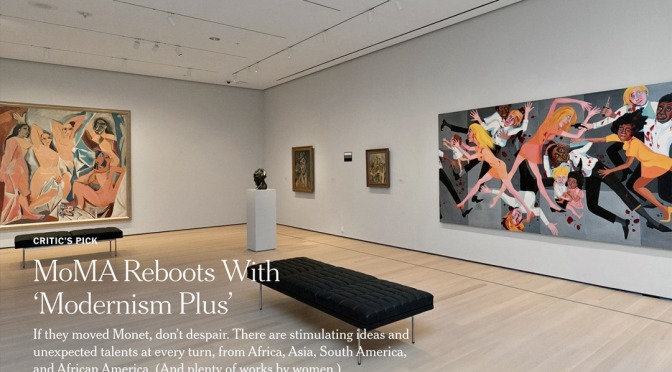
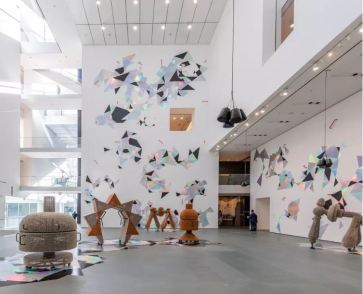 There’s also a special focus on architecture and design in this new approach to the collection: Several galleries are devoted to various aspects of those fields, including “The Vertical City,” an examination of skyscraper construction that includes photos by Berenice Abbott, Hugh Ferriss’s architectural drawings, and other ephemera. Elsewhere, building models of the Guggenheim and a spec design of MoMA by modernist master William Lescaze emphasize the importance of architecture to museums, and vice versa.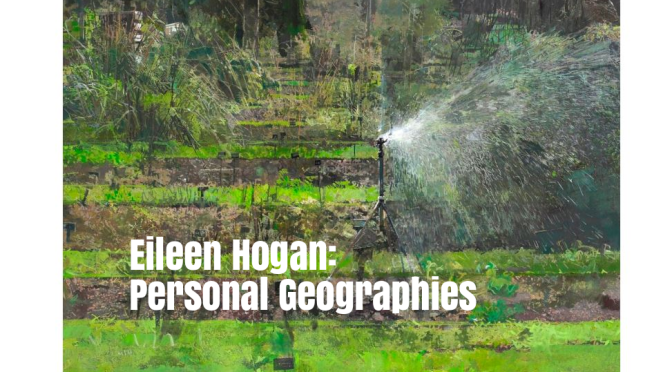
 I describe myself as an urban-based painter who is interested in green spaces. Painting and drawing have been seen as profoundly unfashionable for most of my working life, and I have felt sometimes that it was quite eccentric to be a figurative painter with conventional subject matter. Looking back, my insistence on maintaining my practice as a figurative painter now seems more radical than conventional.
 I was very blessed to have the opportunity to catch up with Hogan ahead of her Mayfair exhibition. I find myself entranced by her vibrant paintings that are dense with detail, filling the canvas from edge to edge with layers upon layers of paint. She has also established portraiture practice, her commissions including HRH The Prince of Wales. In a unique style, Hogan paints her sitters whilst they are deep in conversation, capturing unguarded gestures and expressions to create intricate portraits of both honesty and intimacy.


 The creators of Noori based the product on the traditional rocket stove design, which burns small-diameter wood fuel in a combustion chamber linked to an insulated vertical chimney.
 “The most important thing that we do is we never shake the martini. James Bond had it all wrong,” says Scuto. Shaking it incorporates too much ice, making for a watery drink, and, if it’s a gin martini, it potentially bruises the delicate aromatics. Instead, the drink is stirred roughly 12 times—bartenders use careful discretion—with ice, which is made with filtered water and a top-of-the-line Japanese Hoshizaki ice machine. The liquor is then carefully strained into a glass. It’s “all in the hand of the masters,” says Scuto.
 Age change should be allowed when the following three conditions are met. First, the person is at risk of being discriminated against because of age. Second, the person’s body and mind are in better shape than would be expected based on the person’s chronological age (that is, the person is biologically younger than he is chronologically). Third, the person does not feel that his legal age is befitting.
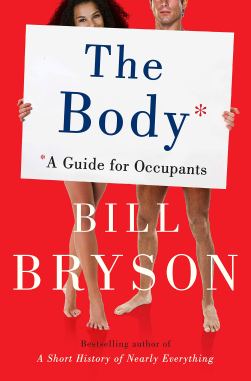 The single most astounding thing I found was that if you took all your DNA and formed it into a single fine strand, it would stretch to Pluto. I don’t think I’ve ever come across a fact that blew me away more than that — that there’s enough of me or you or anyone else to stretch to Pluto. There’s 10 billion miles of DNA inside you. That just seems unbelievable. The surprise is not that there’s so much to understand about the body but that we understand as much as we do.
 Boomers Daily