Category Archives: Pollution

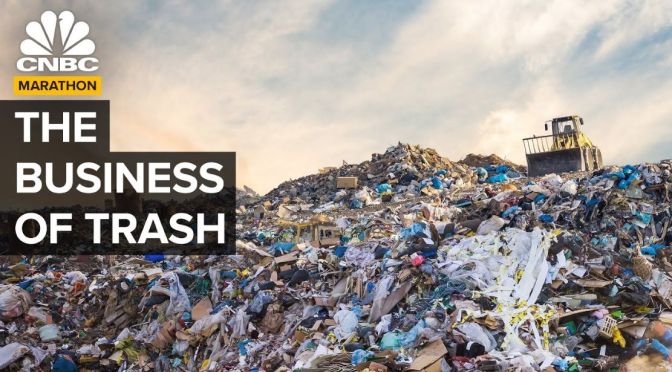
Analysis: The Business Of Waste Management (CNBC)


CNBC (January 8, 2024) CNBC Marathon explores the economics of waste management and how the United States is solving its trash problem. In 2019, the North American waste management market reached $208 billion.

Chapters: 00:00 Introduction 00:48 How Trash Makes Money In The U.S. (Published July 2021) 15:59 How Amazon, American Airlines And Subaru Burn Waste To Make Energy (Published May 2022) 32:24 How To Clean Up The World’s Most Polluted Rivers (Published August 2022) 46:16 Where Do EV Batteries Go When They Die? (Published March 2023)

Thanks to advancements in modern chemistry and support from municipal governments, landfills have seen astonishing financial success in recent years. Burning waste to make energy is a $10 billion industry in the U.S., and the fastest growing part of the business is waste from big companies like Amazon, Subaru, Quest Diagnostics and American Airlines.

They’re part of a growing corporate movement toward “zero landfill” as pressure mounts to reach sustainability requirements. It’s estimated that every year, millions of tons of plastic enter the ocean through rivers, and as global waste generation increases, the problem is poised to worsen.

But a host of companies from Baltimore, Maryland to Bengaluru, India are working on the issue, developing novel methods to capture trash from rivers before it reaches the ocean. Dozens of electric vehicles are scheduled to debut in the next few years and over 300 million electric vehicles are expected to be on the world’s roads by 2030.

The lifetime for an EV battery is estimated to be 12 to 15 years in moderate climates, but that doesn’t mean the batteries end up in landfills when they die.

Ecosystems: Plastic Waste Spoils Galapagos Islands

The Galapagos Islands are home to some of the most unspoiled nature in the world. But even here plastic waste is a problem, and biodiversity is under threat. Marine biologists and conservationists are campaigning for the expansion of protected zones. The fauna and flora of the Galapagos Islands in the Pacific Ocean is a treasure trove for marine biologists.

They still know very little about many of the fish, rays and sea turtles that can be found here. But these days, their work is focused primarily on conservation, because many of these species are endangered due to threats such as overfishing and boat strikes. Efforts to protect local wildlife include attaching tracking devices to juvenile hammerhead sharks to determine their migration routes, which can then be designated as protected areas.

Other research teams are focused on the problem of plastic waste in the Pacific – identifying where it comes from and exploring its impact on marine life. Meanwhile, local fishermen are under pressure: Large fishing fleets from China and elsewhere ply the waters near the Galapagos Islands, severely depleting fish stocks. As a result, local fishing boats are forced to move into designated conservation zones. If the delicate marine environment surrounding the Galapagos Islands is to survive, fishing needs to become more sustainable.

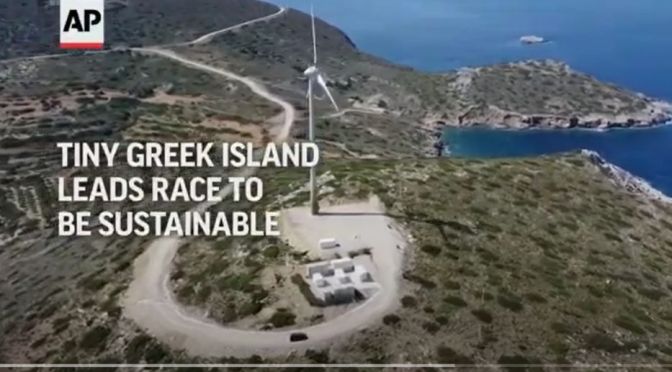
Sustainability: Island Of Tilos, Aegean Sea, Greece

The remote Greek island of Tilos has pioneered a recycling plant that could act as a blueprint for other islands — including popular holiday destinations — that struggle with waste disposal. (May 11)

Tílos is a small Greek island and municipality located in the Aegean Sea. It is part of the Dodecanese group of islands, and lies midway between Kos and Rhodes. It has a population of 780 inhabitants.

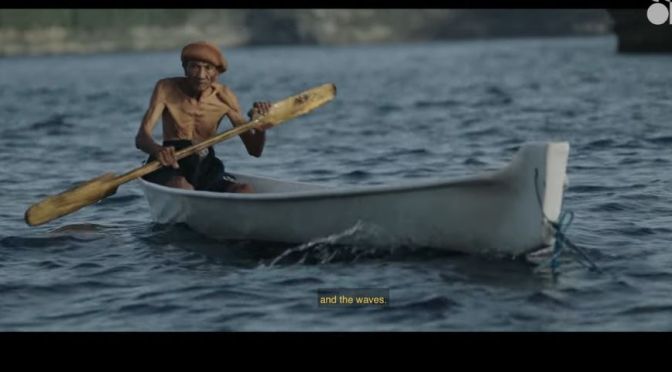
Bali Views: How A 90-Year-Old Man Fights Pollution

Each year, just about 30,000 metric tonnes of plastic pollution enter Indonesia’s waters. How does one man plan to clean it up?

In Indonesia, the ocean plays a critical role in people’s livelihood; from their food to their careers. But that important life source is under threat from overwhelming amounts of plastic. Unfortunately, this pollution is fueled from one of Indonesia’s most popular tourist destinations, Bali.

This, combined with plastic from the rest of the world, washes up on beaches, gets hooked by local fishermen, and damages marine ecosystems. This film follows Wayan, a 90-year-old Balinese fisherman using all his resources and knowledge to tackle this growing problem, one net of trash at a time. This is Voice Above Water, a production from Turning Tides Films.

Zero Waste: Trash Turned Into Cash (The Economist)

The world is facing a growing waste problem, with 2bn tonnes produced last year alone. Is it possible to clean up this mess by turning trash into cash? 00:00 – The world has a huge waste problem.

Video timeline: 00:45 – Upcycling to reduce waste 02:46 – Building offices from recycled products 03:46 – The problem with traditional recycling 04:59 – Waste reduction relies on a circular economy 05:38 – Taiwan’s waste management success 08:20 – The problem with incineration 09:55 – Is the future zero waste? 10:43 – Consumption attitudes are changing Read our special report on waste here https://econ.st/3JrlD6y

Climate Change: Flooding Rivers Ravage Bangladesh

Bangladesh is struggling just to stay afloat. Literally: By 2050, it’s estimated that climate issues will displace one in seven of the country’s inhabitants.

This film takes the viewer on a journey through Bangladesh, exploring why overflowing rivers flood three-quarters of the country every year. We see how flooding threatens the country’s food security, how soil erosion thrusts thousands into homelessness, and how climate refugees are forced to flee their homes in a desperate act of survival.

Along the way, we meet communities adapting to rising sea climate change by growing food on water. This is a strategy which could prove very useful in the near future, as rising sea levels threaten to inundate 11% of the country’s land in the next 30 years.

This documentary brings us to the front lines of the battle against catastrophic climate change in Bangladesh. It also tells the stories of activists who are bringing the dangers posed by man-made threats to light.

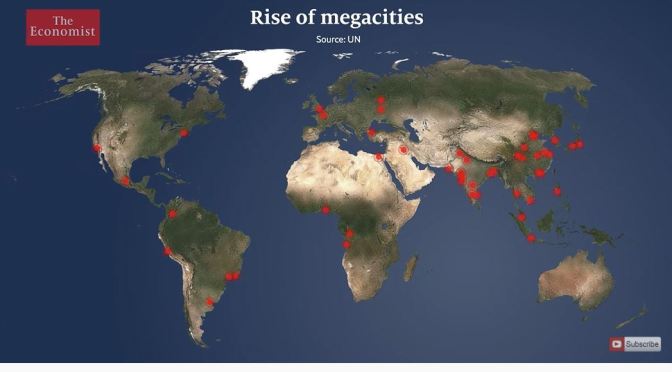
Urban Analysis: The Rise & Problems Of Megacities

By 2050, 6 billion people could be living in megacities. How should the challenges caused by rapid urbanization be handled in the world ahead? Film supported by @Mission Winnow

Video timeline: 00:00: What are megacities? 01:01: The problem with megacities 03:07: How is Ahmedabad tackling rapid urbanisation? 04:45: How can cities manage traffic? 07:04: The problem with waste 08:00: How is Recycle Central revolutionizing trash? 10:58: What are the most urgent issues to resolve?

Profile: ‘Ocean Cleanup’ – Ridding The World’s Oceans Of Plastic (Video)

The Ocean Cleanup, a non-profit organization, is developing advanced technologies to rid the world’s oceans of plastic.

Every year, millions of tons of plastic enter the oceans primarily from rivers. The plastic afloat across the oceans – legacy plastic – isn’t going away by itself. Therefore, solving ocean plastic pollution requires a combination of stemming the inflow and cleaning up what has already accumulated.

FOUNDED 2013

Dutch inventor Boyan Slat founded The Ocean Cleanup at the age of 18 in his hometown of Delft, the Netherlands.

NON-PROFIT FOUNDATION

We are a registered charity as a ‘Stichting’ in the Netherlands, and a 501(c)(3) in the US.

HQ ROTTERDAM

The Ocean Cleanup’s team consists of more than 90 engineers, researchers, scientists and computational modelers working daily to rid the world’s oceans of plastic.

Website