Asboth summitry and military near-misses proliferate, some want measured dialogue while others want markedly tougher talk. Our defence and Russia editors discuss world leaders’ diverging views on handling today’s Russia.
South Korea’s new opposition leader is giving voice to many young men who rail against the country’s feminist values. And what lies behind professional footballers’ frequent, flashy haircuts.
NPR’s Tamara Keith and Amy Walter of the Cook Political Report join Amna Nawaz to discuss the latest political news, including the bipartisan infrastructure plan, and a select committee to investigate the Jan. 6 Capitol attack.
A.M. Edition for June 28. WSJ’s Tom Fairless discusses the U.S. presence in the worldwide economic movement. Crypto exchange Binance is ordered to cease U.K. activities.
WSJ markets columnist Mike Bird on stock and commodity growth. And, Venmo makes a change. Marc Stewart hosts.
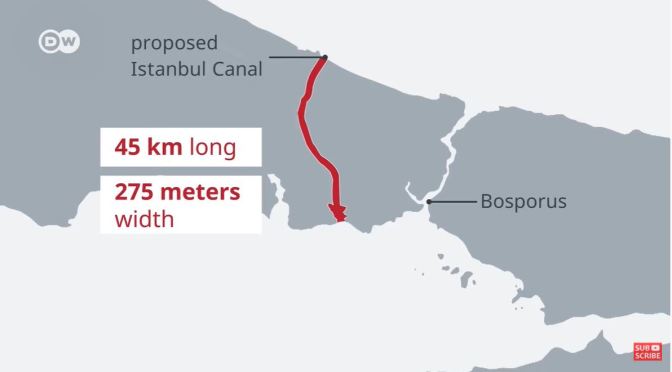
Canal Istanbul is the largest infrastructure project Turkey has ever seen. It will connect the Mediterranean to the Black Sea, and fulfill one of President Recep Tayyip Erdogan’s oldest dreams: To provide a new route, beside the Bosporus, for tankers sailing between the two seas, while at the same time boosting Turkey’s revenues. But the controversial project is pitting Turkey’s president against Istanbul’s mayor, Ekrem İmamoğlu, and the majority of the city’s citizens. So why is the canal so unpopular? And why does Erdogan want to build it anyway?
Emma Nelson covers the weekend’s biggest talking points with panelists Simon Brooke, Terry Stiastny and Benno Zogg. Plus, we check in with Monocle’s editorial director Tyler Brûlé and our Tokyo bureau chief, Fiona Wilson.
Discussing the top topics of the weekend with host Georgina Godwin are: Vincent McAviney with the day’s news round-up, Monocle contributing editor Andrew Mueller on the week’s stranger stories and Guy De Launey telling us why we should visit the Balkans.
New York Times columnist David Brooks and Washington Post columnist Jonathan Capehart join Judy Woodruff to discuss the week in politics, including the potential breakthrough on the road to an infrastructure deal, the justice department’s lawsuit against Georgia’s voting restrictions, and the president’s plan to curb surging violent crime across the country.
1. Rescue crews picked through tons of rubble looking for survivors after the collapse of part of an oceanfront apartment tower near Miami, where officials reported at least one person dead and nearly 100 missing.
2. Hours after President Joe Biden declared “We have a deal” to renew the infrastructure of the United States, the Senate’s top Republican lashed out at plans to follow the $1.2 trillion bipartisan bill with another measure funding what Democrats call “human infrastructure.”
3. Former Minneapolis policeman Derek Chauvin will be sentenced for murdering George Floyd in May 2020 after a trial that was widely seen as a watershed moment in the history of U.S. policing.
4. An indigenous group in the Canadian province of Saskatchewan said it had found the unmarked graves of an estimated 751 people at a now-defunct Catholic residential school, just weeks after a similar, smaller discovery rocked the country.
5. The U.S. government, once openly dismissive of UFO sightings that for decades sparked the popular imagination, is poised to issue an expansive account of what it calls “unidentified aerial phenomena,” based heavily on observations by American military pilots.
President Biden took a preemptive victory lap yesterday over his massive $1 trillion+ infrastructure package, touting a bipartisan agreement he says he’s brokered.
Plus, Minneapolis prepares for Derek Chauvin’s sentencing.
And, why many Pride parades have banned uniformed police officers.
We discuss the future of Libya and whether stability is any closer after yesterday’s Berlin conference. Then, what does the striking down of voting rights legislation mean for bipartisanship during Biden’s presidency?








 Boomers Daily