
Category Archives: Podcasts

 Monocle 24 “The Urbanist” discusses the impact that quarantines can have on cities and what lessons city planners can learn when an outbreak causes borders to close. Here is a report from the ground on the changing nature of city life in Milan.
Top New Science Podcasts: Gravity, Ancient Teeth & Containing Coronavirus
What happens if you overwater a plant? How does gravity actually work? And should we be cancelling mass events to contain the coronavirus?
It’s Q&A time on the show, and this week Phil Sansom is joined by a brainy panel of experts: plant biologist Nadia Radzman, particle physicist Chris Rogers, bioarchaeologist Emma Pomeroy, and virologist and Naked Scientist Chris Smith. Prepare to have your curiosity satisfied…
Top New Science Podcasts: Restoring Notre Dame & The Body’s “Tough Skin”
 On this week’s show, freelance writer Christa Lesté-Lasserre talks with host Sarah Crespi about the scientists working on the restoration of Notre Dame, from testing the changing weight of wet limestone, to how to remove lead contamination from four-story stained glass windows.
As the emergency phase of work winds down, scientists are also starting to use the lull in tourist activity to investigate the mysteries of the cathedral’s construction.
Also this week, Felipe Quiroz, an assistant professor in the biomedical engineering department at the Georgia Institute of Technology and Emory University, talks with Sarah about his paper on the cellular mechanism of liquid-liquid phase separation in the formation of the tough outer layer of the skin. Liquid-liquid phase separation is when two liquids “demix,” or separate, like oil and water. In cells, this process created membraneless organelles that are just now starting to be understood. In this work, Quiroz and colleagues create a sensor for phase separation in the cell that works in living tissue, and show how phase separation is tied to the formation of the outer layers of skin in mice.
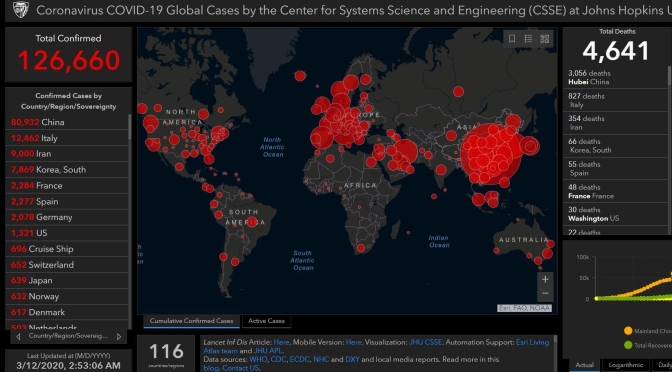
How China And South Korea Are Containing “Coronavirus / Covid-19”
Global health officials have praised China and South Korea for the success of their efforts to contain the coronavirus. What are those countries getting right — and what can everyone else learn from them?
Guest: Donald G. McNeil Jr., a science and health reporter for The New York Times. For more information on today’s episode, visit nytimes.com/thedaily.
Background reading:
- While world leaders are finally speaking out about the gravity of the pandemic, their response lacks unity with the United States absent from its traditional conductor role in managing global crises.
- Stocks tanked again as the outbreak was officially declared a pandemic and policies to address its impact proved lacking or ineffective.
- All flights to the U.S. have been suspended from Europe. Many schools announced they would close indefinitely, some nursing homes banned visitors, and workplaces across the country have urged their employees to work from home. Here are the latest updates.
Top New Science Podcasts: 100-Million-Year-Old Bird In Amber And Viking Dental Hygiene (Nature)
 Hear the latest science news, brought to you by Shamini Bundell and Nick Howe. This week, a newly discovered bird species from the time of the dinosaurs, and microbes hundreds of metres below the ocean floor.
In this episode:
00:44 A tiny, toothy, ancient bird
Researchers have found a perfectly preserved bird fossil trapped in amber, with some rather unusual features. Research Article: Xing et al.; News and Views: Tiny bird fossil might be the world’s smallest dinosaur
08:09 Research Highlights
Dental hygiene in the time of the Vikings, and wildebeest bones feed an African ecosystem. Research Article: Bertilsson et al; Research Article: Subalusky et al.
10:21 Deep sea life
Scientists have uncovered traces of life 750m below the ocean’s surface. Research article: Li et al.
17:31 News Chat
Updates on the Coronavirus outbreak, and peer review in predatory journals. News: Coronavirus: latest news on spreading infection; News: Labs rush to study coronavirus in transgenic animals — some are in short supply; News: Hundreds of scientists have peer-reviewed for predatory journals
Podcast Interviews: “Parks” Author Brian Kelley On History Of National Park Service
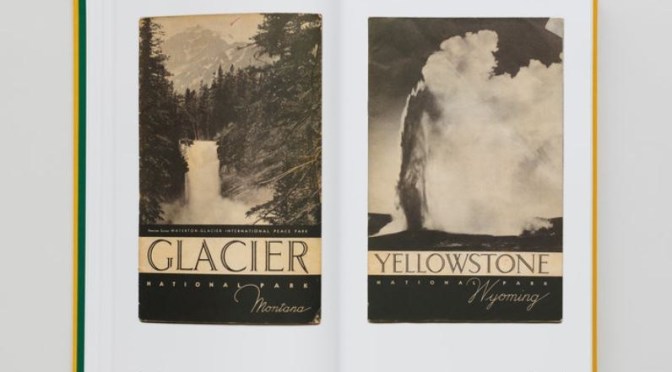
 The National Park Service spans hundreds of sites across the US, including monuments, seashores, memorials and parks. Brian Kelley and Jesse Reed survey the design history of the agency’s visual identity.
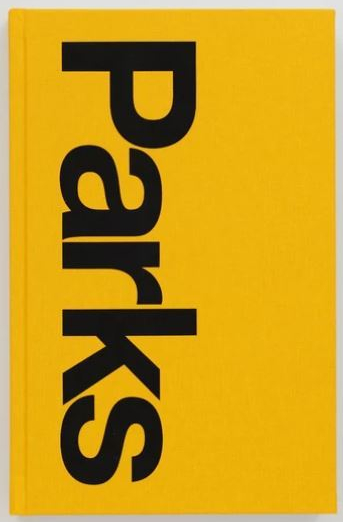 This book brings togethere a collection of over 400 maps produced by the United States National Park Service from 1910 to today. Photographer Brian Kelley has impulsively archived the rarely seen treasures over the past three years, uncovering a design portfolio with little to no credit to their respective designers. The growing collection displays a progressive design approach, from more typographic-driven covers, to the proliferation of duotone print production, culminating in the Unigrid system developed by Italian designer Massimo Vignelli in the 1970s.
New Science Podcasts: Dogs’ Cold Noses Sense Heat, Coronavirus And The Search For Alien Life
On this week’s show, Online News Editor David Grimm joins host Sarah Crespi to discuss how dogs’ cold noses may be able to sense warm bodies. Read the research. International News Editor Martin Enserink shares the latest from our reporters covering coronavirus.
And finally, from a recording made at this year’s AAAS annual meeting, host Meagan Cantwell talks with Jill Tarter, chair emeritus at the SETI Institute, about the newest technologies being used to search for alien life, what a positive signal would look like, and how to inform the public if extraterrestrial life ever were detected.
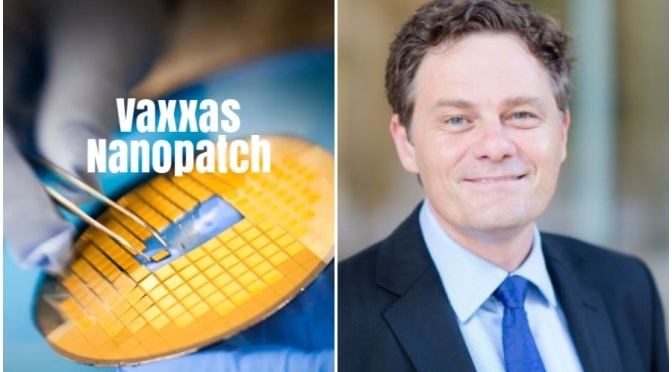
Interview: Scientist And Inventor Mark Kendall – “Nanopatch” Replacement For Vaccination (Podcast)
 Rocket scientist-turned-immunology expert Mark Kendall talks about his Nanopatch, which could revolutionise vaccinations and eradicate some diseases.
Mark Kendall (born 1972) is an Australian biomedical engineer and innovator. He is an Entrepreneurial Professor of the Australian National University. His field of research is the delivery of immunotherapeutics to the skin without the use of a needle or syringe.
In 2011, he co-founded the development company Vaxxas with an investor syndicate. The company’s technology, called Nanopatch, is intended to serve as a needle-free vaccine delivery device. In 2011, Kendall and his AIBN team received the Australian Research Council Eureka Prize for Excellence in Research by an Interdisciplinary Team. In 2012, he was awarded the Rolex Awards for Enterprise for his “pioneering efforts to expand knowledge and improve human life”.
New Science Podcasts: Faster Image ID, Crafting Crystals And Coronavirus / Covid-19 Update (Nature)
 Listen to the latest from the world of science, with Benjamin Thompson and Nick Howe. This week, improving computers’ image identification, and a new method for growing crystals.
In this episode:
00:44 Upgrading computer sight
Researchers have designed a sensor that allows machines to assess images in nanoseconds. Research Article: Mennel et al.; News and Views: In-sensor computing for machine vision
06:51 Research Highlights
Calorie restriction’s effects on rat cells, and the dwindling of sandy seashores. Research Highlight: Old age’s hallmarks are delayed in dieting rats; Research Highlight: Sandy beaches are endangered worldwide as the climate changes
08:53 Crafting crystals
To understand the structure of materials, researchers often have to grow them in crystal form. A new method aims to speed up this process. Research article: Sun et al.
14:48 News Chat
Coronavirus outbreak updates, and climate change’s role in the Australian bush fires. News: Coronavirus: latest news on spreading infection; News: Climate change made Australia’s ‘unprecedented’ bushfires 30% more likely
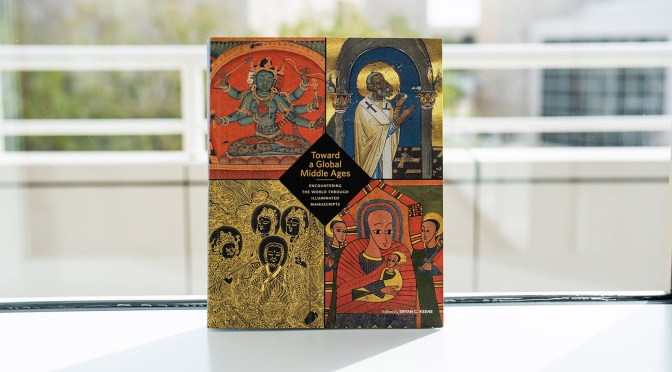
Art History Podcasts: “Understanding the Medieval World through Books” (Getty Museum)
 What was the world like from 500 to 1500 CE? This period, often called medieval or the Middle Ages in European history, saw the rise and fall of empires and the expansion of cross-cultural exchange.
Getty curator Bryan C. Keene argues that illuminated manuscripts and decorated texts from Africa, Asia, Australasia, the Americas, and Europe are windows through which we can view the interconnected history of humanity. In this episode, he discusses his recent book Toward a Global Middle Ages: Encountering the World through Illuminated Manuscripts, highlighting the challenges and opportunities of the emerging discipline known as the Global Middle Ages.
 Boomers Daily