The U.K. and China made big news with promising results in vaccine development for the coronavirus — the US, Russia and at least five other countries are also working on possible vaccines.
But for a vaccine to work effectively, these countries should be working together. Instead, they’re clashing. Countries like the US and Canada have even accused Russia of stealing our vaccine research. Plus:
Pennsylvania, Wisconsin, North Carolina and Georgia are all swing states at the center of the 2020 voting crisis.
And, how the virus will wreak havoc on your fall TV lineup.
Guests: Axios’ Dave Lawler, Stef Kight, and Sara Fischer
NPR’s Tamara Keith and Amy Walter of the Cook Political Report join Judy Woodruff to discuss the latest political news, including what President Trump is saying about the coronavirus and competitor Joe Biden, whether those messages are resonating with voters and what pandemic legislation to expect from Congress before the school year begins.
Lawmakers are back on the hill negotiating the next trillion dollar relief package for the struggling economy. Meanwhile, COVID-19 cases surge in 40 states. Finally, an update on the clash between protesters and police in Portland, Oregon.
The Economist reviews the world’s top headlines including Blackrock’s earnings, new Covid-19 cases rise in America and other countries, airline industry updates and more.
Syndicated columnist Mark Shields and New York Times columnist David Brooks join Amna Nawaz to discuss the week in politics, including the growing rift between President Trump and Dr. Anthony Fauci, what GOP criticism of Trump means for his reelection bid, the latest primary election results and poll numbers and the ongoing debate over mail-in ballots.
Some of the country’s largest school districts have already made the decision to go online-only for this coming school year. Many are talking about hybrid models that combine distance and in-person learning, but whether they’re online or in the classroom, teachers will bear the brunt of making their classes work.
Plus, why Joe Biden’s campaign is dreading foreign policy.
Contributing Correspondent Gretchen Vogel talks about what can be learned from schools around the world that have reopened during the coronavirus pandemic. Unfortunately, few systematic studies have been done, but observations of outbreaks in schools in places such as France or Israel do offer a few lessons for countries looking to send children back to school soon.
The United Kingdom and Germany have started studies of how the virus spreads in children and at school, but results are months away. In the meantime, Gretchen’s reporting suggests small class sizes, masks, and social distancing among adults at schools are particularly important measures.
Also this week, Sarah talks with Kiristie Thompson, a Ph.D. student in the Georgia Institute of Technology’s Department of Chemistry and Biochemistry, about increasing the efficiency of petroleum processing. If all—or even some—petroleum processing goes heat free, it would mean big energy savings. Around the world, about 1% of all energy use goes to heating up petroleum in order to get useful things such as gas for cars or polymers for plastics. These days, this separation is done through distillation, heating, and separating by boiling point. Kirstie describes a heat-free way of getting this separation—by using a special membrane instead. Read a related Insight.
This week, the Trump administration ordered hospitals to bypass the Centers for Disease Control and Prevention send all coronavirus-related data straight to the Department of Health and Human Services. This is just the latest step in President Trump’s war on public health experts.
Plus, a shakeup on Trump’s 2020 campaign team.
And, a major Twitter hack Wednesday afternoon left some of the most powerful people on the platform vulnerable to a cryptocurrency scam.
Guests: Axios’ Sam Baker, Mike Allen, and Ina Fried.
News, Views and Reviews For The Intellectually Curious

 The U.K. and China made big news with promising results in vaccine development for the coronavirus — the US, Russia and at least five other countries are also working on possible vaccines.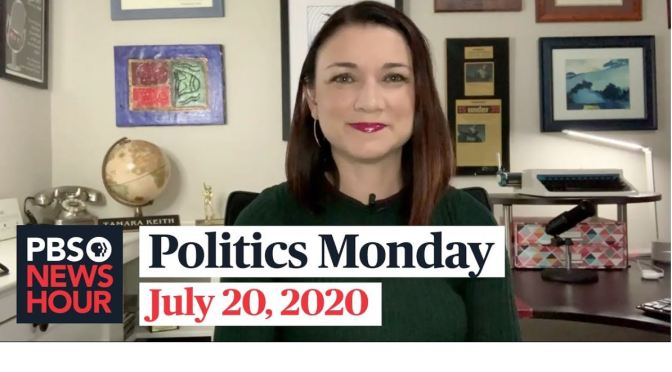

 Lawmakers are back on the hill negotiating the next trillion dollar relief package for the struggling economy. Meanwhile, COVID-19 cases surge in 40 states. Finally, an update on the clash between protesters and police in Portland, Oregon.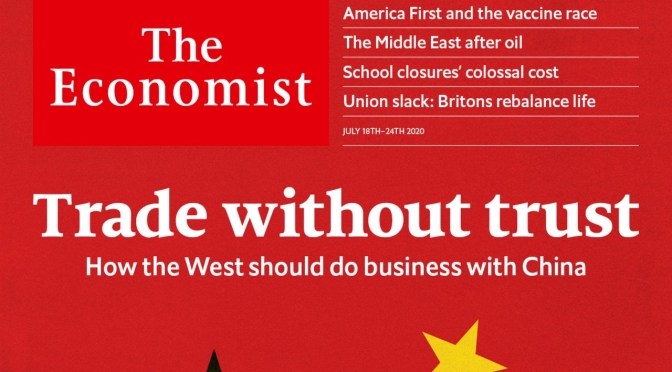
 A selection of three essential articles read aloud from the latest issue of The Economist. This week,
  The Economist reviews the world’s top headlines including Blackrock’s earnings, new Covid-19 cases rise in America and other countries, airline industry updates and more.

 Some of the country’s largest school districts have already made the decision to go online-only for this coming school year. Many are talking about hybrid models that combine distance and in-person learning, but whether they’re online or in the classroom, teachers will bear the brunt of making their classes work.
 Contributing Correspondent Gretchen Vogel talks about what can be learned from schools around the world that have reopened during the coronavirus pandemic. Unfortunately, few systematic studies have been done, but observations of outbreaks in schools in places such as France or Israel do offer a few lessons for countries looking to send children back to school soon.
 Boomers Daily