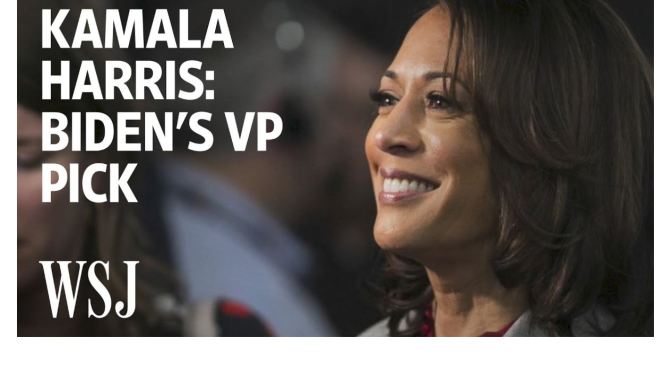
Joe Biden picked Sen. Kamala Harris to be his running mate. WSJ’s Jason Bellini reports on how her life and career brought her to this moment.
Photo: Maddie McGarvey

Joe Biden picked Sen. Kamala Harris to be his running mate. WSJ’s Jason Bellini reports on how her life and career brought her to this moment.
Photo: Maddie McGarvey
 It’s been about a month since the Chinese Communist Party forced a national security law on Hong Kong. This new law made it illegal for anyone anywhere in the world to promote democratic reform in the region. Recent arrests of top media and political figures have made it clear that Hong Kong’s relatively free political system is over.
Guests: Axios’ Bethany Allen-Ebrahimian, and Miriam Kramer and special thanks to Dr. Sanjay Gupta and the Asian American Journalists Association.
NPR’s Tamara Keith and Amy Walter of the Cook Political Report join Judy Woodruff to discuss the latest political news, including what to expect from former Vice President Joe Biden as he emerges into the convention spotlight, the potential for sexist criticism of Biden’s running mate and the political consequences of failed pandemic relief talks for both Congress and President Trump.
 The number of Covid-19 infections in the U.S. surpasses 5 million. Tens of millions of Americans could be evicted with the eviction ban lapsing. Plus, Hong Kong Publisher Jimmy Lai is arrested under China’s new national security law.
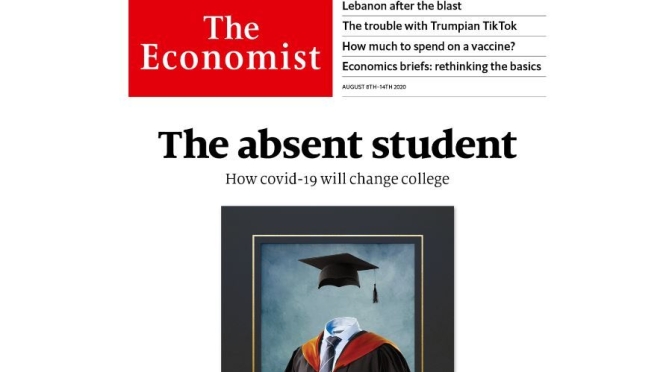
A selection of three essential articles read aloud from the latest issue of The Economist. This week: the absent student, (9:55) Beirut: a city in ruins, (19:45) and why TV from China’s Hunan province has become so popular.
 NPR News Now reports: Protests erupt in Beirut in aftermath of massive explosion, Tik Tok sues U.S., and other world news.
 NPR News Now reports: Congress fails to agree on a new stimulus bill, President Trump considers action, and other top news.
Syndicated columnist Mark Shields and New York Times columnist David Brooks join Judy Woodruff to discuss the week in politics, including a legislative stalemate over a new coronavirus relief package, the politics of the pandemic economy for President Trump and former Vice President Joe Biden, the value of party conventions and how they are coping with our national crisis.
It’s too soon to know what downtown cities will look like after the coronavirus pandemic. What we do know is that no business will be spared. Both small mom and pops and big retailers will have to shut their doors and move away from dense city centers. That could mean landowners, consumers and retailers will have to work together to imagine the new iteration of the American city.
Guests: Axios’ Dion Rabouin, Caitlin Owens, and Sara Goo.
 Staff Writer Meredith Wadman joins host Sarah Crespi to discuss the risk of the novel coronavirus infection to pregnant women. Early data suggest expectant women are more likely to get severe forms of the infection and require hospitalization. Meredith describes how the biology of pregnancy—such as changes to the maternal immune system and added stress on the heart and lungs—might explain the harsher effects of the virus.
Also this week, Sarah talks with Gianluca Roscioli about his experiments with commercial razor blades and real human hair. By using a scanning electron microscope, he was able to show how something relatively soft like hair is able to damage something 50 times harder like stainless steel.






 Boomers Daily