National Trust (April 10, 2023) – In this episode of The Wild Life, a new series of nature films from the National Trust, presenter Gemma Hunt discovers how the charity’s rangers are doing all they can to protect wildlife at Blakeney National Nature Reserve in Norfolk.
With an introduction from Julia Bradbury, this film will transport you to the four-mile-long shingle spit of Blakeney Point, cared for by the National Trust. The spit provides protection for Blakeney Harbour and the surrounding salt marshes are home to a vast array of wildlife. Blakeney Point is also home to England’s largest grey seal colony, over-wintering wildfowl and summer-breeding terns.
Join Gemma as she meets the National Trust rangers who work around the clock to care for this stretch of coastline, which is loved by walkers, sightseers and wildlife enthusiasts. You’ll meet ranger Duncan Halpin who spends seven months of the year living in a remote lifeboat house. During this time, he monitors the seal pups and makes sure endangered birds such as little terns have safe places to nest.
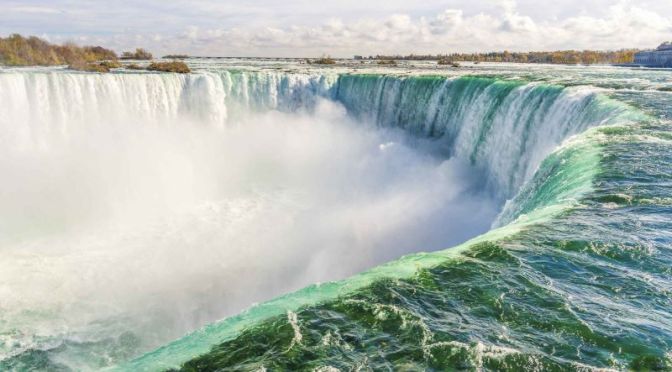
Nature on PBS (April 6, 2023) – From fall to winter, watch as Niagara Falls transforms with the seasons. “Niagara Falls“ premieres April 19, 2023, at 8|7c on PBS.
America’s oldest state park, open 365 days a year, 24 hours a day, brings you closer than you ever thought possible to the grandeur of the Falls. Niagara Falls State Park is always the trip of a lifetime — any time of the year — making it “a park for all seasons.”
Individually, snowflakes are fragile, easily broken, dissolving into droplets of water at the mere touch of a finger or a breath of air, while en masse, they’re capable of wreaking havoc on the city streets and causing catastrophe when avalanching down a mountainside.
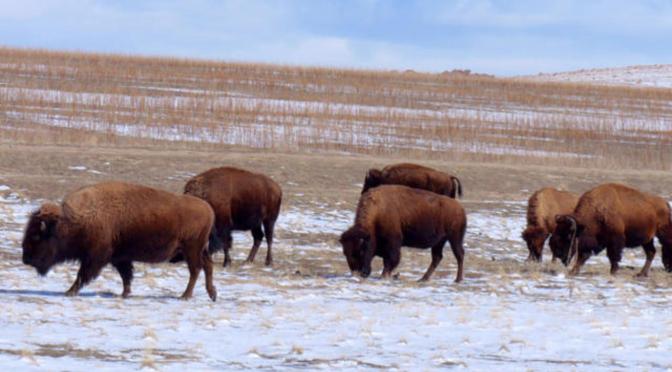
CBS Sunday Morning (April 2, 2023) – We leave you this Sunday morning with Bison still enjoying the snow at Utah’s Antelope Island. Videographer: Lee McEachern.
Antelope Island State Park in Utah is home to free-ranging bison, mule deer, bighorn sheep, pronghorn (antelope), and many other desert animals. Millions of birds congregate along the shores surrounding the island, offering unparalleled opportunities for birding. Year-round Interpretive opportunities round out the Antelope Island experience.
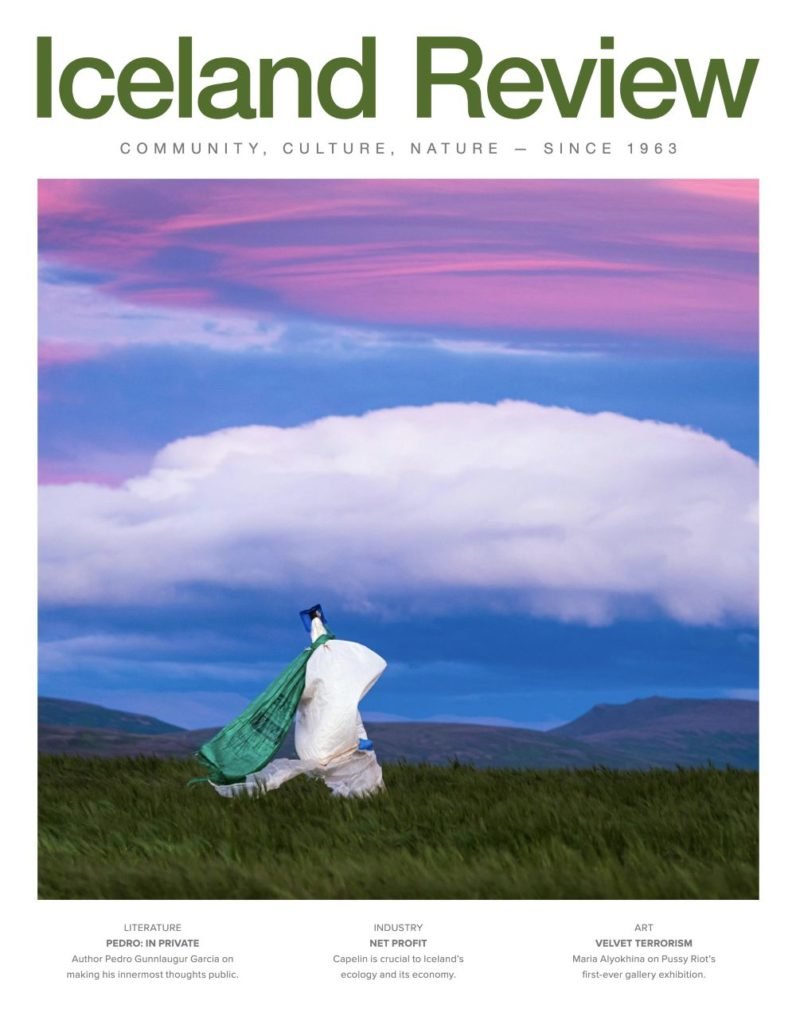
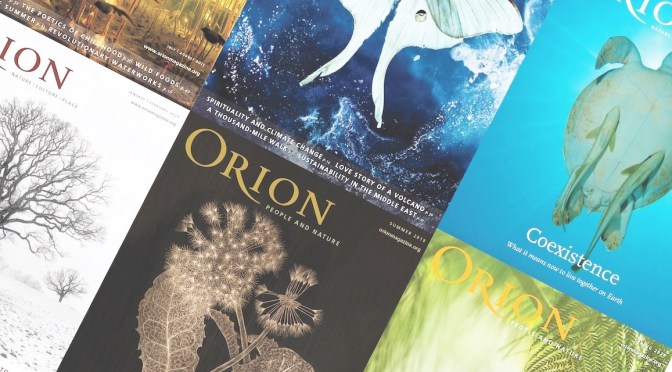
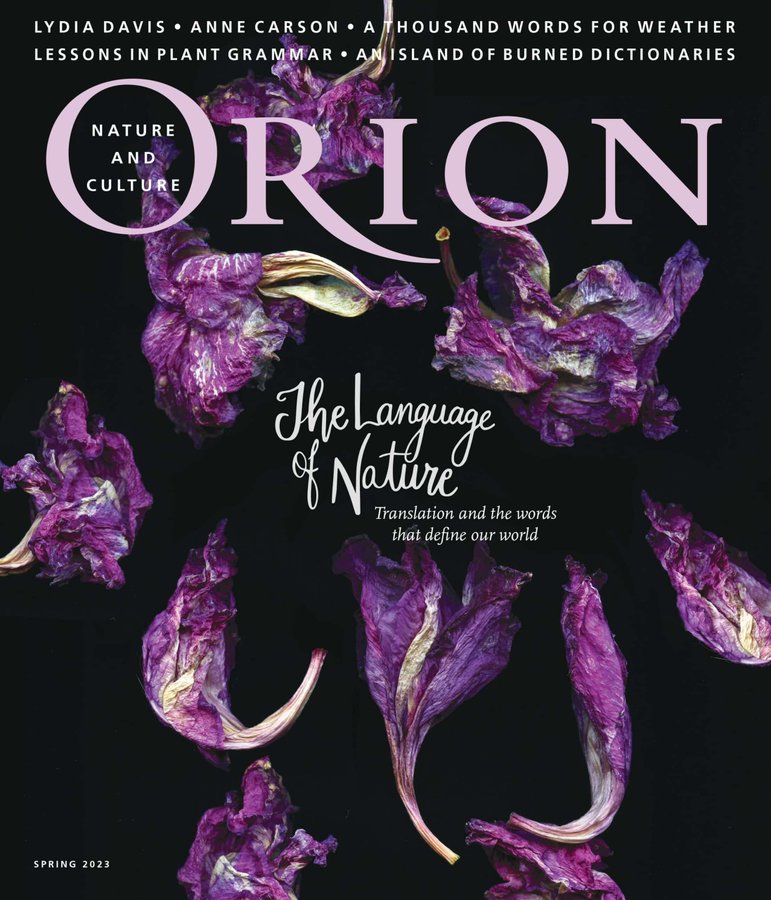
Orion Magazine (Spring 2023) – THIS ISSUE features exclusively works in or about translation, engaging with over twenty-five languages across six continents.
The Northern Mariana Islands lie in a crescent moon south-southeast of Japan. At the lower point is Guåhan, also known as Guam, an island that is geologically part of the same volcanic chain but that set itself apart by becoming an unincorporated U.S. territory instead of remaining part of the Commonwealth.
BANZEIRO—THIS IS WHAT THE PEOPLE of the Xingu call places where the river grows savage. Where, if you’re lucky, you can make it through; where, if you’re not, you can’t. It is a place of danger between where you’re coming from and where you want to go.
Our Spring 2023 issue speaks to the language of nature and features works in or about translation. Here, Orion staffers and friends pulled together a list of their favorite fiction and nonfiction books that in some way reflect this literature of etymology.
This slim fantastical novel reads like an incantation. Set in rural late-19th century Iceland, its braided, lyrical, fugue-like narrative is tender and electric. Here we find a cruel priest named after a monster, trapped in an ice cave, raving at a dead fox. But too, a kindly herbalist burying his friend with her feather collection—a young woman with Down syndrome who spoke a language of her own—who he rescued from an unthinkable fate. This was my first encounter reading Sjón, who is apparently so big in his home country he doesn’t need a last name, but the book’s otherworldliness made perfect sense when I learned he writes lyrics for Björk. This one will haunt me for a while.
In Lulu Miller’s Why Fish Don’t Exist, naming becomes an imposition, an attempt at order and, sometimes, hierarchy. In this book—part memoir, part biography—Miller is searching for a reason to keep living, a sense of order in a chaotic world, and she does so by looking to a taxonomist who spent his life naming the creatures under the sea: David Starr Jordan.
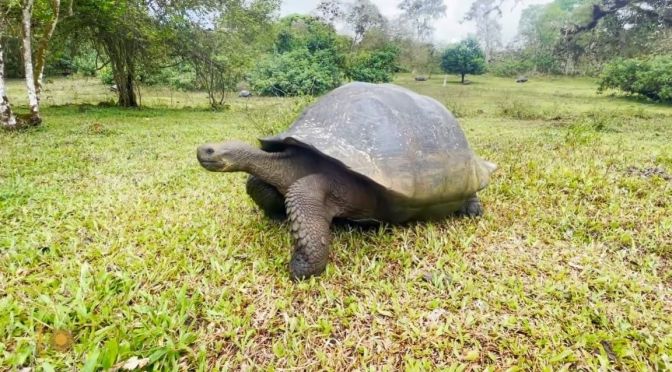
CBS Sunday Morning (March 19, 2023) – We leave you this Sunday with giant tortoises on Santa Cruz Island, in Ecuador’s Galápagos National Park. Videographer: Alan Golds.
There are 13 living species of Galápagos tortoises, which are also sometimes called giant tortoises. These reptiles are among the longest-lived of all land vertebrates, averaging more than a hundred years. The oldest on record lived to be 175. They are also the world’s largest tortoises, with some specimens exceeding five feet in length and reaching more than 500 pounds.
Giant tortoises were once so abundant on the Galápagos archipelago off Ecuador that the Spanish sailors who explored the region in 1535 named the string of islands for them. (The Spanish word for tortoise is galápago.) Although the islands were once thought to be home to at least 250,000 tortoises, only about 15,000 remain in the wild today.
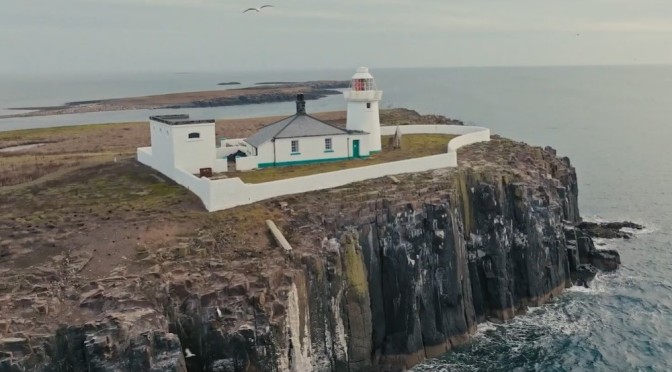
National Trust (March 13, 2023) – In the first episode of The Wild Life, a new series of nature films from the National Trust, presenter Levison Wood explores one of England’s most important seabird colonies. The Farne Islands, off the Northumberland coast, have been cared for by the National Trust since 1925 and are a breeding site for 23 species of seabird, including 43,000 puffin pairs.
The islands are also home to grey seals with around 2,000 pups born every autumn. With an introduction from presenter Julia Bradbury, this film explores the Inner Farne, where you’ll see dive-bombing terns, a medieval chapel and a Victorian lighthouse. Levison finds out what life is like for the rangers who had to deal with the devastating impact of bird flu. He also learns more about the work being done to maintain and protect the area’s fragile ecosystem, address the impact of climate change, protect bird nests and monitor species.
Parts of the Farne Islands may be closed to the public and landing on the islands may not be possible due to bird flu. If closures are in place, you can still experience the islands on a boat tour. Please check the website before you visit: Farne Islands | Northumberland | National Trust With your support we can continue to care for coastal places like The Farne Islands.
January 29, 2023: We leave you this Sunday morning in a snowstorm, in the White Mountains of New Hampshire. Videographer: Scot Miller.
There are 733 named mountains in the White Mountains of New Hampshire. The highest and most prominent of these mountains is Mount Washington, which stands at a respectable 6,288 feet (1,917 meters), making it the tallest peak in the Northeastern United States.
While the peaks of the White Mountains don’t manage to break the 6,500 ft (1,981m) barrier, they are home to some of the most difficult hiking terrain and worst weather in the continental United States.
News, Views and Reviews For The Intellectually Curious









 Boomers Daily