Even limited hearing loss might be associated with cognitive decline. If true, early intervention with hearing aids might help people have better cognitive performance.
Michael Johns III, MD, online editor for JAMA Otolaryngology, speaks with Justin Golub, MD, MS, assistant professor of otolaryngology at Columbia University, whose research has shown that very mild hearing loss can be associated with cognitive disability.
Colin Cowherd talks with Dr. Patrick Soon-Shiong who is not only a Doctor helping to fight Covid-19 but also owns the LA Times and is a minority owner of the Lakers. Dr. Shiong talks about the things we are learning about the disease and why it is so much more dangerous than previous pandemics.
Dr Patrick Soon-Shiong is a South African-American billionaire surgeon, businessman, media mogul, and bioscientist. He is the inventor of the drug Abraxane, which became known for its efficacy against lung, breast, and pancreatic cancer.
With questionable coronavirus content flooding airwaves and online channels, what’s being done to limit its impact?
In this episode:
00:57 The epidemiology of misinformation
As the pandemic spreads, so does a tidal wave of misinformation and conspiracy theories. We discuss how researchers’ are tracking the spread of questionable content, and ways to limit its impact.
Our hosts pick out things that have made them smile in the last week, including walks in new places, an update on the Isolation Choir, and a very long music playlist.
Scientists around the world are concerned about the impacts that the pandemic will have on their funding and research projects. We hear from two who face uncertainty, and get an update on the plans put in place by funding organisations to support their researchers.
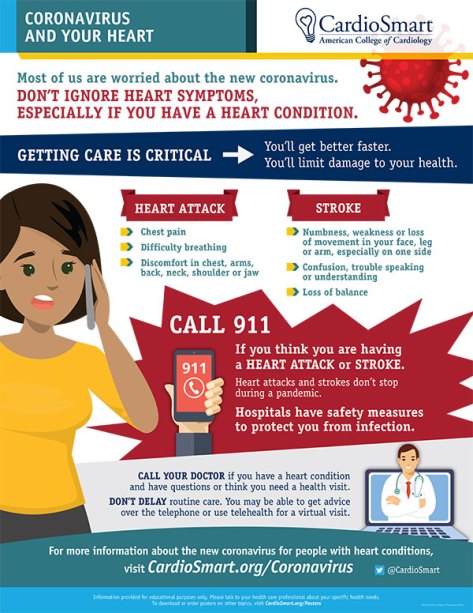
Hospitals across the U.S. are experiencing an influx of COVID-19 patients, but clinicians are reportedly seeing fewer patients going to the emergency room for heart attack or stroke.
Experts worry that patients who need critical care are delaying their treatment over COVID-19 concerns.
To encourage patients to pay close attention to their symptoms and call 9-1-1 immediately if they believe they are having a heart attack or stroke, ACC’s CardioSmart team developed the Coronavirus and Your Heart Infographic.
The infographic urges patients not to ignore symptoms, especially if they have a heart condition, and reassures them that hospitals have safety measures to protect patients from infection with the novel coronavirus.
Ventilators have become prized in hospitals across the U.S. and beyond because they are desperately needed to treat very ill Covid-19 patients. But they are also feared for the damage they can inflict, and for the slim odds of survival they offer.
Michelle Fay Cortez and Olivia Carville report that it’s not yet clear what the long-term consequences ventilators have for those lucky enough to recover after having been on one.
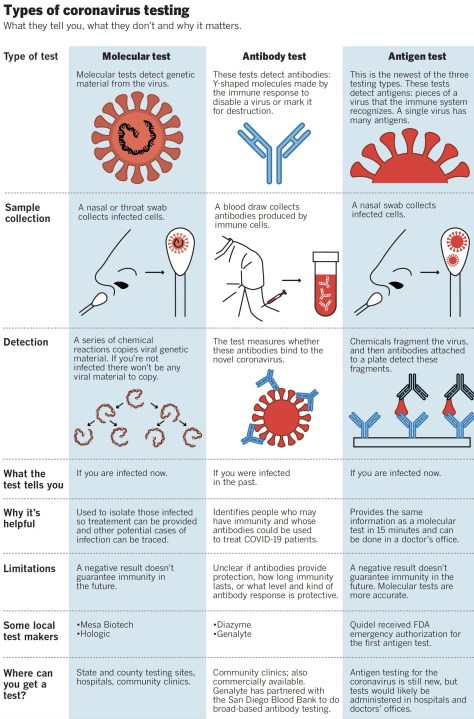
Benjamin Thompson, Noah Baker, and Amy Maxmen discuss the role of antibody tests in controlling the pandemic, and how public-health spending could curtail an economic crisis. Also on the show, the open hardware community’s efforts to produce medical equipment.
In this episode:
02:08 Betting on antibodies
Antibody tests could play a key role in understanding how the virus has spread through populations, and in ending lockdowns. We discuss concerns over their reliability, how they could be used, and the tantalising possibility of immunity.
Jim Yong Kim, former president of the World Bank, argues that strong investment in public health is crucial to halt the ongoing pandemic and to prevent a global financial crisis. We discuss his work with US governors to massively increase contact tracing, and his thoughts on how researchers can help steer political thinking.
Our hosts talk about staying positive, and pick a few things that have made them smile in the last 7 days, including a tiny addition to the team, a newspaper produced by children in lockdown, and a gardening update.
Researchers are stepping up efforts to design and produce ventilators and personal protective equipment for frontline medical staff. We hear how the open hardware movement is aiding these efforts, and the regulations that teams need to consider if their designs are to make it into use.
Featuring articles on deaths due to e-cigarette– or vaping-associated lung injury, apixaban for venous thromboembolism in cancer, the management of coronary disease in patients with advanced kidney disease, health-status outcomes in the ISCHEMIA-CKD trial, and ten weeks to crush the curve.
Additionally, renin–angiotensin–aldosterone system inhibitors in patients with Covid-19, and teasing the immune system to repair the heart; a review article on the care of patients with diabetic retinopathy; a case report of a man with high blood pressure, renal insufficiency, and hematuria; and Perspective articles on clinical and social risk adjustment, on prediction models, and on medical care during the pandemic.
Doctors are delaying procedures and surgeries in order to save resources like hospital beds and ventilators for Covid-19 patients, and prevent the infection from spreading.
Emma Court reports on the difficult choices doctors are forced to make, and the danger that we’re creating another health care crisis.

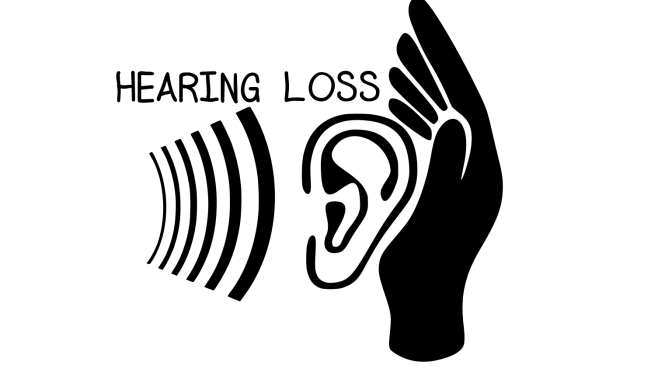
 Even limited hearing loss might be associated with cognitive decline. If true, early intervention with hearing aids might help people have better cognitive performance.

 Colin Cowherd talks with Dr. Patrick Soon-Shiong who is not only a Doctor helping to fight Covid-19 but also owns the LA Times and is a minority owner of the Lakers. Dr. Shiong talks about the things we are learning about the disease and why it is so much more dangerous than previous pandemics.

 With questionable coronavirus content flooding airwaves and online channels, what’s being done to limit its impact?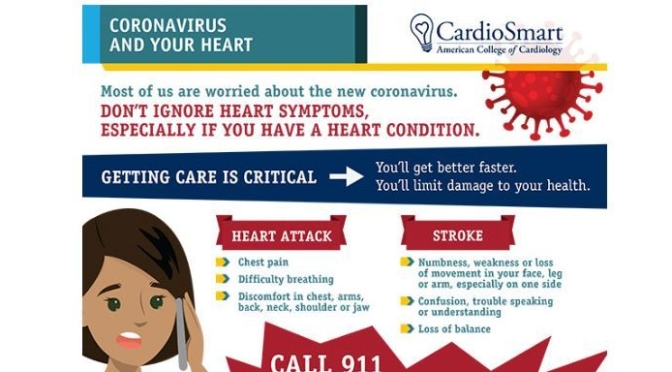

 Ventilators have become prized in hospitals across the U.S. and beyond because they are desperately needed to treat very ill Covid-19 patients. But they are also feared for the damage they can inflict, and for the slim odds of survival they offer.
  Benjamin Thompson, Noah Baker, and Amy Maxmen discuss the role of antibody tests in controlling the pandemic, and how public-health spending could curtail an economic crisis. Also on the show, the open hardware community’s efforts to produce medical equipment.
 Featuring articles on deaths due to e-cigarette– or vaping-associated lung injury, apixaban for venous thromboembolism in cancer, the management of coronary disease in patients with advanced kidney disease, health-status outcomes in the ISCHEMIA-CKD trial, and ten weeks to crush the curve.

 Boomers Daily