National Institute on Aging – As 2022 comes to a close, NIA invites you to explore some of the most popular health information topics from this past year:
— Shingles is a disease that triggers a painful skin rash. About one in three people will get shingles, but there is a vaccine for older adults to help prevent the disease.
The cost of health care is unaffordable for many in the developing world. But while universal health care may sound like an impossible dream, it’s more achievable than you might think.
Video timeline: 00:00 – The argument for universal health coverage is clear 00:57 – Thailand’s path to universal health coverage 03:31 – Universal health care around the world 04:48 – How to finance universal health coverage? 05:30 – Rwanda: from genocide to public health exemplar 07:19 – What is a pooling finance system? 08:01 – Which services make the cut? 11:17 – The economic benefits of UHC 12:23 – Could covid-19 be a catalyst for reform?
Greg Corrado – Ph.D., Head of Health AI, November 28, 2022:
Alongside licensing our AI technology, iCAD will also use Google Cloud’s secure, scalable infrastructure, giving them the ability to rapidly expand cloud-hosted solutions into new regions. By doing so, iCAD can scale access to AI-based tools in underserved regions where infrastructure challenges may constrain their ability to offer breast cancer screenings.
Breast cancer is one of the world’s most common cancers; thankfully, early detection can help save lives and improve outcomes among many who develop the disease. At Google Health we’re developing AI to improve the accuracy and expand the availability of breast cancer screenings. Over time, better screenings will improve health outcomes and reduce disparities for people around the world.
Today, we’re announcing a partnership with iCAD, a leader in medical technology and cancer detection, marking the first time we are licensing our mammography AI research model. iCAD will work toward validating and incorporating our mammography AI technology with its products for use in clinical practices with the goal of improving breast cancer detection and assessment of short-term personal cancer risk for the more than two million people globally diagnosed with breast cancer every year.
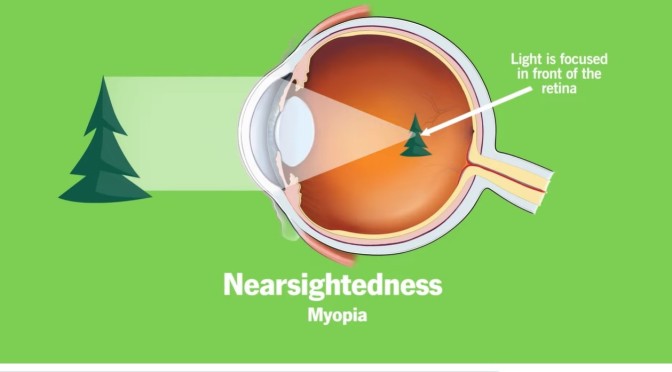
Cleveland Clinic – Nearly 1 out of 3 people have a vision disorder called myopia, or nearsightedness, which makes it difficult to view things in the distance. How does it happen? And is there a cure?
Chapters: 0:00 Intro 0:32 What causes nearsightedness? 1:01 Why can’t you see far? 1:20 When does nearsightedness usually begin? 1:42 What are symptoms of nearsightedness? 1:59 Can nearsightedness be corrected? 2:23 Is there a cure for nearsightedness?
What is myopia?
People who have myopia (also known as nearsightedness) have difficulty seeing distant objects, but can see objects that are near clearly. For example, a person who is nearsighted may not be able to make out highway signs until they are just a few feet away.
Myopia affects a significant percentage of the population. It’s an eye focus disorder that is easily corrected with eyeglasses, contact lenses or surgery.
How common is myopia?
Myopia is very common. According to the American Optometric Association, more than 40% of Americans are myopic, a number that is rapidly rising, especially among school-aged children. Eye experts expect this trend to continue in the coming decades.
Today one in four parents has a child with some degree of nearsightedness. Some eye experts believe that if your child spends an extraordinary amount of time engaged in “near” activities, such as reading or using smartphones and computers, it may raise the risk of developing myopia.
Can myopia lead to blindness?
Usually, myopia is a minor nuisance that can be corrected with eyeglasses, contact lenses or surgery. But in rare cases, a progressive type called degenerative myopia develops that can be very serious and is a leading cause of legal blindness. Degenerative myopia affects only about 2% of the population. It is believed to be inherited and is more common in Jewish, Japanese, Chinese and Middle Eastern people.
When you’re ready to start reviewing plans, check out the Medicare plan finder tool, which will let you compare Medicare Advantage and Part D prescription drug plans available in your area. You can also get this information by calling Medicare at 800-633-4227.
If you’re looking for a Medigap plan, you can also start at medicare.gov, where you can compare the different types of coverage, as well as find the policies available in your ZIP code.
Another good resource is the State Health Insurance Assistance Program (SHIP), which provides free guidance over the phone. To find your state’s program, go to shiphelp.org or call 877-839-2675.
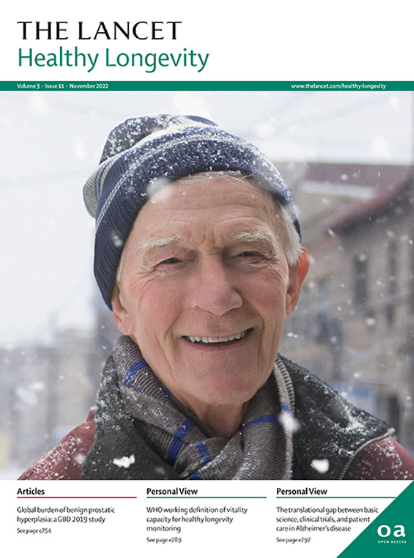
Research & review on #Alzheimers, global burden of benign prostatic hyperplasia, #WHO def of vitality capacity, IPD meta on social connection & #cognition, #oralhealth for older people & more.
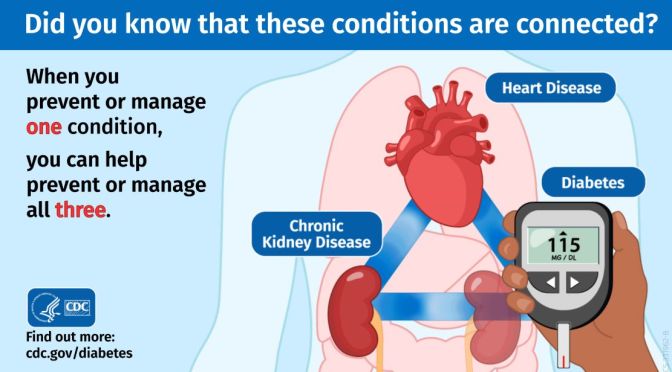
Centers for Disease Control and Prevention (CDC) – The body is complicated! While organs in your body each have a specific job to do to keep you healthy, they still rely on each other to function well. When one organ isn’t working the way it should, it can put stress on other organs, causing them to stop working properly as well.
The relationship between chronic kidney disease (CKD), diabetes, and heart disease is one example of the ways our organs are connected.
The body uses a hormone called insulin to get blood sugar into the body’s cells to be used as energy. If someone has diabetes, their pancreas either doesn’t make enough insulin or can’t use the insulin it makes as well as it should.
If someone has CKD, their kidneys are not able to filter out toxins and waste from their blood as well as they should.
Heart disease refers to several types of heart conditions. The most common condition, coronary artery disease, leads to changes in blood flow to the heart, which can cause a heart attack.
Make the Connection
So how are these three conditions connected? Risk factors for each condition are similar and include high blood sugar, high blood pressure, family history, obesity, unhealthy diet, and physical inactivity.
High blood sugar can slowly damage the kidneys, and, over time, they can stop filtering blood as well as they should, leading to CKD. Approximately 1 in 3 adults with diabetes has CKD.
When the kidneys don’t work well, more stress is put on the heart. When someone has CKD, their heart needs to pump harder to get blood to the kidneys. This can lead to heart disease, the leading cause of death in the United States. Change in blood pressure is also a CKD complication that can lead to heart disease.
Luckily, preventing or managing one condition can help you prevent and manage the others and lower the risk for more complications.
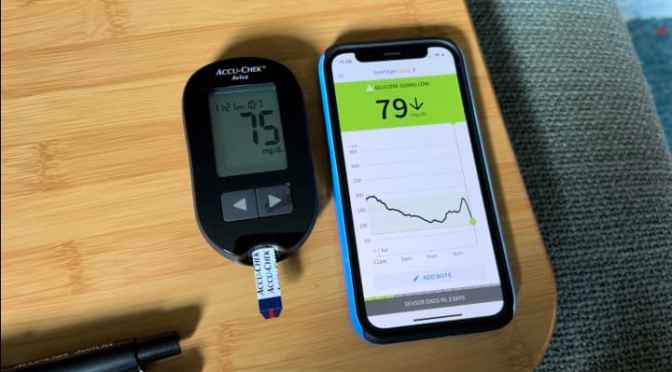
Abbott Laboratories newest continuous glucose monitor is now available at participating retail pharmacies and through durable medical equipment suppliers. The Freestyle Libre 3 was approved by the FDA in June and is a step up from previous Abbott systems.
Abbott Laboratories and Dexcom are the leaders in the CGM market, which hit $5.1 billion in revenue in 2021 and is expected to reach $13.2 billion by 2028, according to Vantage Market Research. Abbott’s CGM systems, called FreeStyle Libre, generated $3.7 billion in revenue last year, with 4 million users globally.
CNBC’s Erin Black, a type 1 diabetic, tested out the Libre 3 for over a month. Here is her review.
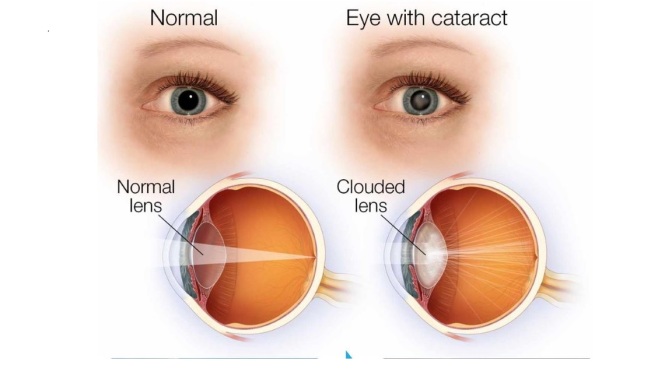
Cleveland Clinic – Cataracts in the eye lens are a later-in-life reality that leads to vision problems for many people. This video shares describes what cataracts are, how they form, and warning signs to help you detect them early.
Chapters: 0:00 Intro 0:10 What are cataracts? 0:43 What are the warning signs of cataracts? 2:44 How are cataracts diagnosed? 3:04 Talk to your eye doctor
“Diverse aging populations, vulnerable to chronic disease, are at the cusp of a promising future. Indeed, growing regenerative options offer opportunities to boost innate healing, and address aging-associated decline. The outlook for an extended well-being strives to achieve health for all,”
Regenerative medicine could slow the clock on degenerative diseases that often ravage the golden years, a Mayo Clinic study finds. Life span has nearly doubled since the 1950s, but health span — the number of disease-free years — has not kept pace. According to a paper published in NPJ Regenerative Medicine., people are generally living longer, but the last decade of life is often racked with chronic, age-related diseases that diminish quality of life. These final years come with a great cost burden to society.
Researchers contend that new solutions for increasing health span lie at the intersection of regenerative medicine research, anti-senescent investigation, clinical care and societal supports. A regenerative approach offers hope of extending the longevity of good health, so a person’s final years can be lived to the fullest.














 Boomers Daily