Category Archives: Magazines

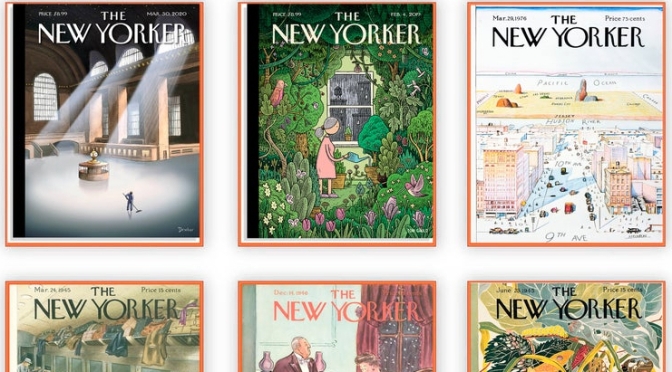
Global Health Essays: ‘The Politics Of Stopping Pandemics’ (New Yorker)

He identifies a cluster of non-medical drivers of deadly outbreaks—war, political instability, human migration, poverty, urbanization, anti-science and nationalist sentiment, and climate change—and maintains that advances in biomedicine must be accompanied by concerted action on these geopolitical matters.

War and Pestilence ride together as two of the Four Horsemen of the Apocalypse, and there is no shortage of historical precedent to demonstrate the aptness of the allegory. The great influenza pandemic that began in 1918 was propelled, in part, by troop movements and population shifts at the end of the First World War. Both the First and the Second World Wars produced typhus epidemics. Armed conflicts cause malnutrition, poor pest control, and sanitation problems; even the soil often becomes contaminated. Medical facilities are destroyed; doctors and nurses, diverted to combat duty, are unable to provide care, and vaccination and other mass-treatment programs usually falter.

Read full essay at The New Yorker

Inside Views: Monocle Magazine – April 2021

Wondering how to direct your efforts? Monocle’s April issue focuses on refreshing everything from your business to your wardrobe. We sit down with a bumper crop of interviewees, revisit Beirut to see how the city has rebuilt after the blast and go behind the scenes in a Hong Kong newsroom. Plus: plenty of recipes, culture and style recommendations and reportage. Available now at The Monocle Shop: https://stage.monocle.com/shop/produc…

INTERNATIONAL ART: ‘APOLLO MAGAZINE – APRIL 2021’

INSIDE THE ISSUE
 FEATURES | Glenn Adamson on Alice Neel’s compassionate portraits; Antony Gormley interviewed by Gabrielle SchwarzChristopher Turner on the Surrealist houses of Edward James; Morgan Falconer on Jessica Morgan’s ambitious vision for the Dia Art Foundation; Kaywin Feldman on cultural leadership in 2021
REVIEWS | Eve M. Kahn on the opening of the Frick Madison; Sukhdev Sandhu on ‘Grief and Grievance’ at the New Museum; Christopher Baker on friendship and portraiture in 18th-century France; Michael Prodger on art museums in the 21st century
 
MARKET | Susan Moore previews spring auctions and reviews sales in Paris and Brussels; Emma Crichton-Miller on collecting Tiffany glass; Samuel Reilly on Frieze New York and gallery reopenings in London
 
PLUS | Kirsten Tambling on satirical images of Robert Walpole; Tim Smith-Laing on Baudelaire’s cantankerous art criticism; Emilie Bickerton in Eugène Atget’s ParisEmma Crichton-Miller on single-artist museums in Switzerland; Will Wiles on the future of department storesThomas Marks on the Georgian feasts of Niko Pirosmani; Robert O’Byrne on Spain before the Civil War

Architecture & Culture: Harvard Design Magazine ‘American Paradigm’ (2021)

The latest issue of Harvard Design Magazine reveals full redesign and new editorial model as it assesses the establishment, and reconsideration, of the paradigm of “America”.

Harvard Design Magazine 48: America marks a turning point for the magazine as the first issue under new editorial director Julie Cirelli, featuring Mark Lee and Florencia Rodriguez as guest editors. This issue also debuts a full redesign by Alexis Mark, the Copenhagen-based graphic design firm. Publishing this month, the issue gathers contributions from leading figures across the fields of architecture, design, urban planning, fashion, art, and governance, including Maurice Cox, Shaun Donovan, Michèle Lamy, Sylvia Lavin, and Marc Norman. Join Lee, Rodriguez, and Norman, alongside contributors Paul Andersen, Neeraj Bhatia, and Maite Borjabad Lòpez-Pastor, for a virtual launch event next Tuesday, March 23, 7:30pm ET.

Harvard Design Magazine 48: America reflects on the theme and definition of “America” through lenses of cultural production, racial justice, and architectural and design practice. In the 20th century, a paradigm of America characterized by progress, openness, and democracy was perpetuated—but with an ominous underbelly of exclusion, racism, and inequity left unexamined. While viewpoints on America’s story and history differ, if not reject one other, what is widely shared is a sense of 2020 as a breaking point—or, “a consciousness of an imminent existential threshold,” as write Lee and Rodriguez.

Read more