https://vimeo.com/434020908
Produced and Directed by: Michael Biondo, Dallas Bennett, and Michael Robison
Edited by: Dallas Bennett
Cinematography by: Michael Biondo
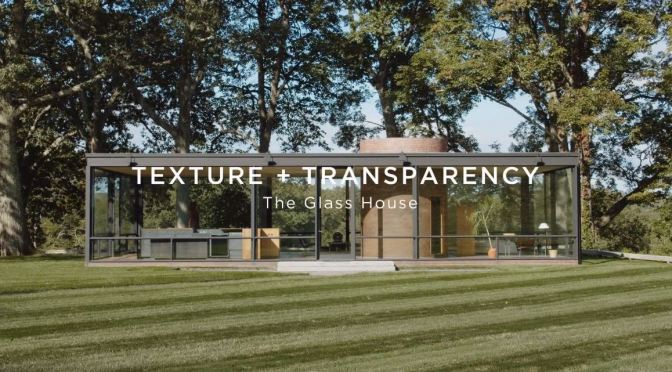
Architectural photographer and filmmaker Michael Biondo and creative reality capture duo Michael Robison and Dallas Bennett (aka MYND Workshop) have collaborated to create an episodic series of short visual tours of the Glass House, a site of the National Trust for Historic Preservation.
This video series seeks to create an ambient and intimate tour of Philip Johnson’s Glass House property in New Canaan, CT. These films are unique in the sense that they combine film and the use of point cloud technology to allow for a tectonic and artistic examination of the buildings in order to better understand the architecture and site design.
“Point clouds are an exceptional visual tool for understanding a space in ways which the human eye doesn’t typically allow,” said Michael Robison, co-founder and CEO of MYND Workshop. “The Glass House site could not be a more perfect subject to be experienced as a point cloud, providing insight into the complex relationships between the various structures and their careful placement throughout the dramatic landscape which defines the Glass House property.”
These films focus on a dialogue between Biondo’s carefully composed videography and MYND’s spectral point cloud visuals. Each video presents one of the different structures which comprise the Glass House property.
Biondo’s breathtaking video manages to capture those visceral experiences which one may come across when visiting the 49-acre property. These scenes offer the textures and light which define the sensual and emotional nature of Johnson’s work. In contrast, MYND Workshop’s animations speak to the layers and transparencies which Johnson often referred to when speaking about the design of the various buildings on the site, allowing for a design perspective that has never been seen before.
MYND Workshop’s medium of choice, the Point Cloud, may be best described as a 3D photograph which adds a spatial dimension to an otherwise 2D scene. The Brooklyn-based studio recognized early on the inherent beauty of the point clouds, exploring their creative potential by using them to create ethereal animations like those in the series.
This project was made possible by the generosity of Joanne and Stanley Marder.
About MYND Workshop
MYND Workshop is a Brooklyn based reality capture studio founded by Michael Robison and Dallas Bennett. Since 2015, they continue to implement a combination of 3D laser scanning and photogrammetry processes to document architecture, historic sites, film sets and artwork. MYND pushes the boundaries of these technologies by merging utility and creativity. Past projects have included Waldorf Astoria Hotel New York, Trinity Church Wall Street, World Trade Center Plaza, 9/11 Museum & Memorial, New York Stock Exchange, The Ford Foundation, The Brooklyn Navy Yard among many others.
About Michael Biondo
Michael Biondo is a New York and Connecticut-based photographer / filmmaker specializing in architecture and design. He studied Photography, Graphic Design, and Art History at the Pratt Institute where he earned a BFA. Recently Biondo contributed photographs to Rizzoli’s 2014 monograph, Allan Greenberg: Classical Architect; Design Book’s 50 U.S. Architects, published in 2015; and Inventive Minimalism, Monacelli Press, 2017. He co-authored and photographed Mid-Century Houses Today, Monacelli, 2015. His photographs have appeared in Architectural Digest, the Wall Street Journal, Architizer, Dwell, a+u Magazine and other publications.
Website

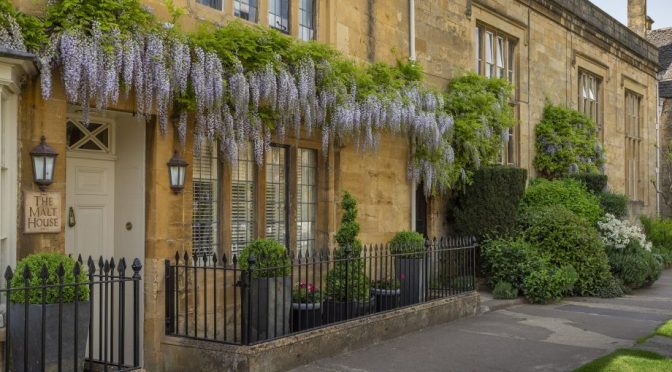
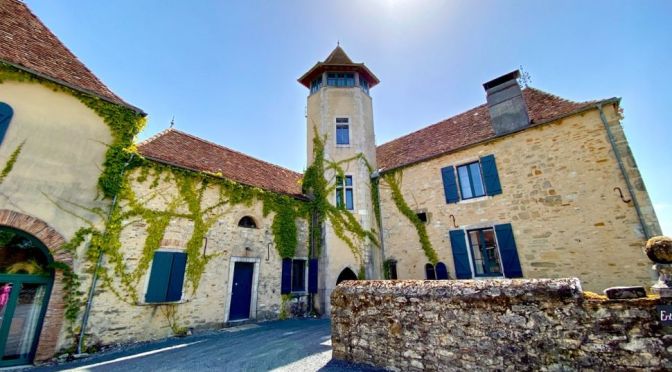
 Chipping Campden is a town charmed by limestone. Its walls dance by the light of the dying day… Chipping Campden’s High Street is best viewed from the covered market of 1627, looking up towards the church tower. The houses are of a creamy local limestone. Walls are offset by grey-brown roof tiles and white woodwork, fronted by foxgloves, hydrangeas and a skirt of lawn.’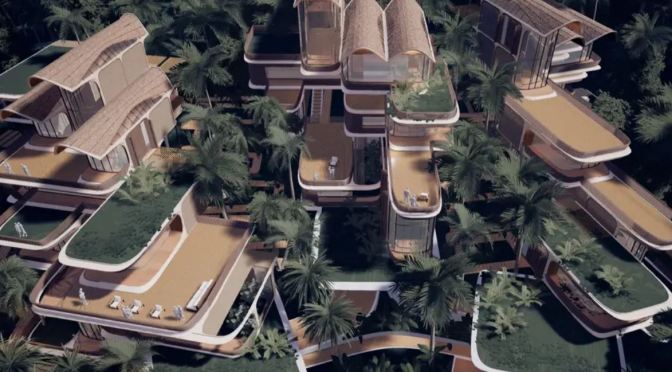
 The first residential units on Roatán Próspera are a case study in local sustainability and global integration. Combining the most advanced modular construction techniques with sustainably-sourced local materials, the design and planning for the first dwellings in Próspera is a tangible example of the dramatic shift in development methodologies taking place around the world.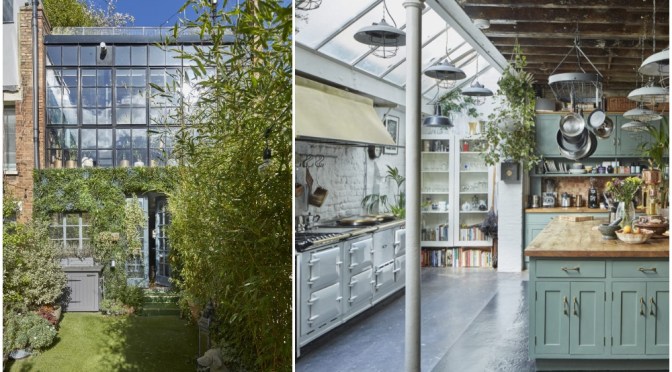


 The brief: A bed amidst the trees; a shower amongst the rocks, the site sits in a nature conservation in rural South Africa; where trees and shrubs and rocks create the architectural backdrop for any home.

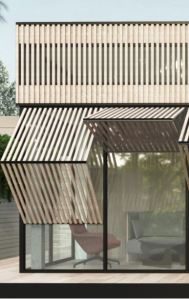 When governor Jerry Brown signed a law that made Accessory Dwelling Units (ADUs) legal in California, it started a revolution in the ways that homeowners, builders and city planners think of small living. Homeowners’ applications for these small backyard buildings have skyrocketed after this regulatory reform in 2018.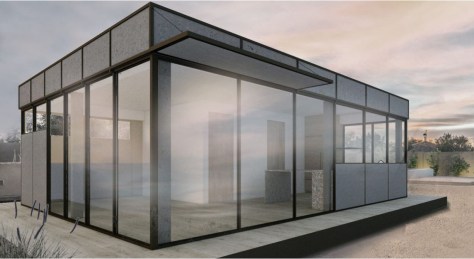
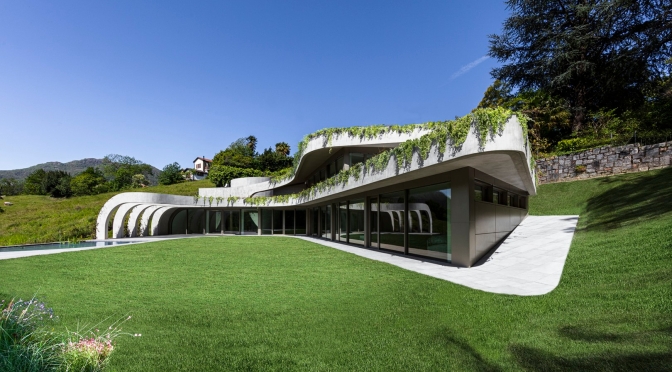
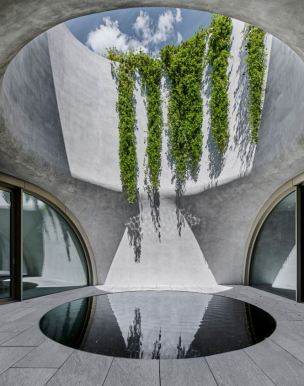 Atelier Alice Trepp, located in Origlio, a small and stunning village, is an atelier designed for Alice Trepp, an Ecuadorian sculptress. The site is characterized by a gentle descending slope, the view of the pastures and of Monte Tamaro, and the coolness given by the lake.
  The shape develops from the analysis of the contour lines and the folding of two of them upwards, under which the building is inserted by cutting out sinuous spaces and movements. The volumes take shape like leaves lifted from the ground, so that the architecture actually seems to be a part of Earth itself.

 A micro-housing concept for Häfele, the leading manufacturer of architectural and furniture, lighting, and hardware. Designed to take advantage of Häfele’s comprehensive product line in both conventional and speculative ways and to position the brand as a resource for emerging models of living…
 Boomers Daily