The Local Project (December 5, 2023) –The Gatehouse by architecture firm Patterson Associates Architects and interior design practice Sonja Hawkins Design depicts the journey of designing a home in the mountains of New Zealand.
Video timeline:00:00 – Introduction to the Home in the Mountains 00:38 – The Vision of a Flexible Home 01:09 – The History of the Central Mountain Location 02:03 – A Focus on the Apertures 02:29 – Connecting the Interior and Exterior Material Palette 03:52 – An Entertainers Space 05:10 – Favourite Aspects of the Home
The Local Project’s house tour illustrates how this dynamic house near the base of the famous Remarkables mountain range and its complex build rise to the exemplary topography whilst being sympathetic to the surrounding rural fabric. The journey of designing a home as compelling as The Gatehouse is nuanced, as is the decision to build such a bold home. The architecture and interior design were conceived holistically by Andrew Patterson and Sonja Hawkins, and as such, the house is a seamless blend of materials and ideals with a showstopping staircase crafted from timber and steel.
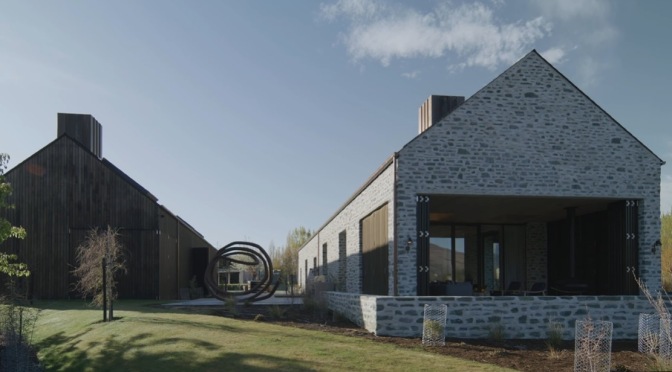
The home consists of two buildings – one stone and one timber – and in the house tour, the architecture and interior design are presented against the backdrop of New Zealand’s incomparable landscape, including the mountain range in the distance and golf course nearby. In the journey of designing a home, The Gatehouse draws on medieval influences in its interpretation of a portcullis – a historical architectural feature best described as a rising door or enclosed outdoor room typically found at the entries of castles or medieval estates. This gateway, crafted from timber and steel, leads to the custom staircase, which corkscrews through the stone building.
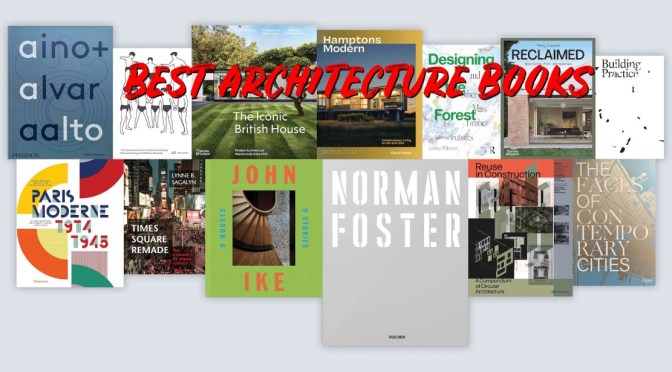
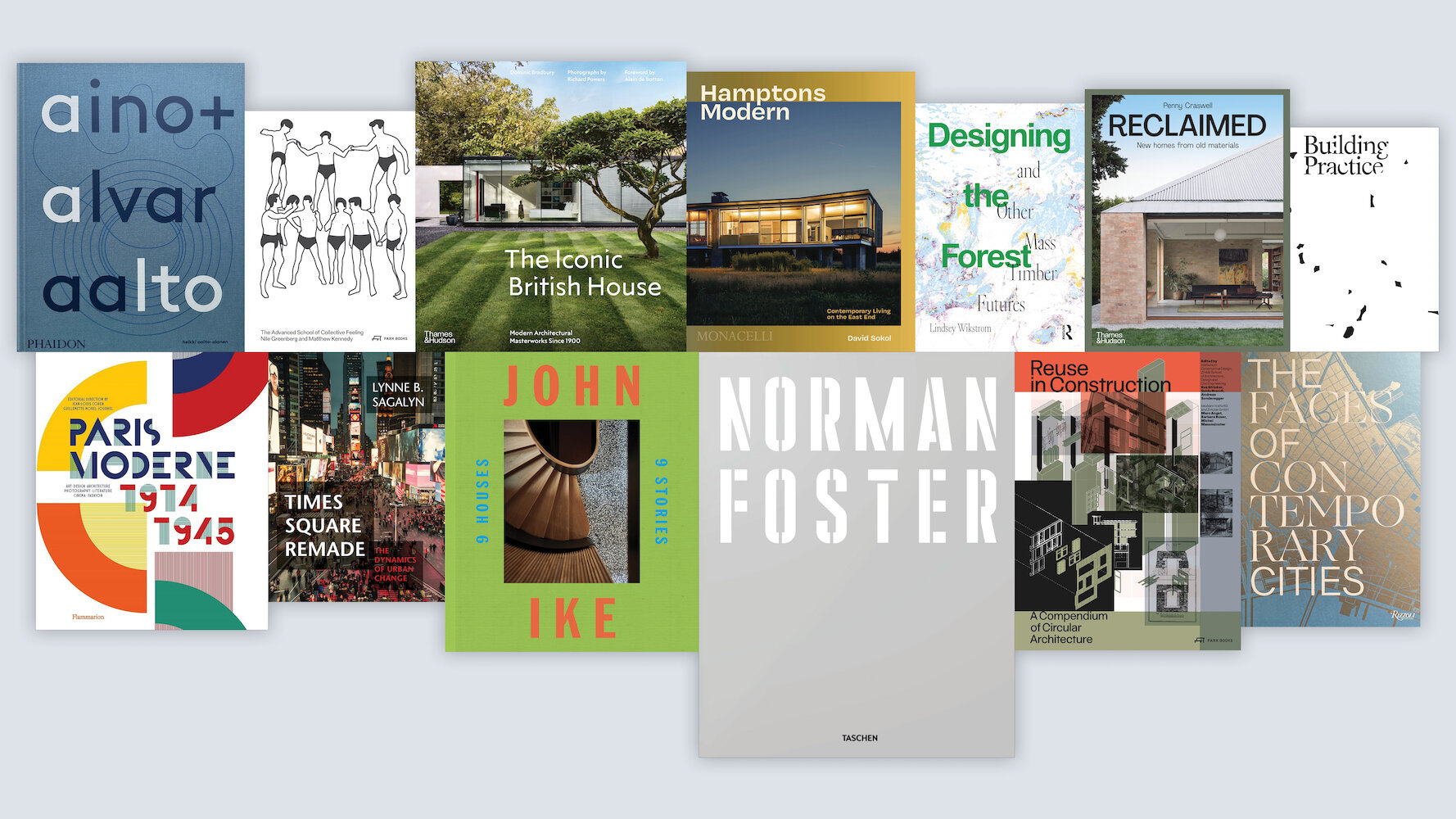
Architectural Record (November 27, 2023) – From a mammoth Norman Foster monograph to a loving tribute to Aino and Alvar Aalto penned by their grandson, RECORD’s 2023 book picks include an assortment of notable titles perfect for holiday gifting—and keeping.
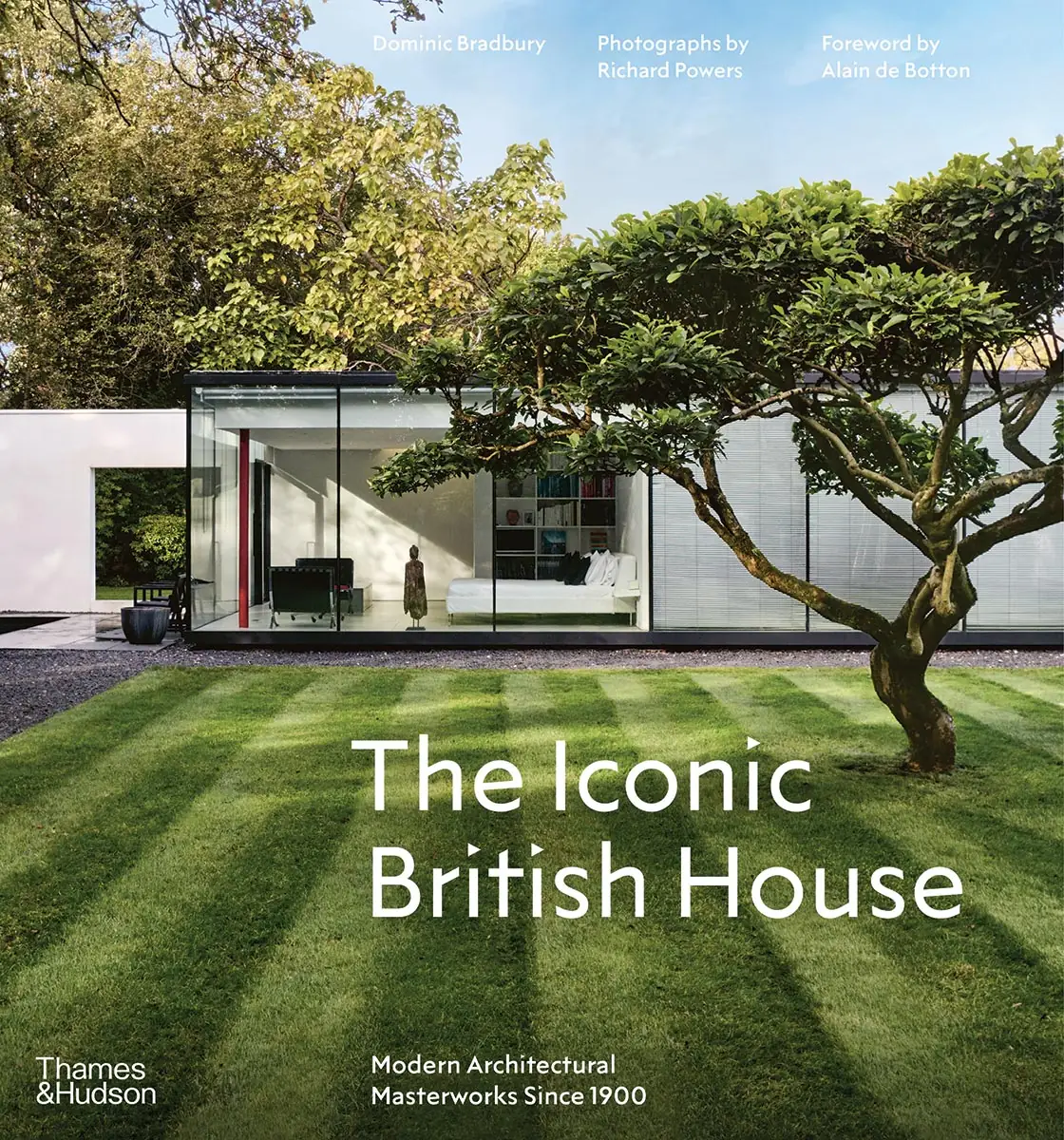
The Iconic British House by Dominic Bradbury. Foreword by Alain de Botton. Thames & Hudson, 320 pages, $65.
“This book should leave us inspired, and a little angry, in a fruitful way,” writes Alain de Botton in his foreword to this hefty, decade-hopping survey of modern domestic architecture in Britain. Kicking off with an Arts and Crafts treasure in Surrey designed by Edwin Lutyens as a rural retreat for “ladies of small means,” the book’s 50 featured domiciles—lushly photographed by Richard Powers—are pointedly diverse in style and context but unified by their creative flair, ingenuity, and ability to induce acute house envy. Don’t say you weren’t warned. Matt Hickman
Building Practice edited by Kyle Miller and Molly Hunker. Applied Research + Design Publishing, 400 pages, $35.
Molly Hunker and Kyle Miller assemble a veritable who’s who of up-and-coming architects, designers, educators, and fabricators in Building Practice. Short, thematic essays, followed by interviews with 32 contributors explore what it means to build a practice, as well as how to practice the skill of building. Far from a run-of-the-mill compilation of flashy projects, this reader on the profession’s next generation offers up valuable insight that many young practitioners would be wise to heed. Leopoldo Villardi
Aino + Alvar Aalto: A Life Together by Heikki Aalto-Alanen. Thames & Hudson, 352 pages, $150.
Even though Alvar Aalto remains one of the most studied subjects in architectural history, his grandson Heikki Aalto-Alanen brings readers something new and unexpected—a love story. This deeply personal account of Aino and Alvar’s life together, replete with sketches and photographs, is told through never-before-published letters that reveal Aino’s often overlooked role in the creative partnership. As Sigfried Giedion wrote in 1949, after her unexpected death: “Their true secret is perhaps that, as people, while they are the complete opposites, they are also equals.” LV
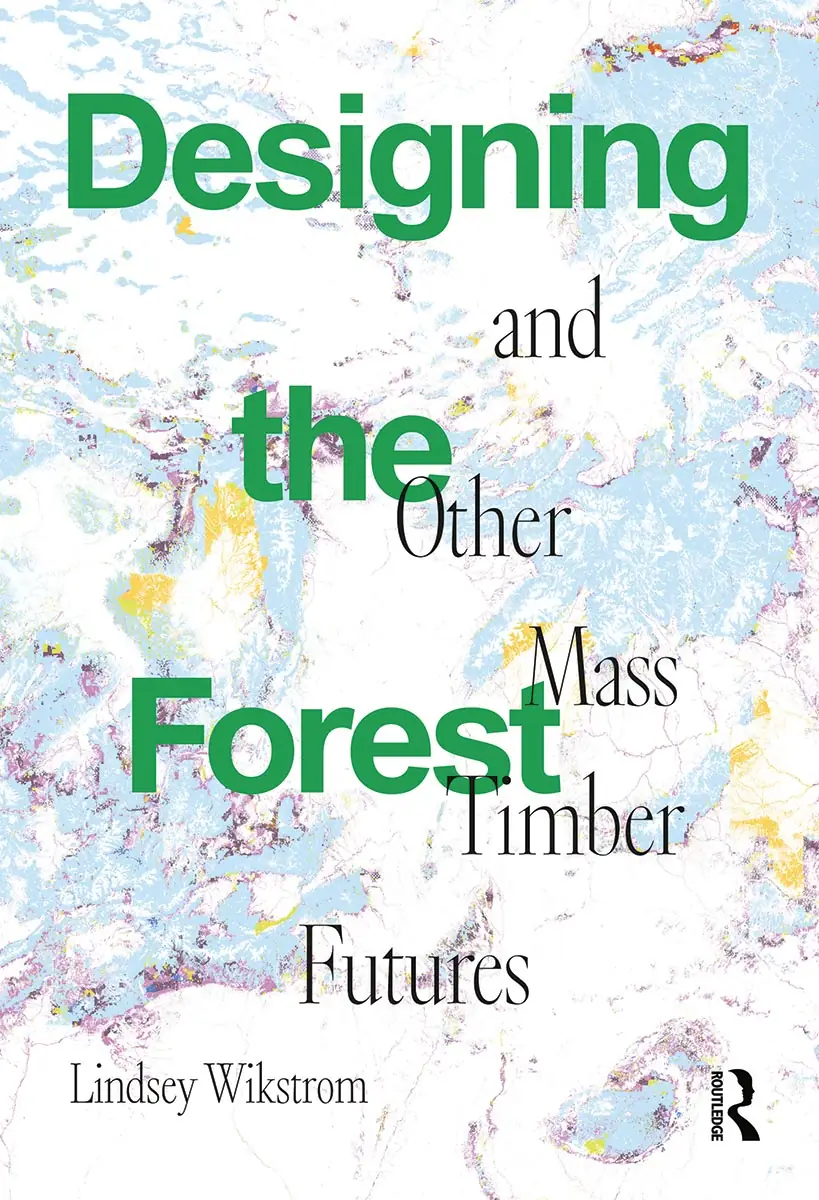
Designing the Forest and other Mass Timber Futures by Lindsey Wikstrom. Routledge, 246 pages, $35.
Mass timber is often seen as an ecologically responsible alternative to concrete and steel. But this is not a given, since building at scale with wood introduces a whole set of new challenges. This is why Lindsey Wikstrom’s book is so welcome. While advocating use of mass timber for its carbon-storing capabilities and potential to be nonextractive, she debunks misguided assumptions and probes ethical and environmental considerations. Designing the Forest provides a deep dive into the material’s complexities and its opportunities. Joann Gonchar, FAIA
Paris Moderne: 1914–1945 by Jean-Louis Cohen and Guillemette Morel Journel. Flammarion, 356 pages, $65.
When Jean-Louis Cohen unexpectedly died in August, Gwendolyn Wright wrote in record that the profession had lost “the most insightful, wide-ranging, lyrical, and prolific historian of modern architecture.” Published posthumously, Paris Moderne, 1914–1945 surveys French design culture, from the overlooked to the widely known. Bookended with photo-essays by Antonio Martinelli, this encyclopedic volume would feel at home in the library of any historian or Francophile. LV
The Advanced School of Collective Feeling: Inhabiting Modern Physical Culture 1926–38 by Nile Greenberg and Matthew Kennedy. Park Books, 176 pages, $40.
From the scantily clad figures on its cover to a ribbon bookmark that doubles as an architectural scale, The Advanced School of Collective Feeling is every bit as playful as it is a book about play. This jog through the history of physical culture vis-à-vis modern architecture features a series of drawings (beautifully rendered in metallic ink over black paper) and an impressive assortment of archival imagery. Taking the book over the finish line: a collection of somersaulting, weight-lifting, and jeté-ing silhouettes that are bound to elicit more than a few smiles. LV
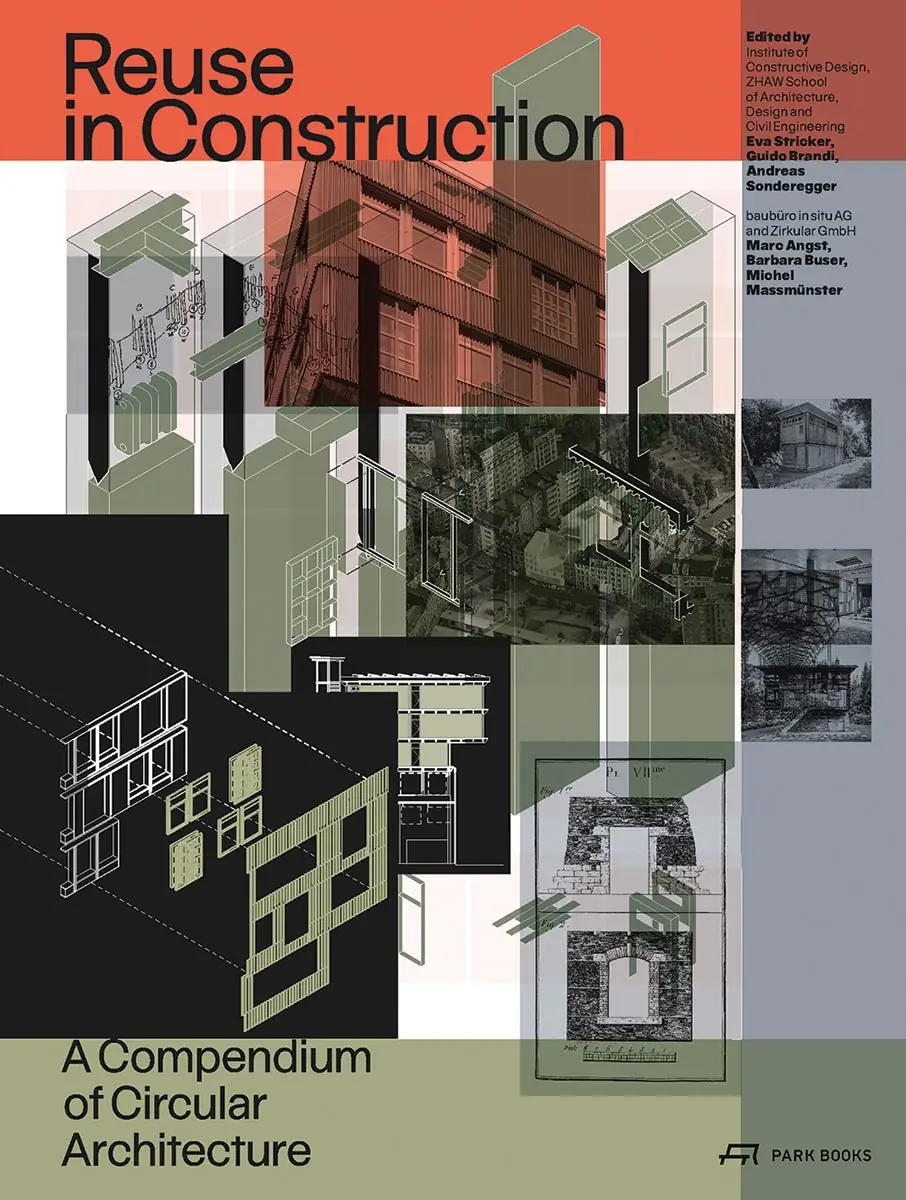
Reuse in Construction: A Compendium of Circular Architecture edited by Eva Stricker, Guido Brandi, Andreas Sonderegger, Marc Angst, Barbara Buser, and Michel Massmünster. Park Books, 344 pages, $75.
Green-building advocates agree that the construction industry is in dire need of an alternative to its typical “take-make-waste” model. But, so far, circular processes are extremely difficult for most architects to implement. Reuse in Construction is intended to help address this problem with an in-depth documentation of K.188, a building-expansion project in Winterthur, Switzerland, that relied almost exclusively on reused components. In addition to this case study, the book discusses the long history of circularity in architecture, as well as a range of practical concerns, including legal, economic, and energy-related issues. JG
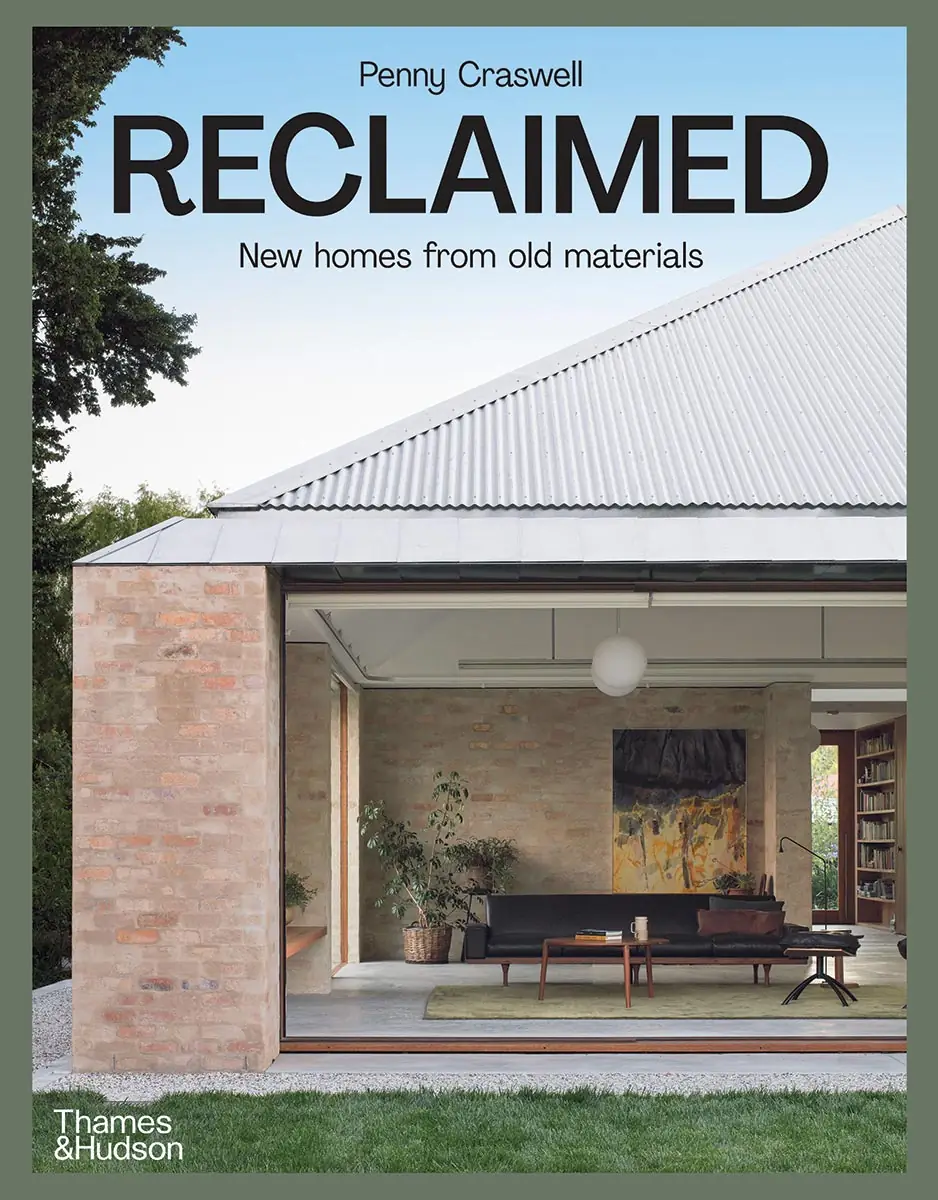
Reclaimed: New Homes from Old Materials by Penny Craswell. Thames & Hudson, 272 pages, $45.
The World Green Building Council estimates that the built environment is responsible for 40 percent of global carbon emissions—10 percent stemming directly from embodied carbon from new materials and construction. Reclaimed offers an alternative to the status quo, demonstrating how to reuse materials for contemporary residential design. Divided into four material categories—brick, timber, metal, and postconsumer waste (denim repurposed as insulation, or recycled-plastic countertops, for example)—this thoughtful guide catalogues 24 houses and apartments across the world. Matthew Marani
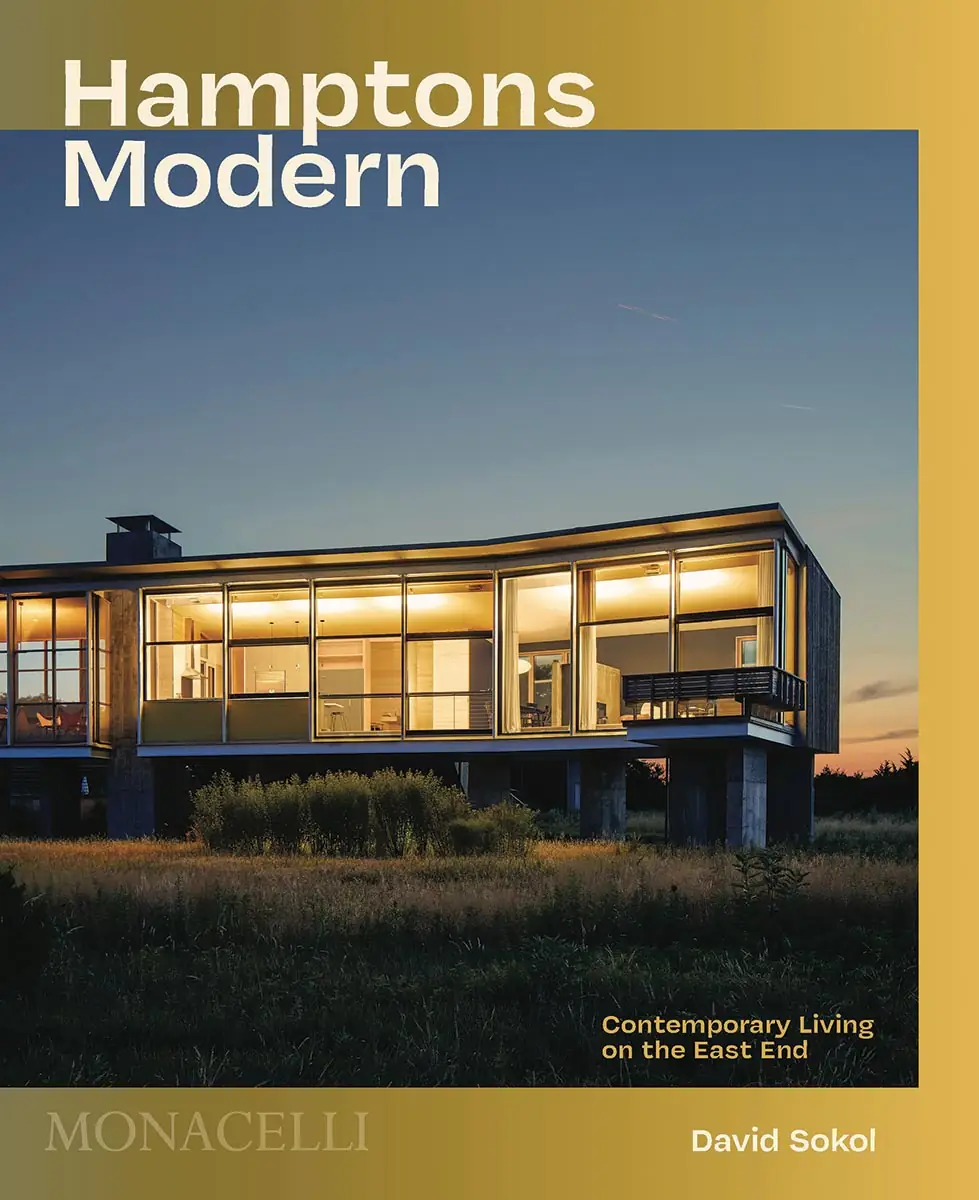
Hamptons Modern: Contemporary Living on the East End by David Sokol. The Monacelli Press, 224 pages, $65.
Intrepid New Yorker and record contributing editor David Sokol travels the East End of Long Island, exploring how the area’s roots in Modernism are shaping its contemporary residential architecture (apart from the manses for the rich and famous). Highlighting 18 houses, on both the South and North Forks, Sokol organizes this richly illustrated work into three sections: Stewarding the Past, Extending the Legacy, and Setting New Precedents. Infused with history, anecdotes, and interviews, this engaging ode to a design movement’s influence in time and place would be an asset to many libraries—and it’s a pleasure to read. Linda C. Lentz
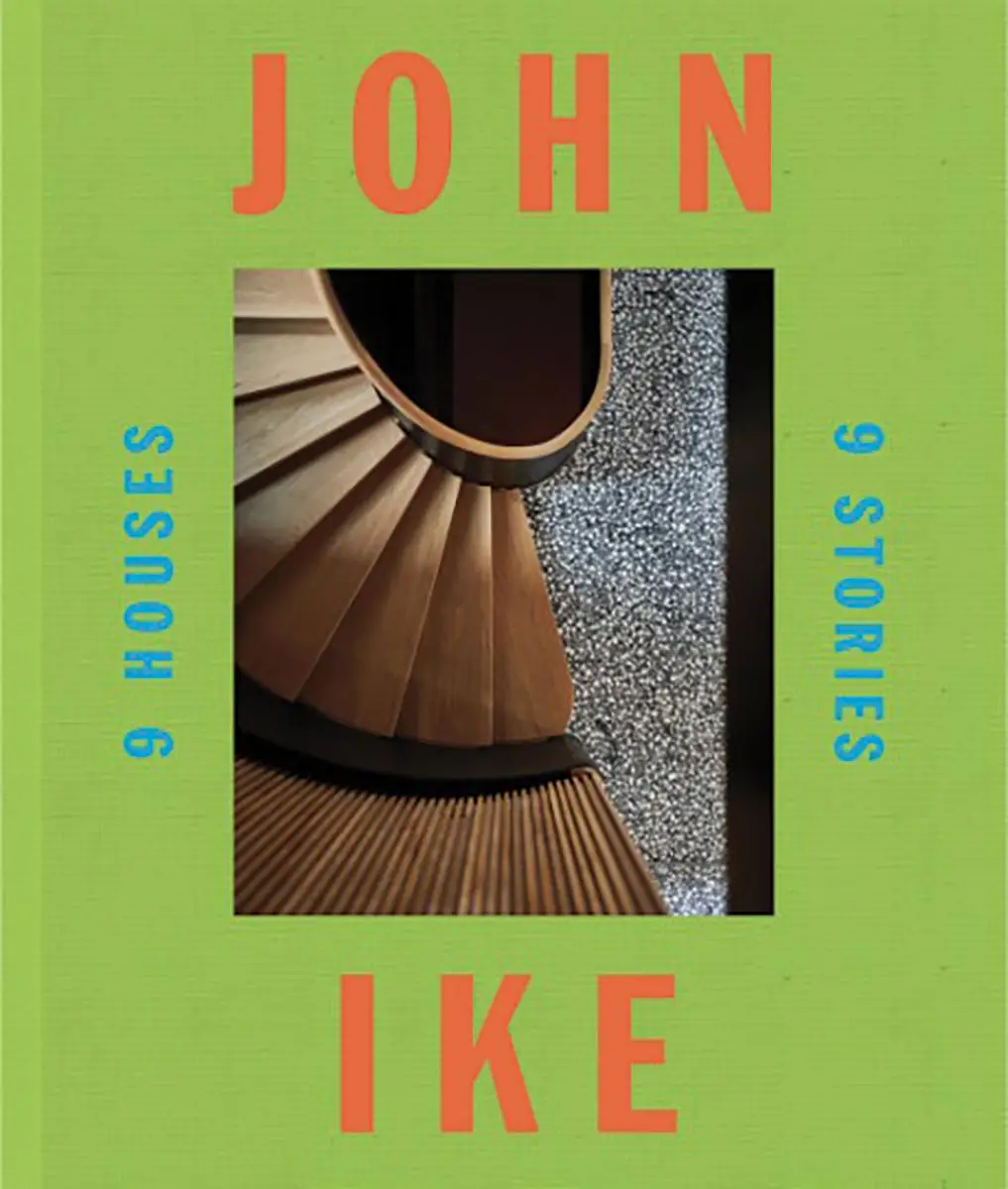
John Ike: 9 Houses, 9 Stories by John Ike and Mitchell Owens. Vendome Press, 304 pages, $75.
A chartreuse cloth cover with blue and tangerine lettering make this eye-catching showcase of residential work difficult to miss on a bookstore shelf. Nine dwellings—deeply contemporary yet full of historical references—slowly unfold over 304 pages, accompanied by the personal stories behind their making. But, reflecting on the collaborative nature of practice, the storytellers are just as varied as the houses. Among them are clients and contractors, as well as former firm partners Tom Kligerman and Joel Barkley. “9 Houses, 9 Stories is intended as a salute to our work,” Ike writes in the introduction. “It also marks the official end to the 34-year run of Ike Kligerman Barkley.” Each of the three architects has now gone out on his own, and readers will need to patiently wait to see what’s next in store. LV
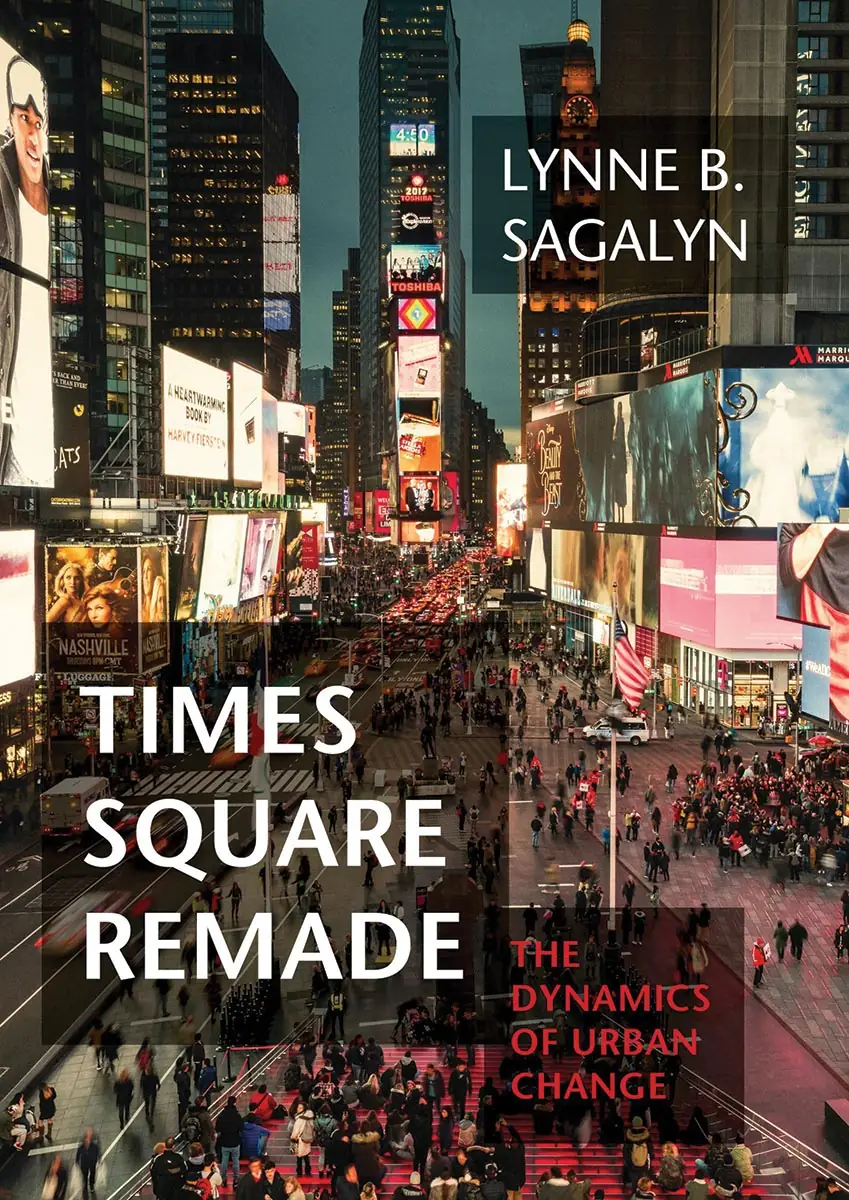
Times Square Remade: The Dynamics of Urban Change by Lynne B. Sagalyn. The MIT Press, 440 pages, $40.
Take a front-row seat to the detailed chronicle of the making, remaking, “ruin,” and revival of New York’s “symbolic soul.” From Times Square’s Gilded Age inception as a highbrow arts destination to its working-class takeover as a carnivalesque playground, then its decline into a destination for pornography and prostitution and the 20-year sanitization campaign that followed, Columbia University professor emerita Lynne Sagalyn doesn’t confine herself to the broad strokes of financial deals or political machinations. She emphasizes the street-level humanity that has persisted at the “crossroads of the world,” throughout the fluctuations in its identity. Pansy Schulman
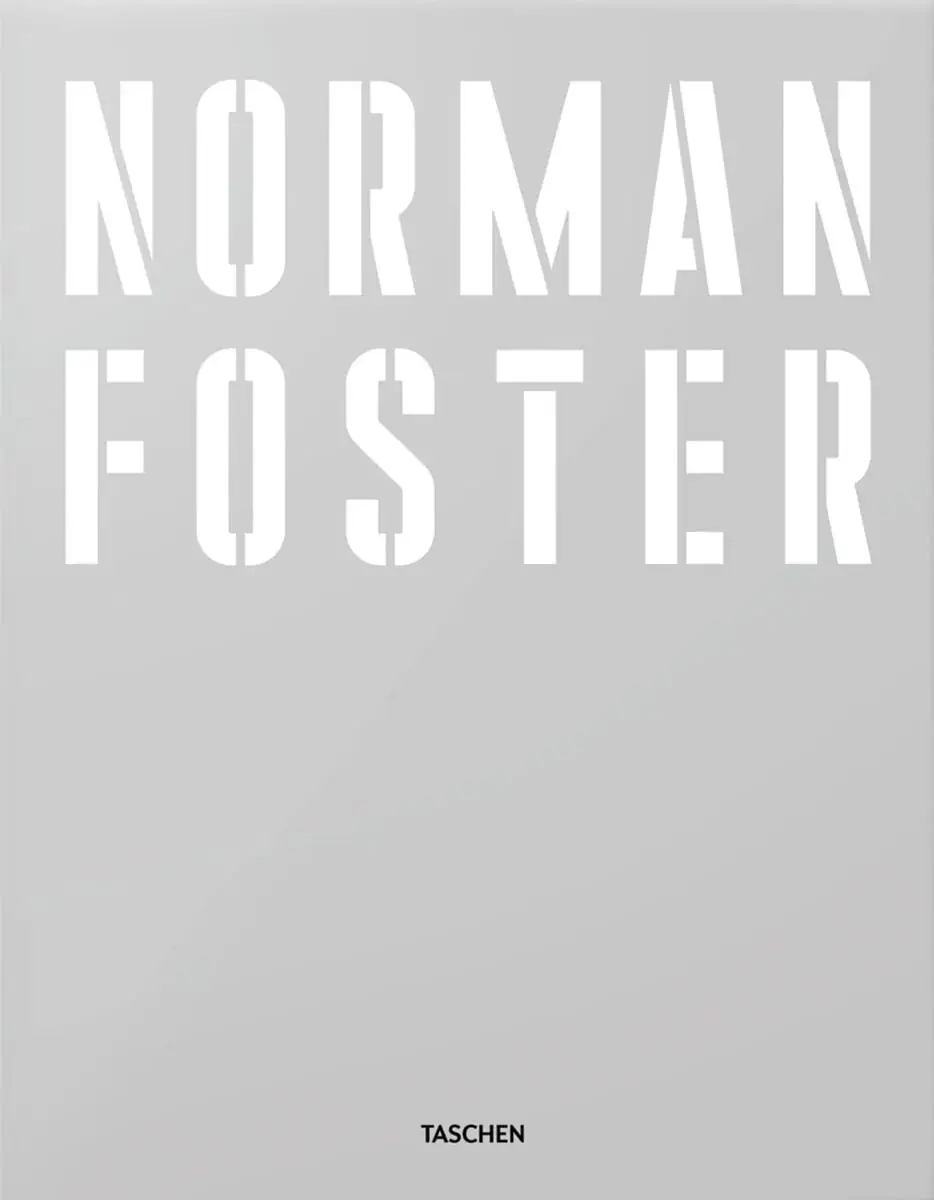
Norman Foster: Complete Works 1965–Today by Norman Foster. Taschen, 1,064 pages, $350.
Accompanying the Norman Forster retrospective held at Paris’s Centre Pompidou earlier this year, this monograph is undoubtedly the heavyweight—literally, at 26 pounds—of architecture-book offerings in 2023. Neatly packaged in a 19″ by 15¼” by 5½” cardboard carton, this two-volume edition (one is titled “works” and the other “networks”) presents the Pritzker Prize–winning architect’s life, work, and personal interests in XXL format, with writings by Taschen regular Philip Jodidio and Foster himself. Not suitable for those who prefer to travel light! LV
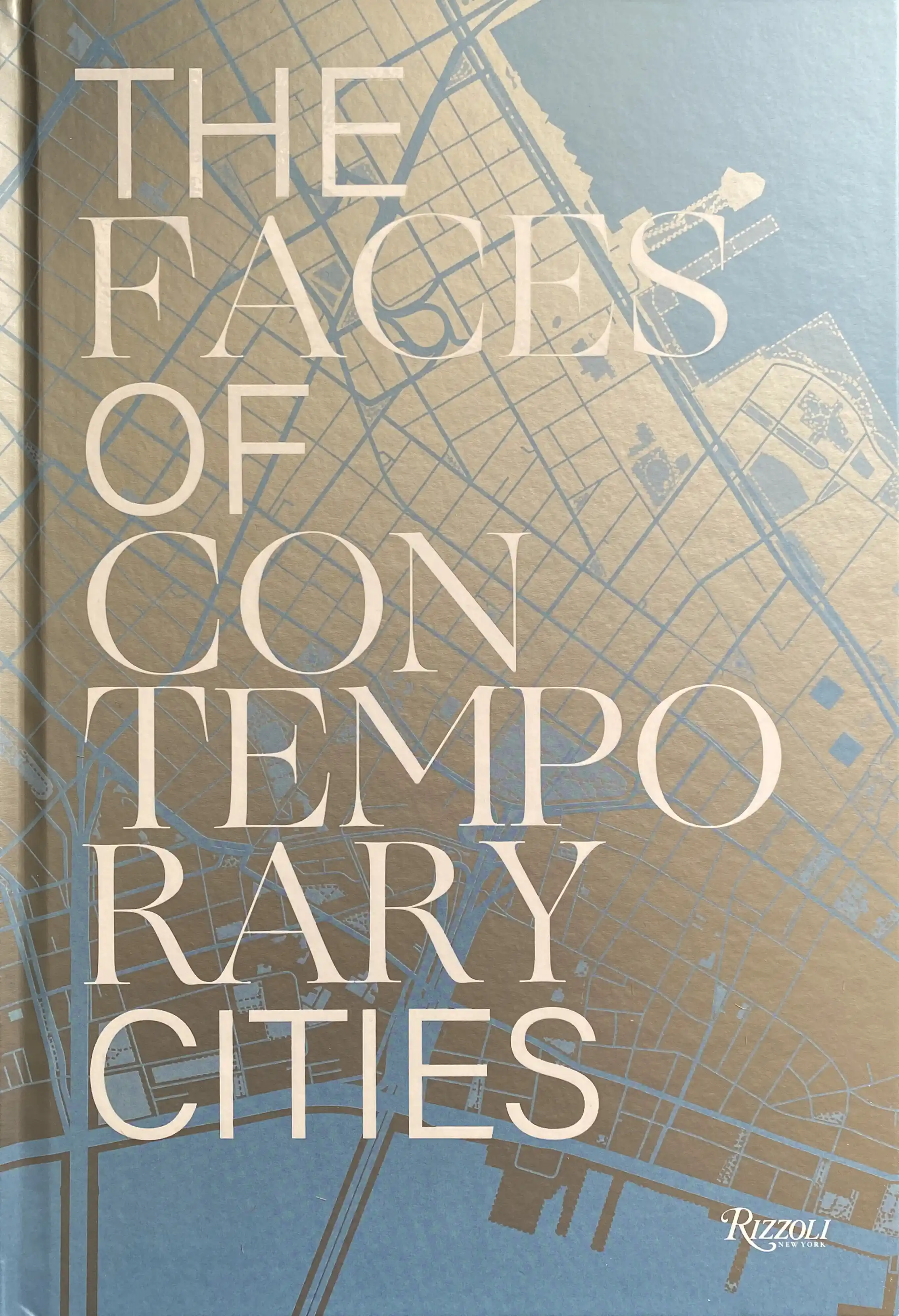
The Faces of Contemporary Cities edited by Davide Ponzini. Rizzoli, 240 pages, $65.
The story of Permasteelisa began in Italy 50 years ago. That small window manufacturer grew to become the company behind the facades of some of the world’s most famous buildings, including Renzo Piano’s Shard in London and Frank Gehry’s Guggenheim in Bilbao. This book reveals how the work of these architectural giants is made possible in part by companies such as Permasteelisa, which draws on its constant research into technology and materials to offer solutions for constructing the most futuristic buildings. With texts by international urban planning scholars and data analysis and georeferencing methodologies developed at the Transnational Architecture and Urbanism Lab (TAU-Lab) of the Politecnico di Milano, the book shows how Permasteelisa’s know-how has allowed it to shape the faces of many contemporary cities such as New York, Paris, London, Berlin, Frankfurt, Milan, Hong Kong, and Sydney.
The Local Project (November 28, 2023) – Designed as a tree house and woven into the landscape of California’s Martis Valley – within striking distance of Lake Tahoe – is Analog House, jointly designed by Olson Kundig and Faulkner Architects.
Video timeline: 00:00 – Introduction to the Tree House 00:44 – Respecting the Landscape Throughout the Design 01:26 – A Quiet Scheme 01:50 – A Conversation Rather than a Brief 02:26 – Walkthrough and the Layout of the House 03:20 – The Singular Choice Materials 04:32 – Exciting Aspects of the Space 05:26 – The Gizmos 06:40 – Favourite Parts of the Process and Design
Due to its location and the nature of its form, the home seamlessly echoes its alpine surroundings and becomes part of the forest floor through conversational design. Situated in a dense forest, the architecture was conceived to be environmentally sensitive. The glass doors and exterior rainscreen are made of recycled steel and the wood frame employs engineered wood studs, joists and rafters. The structure’s steel skin also requires no maintenance and is fire-resistant. As such, the architects not only created a dwelling that nestles into the surrounds but one that greatly considers and responds to the environment.
As seen in the house tour, there is a harmony in the home’s design; it offers seamless transitions from room to room, showcasing the transformed spaces both inside and out. Designed as a tree house, the pièce de résistance of the dwelling is the steel tower – a three-storey structure that rises from the main volume. Designed as a guest wing, it comprises bedrooms with ensuite bathrooms and a rooftop deck with sweeping views. In the main volume of the house lies the kitchen and utility areas, with moveable glass doors that open up to the outdoor spaces and allow for plenty of fresh air to enter the abode.
The Local Project (November 24, 2023) – Located in a leafy pocket of Hawthorn is Shakespeare Grove by B.E. Architecture, a dream house designed as a family home and devised by a memorable palette of materials.
Video timeline:00:00 – Introduction to the Dark and Moody Dream House 01:12 – Designed as Two Halves 01:40 – The Decorative and Private Sector 02:00 – Incorporating A Sense of Scale and Sculpture 02:38 – The Casual and Family Sector 03:01 – A Reduced Material Palette and Light Quality 03:53 – Incorporating Custom Made Personal Items 05:12 – Enjoyable Aspects of the Design
B.E. Architecture’s overarching responsibility was to create a residence that responded to the area and catered to the council, town planners, heritage planners, neighbours and, ultimately, its clients. Designed as two halves, the dream house features a distinct façade that hides the intimate and warm interior. Furthermore, when looking to simplify the expression of the building, the team used consistent materials across both the interior and exterior. Moving the house tour inside, the front half of the home holds the master bedroom, ensuite and study, as well as the formal dining and living areas.
Though facing the street, the front half of Shakespeare Grove is kept private and offers an inward-facing inner experience. The interior design is typified by the inlaid timber ceilings and cocooning walls of felt, and the first half of the dream house is designed to be more decorative than the second. Also shown through the house tour is a generous architectural scale, as seen in the details of the staircase. Moreover, a vaulted hallway leads from the formal part of the dream house to the casual spaces. The rear of the dream house holds the social areas such as the kitchen, lounge and dining space – all of which are open to the natural surrounds and flow to the outdoor entertaining zones.
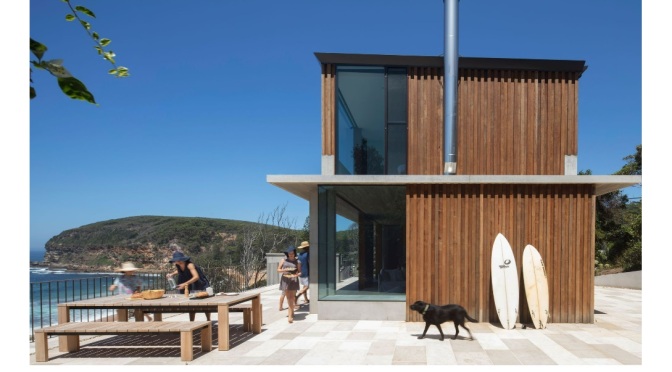
The Local Project (November 22, 2023) – Inside a magical home complemented by the ever-changing backdrop of the ocean, it is evident that Macmasters Beach House is a family residence that allows its owners to live peacefully alongside nature.
Video timeline:00:00 – Introduction to the Magical Home 00:45 – The Beautiful Coastal Site and Its Core Principles 01:25 – A Walkthrough of the Home 02:59 – Focusing on Indoor-Outdoor Connection 03:25 – Perfecting the Build and its Finishings 04:14 – Protecting the Surrounding Bushland 04:45 – Proud Moments
Nestled into the headland, there is a certain wild, Australian characteristic that is hinted at throughout the home’s design. Embracing the idea of barefoot luxury inside a magical home, Polly Harbison Design has imbued the coastal dwelling with principles of simplicity while offering the owners a home where they can experience unparalleled views. Featuring off-form and broad-form concrete as well as exposed eaves, the design and architecture of the beachside house allows the materials to speak for themselves.
Moreover, the remnant pocket of bush that surrounds the home is enhanced and carefully considered by keeping the footprint of the home as small as possible while still providing plenty of space for the family within. Polly Harbison Design has also retained much of the landscape to encourage the existing vegetation on site to regenerate. Once inside a magical home, the house tour reveals a deep connection between the natural and built elements.
The Local Project (November 19, 2023) – In a stark juxtaposition from the materiality and pace of New York City, Brooklyn Mass Timber is an architects own home that steps away from the steel and concrete that dominates the architecture of the area.
Video timeline:00:00 – Introduction to the Architect’s Own Home 01:03 – The Original Property and its History 01:31 – A Specific Type of Building 02:00 – The Layout and Walkthrough of the Home 02:57 – Making An Example of Utilising Timber 03:40 – Designed to Be Dissassembled with Zero Waste 03:52 – Pursuing Passive House Principles 04:18 – A Curated and Integrated Approach 06:07 – Focusing on Connecting to Context 06:58 – Favourite Aspects of the Home
Schiller Projects creates an oasis made of timber, contained within one of the city’s coveted 1800s carriage houses. Not only does it test the bounds of adaptive re-use, but it sets an important precedence for housing in urban environments. The project is an architects own home – the residence of Aaron Schiller, Founder of Schiller Projects, his wife Anna and their two young children.
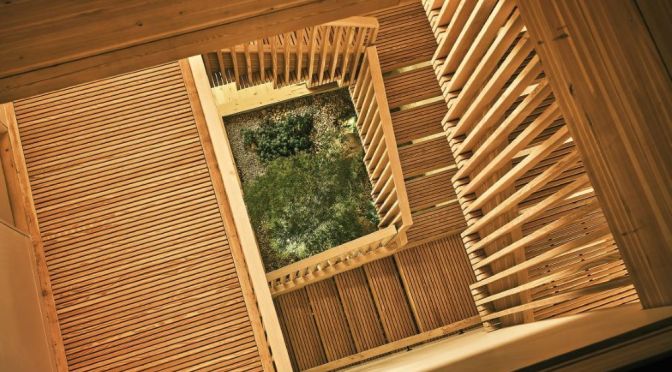
Located in Brooklyn just ten minutes from downtown Manhattan, it feels secluded while still being within easy reach of the city. As one enters an architects own home, they are met with a view directly to the backyard, a three-storey wood staircase with a garden at its foot and the kitchen. As one ascends the stairs, the second level holds two bedrooms and a laundry room, bathroom and living room that looks out towards the cathedral, and the top level contains the main suite.
The Local Project (November 17, 2023) – When an architect designs a breathtaking home connected to nature, the results can be mesmerising. Six Square House by Young Projects is one such example, and this house tour, which takes viewers inside and documents how an architect designs a breathtaking home, captures the contemporary home and surrounding landscape in all its glory.
Video timeline:00:00 – Introduction to the Breathtaking Home 00:55 – A Rural Hamptons Location 01:48 – A Family and Landscape Centred Brief 02:24 – The Organisation of The Home 03:25 – Experiencing The Landscape Surrounding the Home 05:03 – The Exterior Material Palette 05:47 – A Neutral and Art Focused Interior 06:37 – The Brazilian Furniture Design 07:00 – Proud Moments
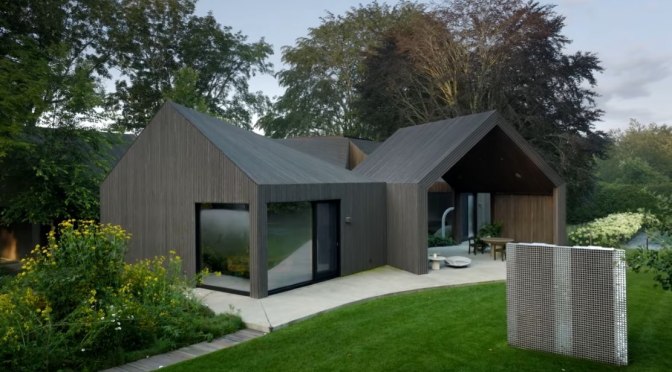
Nestled deep into the large property, this house is defined by half a dozen cubes, which tesselate from a centre point, resulting in a dynamic piece of architecture set amid a lush garden. As architect Bryan Young says, “the gabled modules are arranged to align roof ridges and create continuity from one module to the next.” The contemporary form is connected to nature in a myriad of ways – the cubic volumes feature openings, which act as conduits to the garden; apertures from within frame the landscape; and the internal courtyard captured in the house tour features a garden bed beneath a timber pavilion.
It is holistic and intentional – the type of effect achieved when an architect designs a breathtaking home. The house tour takes viewers inside where the interiors are bright and connected to nature. The living area unfurls to the east and the kitchen sits to the west along the home’s central spine. Up above, the lines of the hybrid roofscape can be traced across the ceiling. Lofty and bright, the sense of openness is unexpected in comparison to the strict, geometric exterior. Bryan speaks to this, saying, “if each of the six volumes can be read as autonomous elements from the outside, from the inside, you begin to realise that in fact they’re conjoined in a very interesting way.”
The Local Project (November 14, 2023) – White Rock is a secret cabin hidden in the woods in the Gaspereau Valley, an agricultural community in Nova Scotia, Canada. Designed by architect Omar Gandhi as a retreat for his family, a close friend’s family and their circle of friends and colleagues,
Video timeline:00:00 – Introduction to the Architect’s Own Secret Cabin 00:55 – A Shared Childhood Dream 01:26 – A Walkthrough and the Layout of the Cabin 02:39 – A Sparse and Simple Material Palette 04:01 – The Modern Kitchen Design 05:33 – Evolving The Design Elements 05:56 – Favourite Aspects of the Project
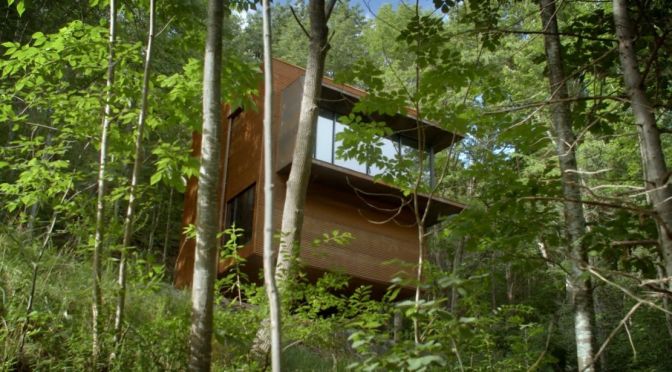
it is a deeply personal project that adds a dynamic layer to his studio’s portfolio. It is possible to visualise this secret cabin hidden in the woods in other forest settings, yet the architectural nuances bring a specificity to the design that belong only to this place. From a distance, the cabin is but a small disruption amid the ever-changing colours of the forest, yet up close, its architectural presence is monumental. The steel form is a confident expression of simple geometries and a bold reinterpretation of a typical secret cabin hidden in the woods.
A house tour reveals an aesthetic that is elemental and layered, from the bedrooms to the kitchen. The interior design, which is defined by smoked oak, raw steel shelving and wall-mounted industrial light fixtures, complements the architecture of this secret cabin hidden in the woods. As the lead architect, designer and homeowner, Omar embraced the opportunity to inject his personality into the design. He saw this project as an opportunity to experiment within the framework of his practice, thus, several pieces of furniture created in collaboration with local artisans and makers dot the interiors.
The Local Project (November 10, 2023) – Emerging out of the meadow is Peconic House by Mapos Studio, a family home with a rooftop garden located on a narrow stretch of landscape in Hampton Bays, New York.
Video timeline:00:00 – Introduction to the Architectural Family House 00:53 – Not the Typical Hamptons House 01:29 – Emerging from the Landscape 02:09 – A Noble Material Palette 03:26 – A Walkthrough of the Home 04:32 – Incorporating A Bit of Fun 05:35 – The Star of the Exterior 05:54 – Respecting the Site 06:18 – Proud Moments
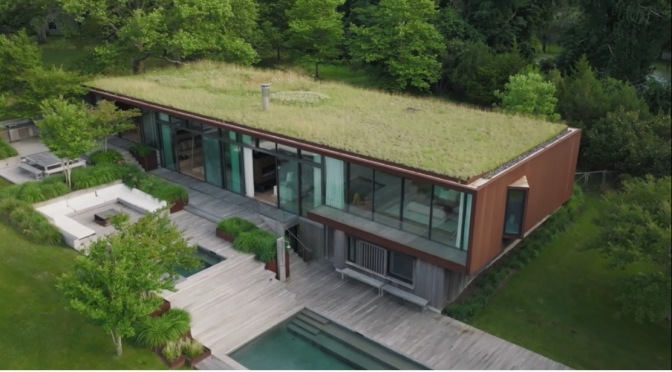
Designed to be the opposite of a typical Hamptons home, Peconic House has been built out of materials that help it become part of the landscape. Emphasising red cedar – due to the clients’ love for the material – Mapos Studio employs the wood in both the interior design and exterior architectural elements. Throughout the house, the red cedar is used for cabinetry, walls and floorboards and also gives the interior a unique aroma.
Additionally, as shown in the house tour, the cedar over the exterior architecture will weather over time due to the salt air, humidity and seasons, allowing for the clients to watch their house slowly age. As the house tour travels into the main living space of the home, there is an expansive view of Peconic Bay that immediately grabs attention. Sunken behind a bookshelf is the main living area that doubles as the family’s band room and television room, separated only by a two-sided fireplace.
To the right of the family room is the dining room and kitchen, which has become the heart of the home. Though the residence sprawls over 3,800 square metres, Mapos Studio has broken it up into smaller spaces to encourage more intimate family gatherings and connections. Moreover, there is a green roof with an overhanging sycamore tree that allows the children to climb up it and play in the rooftop garden. Designed for a New York family of five, the house encourages social connection.
The Local Project (November 7, 2023) – Casa Piva is a small yet layered architects own home defined by a slow revealing of spaces and experiences. Andrew Piva, Project Architect and Director at B.E. Architecture, refers to his home as a labour of love – it is simultaneously warm, inviting and highly functional thanks to the use of Tuscan Oak as a surface material.
Video timeline:00:00 – Introduction to the Architects Own Home 01:11 – Behind the Design of the Home 02:12 – Enveloped in Warm Materials 03:18 – Including A Bit of Fun 04:44 – A Compact And Generous Brief 06:18 – Focusing on A Minimal Selection of Materials 06:32 – A Rational, Balanced and Calm Design
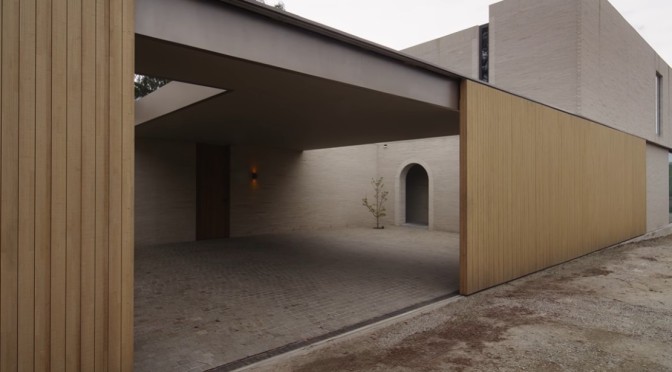
From the street, the family home doesn’t reveal too much of itself. However, upon entry, one is met with an intriguing and experiential journey through spaces that are designed around a series of small courtyards. The foremost entry into the architects own home takes place through a modest-sized door from the laneway, where one is greeted by a large and intricate brick courtyard with trees coming up through apertures in the roof – a scene reminiscent of an Italian villa. As well as providing a generous space for the dwelling, it also serves as a functional space to park cars.
Once inside, Casa Piva reveals a compressed, dark and moody ambience. This slowly transitions as you journey through the architects own home. The first glimpse of the kitchen, which is adorned with Tuscan Oak joinery, reveals the warmth and comfort the casa brings forth. The home is compact but features generously sized rooms. Within the residence are three bedrooms as well as a study, which doubles as a TV room and guest bedroom and reveals the residence’s flexibility. The master bedroom is larger and cocooned in timber.
News, Views and Reviews For The Intellectually Curious










 Boomers Daily