
What a Lost Treasure Could Reveal About the Medieval World
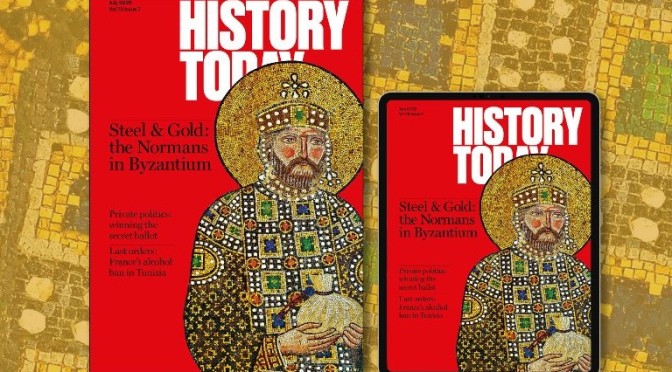
National Geographic explorations have uncovered remarkably preserved Byzantine shipwrecks, particularly in the Black Sea, where anoxic (oxygen-free) deep water preserves wooden structures for over a millennium. These discoveries, including vessels from the 9th century and earlier, provide unprecedented insights into ancient maritime trade, construction, and life.
Key Discoveries and Mysteries
The Ship’s Purpose: Investigations revealed the ship likely belonged to the Christian church (possibly the monastery of Samos) and was ferrying wine and olive oil to Byzantine troops fighting Persians in A.D. 626.
Innovative Design: Unlike other ships of its time, this vessel featured advanced facilities that provided “gracious” food and accommodation for passengers, who typically slept on open decks.
The Black Sea Finds: More recently, National Geographic has covered the discovery of over 40 remarkably preserved shipwrecks in the Black Sea’s “dead zone” (an oxygen-starved environment), including 1,000-year-old Byzantine trading vessels with intact masts and carvings.
The Croatia Wreck: Another significant find in the Adriatic Sea near Croatia challenged the narrative of simple coastal trading when archaeologists discovered a cargo that suggested a much more complex and “flipped” story of medieval commerce.
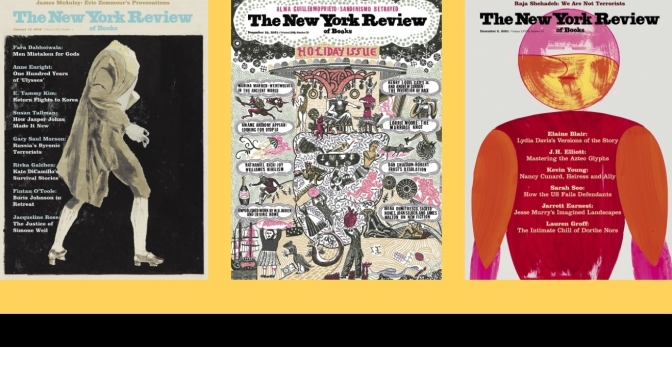
THE NEW YORK REVIEW OF BOOKS: The latest issue features Anne Enright on a day in Jeffrey Epstein’s life, Jacob Weisberg on the Great Crash, Ingrid D. Rowland on Giorgia Meloni alla fresco, Robert G. Kaiser on Citizen Bezos, Marilynne Robinson on two-party tyranny, Catherine Nicholson on the first diarist, Nathan Thrall on a lost Hebrew classic about the Nakba, David Cole on the fate of affirmative action, Aaron Matz on satire, Orville Schell on Chiang Kai-shek, Mark Lilla on a nineteenth-century protofascist, a poem by Patricia Lockwood, and much more.
When Jeff Bezos bought The Washington Post in 2013 and promised to find inventive ways to make journalism profitable in the digital age, he seemed like a godsend. He wasn’t.
The Leiden Collection—one of the largest private collections of Dutch art in the world—was conceived as a “lending library for Old Masters,” animated by the humanist spirit found in Rembrandt’s paintings.
Art and Life in Rembrandt’s Time: Masterpieces from the Leiden Collection – an exhibition at the H’ART Museum, Amsterdam, April 9–August 24, 2025, and the Norton Museum of Art, West Palm Beach, Florida, October 25, 2025—March 29, 2026
The Leiden Collection Online Catalogue, Fourth Edition edited by Arthur K. Wheelock Jr. and Elizabeth Nogrady
The historian A J P Taylor was at Oxford during the general strike of 1926. After it, he later recalled, relations between the minority of undergraduates, such as himself, who had gone to help the strikers and those who had signed on as special constables or volunteer strike-breakers were cordial. Only those sensible men who had stuck to their books and essays were disdained. The whole episode seemed funny in a stereotypically English way – like a Punch cartoon brought to life.
With the Trump administration’s backing down on its tariffs on China, its military abduction of Venezuelan President Nicolás Maduro, its insistence on seizing Greenland one way or another, its bombings in Nigeria, and its declaration that the official U.S. military budget will be increased by 50 percent in 2027—the last four events occurring in a two-week span in late December and early January—establishment commentators are all over the map.
Vijay Prashad critiques the argument that colonialism was, at most, ancillary to the transition between capitalism and feudalism in Western Europe. Instead, Prashad argues, “capitalism as it historically emerged—industrial, global, racialized, and imperial—was inseparable from colonial expropriation.” This reality must fuel a Marxist conception of the global struggle for reparations for those who have been oppressed and exploited at the hands of empires past and present.
In this dual review, Paul Buhle lends contemporary context to the histories of McCarthyism found in the recently published A Blacklist Education, by Jane S. Smith, and Operation Mind, by Natalie Zemon Davis and Elizabeth Donovan. In these two books, Buhle writes, readers can find parallels with the was that is today being waged against university professors and students for political activities—a stark reminder that political witch-hunts did not end with Joe McCarthy.
Craig Medlen dissects the logic behind the Trump administration’s efforts to impose tariffs as a way to counteract “unfair” U.S. trade deficits. Situating these deficits in the longer history of U.S. trade hegemony and its crumbling position in the global economy, Medlen uses incontrovertible data to illustrate how mainstream economic orthodoxy fails to acknowledge the effects of foreign inputs that integral to the workings of U.S. monopoly capital.
The self-taught painter had a trememdous sense of self-belief, despite being ridiculed in his lifetime. A landmark exhibition confirms him as a singularly modern artist
Since 1956, the New York institution has fostered cross-cultural understanding, equipped with a collection of masterpieces assembled by its founder, John D. Rockefeller
When art becomes an act of last resort
Joseph Koerner’s account of art made in extremis turns Bosch, Beckmann and Kentridge into unexpected associates across the ages
The Sahara has cycled between eons of bountiful life and arid desolation. What will it mean when the world’s largest desert turns green once again? By Henry Wismayer | Photographs by Marcus Westberg
Choreography that changed the language of dance, avant-garde costumes by runway designers, music that defined a new American sound. As her company turns 100, an inside look at the enduring world of Martha Graham. Photographs by ioulex | Text by Jacoba Urist
She was known as Vicky With Three Kisses—a German radio star whose singing and sweet talk comforted weary Nazi soldiers. She was actually a secret weapon in a little-known Allied propaganda effort. By April White
In central Texas, ranchers are beset by threats, from coyotes to drought and foreign competition. To protect their flocks from predators and help preserve their own way of life, they’re turning to the ancient know-how of man’s best friend. By Chris Pomorski | Photographs by Jordan Vonderhaar
In A House for Miss Pauline, the Jamaican novelist Diana McCaulay examines her family’s shadowy history by telling the story of a woman who builds her house with the remains of the manor of a former slave plantation.
Four years after their full-scale invasion, the Russians are trying to freeze Ukraine into submission by relentlessly attacking the country’s energy grid.
What Bernie Sanders brought to the job of mayor of Burlington and what he did with it help explain what matters to him and how he fits into American political argument.
Bernie for Burlington: The Rise of the People’s Politician and the Transformation of One American Place by Dan Chiasson
News, Views and Reviews For The Intellectually Curious