From an Apollo magazine online article:
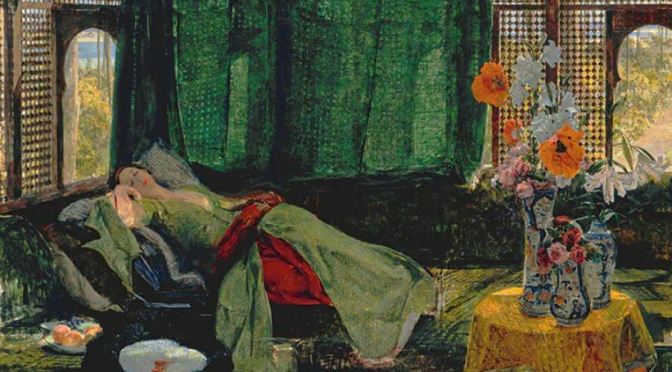
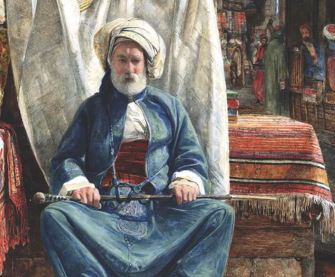 Things take an even stranger turn when he gets to Egypt, and his own features still appear again and again; not, as before, as a barely significant detail in an otherwise busy composition, but as a principal element. In a series of fine single-figure paintings brought together at the Watts Gallery, Lewis represents himself as a Syrian sheikh scanning the horizon of the Sinai desert; as the suave ‘bey’ of a Cairene household, lowering his eyelids as his servant offers him a water pipe; as an impassive carpet-seller in the Bezestein bazaar. In none of these, however, does he quite meet our eye.
In his mid thirties, an age at which most ambitious artists were making themselves as visible as possible, John Frederick Lewis (1804–76), a successful painter of sporting subjects and Mediterranean scenes, vanished from London for more than a decade. It was an audacious move. He spent two years in Italy, then followed in Lord Byron’s footsteps, travelling through Albania, Corfu, Athens and Smyrna, and after a year in Constantinople he sailed for Egypt. Once there Lewis fell in love with Cairo, and rather than returning to England with his sketchbooks he set up home, staying until 1851. Those years might have been something of a biographical blank had it not been for a visit in 1844 from his old friend William Makepeace Thackeray, who included a somewhat excitable account in his travel book Notes of a Journey from Cornhill to Grand Cairo (1846).
To read more: https://www.apollo-magazine.com/john-frederick-lewis-watts-gallery-review/?utm_medium=email&utm_campaign=APWH%20%2020191004%20%20AL&utm_content=APWH%20%2020191004%20%20AL+CID_8f41f662a8c7742f6db2d929c7188b59&utm_source=CampaignMonitor_Apollo&utm_term=Read%20the%20full%20article


 In “Unto This Last and Other Essays on Art and Political Economy” (1860), which gives the exhibition its title, Ruskin “sees” interconnected social injustices. He attacks economic inequality. Later, he sets out to establish a utopian community in working-class Sheffield, England. In one gallery we see his influence on “progressive thinkers worldwide.” Gandhi said that reading “Unto This Last” in 1904 transformed his life and ideas.
 ‘If you can paint one leaf,” John Ruskin once declared, “you can paint the world.” And in “Unto This Last: Two Hundred Years of John Ruskin”—the hypnotically potent (though flawed) exhibition at the Yale Center for British Art marking the bicentennial of his birth—we see how wonderfully he kept trying.
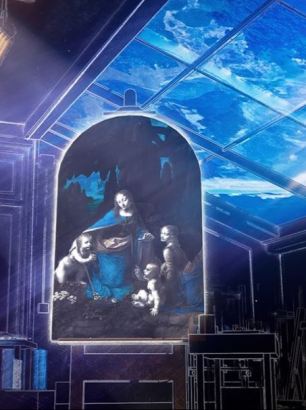 The mind of Leonardo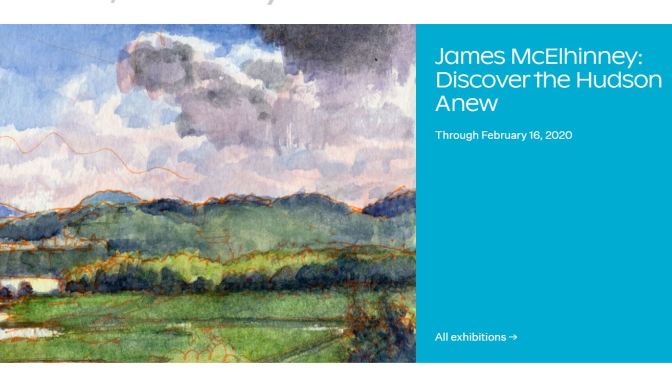
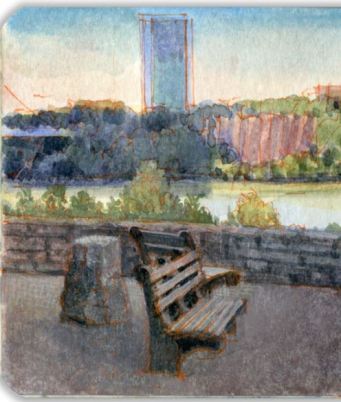 James McElhinney: Discover the Hudson Anew presents the painter’s sketch books and prints related to the River in a comprehensive showing for the first time. A video program, animating turning pages, will allow visitors to see additional sketchbook paintings. McElhinney says he wants his art to demonstrate “that constructive dialogue between humanity and nature is alive and well, while underscoring how art provides durable and dynamic modes of engagement.”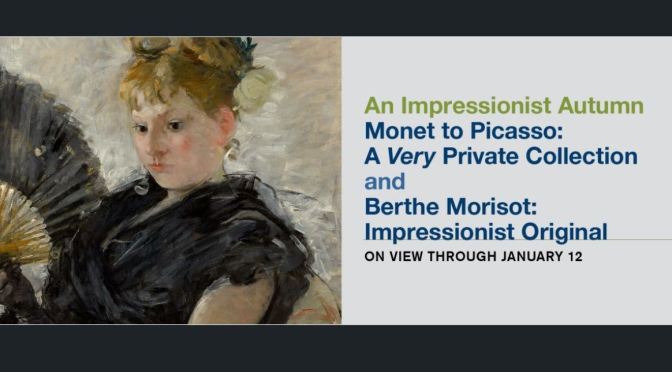
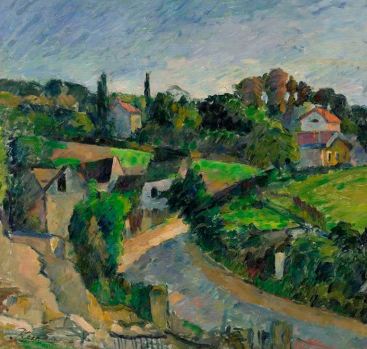 While all of the works on exhibit hold special interest, Aurisch identifies several gems. For example, Van Gogh fans will enjoy his spectacular perspectival rooftop view from the window of his room in The Hague in 1882. Maurice de Vlaminc’s 1906 Dancer at the “Rat Mort” (La danseuse du “Rat Mort”) is a delight with his Fauve treatment of the figure; through color and gestural line, it’s as though we are witnessing a shift into the 20th century. And Henri Matisse’s 1943 still life titled Lemons against a Fleur-de-lis Background (Citrons sur fond rose fleurdelisé) vibrates with lively pink patterned wallpaper and a stacked brick platform, charged with Japonisme energy.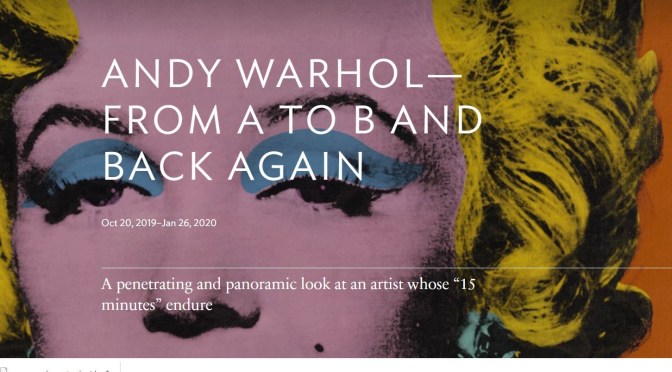
 Warhol, with obvious self-deprecation, described his philosophy as spanning from A to B. As this exhibition decidedly proves, his thinking and artistic production ranged well beyond that, but his true genius lies in his ability to identify cultural patterns and to use repetition, distortion, and recycled images in a way that challenges our faith in images and questions the meaning of our cultural icons.
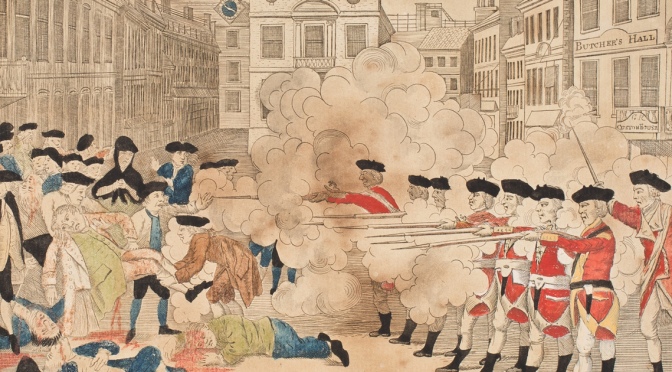
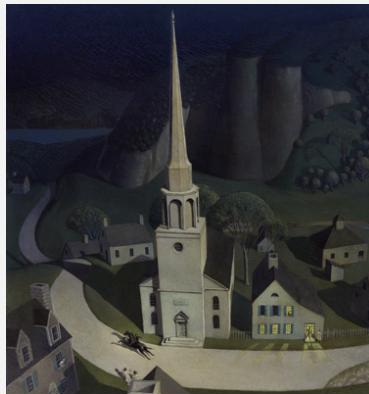 Revere’s place in history was cemented by
  The exhibition was organized by the
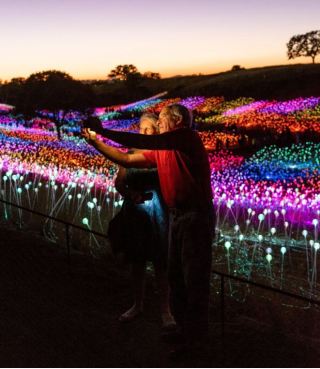 But there is nothing quite like the mind-bending spectacle now on display at dusk in the hills of Paso Robles here, a popular wine destination. That is the witching hour when thousands of solar-powered glass orbs on stems, created by the artist Bruce Munro, enfold visitors in an earthbound aurora borealis of shifting hues.
 Boomers Daily