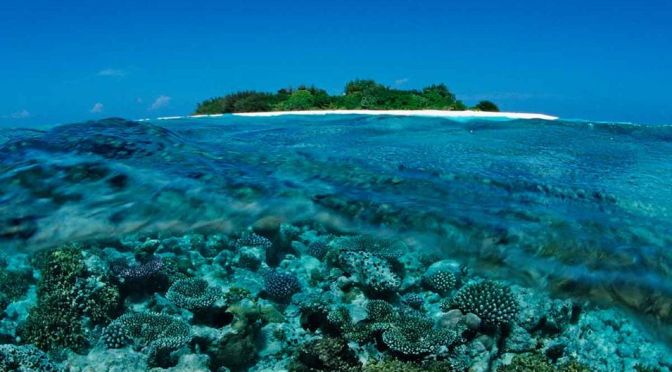
The One Ocean Summit opens this Wednesday in the French port of Brest. Seas and oceans cover around 70 percent of the surface of our planet, but continue to face an onslaught of problems, from pollution to rising temperatures. In the Maldives, coral reefs are dying because of climate change. However, locals are doing their best to save them. Our France 2 colleagues report, with FRANCE 24’s Wassim Cornet.
Maldives, officially the Republic of Maldives, is an archipelagic country in the Indian subcontinent of Asia, situated in the Indian Ocean. It lies southwest of Sri Lanka and India, about 750 kilometres from the Asian continent’s mainland.
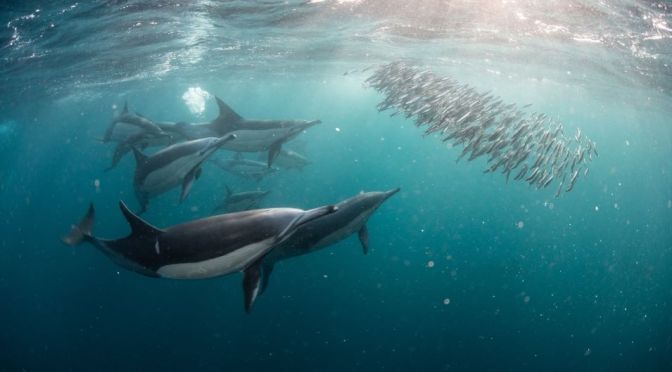
Migrations are a key to survival in the marine ecosystem. From whales and turtles to sardines, by travelling to different locations, nektonic animals stand better chances of finding food or a suitable place to breed and raise their young. In this video, we’ll take a look at the migrations of nektonic organisms – animals that are able to actively swim and can undertake large-scale journeys around the world, covering larger distances than plankton and their predators.
Video timeline: 00:00 – Introduction 01:10 – Chapter 1: Nektonic Adaptations – Why Animals Migrate 02:05 – Chapter 1: Nektonic Adaptations – Marine Mammals 02:35 – Chapter 1: Nektonic Adaptations – Migratory Fish 03:00 – Chapter 2: In Search of Sanctuary – The Sea Turtle Migration 04:04 – Chapter 2: In Search of Sanctuary – The Whale Migration 04:56 – Chapter 2: In Search of Sanctuary – The Whale Nursing Period 05:40 – Chapter 3: The Sardine Run – A Plentiful Feast 06:45 – Chapter 3: The Sardine Run – Nektonic Invertebrates 07:13 – Conclusion
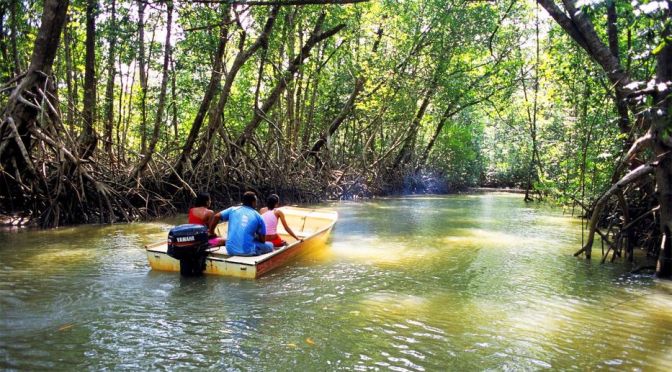
This Wednesday is International Wetlands Day. Worldwide, wetlands cover 12.1 million km². But more than 30 percent have been lost over the past 50 years, despite them playing a crucial role in mitigating the impact of climate change. One example is the Mangroves National Park in the Democratic Republic of Congo. It’s the only marine park in the country and it’s home to a wide variety of plants and rare animals, including sea turtles. But the park is increasingly threatened by poaching and illegal logging. The construction of a deep water port in the vicinity has also sparked controversy. Our correspondents report.
As more of the world’s forests are destroyed, it makes you wonder: what’s going to absorb CO2 in their place?! In an ironic twist of fate, one of Earth’s “deadest” habitats might be our best hope for an ongoing supply of breathable air.
Called peatlands, these wetland environments are named for their tendency to accumulate decayed plant matter. Unlike most other ecosystems, like forests, where branches and leaves typically decompose in a matter of months… in peatlands, that plant material can stay intact for millenia. You see, peatlands mostly exist in high altitude places where temps are low and there’s not much water flow. This results in their having extremely low oxygen and high acidity levels.
These harsh conditions aren’t very hospitable to microbes and fungi, which are instrumental to the whole decomposition process. So without them around, the plant material sort of… just sits. Over time, that it globs together to form peat, a thick, spongy material that can soak up 20x its weight in water. Peat also soaks up loads of carbon. Through a process known as the Calvin cycle, living plants absorb CO2 from the air and convert it into organic molecules that they can then use as energy to grow.
Through decomposition, the carbon that’s “fixed” in a plant’s structure gets released but since peat doesn’t decompose, that carbon can stay put! It’s estimated that peatlands contain 550 gigatonnes of organic carbon, which is twice as much organic carbon as all the world’s forests combined. That’s absolutely wild, considering that forests cover about 30% of the world’s land area… and peatlands only account for 3%! Like most of the world’s habitats, peatlands aren’t immune to the threats of human development and exploitation.
Peat is also are a very in-demand resource. Its incredible water holding capacity makes it a favorite amongst horticulturists; If you’ve ever picked up a bag of soil amendment, chances are it’s full of the stuff. Since peat is also a fossil fuel with a long burn, it’s used in some parts of the world. Peatlands are also often drained to accommodate other land use activities, like agriculture.
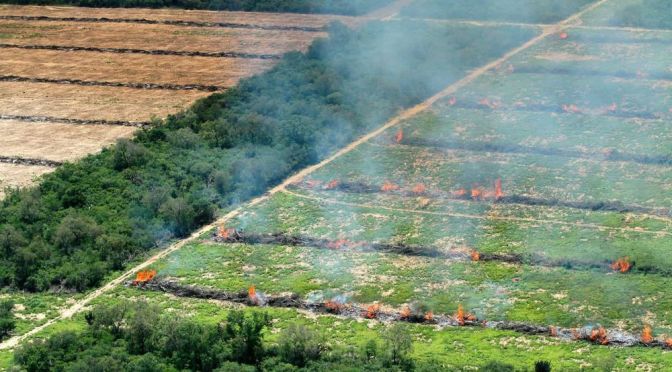
Paraguay might be one of the world’s first countries to lose its rainforest because of a confluence of factors including inequality, corruption, drug trafficking, and climate change. The South American nation offers a stark warning for what the planet stands to lose if it doesn’t act to protect its natural resources.
Paraguay is a landlocked country between Argentina, Brazil and Bolivia, home to large swaths of swampland, subtropical forest and chaco, wildernesses comprising savanna and scrubland. The capital, Asunción, on the banks of the Paraguay River, is home to the grand Government Palace and the Museo del Barro, displaying pre-Columbian ceramics and ñandutí lacework, the latter available in many shops.
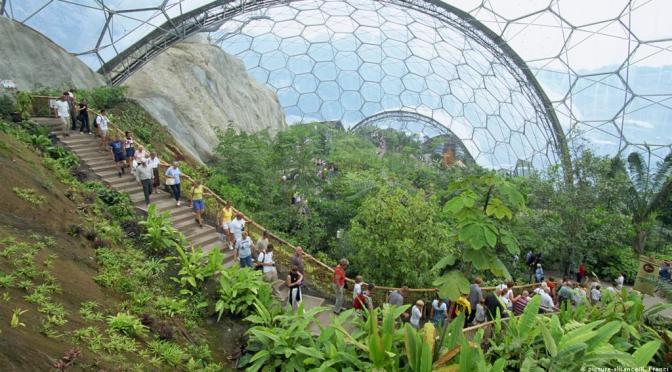
There’s a rainforest in Europe? Apparently, yes – and it’s called the Eden Project! It houses the world’s largest covered rainforest, beneath a giant dome.
But it’s not an amusement park, but rather an educational centre and environmental organisation. The concept: Only those who experience and engage with the beauty of nature can also protect it. That’s why 100,000 plants from all over the world have been brought here, where they cover an area of some 50 hectares.
Not only the sheer number of plants is impressive, the building itself is, too: Two geodesic domes span the site as greenhouses – like massive soap bubbles sticking together. Our Euromaxx reporter Hendrik Welling visits the record-breaking Eden Project and to explore its biotopes and rainforest.
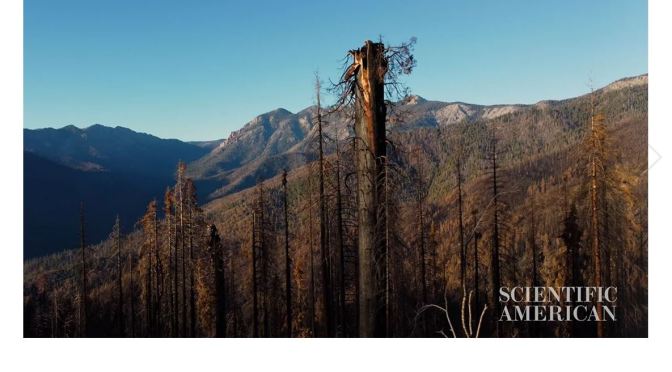
On a dead still November morning in the Sierra Nevada, two researchers walk through a graveyard of giants. Below their feet: a layer of ash and coal. Above their heads: a charnel house of endangered trees.
This is Alder Creek Grove, a once idyllic environment for a majestic and massive specimen: the giant sequoia. It is now a blackened monument to a massive wildfire—and humankind’s far-reaching impact on the environment. But these two researchers have come to do more than pay their respects.
Linnea Hardlund and Alexis Bernal, both of the University of California, Berkeley, are studying the effects of record-breaking fires such as the one that destroyed large swaths of Alder Creek Grove in the hopes that their findings will inform forest management that might preserve giant sequoias for future generations.
So far, those findings are grim: mortality in Alder Creek Grove is near 100 percent. Of the mighty trees that stood watch for thousands of years, only charred skeletons remain. About a century of aggressive fire suppression and a warming, drier climate have created a perfect environment for unprecedented fire.
On August 19, 2020, it came to the Giant Sequoia National Monument. The SQF Complex was two fires—the Castle and Shotgun fires—that burned for more than four months, affecting nearly 175,000 acres. And a preliminary report on the Castle Fire estimated that 10 to 14 percent of all living giant sequoias were destroyed.
Hardlund, who is also at the nonprofit Save the Redwoods League, and Bernal fear that, without scientifically informed intervention, such fires will continue to return to the Sierra Nevada—leaving the once proud guardians of the forest a memory and another casualty of our ecological failure.
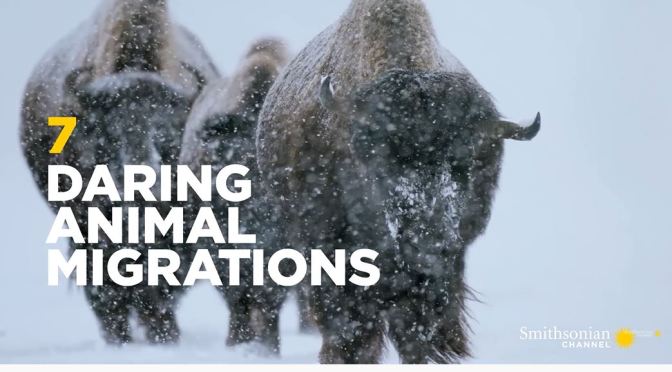
From one million wildebeest crossing croc-infested waters to a manatee’s journey to warmer waters, here’s a closer look at 7 daring animal migrations.
Video timeline: 0:00 Intro to 7 Daring Animal Migrations | Smithsonian Channel 1:00 1 million wildebeest cross these croc-infested rivers 2:51 The largest mammal migration in the world 4:19 The pragmatic way African buffalos organize their herds 7:06 Thousands of monarch butterflies take flight 11:03 A manatee embarks on an inland journey to warmer waters 14:05 Yellowstone bison are built for winter survival 18:00 Why birds flock to this South African nature reserve
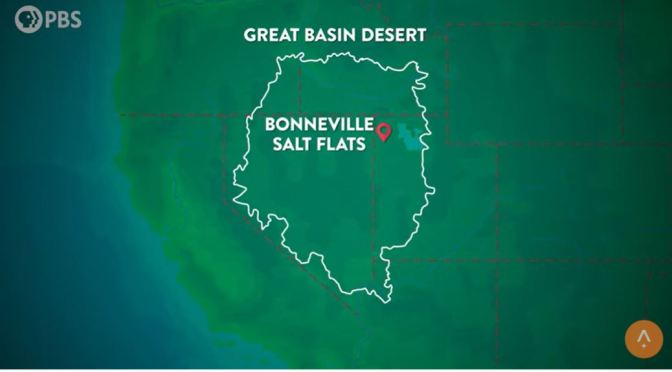
The Bonneville Salt Flats are perfect for speed. Every year, cars and motorcycles break land speed records on the flat expanse of the Bonneville Salt Flats. It’s been a tradition for more than a century, and racers have built a thriving community around the salt races. But how did these salt flats form, and why are they disappearing now?
News, Views and Reviews For The Intellectually Curious


 Boomers Daily