
The IRS sent roughly 90 million stimulus checks to Americans in March. WSJ’s chief economics commentator Greg Ip explains why stimulus checks alone are unlikely to spur inflation. Photo Illustration: Carlos Waters
Category Archives: Economics
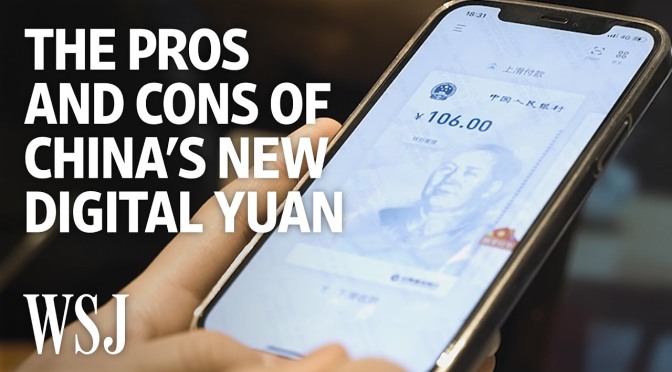
Analysis: ‘China’s Digital Currency Concerns’ (WSJ)
As China moves closer to rolling out its new digital cash, there are concerns the government will track every transaction––not just of citizens but of foreign companies in the country. WSJ travels to Chengdu to see this money revolution in action. Photo: Lorenz Huber for The Wall Street Journal

Analysis: ‘NFT’s And The Digital Art Boom’ (Video)
Non-fungible tokens, or NFTs, have exploded onto the digital art scene this past year. Proponents say they are a way to make digital assets scarce, and therefore more valuable. WSJ explains how they work, and why skeptics question whether they’re built to last. Photo Illustration: Jacob Reynolds/WSJ
A non-fungible token is a special type of cryptographic token which represents something unique. NFTs are called non-fungible because they are not mutually interchangeable, since they contain unique information, although it is possible to mint any number of NFTs representing the same object.
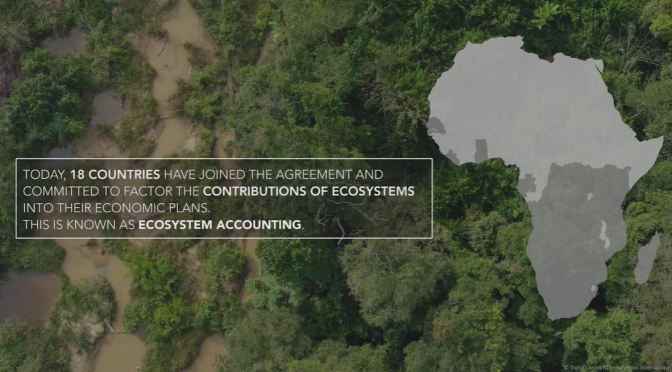
Economics Of Nature: ‘Mapping The Ecosystems Of Liberia, Africa’ (Video)
NASA is working alongside Conservation International and the Liberian Government through the Environmental Protection Agency (EPA) to pilot an innovative and replicable approach to more accurately map ecosystems to support effective planning and sustainable decision-making. NASA’s satellite data and expert analysis will provide a country-wide picture of Liberia’s hardwood forests, mangroves, and other ecosystems; Conservation International and the Liberian Government through the EPA will augment that data with their expertise in ecosystem accounting, field studies, and local knowledge to quantify the value of the country’s natural resources and related ecosystem services.
Liberia is a country in West Africa, bordering Sierra Leone, Guinea and Côte d’Ivoire. On the Atlantic coast, the capital city of Monrovia is home to the Liberia National Museum, with its exhibits on national culture and history. Around Monrovia are palm-lined beaches like Silver and CeCe. Along the coast, beach towns include the port of Buchanan, as well as laid-back Robertsport, known for its strong surf.
Read more: https://www.nasa.gov/feature/goddard/…
Analysis: What Makes ‘Costco’ So Successful
Costco is one of the biggest and most successful retailers in the country. In this video, WSJ’s Sarah Nassauer dissects the wholesaler’s unique approach to doing business. Photo: Qian Weizhong/ZUMA Press

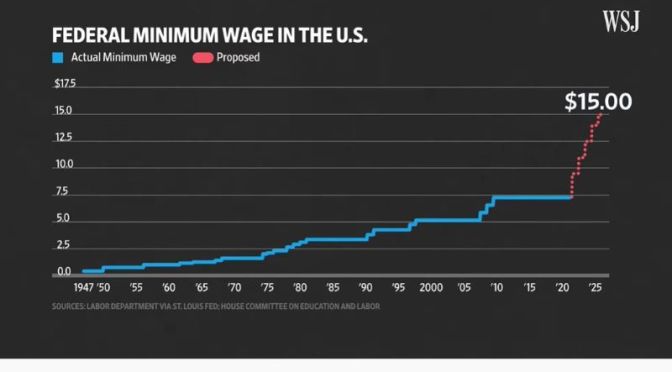
The Economy: How A $15 Minimum Wage Effects It
Biden has identified raising the minimum wage as a key goal of his administration, but economists and lawmakers disagree on the potential impact. WSJ asked two economists and a minimum-wage worker what the costs and benefits of a $15 minimum wage might be. Photo: Bill Clark/Congressional Quarterly/Zuma Press
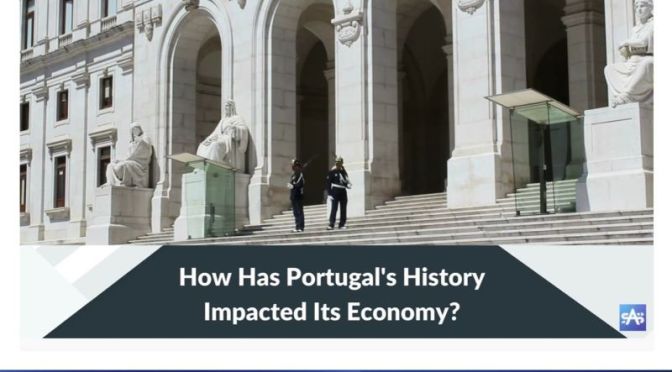
Europe: An Economic History Of Portugal
In the lead up to the Eurozone Crisis, Portugal’s Economy was an outlier. Whilst many economies went on an incredible run, the Portuguese Economy did not have such a good time. Not only underperforming the average eurozone growth rate, but unemployment actually rose from 3.8% to 7.5% between the millennium and 2008. Compare this against the likes of Greece, Spain and Italy, all of which had seen significant declines in unemployment. Raising the question of why? Why had Portugal’s Economy stagnated in what were supposed to be the good times? What was the impact of its long history as a colonial power? And to what extent did a 19th Century letter from Pope Leo the 13th influence its wider economic approach?

Luxury Brands: ‘Why Some Watches Are So Expensive’
Expensive materials, delicate craftsmanship, and an economic principle that turns the usual equation of supply and demand on its head. WSJ explains why some watchmakers can charge hundreds of thousands of dollars for a single timepiece. Illustration: Alex Kuzoian/WSJ
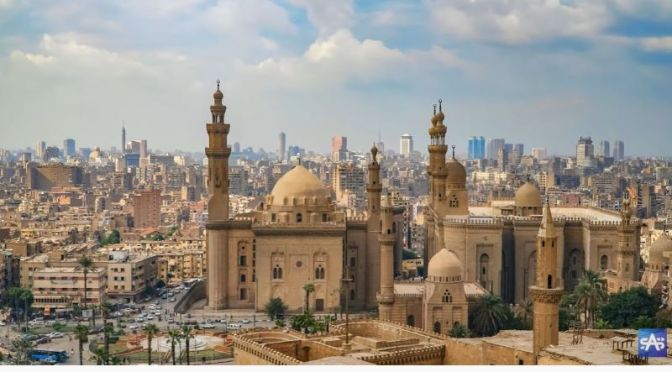
Africa: ‘An Economic History Of Egypt’ (Video)
The Egyptian Economy was the only one in the Middle East North Africa region to avoid a recession in 2020. Being a good reflection of the economic rollercoaster Egypt routinely finds itself on. One driven by inflation rates of up to 30% a year, a halving of its currency and a painful IMF bailout in 2016. But how did Egypt’s Economy find itself in this situation? What impacts did Five Year Plans, spending nearly 20% of GDP on the military and widespread nationalisation have on its economy? Why is Egypt the world’s largest importer of wheat? And perhaps most importantly, what has its post 2011 revolution delivered?
Egypt, a country linking northeast Africa with the Middle East, dates to the time of the pharaohs. Millennia-old monuments sit along the fertile Nile River Valley, including Giza’s colossal Pyramids and Great Sphinx as well as Luxor’s hieroglyph-lined Karnak Temple and Valley of the Kings tombs. The capital, Cairo, is home to Ottoman landmarks like Muhammad Ali Mosque and the Egyptian Museum, a trove of antiquities.
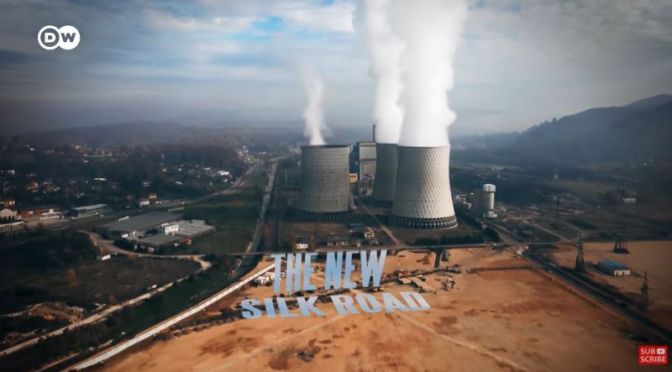
World Economy: ‘China’s New Silk Road’ (Video)
The “New Silk Road” is an enormous Chinese international development project. It’s a trade network that involves Asia, Africa, and Europe — and more than 70 countries are already involved. It may turn the old world order upside down. China is investing in bridges, port facilities, railroads, and roads around the world. Beijing is spending several hundred billion euros on what it calls the “Silk Road Economic Belt.” Eastern European and the Balkan countries in particular are interested in Chinese loans and investments, as they look beyond the EU for sources of capital. In turn, the region is attractive to China because of its strategic position as a gateway to the West. A new coal-fired power plant is being built in Tuzla, Bosnia, with the help from China. But not everyone is in favor of the project. While the new plant will emit fewer emissions which will have a positive effect on air-quality, some question the country’s decision to commit to using coal for decades to come.
 Boomers Daily