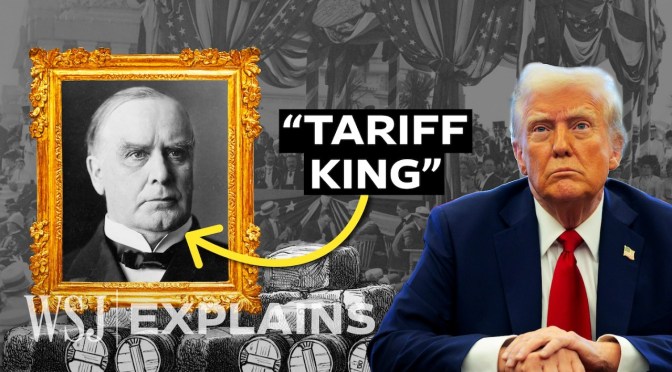
The ‘McKinley Tariffs’ were some of the largest hikes in U.S. history, but in his second term, McKinley changed his mind, and argued for more free international trade as a way of helping the U.S. economy. WSJ explores how McKinley used tariffs, how Trump is following a similar playbook and why McKinley. Actually came to speak out against them.
Discover HBR’s January-February 2025 issue: How AI can transform your organization, why leaders shouldn’t try to do it all, and what people still get wrong about negotiations.
World Economic Forum (January 11, 2025): This week’s top stories of the week include:
0:15 What do the jobs of the future look like? – The world of work is changing fast. While 92 million jobs may disappear over the next 5 years, nearly 170 million new ones will emerge, driven by new technology and the energy transition. What are these new jobs and which sectors will see the greatest changes? Find out in the 2025 Future of Jobs Report.
1:40 Here’s how factories are changing – Chindarat Ninnama tells us the story of how data and digital tools transformed her factory job into a career brimming with new opportunities. A shortage of workforce talent is a major barrier to the digital transformation of manufacturing. Western Digital is part of the World Economic Forum’s Frontline Talent of the Future initiative, which has built a playbook of solutions to address this
5:28 Global cooperation has flatlined – The world is facing a perfect storm of challenges, with global security at a crisis point and competition escalating. The climate crisis has intensified, with 2024 recorded as the hottest year ever. Economic growth remains sluggish, with the IMF projecting global growth of just 3.2% in 2025—and only 1.8% in developed economies.
7:47 These are the most essential skills for work – The jobs of tomorrow will require a new set of skills. The latest Future of Jobs report surveyed company executives on the most in-demand skills of the workplace – both today and in 2030. Find out what the ‘hirers’ of the future are looking for.
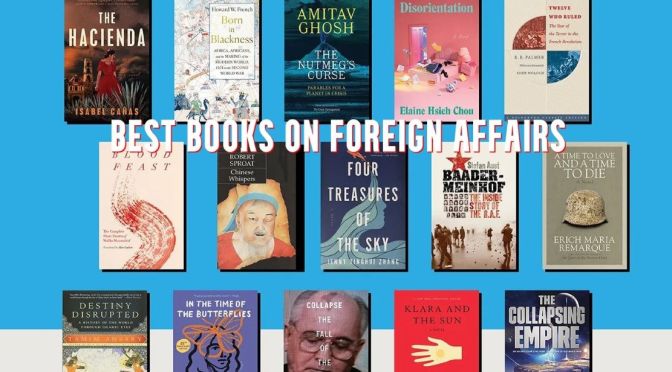
Foreign Policy Magazine(December 8, 2023): The Best of Books 2024 on international politics, economics, and history that were featured in the magazine this year, selected by Foreign Affairs’ editors and book reviewers.
In a revelatory book, Farrell and Newman describe how the United States has turned its control over information networks into a hidden tool of economic domination—and warn of the risks of Washington’s weaponization of data power for ordinary people, as well as for the global financial system.read the review
In a major reconsideration of Cold War history, Radchenko examines the Soviet Union’s competing ambitions for revolution, security, and legitimacy—and how Soviet leadership, blinded by its own hubris and aggression, set the stage for the downfall of the USSR. read the review
Kahan argues that what unifies liberals across the centuries, including those involved in building and defending liberal democracy today, are their efforts to build societies free from the fear of arbitrary power. He sculpts a masterful and beautifully written history of liberalism’s long intellectual journey. read the review
In this sobering study, Levitsky and Ziblatt demonstrate how the United States’ enduring constitutional order—one forged in a pre-democratic age—increasingly thwarts the will of an expanding multicultural majority in favor of a shrinking rural white minority.read the review
Focused on the sophisticated and networked world of autocracy, dictatorship, and tyranny, Applebaum argues that what separates hardcore autocratic states, such as China and Russia, from softer illiberal and authoritarian regimes, such as those in Hungary, India, and Turkey, is the ruthlessness and reach of their dictatorial power and their deep hostility to the Western-led democratic world.read the review














 Boomers Daily