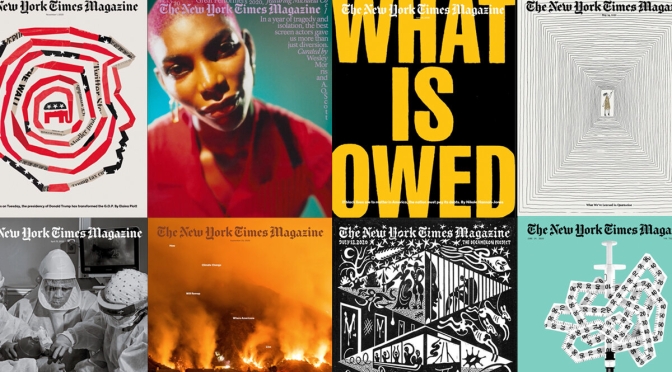
THE NEW YORK TIMES MAGAZINE:The 11.23.25 Issue features Daniel Bergner on how antidepressants could be disrupting the sexual development of teenagers; Coralie Kraft on three people who fell in love with A.I. chatbots; Jordan Kisner on the power of screaming and the Greek heroine Electra; Tina Brown in conversation with Lulu Garcia-Navarro; and more.
Sixty former staffers describe an environment of suspicion and intimidation within the nation’s most powerful law enforcement agency. By Emily Bazelon and Rachel Poser
Viewers seem baffled by viral videos of homes left to tumble into the ocean. But this is how we approach a growing range of “stranded” assets. By Brooke Jarvis
Research on adults who take S.S.R.I.s shows they tamp down sexual desire. Why aren’t we studying what that could mean for adolescents who take them? By Daniel Bergner
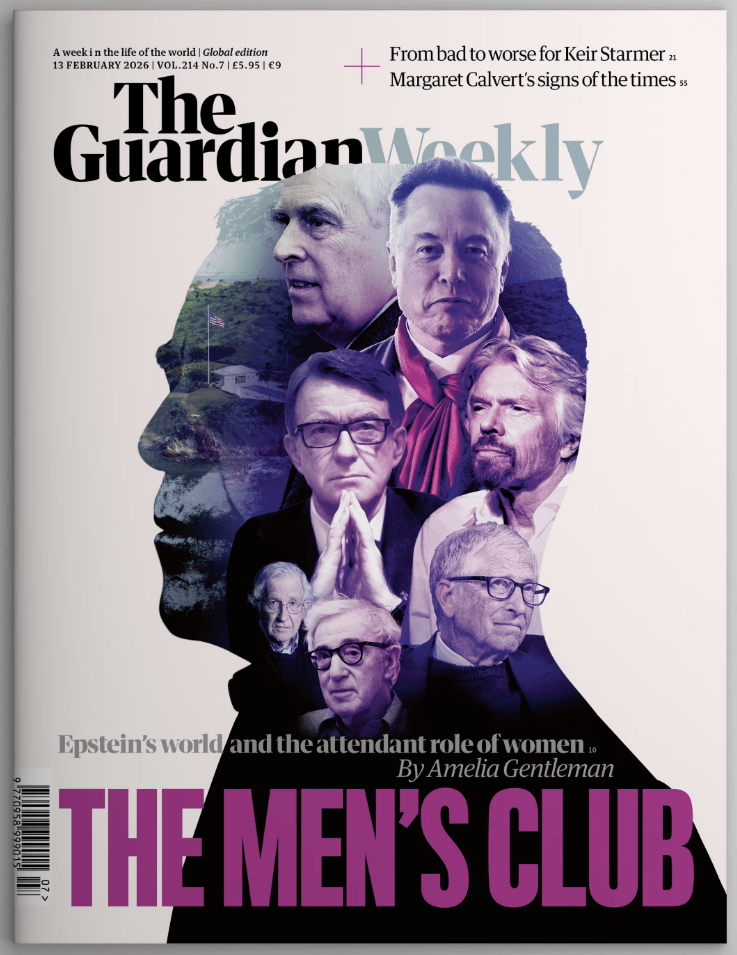
The release last week of a tranche of Jeffrey Epstein’s private emails raised more questions about Donald Trump’s links to the disgraced financier.
The US president had spent much of this year trying to bat away questions about Epstein while rejecting pressure to release the bulk of the files. But in an abrupt reversal on Sunday – widely seen as an admission that he cannot control his Maga base on the issue – Trump urged House Republicans to back the release of the files after all.
That was duly passed this week and if the Senate also votes the same way, the justice department will be compelled to release all unclassified materials on Epstein, who died in jail in 2019 while awaiting trial on sex-trafficking charges.
So we may soon find out what Trump has tried for so long to keep buried. As David Smith writes for our big story, last week’s email release pointed less to a grand conspiracy and more to an elite world in which wealthy, powerful and privileged individuals operate above the law.
One thing’s for sure: despite Trump’s wishes, the Epstein scandal isn’t going away just yet.
Spotlight | Can methane cuts avert climate disaster? With temperatures breaching limits set out in the Paris Agreement, designed to mitigate climate change, experts say tackling the powerful gas could buy crucial time as the clean-energy shift stalls. Fiona Harvey reports
Spotlight | The US military’s plans for a divided Gaza A ‘green zone’ will be secured by international and Israeli troops, while almost all Palestinians have been displaced to a ‘red zone’ where no reconstruction is planned, reports Emma Graham-Harrison
Feature | What chance did one boy have to survive on Britain’s streets? When documentary film-maker Pamela Gordon first met Craig in Nottingham, he was 13 and homeless. She still thought his life might turn around, but she was tragically wrong
Opinion | Labour’s asylum plans are cruel, overspun and unachievable There is mounting disquiet among Labour MPs, while the vulnerable refugees at the heart of this story are living with a renewed sense of panic, writes Diane Taylor
Culture | Stranger Things reaches its upside down finale After a decade, the Netflix hit is bowing out. Ahead of its last episodes, the show’s creators and cast talk to Rebecca Nicholson about big 80s hair, recruiting a Terminator killer – and the birds Kate Bush sent them
The President granted two hundred and thirty-eight pardons and commutations in his first term; less than a year into his second, he has issued nearly two thousand. By Benjamin Wallace-Well
The polymathic entertainer has had a lifelong bond with the wittiest—and the most tortured—of writers. And now he’s starring in “The Importance of Being Earnest.” By Rebecca Mead
It used to be that drawing heat from deep in the Earth was practical only in geyser-filled places such as Iceland. But new approaches may have us on the cusp of an energy revolution. By Rivka Galchen
THE NEW YORK TIMES MAGAZINE:The 11.16.25 Issue features David Gaubey Herbert on the woman who wouldn’t stop having children; C.J. Chivers on a soldier stranded on the front lines in Ukraine; Matt Purdy on President Trump’s vagueness; and more.
As neural implant technology and A.I. advance at breakneck speeds, do we need a new set of rights to protect our most intimate data — our minds? By Linda Kinstler
The dust may have settled on Zohran Mamdani’s astounding, against-the-odds victory in the New York mayoral election. But a week on, the scale of his achievement looks no less impressive.
As Ed Pilkington outlines in this week’s big story, Mamdani swept away his establishment-backed heavyweight opponent Andrew Cuomo by mobilising an army of grassroots volunteers and donors, while also connecting deeply with the voters whose support he most needed on the issues that mattered most to them, namely affordability and economic justice.
It’s a ground-up approach to doing things that US Democrats – who also won governorships in Virginia and New Jersey on an encouraging night – can learn from as they reflect on a torrid year since Donald Trump swept to power.
Spotlight | The green monster of Cop30 Amid bombast, strife and competing interests, is the annual climate summit, which opened in Brazil this week, still the forum we need to save the planet? Fiona Harvey reports from the Amazonian city of Bélem
Spotlight | The extraordinary fall of the BBC’s top bosses A whirlwind that began with a report criticising the editing of a speech by Donald Trump is part of a wider political story, some say. Media editor Michael Savage charts the tale
Feature | Why not everyone is sad to see the end of USAID When Donald Trump set about dismantling USAID, many around the world were shocked. But on the ground in Sierra Leone, the latest betrayal was not unexpected. Mara Kardas-Nelson finds out why
Opinion | A president groped? Sadly it isn’t a shock After Claudia Sheinbaum was assaulted last week, her opponents claimed she staged it. From their own experiences, the women Mona Eltahawy met know she didn’t have to
Culture | Rosalía, the Catalan queen of pop With a towering new album about female saints in 13 languages, she’s pop’s boldest star – and one of its most controversial. She tells Laura Snapes why we need forgiveness instead of cancel culture
THE NEW YORK TIMES MAGAZINE:The 11.9.25 Issue features Parul Sehgal on Guillermo del Toro’s adaptation of ‘Frankenstein’; Emily Baumgaertner Nunn on the trafficked girls of Los Angeles; Jesse Barron on the suicide of a teen who fell in love with an A.I. chatbot; J Wortham on the art exhibition using decommissioned Confederate monuments; and more.
The industry keeps echoing ideas from bleak satires and cyberpunk stories as if they were exciting possibilities, not grim warnings.By Casey Michael HenryCreditPhoto illustration by Michael Houtz