

 Two-time Rock and Roll Hall of Fame inductee Graham Nash has hits aplenty spanning his nearly six-decade career. But the 77-year-old singer-songwriter recently chose to perform a special run of shows featuring his lesser-known first two solo albums in their entirety, which together describe a crucial chapter in his personal and artistic life. Tom Casciato recently spoke to Nash to learn more.
Category Archives: Arts & Literature

Top Museum Exhibitions: “Caravaggio & Bernini” At The Kunst Historisches, Vienna (Thru Jan 19, 2020)
From a Hyperallergic online review:

Caravaggio & Bernini: The Discovery of Emotions features some of the artists’ greatest works, but also charts their influence on others. And that influence proved to be powerful and enduring. Caravaggistas spread across Europe like termites. And so we could call this exhibition a battle of the swaggerers, the pomp of a very eclectic brand of Viennese historicism facing off against the theatrical push and preen of two great Italians.

From almost the beginning, Caravaggio, that man who arrived in Rome in the 1590s, is completely outrageous. Whom did he think were his principal patrons? Churchmen, of course. Did they care that he depicted John the Baptist in an extraordinary painting, circa 1602, as a carefree, lascivious, curly-haired boy with the cheekiest of grins imaginable?

Book Review Podcasts: “Antisocial” By Andrew Marantz, “No Stopping Us Now” By Gail Collins (NYT)

From the New York Times Book Review:
“Antisocial,” the new book by Andrew Marantz, plainly states its subject in its subtitle: “Online Extremists, Techno-Utopians, and the Hijacking of the American Conversation.” In order to write it, Marantz immersed himself in corners of the internet most of us would go out of our way to avoid.
Gail Collins visits the podcast this week to discuss her new book, “No Stopping Us Now,” an eye-opening chronicle of older women’s journey to progress in the United States over the years. “It used to be, the whole vision of your life if you were a woman was that you got married, you had children and, once the children were grown, you were old — done,”

Collins says on the podcast this week. “That was the thing I was looking at: What counted as old, and then what did women do when they got to what was regarded as old? How did they use it, how did they fight it?”
To read more: https://www.nytimes.com/2019/11/08/books/review/Andrew-Marantz-Gail-Collins-interview.html
New Art History Books: “A Month In Siena” By HISHAM MATAR Is A “Triumph”
From a Penguin Random House release:
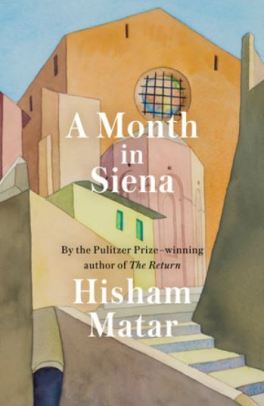 Including beautiful full-color reproductions of the artworks, A Month in Siena is about what occurred between Matar, those paintings, and the city. That month would be an extraordinary period in the writer’s life: an exploration of how art can console and disturb in equal measure, as well as an intimate encounter with a city and its inhabitants. This is a gorgeous meditation on how centuries-old art can illuminate our own inner landscape—current relationships, long-lasting love, grief, intimacy, and solitude—and shed further light on the present world around us.
From the Pulitzer Prize–winning author of The Return comes a profoundly moving contemplation of the relationship between art and life.
Listen to an excerpt below:
After finishing his powerful memoir The Return, Hisham Matar, seeking solace and pleasure, traveled to Siena, Italy. Always finding comfort and clarity in great art, Matar immersed himself in eight significant works from the Sienese School of painting, which flourished from the thirteenth to the fifteenth centuries. Artists he had admired throughout his life, including Duccio and Ambrogio Lorenzetti, evoke earlier engagements he’d had with works by Caravaggio and Poussin, and the personal experiences that surrounded those moments.
To read more: https://www.penguinrandomhouse.com/books/609913/a-month-in-siena-by-hisham-matar/

New Books: “Airline Maps – A CENTURY OF ART AND DESIGN” By MARK OVENDEN and MAXWELL ROBERTS
From a Penguin Random House review:
 In this gorgeously illustrated collection of airline route maps, Mark Ovenden and Maxwell Roberts look to the skies and transport readers to another time. Hundreds of images span a century of passenger flight, from the rudimentary trajectory of routes to the most intricately detailed birds-eye views of the land to be flown over. Advertisements for the first scheduled commercial passenger flights featured only a few destinations, with stunning views of the countryside and graphics of biplanes. As aviation took off, speed and mileage were trumpeted on bold posters featuring busy routes. Major airlines produced highly stylized illustrations of their global presence, establishing now-classic brands. With trendy and forward-looking designs, cartographers celebrated the coming together of different cultures and made the earth look ever smaller.
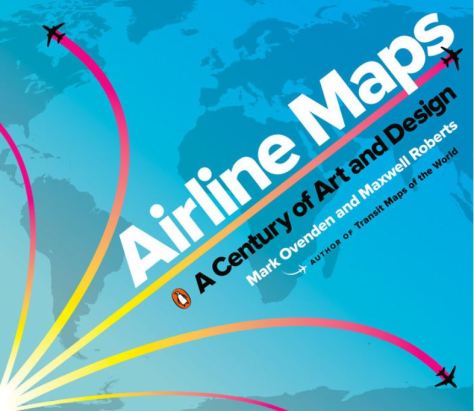
A nostalgic and celebratory look back at one hundred years of passenger flight, featuring full-color reproductions of route maps and posters from the world’s most iconic airlines, from the author of bestselling cult classic Transit Maps of the World.
To read more: https://www.penguinrandomhouse.com/books/600815/airline-maps-by-mark-ovenden-and-maxwell-roberts/

Top Photographers: Luke Shad Bolt’s “Roiling Majesty” Of Ocean Waves
From a Colossal online article:
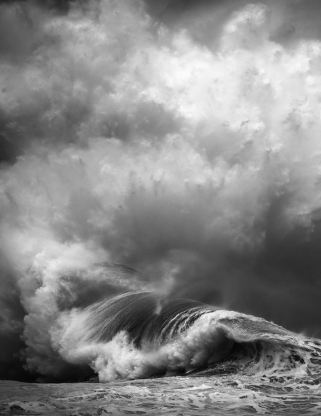 In a statement on the artist’s website, the Maelstrom series is described as “a cursory glimpse of the exchange, cycle and balance of power fundamental to the functioning of our planet and its oceans… Maelstrom encourages the viewer to reflect upon our own naivety and place as a species within the greater natural balance of power.”
Luke Shadbolt captures the roiling majesty of ocean waves in his large-scale aquatic photographs. Printed at 150 x 100 cm (nearly 6 feet by 3.3 feet), the color and black-and-white images show the dramatic shapes and dynamic textures of open water when agitated by major weather events.
https://lukeshadbolt.com/portfolio
The Acquiesce the Front series similarly seeks to draw connections between the human experience and our natural environment. “The physical manifestations portrayed are a deft reflection of those storms that are implicit to the human condition,” and our individual frailty in the face of big events. Yet Shadbolt finds hope in the potential “to learn and grow from these events. While we may be powerless to stop the storm from approaching, we can work to redirect the flood.”
To read more: https://www.thisiscolossal.com/2019/10/waves-by-luke-shadbolt/?mc_cid=e31c291cfd&mc_eid=28f9488a9b

Top New Nature Books: “Turning The Boat For Home” By Richard Mabey
From a Cotswold Life online interview/review:
 “I suppose I started off with a fairly literal view of the world,” he says. “But, quite early on, it became clear to me that there was much more going on than simply the picture I was seeing; that the natural world had an agenda of its own; that it was going to live out life, regardless of how we viewed it and how we used it; and, indeed, regardless of the fancy metaphors that we used.”
Oh my goodness. Where to begin?
I could start with the ‘Praying Beech’ – a tree whose (‘whose’? The human possessive feels simultaneously wrong and yet just right) two branch stubs clasped each other like hands. Once, when the rain fell in an apocalyptic burst, Richard Mabey watched its bark melt in front of his eyes. It was, of course, no stranger to extremes of weather: one summer past, the tree had been split by lightning, bees hunkering down in its newly-created hollows. Sometime later, a storm had toppled it, leaving fungi free to colonise its delicious surfaces: knobbly coral spots; dead man’s fingers rising corpse-like from the tree’s own rot; white porcelain tufts, like Royal Worcester plates awaiting a delicate slice of egg-yellow sponge.
Short Films: “The Art Of Collecting” By Petr Krejčí
Filmed and Directed by: Petr Krejčí
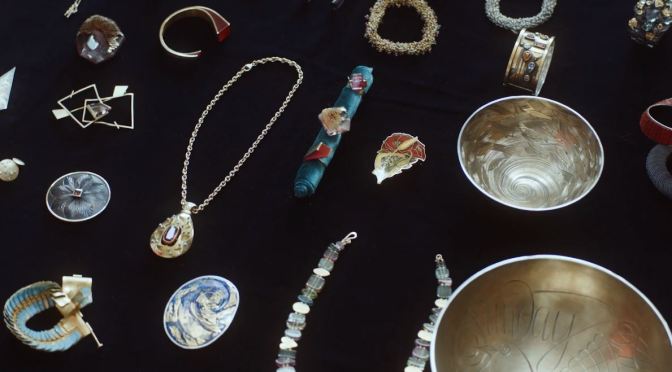
A film commissioned by Goldsmith’s Compay for Goldsmith’s Fair 2019. This year’s theme was about collecting and collectors.
Goldsmiths’ Fair is recognised internationally as the premier UK showcase for contemporary jewellery and silver.
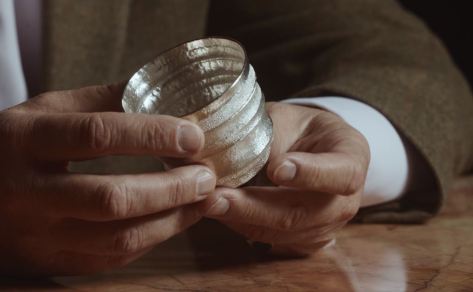
Each year, this unique event draws collectors, design lovers and luxury shoppers to the magnificent Goldsmiths’ Hall where they can browse the latest collections from this handpicked selection of craftsmen and women.
Website: https://www.goldsmithsfair.co.uk/
Literary Milestones: A Letter To Sylvia Beach, Founder, “Shakespeare And Company” In Paris (100 Years Old This Month)
From a Shakespeare and Company email:
Dear Sylvia Beach,
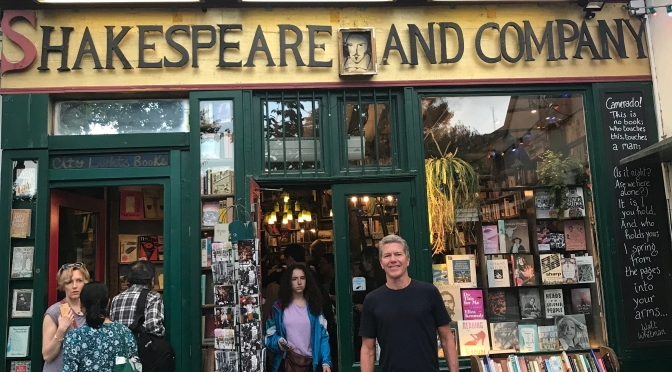
 One hundred years ago this month, you opened the shutters of a small bookshop on rue Dupuytren. Its name was Shakespeare and Company. I often wonder if, on that first morning, you could ever have imagined how important your story would be.
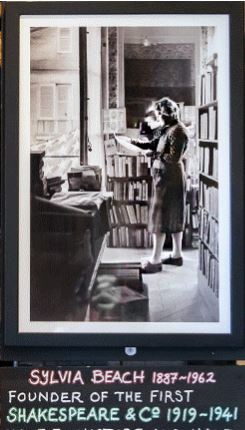
You were only 32 but had already lived quite a life. Soulful and fearless, witty and energetic, you’d been active in the women’s suffrage movement, studied French poetry in Paris, and served with the Red Cross in Serbia during the First World War. You had also met Adrienne Monnier, one of the first women in France to found her own bookshop. Adrienne would be your companion for decades to come.
Your bookshop—first on rue Dupuytren, then around the corner on rue de l’Odéon—became a sanctuary for Anglophone and Francophone writers. T.S. Eliot, Gertrude Stein, Ezra Pound, James Joyce, Ernest Hemingway, Djuna Barnes, and F. Scott Fitzgerald, as well as André Gide, Paul Valéry, and Louis Aragon, among many others, all bought and borrowed books from you, and attended readings and parties at Shakespeare and Company. As André Chamson wrote about you: “Sylvia Beach carried pollen like a bee. She cross-fertilised these writers. She did more to link England, the United States, Ireland, and France than four great ambassadors combined.” I think of this whenever I ponder the role booksellers and bookshops can play during this age of political and ecological turbulence. When James Joyce couldn’t find anyone to publish Ulysses—his modernist masterpiece that had been condemned for obscenity—you stepped up. Even when you closed your bookshop in 1941, it was not an act of defeat but of defiance—you would rather see your life’s work shuttered forever than sell Finnegans Wake to a high-ranking Nazi officer.
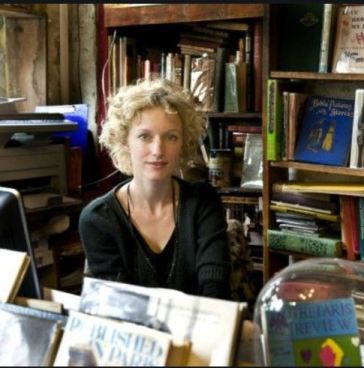
When my father, George Whitman, opened this bookshop in 1951, you were not just a regular visitor but an inspiration. You had shown how a true bookseller must also be prepared to be a librarian, a publisher, a PO box, a banker, a hotelier, and—most importantly—a friend to writers and readers. For your belief that a love of reading is more important than the quest for profit, you have been called the patron saint of independent bookstores. We’re sure that your extraordinary memoir and your beautiful letters continue to embolden booksellers the world over, just as they embolden us. Particularly during hard times, your story stands like a beacon when we need direction, comfort, or inspiration.
Thank you, Sylvia, for everything you did and everything you stood for.
In loving homage,
Sylvia Whitman
Proprietor
Shakespeare And Company
https://shakespeareandcompany.com/

New Collector Books: “Salvador Dalí Tarot Card” Book Set (Taschen)
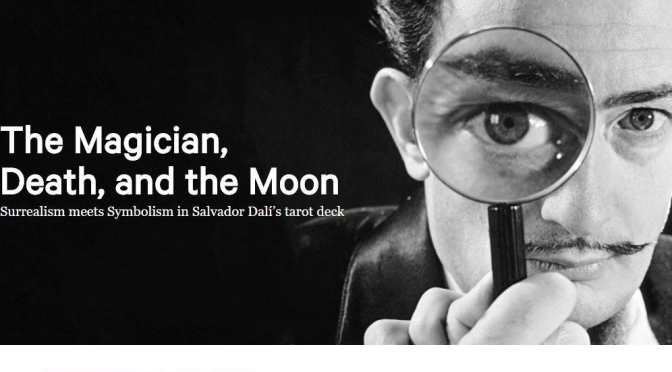
 Dalí poses as the Magician, his wife Gala becomes the Empress, and the death of Julius Caesar is reinterpreted as the Ten of Swords in the artist’s extraordinary custom tarot deck. First published in a 1984 limited edition that has since long sold out, this lush box set brings back all 78 cards, each dazzling in color, along with a companion book on the making-of and practical instructions.
To read more: https://www.taschen.com/pages/en/catalogue/art/all/44640/facts.dali_tarot.htm
 Boomers Daily