All posts by She Seeks Serene

My Journey of Reimagining Life, Love and Education

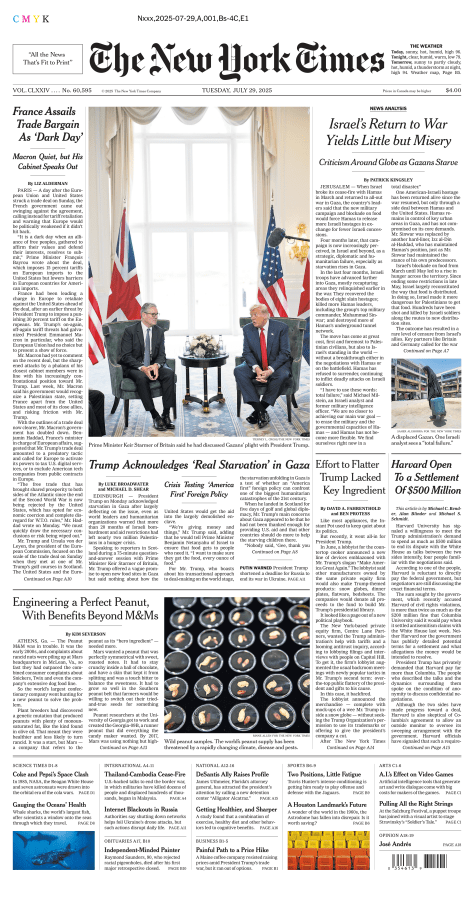
THE NEW YORK TIMES – TUESDAY, JULY 29, 2025

France Criticizes E.U.’s Trade Deal With Trump

Some French cabinet members have aired their sharp disapproval of the agreement with the United States. The prime minister called it “a dark day.”

Manhattan Gunman’s Note Referred to N.F.L. and Brain Trauma, Police Say

The shooting occurred in a Midtown tower that has offices of the National Football League. Mayor Eric Adams said that a note found on the gunman mentioned the N.F.L.

At Slain Officer’s Home, His Bangladeshi Community Mourns

Trump Is Winning His Trade War. What Will That Mean for the Economy?

President Trump’s vision for reshaping global trade is falling into place, an experiment that economists say could still produce damaging results.

I.M.F. Raises Global Growth Outlook as U.S. Looks to Avert Trade Wars

The International Monetary Fund warned that trade tension continued to be a risk for the global economy.

Rewriting the Classroom: AI, Autonomy & Education

By Renee Dellar, Founder, The Learning Studio, Newport Beach, CA

Introduction: A New Classroom Frontier, Beyond the “Tradschool”

In an age increasingly shaped by artificial intelligence, education has become a crucible—a space where our most urgent questions about equity, purpose, and human development converge. In a recent article for The New York Times, titled “A.I.-Driven Education: Founded in Texas and Coming to a School Near You” (July 27, 2025), journalist Pooja Salhotra explored the rise of Alpha School, a network of private and microschools that is quickly expanding its national footprint and sparking passionate debate. The piece highlighted Alpha’s mission to radically reconfigure the learning day through AI-powered platforms that compress academics and liberate time for real-world learning.

For decades, traditional schooling—what we might now call the “tradschool” model—has been defined by rigid grade levels, high-stakes testing, letter grades, and a culture of homework-fueled exhaustion. These structures, while familiar, often suppress the very qualities they aim to cultivate: curiosity, adaptability, and deep intellectual engagement.

At the forefront of a different vision stands Alpha School in Austin, Texas. Here, core academic instruction—reading, writing, mathematics—is compressed into two highly focused hours per day, enabled by AI-powered software tailored to each student’s pace. The rest of the day is freed for project-based, experiential learning: from public speaking to entrepreneurial ventures like AI-enhanced food trucks. Alpha, launched under the Legacy of Education and now expanding through partnerships with Guidepost Montessori and Higher Ground Education, has become more than a school. It is a philosophy—a reimagining of what learning can be when we dare to move beyond the industrial model of education.

“Classrooms are the next global battlefield.” — MacKenzie Price, Alpha School Co-founder

This bold declaration by MacKenzie Price reflects a growing disillusionment among parents and educators alike. Alpha’s model, centered on individualized learning and radical reallocation of time, appeals to families seeking meaning and mastery rather than mere compliance. Yet it has also provoked intense skepticism, with critics raising alarms about screen overuse, social disengagement, and civic erosion. Five state boards—including Pennsylvania, Texas, and North Carolina—have rejected Alpha’s charter applications, citing untested methods and philosophical misalignment with standardized academic metrics.

Still, beneath the surface of these debates lies a deeper question: Can a model driven by artificial intelligence actually restore the human spirit in education?

This essay argues yes. That Alpha’s approach, while not without challenges, is not only promising—it is transformational. By rethinking how we allocate time, reimagining the role of the teacher, and elevating student agency, Alpha offers a powerful counterpoint to the inertia of traditional schooling. It doesn’t replace the human endeavor of learning—it amplifies it.


I. The Architecture of Alpha: Beyond Rote, Toward Depth

Alpha’s radical premise is disarmingly simple: use AI to personalize and accelerate mastery of foundational subjects, then dedicate the rest of the day to human-centered learning. This “2-Hour Learning” model liberates students from the lockstep pace of traditional classrooms and reclaims time for inquiry, creativity, and collaboration.

“The goal isn’t just faster learning. It’s deeper living.” — A core tenet of the Alpha School philosophy

The ideal would be that the “guides”, whose role resembles that of a mentor or coach, are highly trained individuals. As detailed in Scott Alexander’s comprehensive review on Astral Codex Ten, the AI tools themselves are not futuristic sentient agents, but highly effective adaptive platforms—“smart spreadsheets with spaced-repetition algorithms.” Students advance via digital checklists that respond to their evolving strengths and gaps.

This frees the guide to focus not on content delivery but on cultivating purpose and discipline. Alpha’s internal reward system, known as “Alpha Bucks,” incentivizes academic effort and responsibility, complementing a culture that values progress over perfection.

The remainder of the day belongs to exploration. One team of fifth and sixth graders, for instance, designed and launched a fully operational food truck, conducting market research, managing costs, and iterating recipes—all with AI assistance in content creation and financial modeling.

“Education becomes real when students build something that never existed before.” — A guiding principle at Alpha School

The centerpiece of Alpha’s pedagogy is the “Masterpiece”: a year-long, student-directed project that may span over 1,000 hours. These masterpieces are not merely academic showcases—they are portals into the child’s deepest interests and capacities. From podcasts exploring ethical AI to architectural designs for sustainable housing, these projects represent not just knowledge, but wisdom. They demonstrate the integration of skills, reflection, and originality.

This, in essence, is the “secret sauce” of Alpha: AI handles the rote, and humans guide the soul. Far from replacing relationships, the model deepens them. Guides are trained in whole-child development, drawing on frameworks like Dr. Daniel Siegel’s interpersonal neurobiology, to foster resilience, self-awareness, and emotional maturity. Through the challenge of crafting something meaningful, students meet ambiguity, friction, failure, and joy—experiences that constitute what education should be.

“The soul of education is forged in uncertainty, not certainty. Alpha nurtures this forge.”


II. Innovation or Illusion? A Measure of Promise

Alpha’s appeal rests not just in its promise of academic acceleration, but in its restoration of purpose. In a tradschool environment, students often experience education as something done to them. At Alpha, students learn to see themselves as authors of their own growth.

Seventh-grader Byron Attridge explained how he progressed far beyond grade-level content, empowered by a system that respected his pace and interests. Parents describe life-altering changes—relocations from Los Angeles, Connecticut, and beyond—to enroll their children in an environment where voice and curiosity thrive.

“Our kids didn’t just learn faster—they started asking better questions.” — An Alpha School parent testimonial

One student, Lukas, diagnosed with dyslexia, flourished in a setting that prioritized problem-solving over rote memorization. His confidence surged, not through remediation, but through affirmation.

Of the 12 students who graduated from Alpha High last year, 11 were accepted to universities such as Stanford and Vanderbilt. The twelfth pursued a career as a professional water skier. These outcomes, while limited in scope, reflect a powerful truth: when students are known, respected, and challenged, they thrive.

“Education isn’t about speed. It’s about becoming. And Alpha’s model accelerates that becoming.”


III. The Critics’ View: Valid Concerns and Honest Rebuttals

Alpha’s success, however, has not silenced its critics. Five state boards have rejected its public charter proposals, citing a lack of longitudinal data and alignment with state standards. Leading educators like Randi Weingarten and scholars like Justin Reich warn that education, at its best, is inherently relational, civic, and communal.

“Human connection is essential to education; an AI-heavy model risks violating that core precept of the human endeavor.” — Randi Weingarten, President, American Federation of Teachers

This critique is not misplaced. The human element matters. But it’s disingenuous to suggest Alpha lacks it. On the contrary, the model deliberately positions guides as relational anchors, mentors who help students navigate the emotional and moral complexities of growth.

Some students leave Alpha for traditional schools, seeking the camaraderie of sports teams or the ritual of student government. This is a meaningful critique. But it’s also surmountable. If public schools were to adopt Alpha-inspired models—compressing academic time to expand social and project-based opportunities—these holistic needs could be met even more fully.

A more serious concern is equity. With tuition nearing $40,000 and campuses concentrated in affluent tech hubs, Alpha’s current implementation is undeniably privileged. But this is an implementation challenge, not a philosophical flaw. Microschools like The Learning Studio and Arizona’s Unbound Academy show how similar models can be adapted and made accessible through philanthropic or public funding.

“You can’t download empathy. You have to live it.” — A common critique of over-reliance on AI in education, yet a key outcome of Alpha’s model

Finally, concerns around data privacy and algorithmic transparency are real and must be addressed head-on. Solutions—like open-source platforms, ethical audits, and parent transparency dashboards—are not only possible but necessary.

“AI in schools is inevitable. What isn’t inevitable is getting it wrong.” — A pragmatic view on technology in education


IV. Pedagogical Fault Lines: Re-Humanizing Through Innovation

What is education for?

This is the question at the heart of Alpha’s challenge to the tradschool model. In most public systems, schooling is about efficiency, standardization, and knowledge transfer. But education is also about cultivating identity, empathy, and purpose—qualities that rarely emerge from worksheets or test prep.

Alpha, when done right, does not strip away these human elements. It magnifies them. By relieving students of the burden of rote repetition, it makes space for project-based inquiry, ethical discussion, and personal risk-taking. Through their Masterpieces, students grapple with contradiction and wonder—the very conditions that produce insight.

“When AI becomes the principal driver of rote learning, it frees human guides for true mentorship, and learning becomes profound optimization for individual growth.”

The concept of a “spiky point of view”—Alpha’s term for original, non-conforming ideas—is not just clever. It’s essential. It signals that the school does not seek algorithmic compliance, but human creativity. It recognizes the irreducible unpredictability of human thought and nurtures it as sacred.

“No algorithm can teach us how to belong. That remains our sacred task—and Alpha provides the space and guidance to fulfill it.”


V. Expanding Horizons: A Global and Ethical Imperative

Alpha is not alone. Across the U.S., AI tools are entering classrooms. Miami-Dade is piloting chatbot tutors. Saudi Arabia is building AI-literate curricula. Arizona’s Unbound Academy applies Alpha’s core principles in a public charter format.

Meanwhile, ed-tech firms like Carnegie Learning and Cognii are developing increasingly sophisticated platforms for adaptive instruction. The question is no longer whether AI belongs in schools—but how we guide its ethical, equitable, and pedagogically sound implementation.

This requires humility. It requires rigorous public oversight. But above all, it requires a human-centered vision of what learning is for.

“The future of schooling will not be written by algorithms alone. It must be shaped by the values we cherish, the equity we pursue, and the souls we nurture—and Alpha shows how AI can powerfully support this.”


Conclusion: Reclaiming the Classroom, Reimagining the Future

Alpha School poses a provocative challenge to the educational status quo: What if spending less time on academics allowed for more time lived with purpose? What if the road to real learning did not run through endless worksheets and standardized tests, but through mentorship, autonomy, and the cultivation of voice?

This isn’t a rejection of knowledge—it’s a redefinition of how knowledge becomes meaningful. Alpha’s greatest contribution is not its use of AI—it’s its courageous decision to recalibrate the classroom as a space for belonging, authorship, and insight. By offloading repetition to adaptive platforms, it frees educators to do the deeply human work of guiding, listening, and nurturing.

Its model may not yet be universally replicable. Its outcomes are still emerging. But its principles are timeless. Personalized learning. Purpose-driven inquiry. Emotional and ethical development. These are not luxuries for elite learners; they are entitlements of every child.

“Education is not merely the transmission of facts. It is the shaping of persons.”

And if artificial intelligence can support us in reclaiming that work—by creating time, amplifying attention, and scaffolding mastery—then we have not mechanized the soul of schooling. We have fortified it.

Alpha’s model is a provocation in the best sense—a reminder that innovation is not the enemy of tradition, but its most honest descendant. It invites us to carry forward what matters—nurturing wonder, fostering community, and cultivating moral imagination—and leave behind what no longer serves.

“The future of schooling will not be written by algorithms alone. It must be shaped by the values we cherish, the equity we pursue, and the souls we nurture.”

If Alpha succeeds, it won’t be because it replaced teachers with screens, or sped up standards. It will be because it restored the original promise of education: to reveal each student’s inner capacity, and to do so with empathy, integrity, and hope.

That promise belongs not to one school, or one model—but to us all.

So let this moment be a turning point—not toward another tool, but toward a deeper truth: that the classroom is not just a site of instruction, but a sanctuary of transformation. It is here that we build not just competency, but character—not just progress, but purpose.

And if we have the courage to reimagine how time is used, how relationships are formed, and how technology is wielded—not as master but as servant—we may yet reclaim the future of American education.

One student, one guide, one spark at a time.

THIS ESSAY WAS WRITTEN AND EDITED BY RENEE DELLAR UTILIZING AI.

THE NEW YORKER MAGAZINE – AUGUST 4, 2025 PREVIEW

People sit in the shade on the steps of the Metropolitan Museum of Art.

THE NEW YORKER MAGAZINE: The latest cover features Victoria Tentler-Krylov’s “Chiaroscuro at the Met” – The art of shade.

What to Do When the Supreme Court Rules the Wrong Way

The blows have been coming weekly, as Trump tries to ransack the Constitution. Yet recent Court history shows that what feels like the end can be a beginning. By Amy Davidson Sorkin

“No Tax on Tips” Is an Industry Plant

Trump’s “populist” policy is backed by the National Restaurant Association—probably because it won’t stop establishments from paying servers below the minimum wage. By Eyal Press

Israel’s Zones of Denial

Amid national euphoria over the bombing of Iran—and the largely ignored devastation in Gaza—a question lurks: What is the country becoming? By David Remnick

THE NEW YORK TIMES – MONDAY, JULY 28, 2025

Trump Cites Hunger in Gaza as He Meets With Starmer

President Trump said that children in Gaza “look very hungry,” indicating disagreement with Israeli officials. He was holding talks with Prime Minister Keir Starmer of Britain.

‘Revenge Is Not a Policy’: Israelis Voice Dissent Against the War in Gaza

After a long silence, prominent Israelis and activists are increasingly raising alarms about potential war crimes being carried out by the government.

Europe Accepts a Trump Trade Deal With Other Worries in Mind

The framework agreement with President Trump will likely not do much for economic growth on either side. But it avoids fissures on foreign policy issues.

Thailand and Cambodia Agree to Halt Fighting That Has Killed Dozens

The ceasefire will start at midnight on Monday after U.S.-backed talks in Malaysia. The border war killed dozens of people and displaced hundreds of thousands.

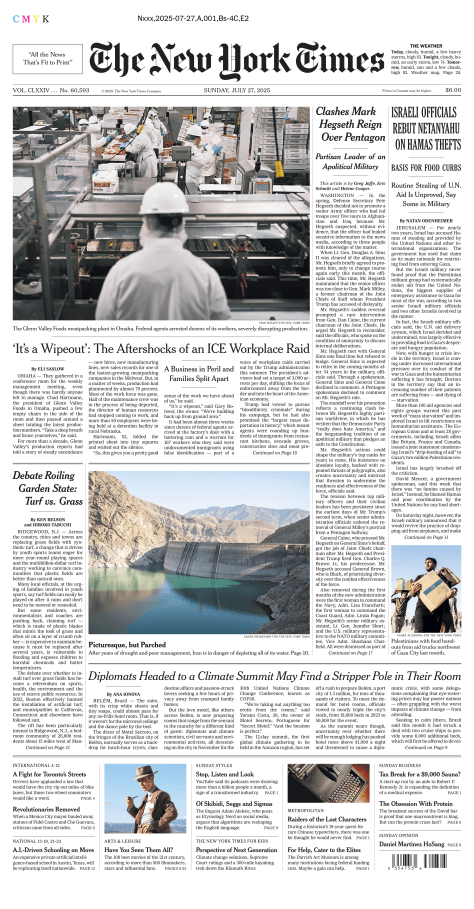
THE NEW YORK TIMES – SUNDAY, JULY 27, 2025

No Meals, Fainting Nurses, Dwindling Formula: Starvation Haunts Gaza Hospitals

Amid Israeli restrictions on food, hunger is spreading across Gaza. Doctors and nurses lack the resources to stem the surge.

Israel Says It Has Paused Some Military Activity in Gaza as Anger Grows Over Hunger

Trump to Meet With Top E.U. Official as Threat of Trade War Looms

Right-Wing Influencers Say Ghislaine Maxwell Is Key to Unlocking Epstein Case

BARRON’S MAGAZINE – JULY 28, 2025 FINANCE PREVIEW

BARRON’S MAGAZINE: The latest issue features ‘TV Is Finally Dying. Why That’s Actually Good News for Disney’…

Why That’s Actually Good News for Disney.

It has been a lost decade for the entertainment giant. But with TV declines baked in and growth improving, the stock is ready for a new era

Annuities Are Coming in New Shapes and Sizes. Here Are the 100 Best Ones.

Annuities are often complicated, with confusing fee structures, but certain ones can make sense for a portion of your retirement portfolio.

Tariffs May Be Coming for Your Retirement Savings. Here’s What to Do.

Higher inflation data could soon fuel market volatility. While that can be scary, it pays to stick with your diversified mix of stocks and bonds. 

Want to Be a 401(k) Millionaire? Start With These Fixes.

The stock market gains about 10% a year, but your savings may be falling behind. Here’s how to make the most of your 401(k).

THE NEW YORK TIMES – SATURDAY, JULY 26, 2025

No Proof Hamas Routinely Stole U.N. Aid, Israeli Military Officials Say

Israel has long restricted or completely blocked aid to Gaza on the argument that Hamas steals it to use as a weapon of control over the population.

The DailyAudioHow Seeking Food Has Become Deadly in Gaza

Competing Conspiracy Theories Consume Trump’s Washington

President Trump is trying to divert attention from the Jeffrey Epstein conspiracy theory with one about Barack Obama and treason.

A Clash Over a Promotion Puts Hegseth at Odds With His Generals

Suspicions about leaks and a mistrust of senior military officers have defined much of Defense Secretary Pete Hegseth’s first six months on the job.

In Russia, Corruption Cases Following Battlefield Failures

Officials in three of the five Russian regions bordering Ukraine have been accused of embezzling funds for border defenses.

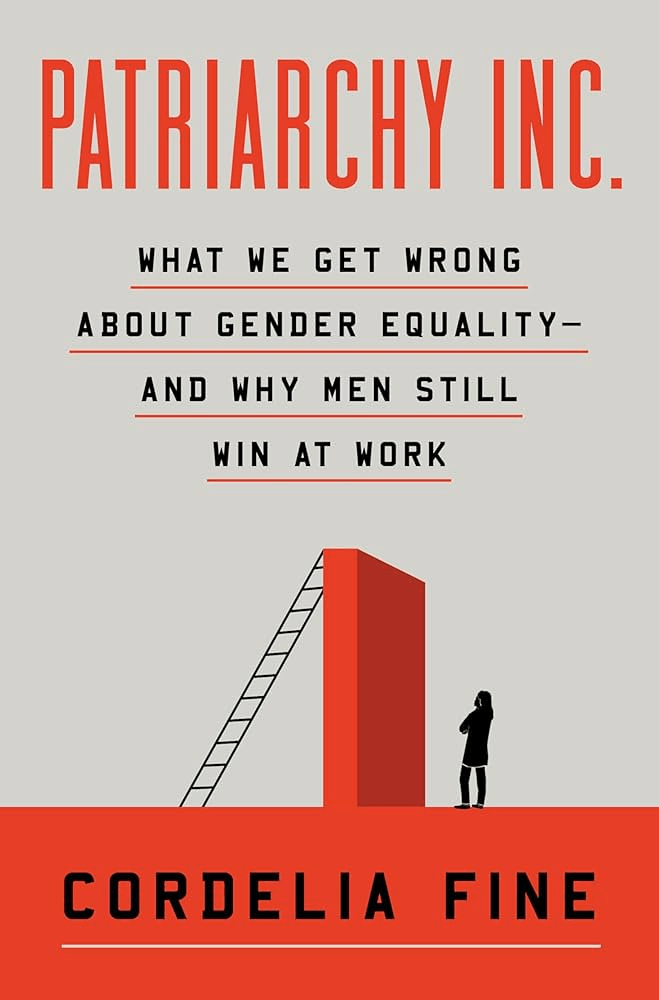
Patriarchy, Feminism and the Illusion of Progress

By Renee Dellar, Founder, The Learning Studio, Newport Beach, CA

We often imagine patriarchy as a relic—obvious, archaic, and easily challenged. But as generations of feminist thinkers have long argued, and as Cordelia Fine’s Patriarchy Inc. incisively confirms, its enduring power lies not in its bluntness, but in its ability to mutate. Today, patriarchy doesn’t need to roar; it whispers in algorithms, smiles from performance reviews, and thrives in wellness language. This essay argues that Fine’s emphasis on workplace inequality, while essential, is incomplete without a parallel reckoning with patriarchy’s grip on domestic life—and more profoundly, without a reimagining of gender itself. What we need is a psychological evolution: a balanced embodiment of both feminine and masculine energies in all people, if we are to unbuild a system that survives by design.

In 1949, Simone de Beauvoir wrote in The Second Sex, “One is not born, but rather becomes, a woman.” With that sentence, she shattered the myth of biological destiny. Womanhood, she claimed, was not innate but culturally scripted—a second sex constructed through tradition, religion, and expectation. Patriarchy, in her analysis, was no divine order but a human invention: an architecture of dominance designed to reproduce itself through social roles. Fine’s forthcoming Patriarchy Inc. (August 2025) echoes and updates this insight with sharp empirical rigor. In the workplace, she shows, patriarchy has not disappeared—it has evolved. It now markets fairness, monetizes empowerment, and offloads systemic change onto individuals via coaching, productivity hacks, and “confidence workshops” that sell resilience as a substitute for reform.

What makes Fine’s critique vital is not merely that patriarchy persists—it’s how it thrives beneath the very banner of equality. It now cloaks itself in metrics, missions, and diversity gloss. Corporate offices tout inclusion while continuing to reward masculine-coded behaviors and promote male leadership: 85% of Fortune 500 CEOs remain men. Patriarchy, we learn, is not a crumbling wall—it is a self-repairing system. To dismantle it, we must go deeper than metrics. We must examine the energies it suppresses and rewards.

Masculine and Feminine Traits: A New Grammar of Justice

To understand the psychological mechanics of patriarchy, we must revisit the traits society has long coded as masculine or feminine—traits that are neither biological imperatives nor moral absolutes, but social energies shaped over centuries.

  • Masculine traits are typically associated with competition, independence, assertiveness, strength, and linear action. Taken too far, they veer into domination.
  • Feminine traits, by contrast, are linked to empathy, care, intuition, collaboration, and receptivity—qualities that bind rather than divide.

These traits exist in all people. Yet patriarchy has historically overvalued the former and devalued the latter, punishing men for softness and women for strength. A just society must not erase these differences but balance them—within institutions, relationships, and most importantly, within the self.

Simone de Beauvoir: The Architecture of Otherness

De Beauvoir’s diagnosis of woman as “Other”—the deviation from the male norm—remains uncannily relevant. Today’s workplaces replicate that Othering in subtler ways: through dress codes, tone policing, and leadership norms that penalize feminine expression. As Fine notes, women must be confident, but not cold; nurturing, but not weak; assertive, but not abrasive. In other words: perfect. The corporate woman who succeeds by male standards is often punished for violating feminine ideals. The double bind remains—only now it wears a blazer and carries a badge that says “inclusive.”

Friedan, Domesticity, and the New Containment

In 1963, Betty Friedan exposed what she called “the problem that has no name”: the stifling despair of suburban domesticity. Today, that problem has been rebranded. The girlboss, the multitasking mother, the curated freelancer—each is sold as empowered, even as she shoulders the same disproportionate domestic load. Women continue to dominate sectors like education and healthcare, often underpaid and undervalued despite being deemed “essential.” These roles, Fine shows, are praised symbolically while marginalized materially. Even progressive policies like flexible hours and parental leave frequently assume women are the default caregivers, reinforcing the burden Friedan tried to name.

Millett’s Sexual Politics: The Myth of Neutrality

Kate Millett’s Sexual Politics reframed patriarchy as institutional, not interpersonal. Literature, law, and culture all naturalized male dominance. Fine brings that lens to the boardroom. Modern hiring algorithms and promotion pathways may appear neutral, but they are encoded with values that reward masculine norms. Women are urged to “lean in,” but warned not to lean too far. Diversity initiatives often succeed at optics, but fail to shift power: the faces at the table change, yet the hands on the levers remain the same. As Fine argues, equity requires more than visibility—it demands structural rebalancing.

Lorde and the Failure of Inclusion Without Power

Audre Lorde warned that “the master’s tools will never dismantle the master’s house.” Too often, DEI programs use those very tools. Difference is celebrated, but only within safe boundaries. Women of color may be promoted, but without adequate mentorship, institutional backing, or decision-making power, the gesture risks becoming symbolic. Fine channels Lorde’s insight: inclusion without transformation is corporate theater. Real justice requires not just a change in personnel, but a change in priorities, metrics, and values.

Gerda Lerner and the Machine That Adapts

In The Creation of Patriarchy, Gerda Lerner traced patriarchy’s roots to law, religion, and economy, showing it as a machine designed for self-preservation. Fine updates this metaphor: the machine now runs on data, flexibility, and illusion. Today’s labor markets reward 24/7 availability, mobility, and presenteeism—conditions often impossible for caregivers. When women enter male-dominated fields, prestige and pay often decline. The system adapts by downgrading the value of women’s gains. Patriarchy doesn’t just resist change—it mutates in response to it.

The Invisible Burnout: When Women Do Both

As women are pushed to succeed professionally, they’re also expected to maintain responsibility for domestic life. This dual burden—emotional labor, mental load, caregiving—is not equally shared. While women have been pressured to adopt masculine-coded traits to succeed, men have faced little reciprocal cultural push to develop their feminine sides. As a result, many women are performing two identities—professional and maternal—while men remain tethered to one. This imbalance is not just unfair—it is unsustainable.

Men Must Evolve Too: The Will to Change

Cordelia Fine joins American author, theorist, educator, and social critic bell hooks in arguing that men must be part of the liberation project—not as allies, but as participants in their own healing. In The Will to Change, hooks argued that patriarchy damages men by severing them from their emotions, from intimacy, and from ethical wholeness. Fine builds on this, showing how men are rewarded with status but robbed of connection.

What does transformation look like for men? Not emasculation, but evolution:

  • Self-awareness: recognizing one’s emotions, triggers, and limitations.
  • Self-regulation: managing impulses with maturity and intention.
  • Self-compassion: replacing shame with acceptance and care.

These are not feminine traits—they are human ones. And leaders who embody both emotional intelligence and strategic clarity are not only more ethical—they are more effective. Institutions must reward this integration, not punish it.

From Balance to Redesign: What Fine Urges

Fine’s prescriptions are bold:

  • Assume all workers have caregiving roles—not just mothers.
  • Redesign success metrics to value care, collaboration, and emotional labor.
  • Teach gender equity not as tolerance, but as a foundational moral principle.
  • Foster this evolution early—at home, in classrooms, in culture.

This is not incremental reform. It is a new architecture: one that recognizes care as central, emotional labor as valuable, and balance as a mark of strength.

Conclusion: The System That Learns, and the Refusal That Liberates

Patriarchy has endured not because it hides, but because it learns. As Simone de Beauvoir revealed its ontological design, and Gerda Lerner its historical scaffolding, Cordelia Fine now reveals its polished upgrade. Patriarchy today sells resistance as a brand, equity as a product. It launders its image with the very language that once opposed it.

We no longer suffer from a lack of critique. We suffer from a failure to redesign. And so, as Audre Lorde warned, our task is not to decorate the master’s house—it is to refuse it. Not through token representation, but through radical revaluation. Not through balance sheets, but through balanced selves.

To dismantle patriarchy is not to flip the power dynamic. It is to end the game altogether. It is to build something entirely different—where human worth is not ranked, but recognized. Where power is not hoarded, but shared. Where every child, regardless of sex, is raised to lead with empathy and to love with courage.

That future begins not with a program, but with a decision. To evolve. To balance. To refuse the illusion of progress and demand its substance.

RENEE DELLAR WROTE AND EDITED THIS ESSAY UTILIZING AI

NATIONAL REVIEW – SEPTEMBER 2025

National Review (@NRO) / X

NATIONAL REVIEW (July 25, 2025): The latest issue features ‘A New Arsenal of Democracy’ – Defense Industry Special Issue

Tucker Carlson’s Dark Turn

He can’t stop talking about the Jews

Jon Stewart’s F-Bomb Chorus

The minstrelsy of late-night-TV activism. Armond White

What We’re Selling to Ukraine

A perusal of recent U.S. arms sales to Ukraine, approved by the Pentagon office that keeps track of American weapons and supply stockpiles. Jim Geraghty

Moby-Dick, Perpetual Inquiry, and the Sublime

By Intellicurean, July 25, 2025

“Call me Ishmael.”

This iconic first line anchors one of the most enduring openings in American literature. Yet before it is spoken, before Ishmael’s voice emerges on the page, we encounter something more unusual: a kind of literary invocation. The opening pages of Moby-Dick—those dense, eclectic “Extracts” quoting scripture, classical literature, scientific treatises, and forgotten travelogues—do not serve as a traditional preface. Instead, they operate like a ritual threshold. They ask us to enter the novel not as a narrative, but as a vast textual cosmos.

Melville’s fictional “sub-sub-librarian” gathers fragments from Job to Shakespeare to obscure whaling reports, assembling a chorus of voices that have, across centuries, spoken of the whale. This pre-narrative collage is more than ornamentation. It proposes a foundational idea: that the whale lives not only in the ocean, but in language. Not only in myth, but in memory. Not only in flesh, but in thought.

Before the Pequod ever sets sail, Melville has already charted his central course—into the ocean of human imagination, where the whale swims through texts, dreams, and questions that refuse easy resolution.


Proof of Two Lives

“There’s something I find strangely moving about the ‘Extracts’ section,” remarks literary critic Wyatt Mason on The World in Time, a podcast hosted by Lewis Lapham. “It’s proof of two kinds of life. The life of the creature itself, and the life of the mind—the attention we pay over time to this creature.”

Mason’s comment offers a keel for the voyage ahead. In Moby-Dick, the whale is not simply an animal or antagonist. It becomes a metaphysical magnet, a mirror for human understanding, a challenge to the limits of knowing. The “Extracts” and “Etymologies,” often dismissed as digressions, are in fact sacred rites—texts that beg to be read with reverence.

In teaching the novel to incarcerated students through the Bard Prison Initiative, Mason and fellow writer Donovan Hohn describe how these obscure, labyrinthine sections are received not as trivia but as scripture. The students descend into the archive as divers into a shipwreck—recovering fragments of forgotten wisdom, learning to breathe in the pressure of incomprehensibility. “The whale,” Mason repeats, “resides or lives in texts.” And what a library it is.


The Whale as Philosophy

“All my means are sane, my motive and my object mad.”

Harold Bloom, the late sage of literary criticism, would have nodded at Mason’s insight. For Bloom, Moby-Dick was not merely a novel, but “a giant Shakespearean prose poem.” Melville, he believed, was a tragedian of the American soul. Captain Ahab, mad with self-reliance, became for Bloom a Promethean figure—bound not by divine punishment, but by his own obsessive will.

In Bloom’s classroom at Yale in 2011, there were no lecture notes. He taught Moby-Dick like a jazz solo—improvised, living, drawn from a lifetime of memory and myth. “It’s very unfair,” he said, reflecting on the whale hunts—great mammals hunted with harpoons and lances. Yet the Pequod’s most moral man, Starbuck, is also its most proficient killer. A Quaker devoted to peace, he is also the ship’s deadliest lance. This contradiction—gentleness and violence braided together—is the essence of Melville’s philosophy.

The whale, in Bloom’s reading, is sublime not because it symbolizes any one thing—God, evil, justice, nature—but because it cannot be pinned down. It is an open question. An unending inquiry. A canvas for paradox. “Heaven help them all,” Bloom said of the Pequod’s doomed crew. “And us.”


Melville the Environmentalist

“There she blows! There she blows! A hump like a snow-hill! It is Moby Dick!”

Where Bloom heard Melville’s music in metaphor and myth, Richard J. King hears it in science. In Ahab’s Rolling Sea: A Natural History of Moby-Dick (2019), King charts a different map—overlaying Melville’s imagined ocean onto real tides, real whales, real voyages. He sails replica whalers, interviews marine biologists, pores over Melville’s notebooks.

His inquiry begins with a straightforward question: could a sperm whale really destroy a ship? Historical records suggest yes. But King doesn’t stop at anatomy. His portrait of Melville reveals a proto-environmentalist, someone who revered the sea not just as symbol but as system. Melville’s whale, King argues, is a creature of wonder and terror, not just prey but presence.

In an age of ecological crisis, King reframes Moby-Dick as a book not just of metaphor but of environmental ethics. Ishmael’s meandering digressions become meditations on the ocean as moral agent—an entity capable of sustaining and destroying. The sea is no backdrop; it is a character, a god, an intelligence. Melville’s ocean, King suggests, humbles the hubris of Ahab and calls readers to ecological humility.


Rediscovery in Dark Times

“Strike through the mask! How can the prisoner reach outside except by thrusting through the wall?”

Aaron Sachs, in Up From the Depths: Herman Melville, Lewis Mumford, and Rediscovery in Dark Times (2022), picks up the whale’s trail in the 20th century. In 1929, as the world plunged into the Great Depression, the writer and historian Lewis Mumford resurrected Melville from literary oblivion. His biography of the long-forgotten author recast Melville not as a failure, but as a visionary.

For Mumford, Melville was a kindred spirit—a man who, long before the term “modernity” took hold, had already seen its psychic cost. As Mumford watched the rise of industry, mass production, and spiritual exhaustion, he found in Melville a dark prophet. Ahab’s fury was not personal—it was civilizational.

Critics have praised Sachs’s biography as timely and thoughtful. Its thesis is clear: in times of disorientation, literature does more than reflect the world—it refracts it. It preserves vital truths, repurposing them when our present crises demand older insights.

In Sachs’s telling, Moby-Dick is not just a classic; it’s a living text. A lighthouse in the storm. A warning bell. A whale-shaped mirror reflecting our fears, failures, and persistent hope.


The Whale in the Classroom

“Ignorance is the parent of fear.”

The classroom, as Sachs and Mason both suggest, becomes a site of literary resurrection. In prison education programs, students discover themselves in the “Extracts”—not despite their difficulty, but because of it. The very act of grappling with Melville’s arcane references, strange structures, and encyclopedic digressions becomes an act of reclamation.

To teach Moby-Dick in a prison is to raise a sunken ship. Its sentences, like salvaged artifacts, reveal new meaning. Forgotten knowledge becomes fuel for rediscovery. Students, many of whom have been dismissed by society, see in Melville’s endless inquiry a validation of their own intelligence and complexity.

Harold Bloom taught Moby-Dick the same way. Every reading was new. No fixed script, only the swell of thought. He modeled Melville’s method: trust the reader, trust the text, trust the mystery.

The whale resists capture—literal and interpretive. It is not a symbol with a key, but a question without an answer. That resistance is what makes Moby-Dick enduring. It insists on being re-read. Re-thought. Re-discovered.


The Archive That Breathes

“It is not down in any map; true places never are.”

Taken together, the voices of Wyatt Mason, Harold Bloom, Richard J. King, and Aaron Sachs reveal Moby-Dick as something more than literature. It is a breathing archive—a repository of imagination, inquiry, and paradox.

Within its pages dwell theologies and taxonomies, drama and digression, sermons and sea shanties. It houses the ethical weight of ecology, the fury of Ahab, the wonder of Ishmael, and the ghosts of Melville’s century. It defies genre, resists reduction, and insists on complexity.

Melville did not write to close arguments but to open them. He did not believe in neat endings. His whale is the quintessential “true place”: uncapturable, immeasurable, endlessly sublime.

And yet we return. We keep hunting—not with harpoons, but with attention. With interpretation. With awe.


A Final Breach

What, then, do we do with Moby-Dick in the twenty-first century? How do we reconcile Ahab’s consuming fury with Ishmael’s contemplative awe? How do we carry Bloom’s Prometheus, King’s Leviathan, Sachs’s resurrected Melville, and Mason’s classroom in a single imagination?

We read. We reread. We become “sub-sub-librarians”—archivists of ambiguity, curators of complexity. We do not read Moby-Dick for closure. We read it to learn how to remain open—to contradiction, to paradox, to mystery.

But what if we, like Captain Ahab, set off to find Moby Dick and never found the whale?

What if all our intellectual harpoons missed their mark? What if the whale was never there to begin with—not as symbol, not as certainty, not as prize?

Would we call that failure?

Or might we discover, like Ishmael adrift on the coffin-raft, that survival is not about conquest, but endurance? That truth lives not in the kill, but in the quest?

Perhaps Melville’s greatest lesson is that the whale must never be caught. Its sublimity lies in its elusiveness—in its capacity to remain just beyond the reach of definition, control, and meaning. It breaches in metaphor. It disappears in digression. It waits—not to be captured, but to be considered.

We will never catch it. But we must keep following.

For in the following, we become something more than readers.
We become seekers.

THIS ESSAY WAS WRITTEN BY INTELLICUREAN UTILIZING AI