

On the podcast this week, the extraordinary Rebecca Solnit discussing Orwell's Roses, her fresh and revolutionary take on George Orwell as an avid gardener.
— Shakespeare&Company (@Shakespeare_Co) January 20, 2022
Apple: https://t.co/teTAJkxzPq
Spotify: https://t.co/NgSKzJLaEG
Patreon:https://t.co/MpzpnjW5Sb@GrantaBooks pic.twitter.com/t1nwb4ErRf
Daily Archives: January 20, 2022
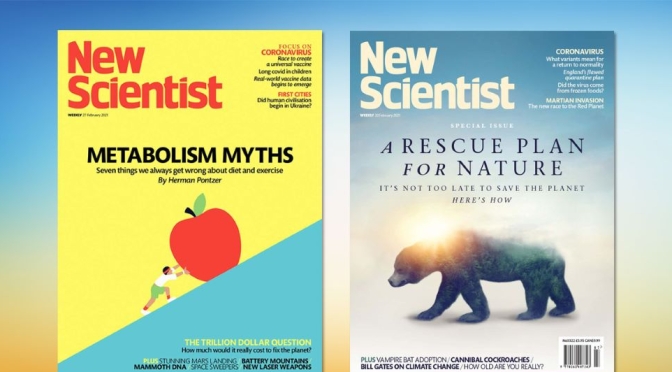
Previews: New Scientist Magazine – January 22
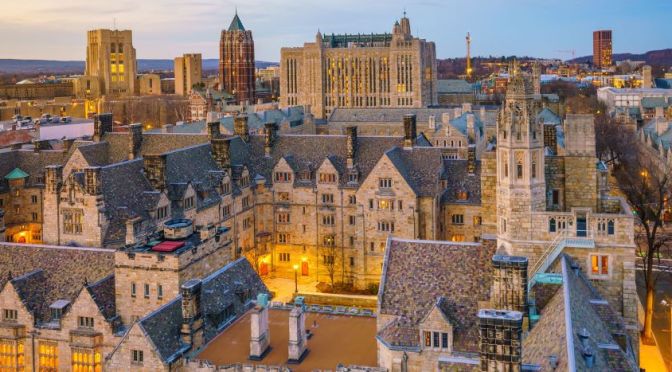
Aerial Views: New Haven In Southern Connecticut
New Haven is a coastal city on Long Island Sound, in Connecticut. It’s home to the Ivy League Yale University, founded in 1701. The institution’s museums include the Yale Peabody Museum of Natural History, the Yale University Art Gallery and the Yale Center for British Art. Grove Street Cemetery, dating from the late 18th century, has a 19th-century Egyptian Revival gateway. The New Haven Museum covers local history.
Science: Random Genome Mutations, Ancient Peru’s Hallucinogenic Beer
Challenging the dogma of gene evolution, and how chiral nanoparticles could give vaccines a boost.
In this episode:
00:45 Genome mutations may be less random than previously thought
A long-standing doctrine in evolution is that mutations can arise anywhere in a genome with equal probability. However, new research is challenging this idea of randomness, showing that mutations in the genome of the plant Arabidosis thaliana appear to happen less frequently in important regions of the genome.
Research article: Munroe et al.
News and Views: Important genomic regions mutate less often than do other regions
13:45 Research Highlights
How hallucinogenic beer helped cement an ancient superpower’s control, and a surprisingly enormous colony of breeding fish.
Research Highlight: Drug-fuelled parties helped ancient Andean rulers to hold power
Research Highlight: Vast fish breeding colony is more than twice the size of Paris
16:11 How a left-handed nanoparticle could give vaccines a boost
The chirality of a molecule – whether it has a left- or right-handed orientation – can have significant impacts on how it works. This week, a team show that left-handed gold nanoparticles can stimulate the immune system of mice, and boost the activity of a flu vaccine.
Research article: Xu et al.
News and Views: Nanoparticle asymmetry shapes an immune response
23:04 Briefing Chat
We discuss some highlights from the Nature Briefing. This time, Tasmanian devils’ discerning diets break the rules on scavenging, and new techniques uncovering the sex of ancient human remains may rewrite our assumptions.
Cosmos: Tasmanian devils puzzle science with picky eating habits
The Observer: Archaeology’s sexual revolution

Morning News: Global Inflation, Defectors In Myanmar, Cover Songs
Shoppers across the developed world face sharply rising prices, and leaders are reaching for all manner of remedies—but that’s what central banks are for.
Behind the story of Myanmar’s brutal military leadership is a slow stream of defectors; our correspondent meets the support network they rely on. And cover songs muddle the notion of who can call it their tune.

Front Page: Wall Street Journal – January 20

Island Views: A ‘Magical’ Coral Reef Found In Tahiti
A “magical” coral reef stretching as far as the eye can see has been discovered off the coast of the South Pacific island Tahiti. The beautiful reef took around 25 years to grow and was found in the “twilight zone”, where it is highly unusual to unearth such a find as there is barely enough light to sustain life. “It was magical to witness giant, beautiful rose corals which stretch for as far as the eye can see. It was like a work of art,” said French photographer Alexis Rosenfeld, who led the team of international divers that made the discovery. The acres of giant corals in pristine condition show no sign of being damaged by climate change and demonstrate just how little we know about the ocean, according to experts. They say it shows the need to protect the world’s remaining healthy reefs from environmental damage. Read the full story here: https://www.telegraph.co.uk/world-new..
 Boomers Daily