

Molnupiravir (MK-4482, EIDD-2801) is an investigational oral antiviral medicine that significantly reduced the risk of hospitalization or death at a planned interim analysis of the Phase 3 MOVe-OUT trial in at risk, non-hospitalized adult patients with mild-to-moderate COVID-19. At the interim analysis, molnupiravir reduced the risk of hospitalization or death by approximately 50%; 7.3% of patients who received molnupiravir were either hospitalized or died through Day 29 following randomization (28/385), compared with 14.1% of placebo-treated patients (53/377); p=0.0012. Through Day 29, no deaths were reported in patients who received molnupiravir, as compared to 8 deaths in patients who received placebo.
Tag Archives: Yale
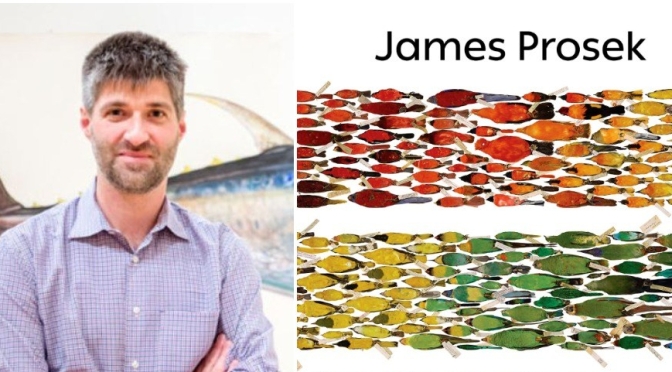
Art Books: “Art, Artifact, Artifice” By James Prosek
Award-winning artist, writer, and naturalist James Prosek (b. 1975) has gained a worldwide following for his deep connection with the natural world, which serves as the basis for his art and numerous popular books. In this cross-disciplinary catalogue, Prosek poses the question, What is art and what is artifact—and to what extent do these distinctions matter?
Drawing on the collections of the Yale University Art Gallery and the Yale Peabody Museum of Natural History, Prosek places man- and nature-made objects on equal footing aesthetically, suggesting that the distinction between them is not as vast as we may believe. In more than 150 full-color plates, objects such as a bird’s nest, dinosaur head, and cuneiform tablet are juxtaposed with Asian handscrolls, an African headdress, modern masterpieces, and more. Artists featured include Albrecht Dürer, Helen Frankenthaler, Vincent van Gogh, Barbara Hepworth, Pablo Picasso, and Jackson Pollack, as well as Prosek himself, whose works depict fish, birds, and endangered wildlife. Also included are an incisive essay by Edith Devaney and texts by Prosek that explore the magnificent productions of our wondrous interconnected world.
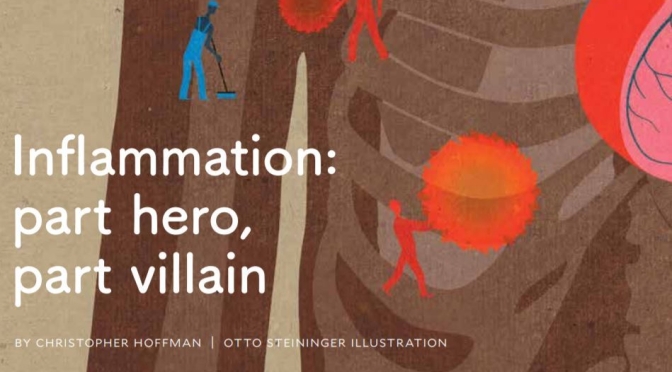
Health: “Inflammation – Part Hero, Part Villain” (Yale Medicine Magazine)


Exhibition & Book Review: “Unto This Last – Two Hundred Years Of John Ruskin” (Yale Center)
From a Wall Street Journal online review:
 In “Unto This Last and Other Essays on Art and Political Economy” (1860), which gives the exhibition its title, Ruskin “sees” interconnected social injustices. He attacks economic inequality. Later, he sets out to establish a utopian community in working-class Sheffield, England. In one gallery we see his influence on “progressive thinkers worldwide.” Gandhi said that reading “Unto This Last” in 1904 transformed his life and ideas.
The novelist Charlotte Brontë exclaimed after reading that first volume, “I feel now as if I had been walking blindfold[ed]—this book seems to give me eyes.”
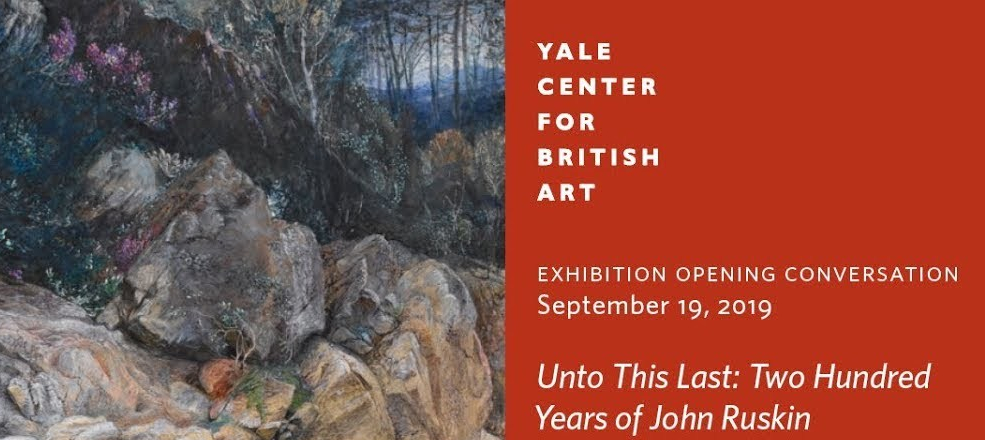 ‘If you can paint one leaf,” John Ruskin once declared, “you can paint the world.” And in “Unto This Last: Two Hundred Years of John Ruskin”—the hypnotically potent (though flawed) exhibition at the Yale Center for British Art marking the bicentennial of his birth—we see how wonderfully he kept trying.

New Books On Food: “American Cuisine” By Paul Freedman – 200 Years Of “Regionalism And Variety”
From a Yale News online review:
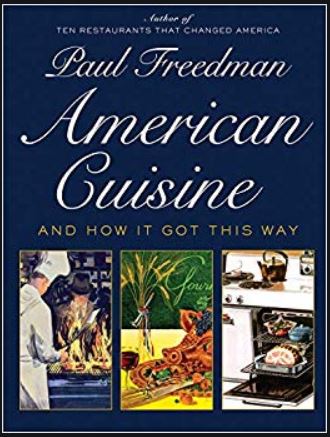 One way to understand American cuisine is through its regions — and the regional traditions that underlie the history of American cuisine. New England, the South, and New Orleans Creole are the regional cuisines of America. Examples of New England cuisine are “Yankee Pot Roast,” the lobster roll, and clam chowder. Southern favorites include grits, collard greens, okra, fried tomatoes, and sweet potato pie. Louisiana’s signature creole dishes are jambalaya, gumbo, and étouffée.
The compensation for that standardization — or at least what the food companies and the food and restaurant industry have offered — is variety. In my opinion, variety is what the food companies offer you in lieu of quality. At least in certain aspects, quality is impossible in an industrial food system.
In his new book, “American Cuisine: And How It Got This Way,” Yale historian Paul Freedman gives readers a window into understanding American history through cuisine spanning more than 200 years, debunking the myth that American cuisine does not, in fact, exist.
Freedman, the Chester D. Tripp Professor of History, approaches his study of American cuisine not by identifying a list of specific national or regional dishes, but rather by looking at the interactions among regionalism, standardization, and variety.
To read more: https://news.yale.edu/2019/10/15/yale-historian-pens-book-defining-what-exactly-american-cuisine
 Boomers Daily