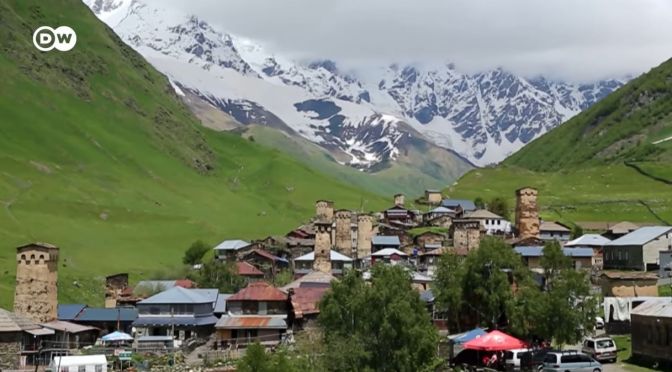

Only 70 families live in the village up on the country’s highest mountain – the Shkhara. During the summer, tourists love visiting the village to see its unique tower houses – an old medieval defense method.

Only 70 families live in the village up on the country’s highest mountain – the Shkhara. During the summer, tourists love visiting the village to see its unique tower houses – an old medieval defense method.
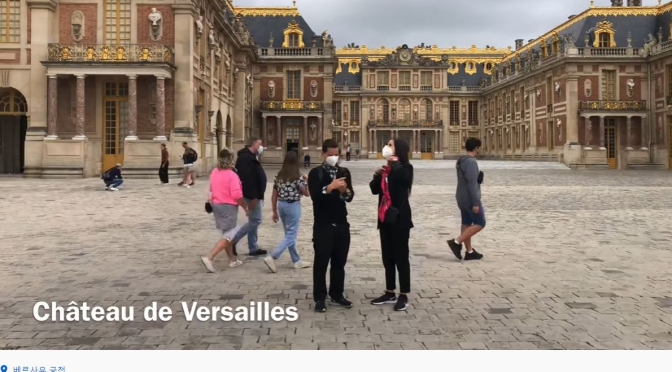
The Palace of Versailles has been listed as a World Heritage Site for 30 years and is one of the greatest achievements in French 17th century art. Louis XIII‘s old hunting pavilion was transformed and extended by his son, Louis XIV, when he installed the Court and government there in 1682. A succession of kings continued to embellish the Palace up until the French Revolution.
Today the Palace contains 2,300 rooms spread over 63,154 m2.
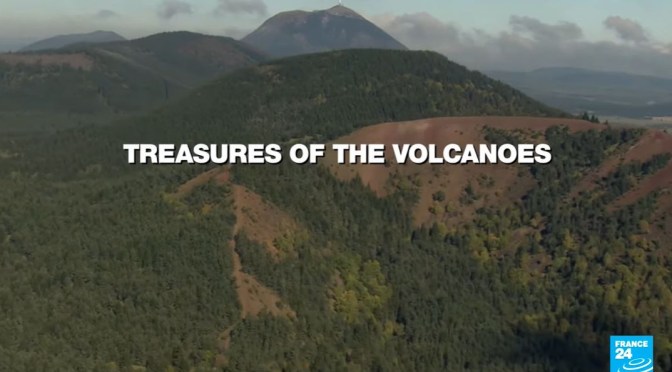
Located in central #France, the Regional Natural Park of the #Auvergne, with its 400,000 hectares, is the largest volcanic ensemble in Europe. In July 2018, #UNESCO listed the Chaîne des Puys mountains range as a world heritage site. Since then, a whole population has been striving to preserve this priceless heritage. We meet the park wardens studying the minute creatures of these open spaces and the craftsmen producing enamelled lava from the dormant volcanoes.
Auvergne is a historical region in central France, and is now part of Auvergne-Rhône-Alpes. The mostly rural, mountainous area is popular for hiking and skiing, with vast forests and dormant volcanoes such as Puy de Dôme. An abundance of natural hot springs has spawned spa towns such as Vichy, known for its mineral water. Clermont-Ferrand is a busy university city with a stately Romanesque church, Notre-Dame du Port.
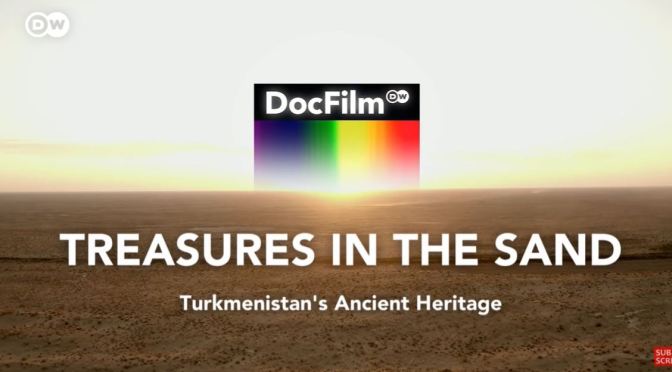
To outsiders, Turkmenistan is one of the world’s least known countries. For the first time in ten years, a film crew has been free to visit spectacular excavation sites and follow international researchers into areas that have long been off-limits. Once considered the poorest part of the Soviet Union, oil and natural gas have brought new wealth to Turkmenistan today.
A little known fact in the West is that 4,000 years ago, the country was home to one of the ancient world’s centers of power. Although it flourished around the same time as the advanced civilizations of Mesopotamia and Egypt, the Margiana empire was later largely forgotten. But recently, archaeologists have discovered palace buildings and magnificent burial treasures at the site of the capital, Gonur Depe, in the Karakum Desert. Incredible aerial photography shows the dimensions of the lost metropolis. An international team of researchers also unearthed monumental fortifications in neighboring Ulug Depe.
The ruined cities of Merv and Kunya-Urgench have been declared UNESCO World Heritage Sites. Suddenly, historians and the media are paying much more attention to Central Asia. Why has Turkmenistan seen powerful empires rise and fall since the Bronze Age? DNA analysis shows a highly mobile population, whose contacts reached as far as India, the Urals and the Mediterranean Sea. The Silk Road between China and Europe was the world’s most important trade route for thousands of years, lending Turkmenistan great historical significance. Since the fall of the Soviet Union, the country has been slowly opening up to international researchers, and its astounding cultural heritage is coming to light.
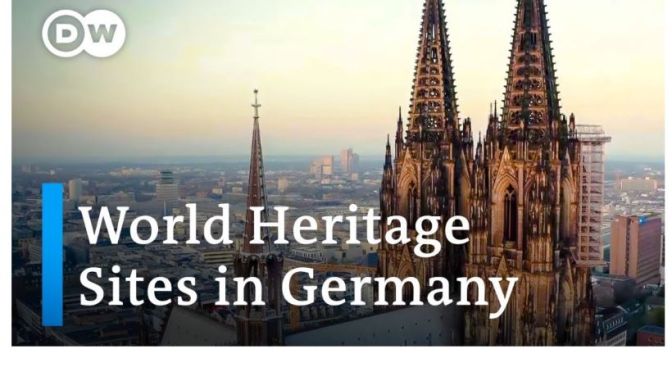
Check out this fantastic drone footage of Germany’s 46 UNESCO World Heritage Sites! In Part 2, we’ll take you to see Cologne Cathedral, the Museum Island in Berlin, the historic towns of Bamberg and Goslar, the Bauhaus buildings and sites in Dessau and Weimar, as well as Wartburg Castle — the place where Martin Luther translated the New Testament into German. Video: André Götzmann | Peter Wozny | Elisabeth Yorck von Wartenburg
 Boomers Daily