

Tag Archives: Wildlife

Wildlife & Travel: ‘Hold Your Breath’ Moments Of Sir David Attenborough

Wondering if the leopard could possibly survive falling from such a height, Attenborough says “suddenly you realise you haven’t written anything because, you know, you’re just completely held. And that may tell you that perhaps your words aren’t all that necessary”.
Wildlife Photographer Of The Year Winners (2023)
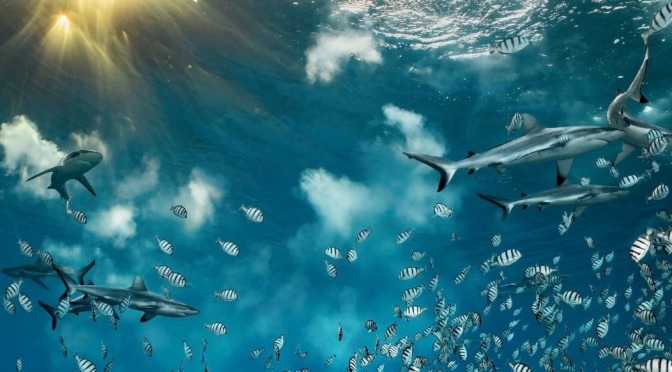
New Scientist spoke to the winning photographers, alongside broadcaster Chris Packham, about the stories behind the images and how they hope their work will inspire change. Wildlife Photographer of the Year is developed and produced by the Natural History Museum, London.
Safaris: Lions, Leopards & Cheetahs Of The Serengeti


Views: Favorite Birds Of Wildlife Photographers
/https://tf-cmsv2-smithsonianmag-media.s3.amazonaws.com/filer_public/5e/b1/5eb1bc29-12a1-41ac-9517-fad96960a3f9/sepoct2023_g07_favoritebirds.jpg)
Anna’s Hummingbird, Calypte anna
/https://tf-cmsv2-smithsonianmag-media.s3.amazonaws.com/filer_public/5d/be/5dbe47f1-53bf-4865-8542-913914c11756/sepoct2023_g20_favoritebirds.jpg)
Photograph by Gretchen Kay Stuart
“I’ve always been enchanted by hummingbirds,” Stuart says. “Their tiny size and iridescent plumage make them seem as though they are born out of fairy tales.”
/https://tf-cmsv2-smithsonianmag-media.s3.amazonaws.com/filer_public/71/3c/713c262a-4344-4288-b28a-843c692ced1f/sepoct2023_g06_favoritebirds.jpg)
Evening Grosbeak, Coccothraustes vespertinus
Photograph by Melissa Groo
/https://tf-cmsv2-smithsonianmag-media.s3.amazonaws.com/filer_public/50/ff/50ff24ff-081e-4b6e-925e-4ee5662cd38c/sepoct2023_g18_favoritebirds.jpg)
The evening Grosbeak tends to hover north of Groo’s home in Central New York State. So she was delighted when a flock of them recently appeared outside her house. “When they roam further south in winter in search of food, I’ve been blessed with their presence, sometimes over months,” she says. “This past winter and into very early spring, I had a flock of up to 15 visiting my platform bird feeder daily, hoovering up black oil sunflower seeds.”
/https://tf-cmsv2-smithsonianmag-media.s3.amazonaws.com/filer_public/eb/ee/ebeead28-455b-4fff-9d2b-2a2943cecbb4/sepoct2023_g01_favoritebirds.jpg)
Northern Pygmy-Owl, Glaucidium gnoma
Photograph by Gerrit Vyn
/https://tf-cmsv2-smithsonianmag-media.s3.amazonaws.com/filer_public/41/ff/41ff8cad-cd8b-4f18-b833-84cb884a4da2/sepoct2023_g15_favoritebirds.jpg)
In Western Oregon where Vyn lives, the tooting of the northern pygmy-owl is the sound of spring. “Even when you don’t see them, while hiking through the forest or sitting in a lush patch of sword ferns on the forest floor and looking up into the canopy, just knowing they are somewhere up there, watching, deepens the experience and magic of place,” he says.

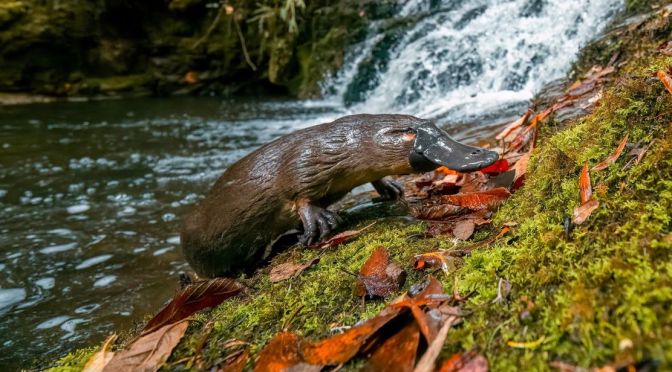
Wildlife: ‘Nature On PBS’ Season 42 Trailer (2023-24)
THE PLATYPUS GUARDIAN | Wednesday, October 18
Witness the story of an extraordinary man and a mysterious animal living on an island at the end of the world…Tasmania. Pete Walsh is a Tasmanian with no background in natural history, yet he’s become obsessed with one of nature’s least understood creatures, the platypus. Before it is too late, Pete is on a mission to observe and understand these animals and save them from urban development in the capital city of Hobart. Pete befriends one particular female platypus he names Zoom. She lets him into her secretive world and Pete learns more about the life of this enigmatic species, capturing unique footage of their behavior.
SPY IN THE OCEAN (4-part special) | Wednesdays, October 25 – November 15
The latest installment of the popular Spy in the Wild series takes place in the ocean, the largest ecosystem on Earth. This four-part Nature miniseries deploys animatronic spy cameras disguised as marine animals to secretly record behavior in the wild. These uncanny robotic look-alikes take us to places where no spy has gone before. They will swim, float, paddle, waddle, drift and fly into every nook and cranny to film rarely seen behavior that reveals how ocean animals possess emotions and behavior similar to humans – including the capacity to love, grieve, deceive and invent.
BIG LITTLE JOURNEYS (3-part special) | Premieres Winter/Spring 2024
Small animals, even tiny ones, must sometimes make epic journeys to find a home or a mate. While the distances may not seem monumental to us, to these little creatures the journey is monumental. Grasses appear like skyscrapers, mounds become mountains and raindrops fall as big as cars. Meet six heroic, tiny travelers risking it all to complete big journeys against the odds.
GRIZZLY 399 (working title) | Premieres Winter/Spring 2024
The most famous bear in Yellowstone is responsible for 22 descendants. Grizzly 399 has become a symbol of the clash between humans and the wild, as well as a measure of success for her species as it creeps back from the brink of extinction. Now, the stakes are higher than ever as the State of Wyoming petitions the federal government to remove grizzlies from the endangered species list—which would make it legal to hunt bears for recreation. But 399 is far more than just a symbol, she’s the protagonist of a riveting story full of twists and turns, hope and heartbreak.
ATTENBOROUGH AND THE JURASSIC SEA MONSTER | Premieres Winter/Spring 2024
Sir David Attenborough unearths a once in a lifetime discovery: the fossil of a giant Pliosaur, the largest Jurassic predator ever known. Follow a team of forensic experts on a perilous expedition to excavate the skull, uncover the predatory secrets lying deep inside the fossil, and unlock clues about the life of this giant sea beast.
PATRICK AND THE WHALE | Premieres Winter/Spring 2024
For years, Patrick Dykstra has traveled the globe following and diving with whales, learning how whales see, hear and perceive other creatures in the water. In Dominica, Patrick has a life changing experience – a close encounter with a sperm whale he names “Delores.” Witness Patrick and the whale attempt to communicate with each other in extraordinary footage never before seen.
RAPTORS: A FISTFUL OF DAGGERS (two-part series; working title) | Premieres Winter/Spring 2024
The planet’s most successful large predators are a group of birds known as raptors. United by a hooked beak, a taste for flesh and a set of razor-sharp talons, these birds of prey have conquered the globe. Raptors dominate every habitat in which they live. Learn more about eagles, hawks, and falcons as well as the lesser-known hunters like the secretary bird, the caracara, kites and more.
UKRAINE ANIMALS (working title) | Premieres Winter/Spring 2024
Ukrainian YouTuber Anton Ptushkin documents the work that Ukrainian citizens have done to rescue and care for the pets and zoo animals abandoned during the war. Before the invasion in February 2022, Ukraine had the second-highest population of pets per capita in the world. In the face of violence, pets and their owners became symbols of resistance, heroes and frontline volunteers. See how a national tragedy transformed into a global story of incredible devotion and love.
FLYWAYS (working title) | Premieres Winter/Spring 2024
Shorebirds fly thousands of miles each year along ancient and largely unknown migratory routes called Flyways. Species travel from feeding grounds in the southern hemisphere to breeding grounds in the Arctic regions and back again, flying up to nine days non-stop without food or water. But their populations are crashing. Follow a conservation movement of bird-loving experts and citizen scientists as they mobilize to the challenge of understanding and saving shorebirds.
GORILLA (working title) | Premieres Winter/Spring 2024
Gabon’s Loango National Park is home to a group of western lowland gorillas that have become accustomed to biologists who have studied them for almost 20 years. This documentary presents an intimate look at a silverback and his family, and features a newborn baby gorilla, brave researchers, forest elephants, buffalos and the last remaining wild coastline in the African tropics.
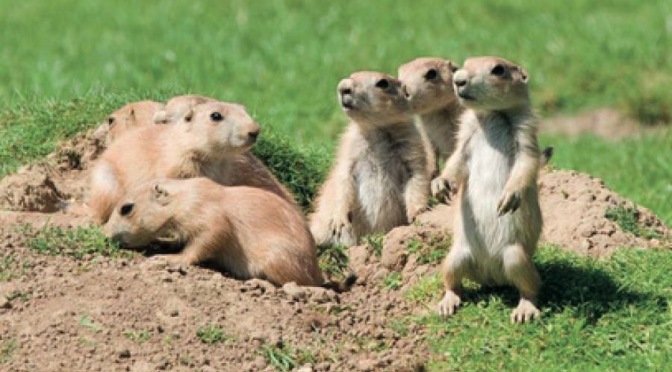
Wildlife Film Trailers: ‘A Prairie Dog’s Life’ (2023)
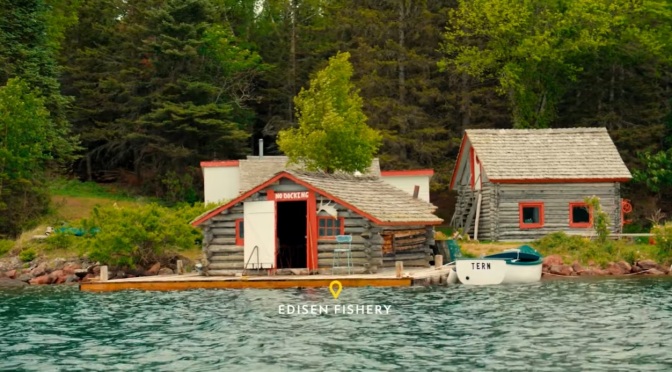
Michigan Travel: A Tour Of The Upper Peninsula

The Upper Peninsula is a forested region in Michigan bordering 3 of the Great Lakes and extending outward from Wisconsin. It’s connected to Michigan’s Lower Peninsula by the roughly 5-miles-long Mackinac Bridge, which spans the Straits of Mackinac.
Sandwiched between the 2 peninsulas is Mackinac Island, a car-free vacation destination with the iconic 1887 Grand Hotel and the Victorian-era Fort Mackinac.
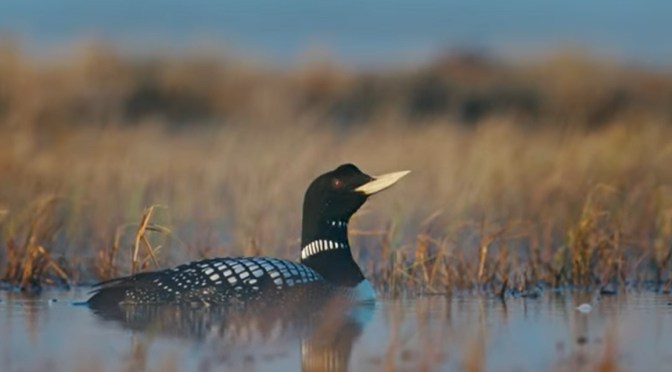
Nature: Filming Birdlife In America’s Arctic Wetlands

Millions of birds from all over the world flock to these wetlands every year to nest and raise their young. Come along with Cornell Lab’s Gerrit Vyn as he joins a team to capture image of the region’s birdlife.
America’s Arctic is one of North America’s last great wilderness areas, a critical habitat for migratory birds from around the world, and a treasure to be protected for future generations.
BBC Earth Wildlife Views: Sir David Attenborough Tours Seven Continents

From ‘Seven Worlds One Planet’.
 Boomers Daily