Yosemite National Park, scenic mountain region in east-central California, U.S. It is situated about 140 miles (225 km) east of the city of San Francisco and some 100 miles (160 km) southeast of Sacramento. Devils Postpile National Monument lies about 15 miles (25 km) to the east, and Kings Canyon National Park is about 40 miles (65 km) to the southeast. The park, surrounded on all sides by national forest lands, encompasses 1,189 square miles (3,080 square km). It was designated a UNESCO World Heritage site in 1984. Park headquarters are located at Yosemite Village in Yosemite Valley, in the west-central part of the park.
Tag Archives: Wildlife
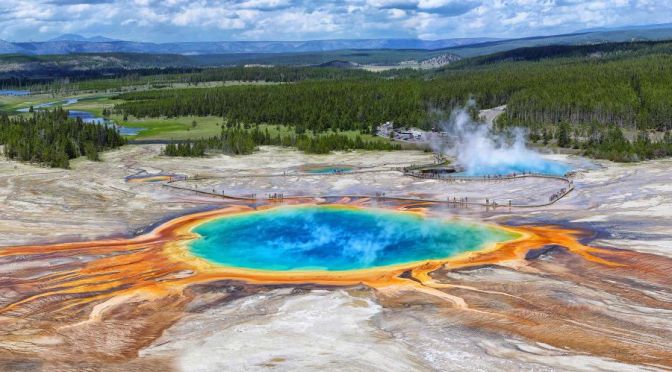
Wilderness: Yellowstone National Park Celebrates 150 Year Anniversary
Yellowstone National Park is a nearly 3,500-sq.-mile wilderness recreation area atop a volcanic hot spot. Mostly in Wyoming, the park spreads into parts of Montana and Idaho too. Yellowstone features dramatic canyons, alpine rivers, lush forests, hot springs and gushing geysers, including its most famous, Old Faithful. It’s also home to hundreds of animal species, including bears, wolves, bison, elk and antelope.
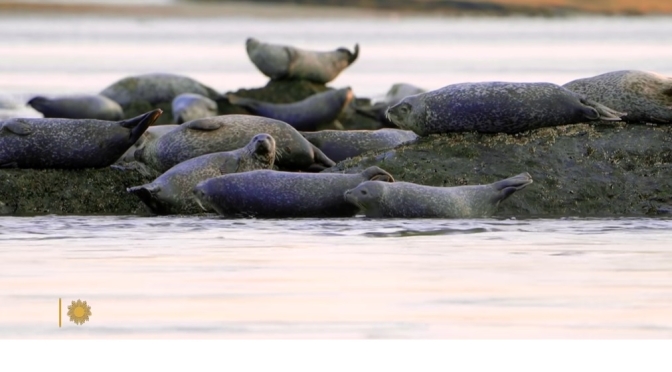
Massachusetts Views: Seals At The Parker River National Wildlife Refuge
“Sunday Morning” leaves you today with seals sunning at the Parker River National Wildlife Refuge in Newburyport, Massachusetts (with some snowy owls looking on). Videographer: Michael Clark.
Parker River National Wildlife Refuge is a wildlife sanctuary encompassing the majority of Plum Island in northeastern Essex County, Massachusetts, 5 miles southeast of Newburyport. It was established in 1942 primarily to provide feeding, resting, and nesting habitats for migratory birds.
The harbour seal, also known as the common seal, is a true seal found along temperate and Arctic marine coastlines of the Northern Hemisphere. The most widely distributed species of pinniped, they are found in coastal waters of the northern Atlantic, Pacific Oceans, Baltic and North Seas.
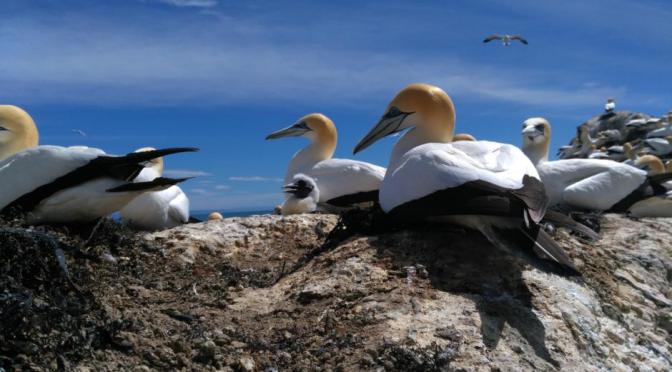
Views: Gannets In Cape Kidnappers, New Zealand
We leave you this Sunday morning at Cape Kidnappers in New Zealand, with gannets, who mate for life. Videographer: Jaime McDonald.
Australasian gannets nest in dense breeding colonies on the New Zealand mainland and coastal rocks and islands, as well as off south-east Australia and Tasmania. Although gannets can be seen occasionally from most places along the coasts of the New Zealand main islands, most gannetries are situated off the North Island. The largest mainland gannetry is at Cape Kidnappers, with around 5,000 breeding pairs. Other mainland breeding sites include Muriwai and Farewell Spit.
Australasian gannets mostly feed on waters over the continental shelf. They prefer flat ground for nesting, rather than cliff ledges. Breeding colonies are mostly situated at sites that are completely or largely surrounded by the sea, i.e. on islands or headlands.
Cape Kidnappers, also known as Te Kauwae-a-Māui and officially known as Cape Kidnappers / Te Kauwae-a-Māui, is a headland at the southeastern extremity of Hawke’s Bay on the east coast of New Zealand’s North Island and sits at the end of an 8 kilometres peninsula which protrudes into the Pacific Ocean.
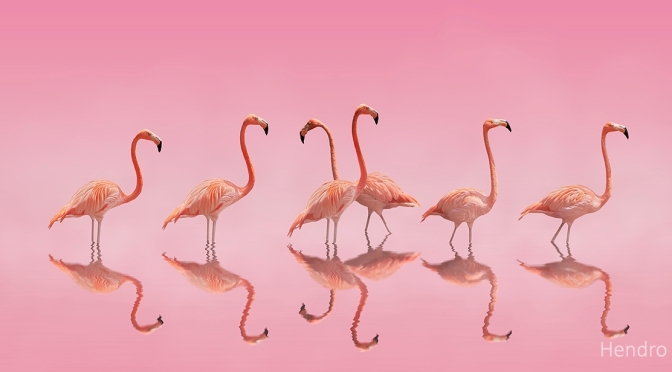
Nature Photography: The Art Of Hendro Soetrisno
Nature: Trumpeter Swans Near Cayuga, New York
We leave you this Sunday among trumpeter swans braving winter’s chill near Cayuga, New York. Videographer: Carl Mrozek.
The trumpeter swan (Cygnus buccinator) is a species of swan found in North America. The heaviest living bird native to North America, it is also the largest extant species of waterfowl, with a wingspan of 185 to 250 cm (6 ft 2 in to 8 ft 2 in). It is the American counterpart and a close relative of the whooper swan (Cygnus cygnus) of Eurasia, and even has been considered the same species by some authorities. By 1933, fewer than 70 wild trumpeters were known to exist, and extinction seemed imminent, until aerial surveys discovered a Pacific population of several thousand trumpeters around Alaska’s Copper River. Careful reintroductions by wildlife agencies and the Trumpeter Swan Society gradually restored the North American wild population to over 46,000 birds by 2010.
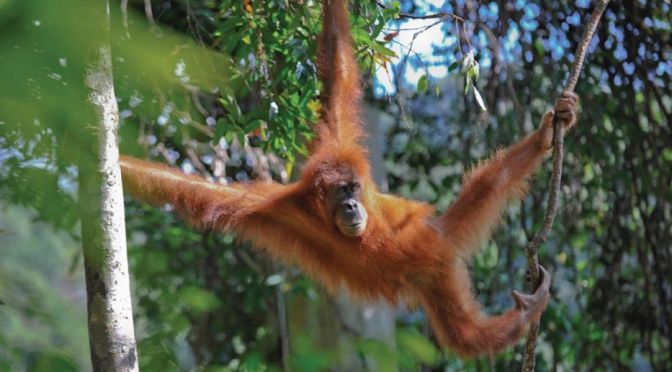
Wildlife: Orangutans On The Island Of Borneo
Learning survival skills is a must for baby orangutans to live in the rainforest among their predators, however, not all of them are natural acrobats!
The Bornean orangutan is a species of orangutan endemic to the island of Borneo. Together with the Sumatran orangutan and Tapanuli orangutan, it belongs to the only genus of great apes native to Asia.
Borneo, a giant, rugged island in Southeast Asia’s Malay Archipelago, is shared by the Malaysian states of Sabah and Sarawak, Indonesian Kalimantan and the tiny nation of Brunei. It’s known for its beaches and ancient, biodiverse rainforest, home to wildlife including orangutans and clouded leopards. In Sabah is 4,095m-tall Mount Kinabalu, the island’s highest peak, and, offshore, the famed dive site Sipadan Island.
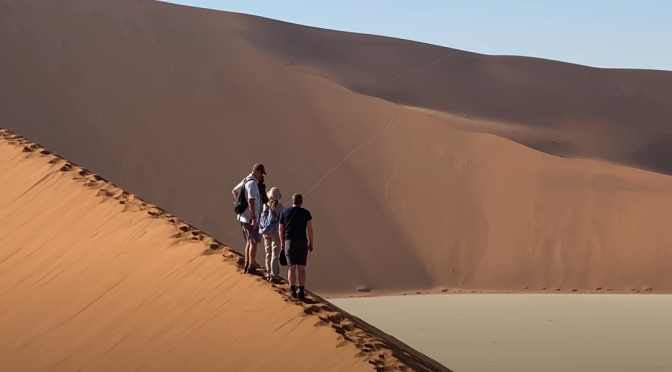
Travel Tours: Namibia In Southwest Africa (4K)
Namibia, a country in southwest Africa, is distinguished by the Namib Desert along its Atlantic Ocean coast. The country is home to diverse wildlife, including a significant cheetah population. The capital, Windhoek, and coastal town Swakopmund contain German colonial-era buildings such as Windhoek’s Christuskirche, built in 1907. In the north, Etosha National Park’s salt pan draws game including rhinos and giraffes.
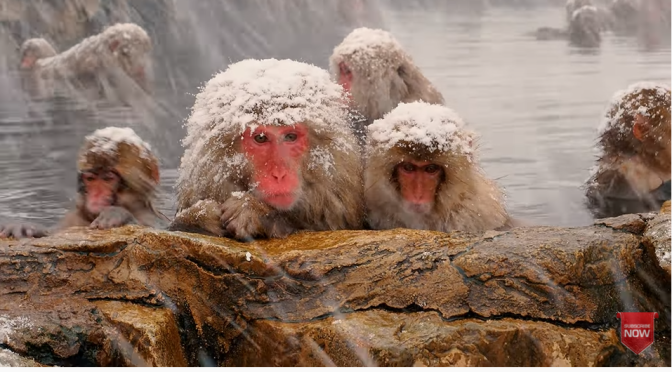
Japan Views: Snow Monkey Park In Heavy Snowfall
Located at the base of Joshinetsu Kogen National Park, the Jigokudani Monkey Park – often referred to as the Snow Monkey Park – is home to a very special troop of monkeys. Created in 1964, the park was established as a conservation area in which the monkeys, Japanese macaques to be exact, would have a refuge within what was already their natural habitat. Once in the park, the naturally-curious monkeys observed humans using the hot spring of a nearby guesthouse and before long, started copying the behaviour. The rest as they say, is history.
Views: Ecuador – Wildlife, Rainforests & Waterfalls
Ecuador is a country straddling the equator on South America’s west coast. Its diverse landscape encompasses Amazon jungle, Andean highlands and the wildlife-rich Galápagos Islands. In the Andean foothills at an elevation of 2,850m, Quito, the capital, is known for its largely intact Spanish colonial center, with decorated 16th- and 17th-century palaces and religious sites, like the ornate Compañía de Jesús Church.
Video timeline: 00:16 – Mindo Valley 00:42 – Pailon del Diablo Waterfall 01:39 – Quilotoa Vulcano Lake 01:59 – Crowned woodnymph bird 02:19 – White-necked jacobin bird 03:07 – Time-lapse of the sky above Quito 03:44 – Cotopaxi National Park 04:57 – Golden tanager bird 05:17 – Andes Mountains 05:38 – Cayambe Volcano 06:23 – Amazon Rainforest